What’s planned for US 278 bridges? Hilton Head is about to find out. Here’s the schedule
After years of anticipation, debate and criticism, the S.C. Department of Transportation on Wednesday will finally release its preferred construction plan for the U.S. 278 bridges project, which will fundamentally reshape Hilton Head Island’s single entry and exit point.
The island’s largest-ever infrastructure project has been under scrutiny due to its ever-shifting timeline, unclear costs and expected impact on native islanders.
But next week’s announcement will mark the beginning of a new chapter in the project’s contentious trek forward, as SCDOT unveils, and residents weigh in on, the state’s “preferred alternative.” The project could cost anywhere from $218 million to $356 million.
The project will be one of the island’s most consequential undertakings this century, and it’s crucial that local and state leaders get it right, Hilton Head residents say.
“We now have a once in a lifetime opportunity to improve our current traffic situation in a way that is beneficial to all,” residents Diederik Advocaat, Steven Baer and Gray Smith wrote in a recent letter to federal highway officials.
Here’s a guide to the project’s schedule in July and August:
Summer timeline
The SCDOT will publish the preferred alternative on its website Wednesday, along with an environmental assessment for the project. There are nine possible alternatives, though SCDOT project manager Craig Winn previously suggested that three of those routes (alternatives 4, 5 and 6) will probably not be selected.
Wednesday is also the start of a 45-day public comment period for the sprawling project, which will replace the deficient eastbound bridge over Mackay Creek and likely result in additional Gullah land loss in the historic Stoney community.
The public comment period ends Aug. 22.
Residents before then will be able to review the SCDOT documents online, submit written suggestions or recommendations to agency officials, attend an in-person public hearing on July 22 to discuss the preferred alternative, and set up appointments at the Island Recreation Center between July 14 and July 16 or Aug. 18 and Aug. 21 to learn more about the state’s proposal.
The public hearing will be held from 2 to 7 p.m. July 22 at the rec center at 20 Wilborn Road. People can drop by to ask questions from 2 to 6 p.m. An hour-long meeting where residents can speak out about the plan will run from 6 to 7 p.m.
You can find specific information about how to submit public comments to the SCDOT or sign-up to speak at the public hearing online at: https://bit.ly/CommentsSCDOT
The SCDOT will also host a meeting for the Stoney community on July 17 at the Rowing and Sailing Center at 133 Squire Pope Road. Transportation officials will answer questions from residents between 1 and 4 p.m.
The Town of Hilton Head Island will get a chance to weigh in on the preferred alternative, too.
Shawn Colin, senior adviser to the town manager, has taken the lead on the project for Hilton Head. He wants to get the town council’s official stance on the matter sometime this summer.
The council, he said, could make suggestions to SCDOT in a submitted response.
The Greenville-based land planning firm MKSK will likely play a major role in those conversations. The town hired the firm for $98,660 this past spring to design a new U.S. 278 entrance for the island that’s welcoming to drivers and less intrusive to the families and businesses that own property in the Stoney neighborhood.
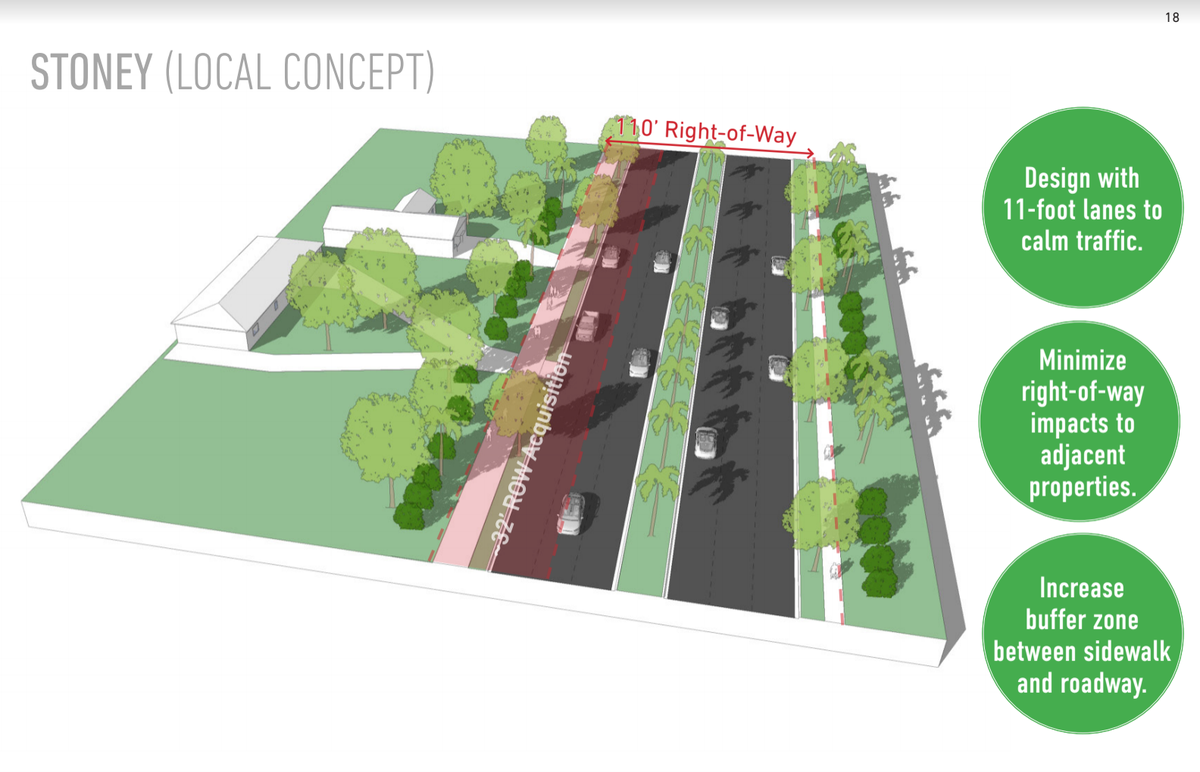
The firm presented some of its initial ideas at a Tuesday council meeting. The MKSK plan is currently based on the expectation that SCDOT will recommend a six-lane highway in the corridor’s existing footprint that cuts through the Stoney community and Jenkins Island.
MKSK’s plan proposes a narrower right-of-way for U.S. 278 in the Stoney area, with 11-foot lanes instead of the SCDOT-recommended 12-foot lanes.
The firm’s plan includes 32 feet of land acquisition, instead of 44 feet, on the north side of U.S. 278 near homes like the Stewart family’s.
“We may have no chance of stopping the SCDOT’s public hearing on the 22nd, because that’s right around the corner, OK? But we do have the responsibility of improving our quality of life,” said Alex Brown, who represents Ward 1 on the Town Council, during the Tuesday meeting. “We’ve got a lot of work to do. We’re nowhere near the finish line at all.”
What happens after Aug. 22?
Colin expects the SCDOT to spend two to three months responding to the public’s written comments.
The state agency could then release an updated version of its preferred alternative with tweaks or modifications, he said.
That may happen sometime this fall, Colin predicted.
“I don’t know if (that process) leads to a completely different alternative,” he said.
The Town Council will eventually have to decide whether it wants to approve or veto the chosen alternative, according to the SCDOT.
“Beaufort County will need to obtain signature for Municipal Consent from the Town of Hilton Head Island prior to the start of construction,” wrote Pete Poore, an SCDOT spokesman, in a Thursday statement.
Another one or two years of design work is needed before construction can actually begin on the project, Colin added.
The SCDOT expects construction to kick off in late 2023 or early 2024, Poore wrote.
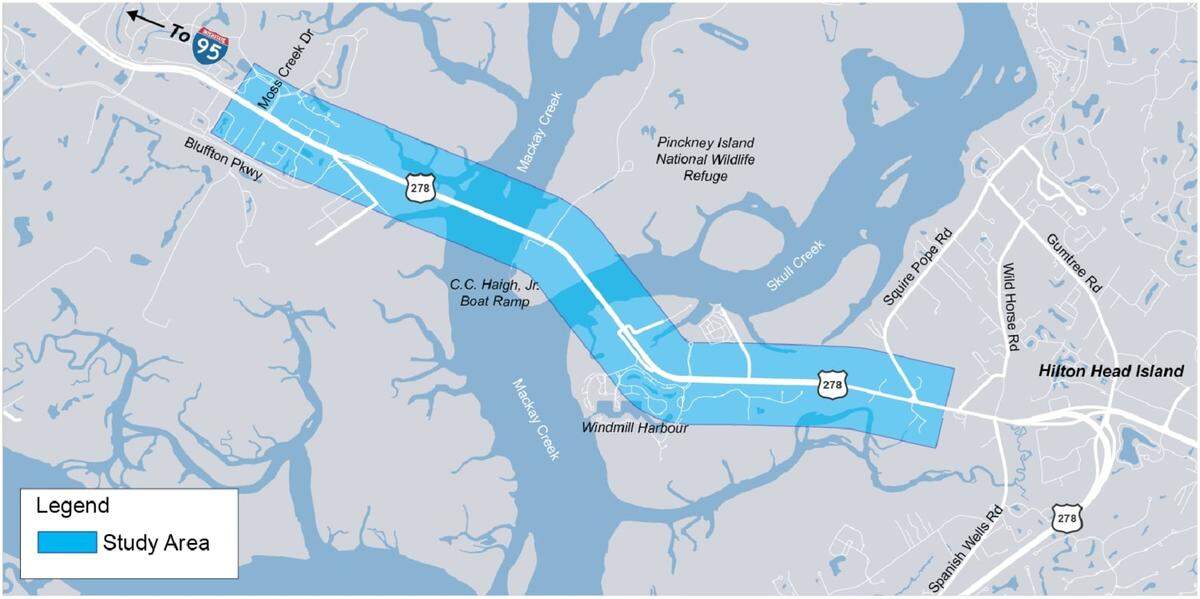
But some island residents have urged the Town Council to flatly reject all of the SCDOT’s proposals, demanding a better process for determining what will happen to the 4.14-mile, congestion-prone stretch of highway between Moss Creek Drive in Bluffton and Spanish Wells Road on the island.
“Act now before SCDOT sets in stone its preferred alternative,” resident Patsy Brison told the council early last year. “You have veto power over SCDOT projects. Please use it.”
The project will be funded, in part, by a 1% transportation tax that Beaufort County voters passed in 2018. That tax is expected to generate $80 million for the project, according to the SCDOT. The county has also secured $120 million in funding from the State Infrastructure Bank, among other things.
What alternatives are under consideration?
The nine alternatives all share some similarities. They each:
Widen the entire corridor to six lanes
Eliminate left turns off U.S. 278 on Pinckney Island and create an underpass under the highway there
The alternatives also have many differences.
Alternative 1, for example, which is the most similar to the current corridor’s configuration, would include the construction of a new eastbound bridge over Mackay Creek, south of the existing eastbound lanes, and the demolition of those old lanes.
Alternative 6, on the other hand, would include the demolition of all existing bridges between Hilton Head and Bluffton. A new, six-lane bridge would be built at the base of the Bluffton flyover and head east, crossing Pinckney Island south of the C.C. Haigh Jr. boat landing and crossing Skull Creek south of the old bridges.
A second new bridge from Jenkins Island to the Spanish Wells Road area would then be built over marshland and historic communities north of the existing highway on Hilton Head.
The Island Packet has published two guides about the U.S. 278 project alternatives. They can be found online at: https://bit.ly/AlternativesGuide1 and https://bit.ly/AlternativesGuide2
This story was originally published July 2, 2021 at 10:17 AM.