Hilton Head bridge project gets $120M from the state. Here’s what’s next
Beaufort County will receive $120 million in state funding for the U.S. 278 corridor project, which will overhaul the bridges that lead to Hilton Head Island.
The state’s decision to provide 44% of the corridor’s expected costs comes after a two-day discussion on whether to give money to the Beaufort County project. It competed against other cities’ applications for funding from the State Infrastructure Bank. Local leaders’ presentations to the board gave new insight on the bridge project, including at least one comment that suggested the new bridge could be a toll road if the project goes over budget.
The corridor project is expected to cost more than $272 million and tear up the entrance to Hilton Head Island for four years of construction starting in 2023. In 2018, Beaufort County voters passed a 1% transportation tax increase to help fund the project.
The goal of the project, according to Beaufort County and Hilton Head officials, is to alleviate traffic congestion and cut down the number of accidents in the busy U.S. 278 corridor.
Residents on Hilton Head have sharply criticized the S.C. Department of Transportation’s plans for the corridor — the sole access point to the island that runs through historic land.
A campaign to “nix the six” bridge alternatives has highlighted what some call a lack of creativity and disregard for native island families who live in the shadow of the four-lane highway.
The Coalition of Island Neighbors, a group organized by Hilton Head residents Patsy Brison and Risa Prince, say the suggestions stand to make the intersections between Pinckney Island and Spanish Wells worse, will destroy culturally significant communities and will cost more than originally anticipated.
“This project is of a once-in-a-generation, significant magnitude, both in community impact and taxpayer cost, (and) COIN is of the opinion and respectfully requests that this project should not be funded by the (State Infrastructure) Bank unless and until these issues are fully addressed,” Brison wrote.
Brison’s and other comments were filed with the State Infrastructure Bank, but the money was ultimately approved.
Where is the money coming from?
Monday’s initial hearing in front of the S.C. Transportation Infrastructure Bank Evaluation Committee came as a surprise even to those who closely follow the developments of the project.
It was not prominently announced by the Town of Hilton Head Island or Beaufort County governments.
S.C. Sen. Tom Davis, however, was at the meeting and provided updates on social media.
Davis said he was there to ensure that the bridge project received the necessary funding. He described this as the “first track” of the project. The second leg of the project, he said, is the bridge design.
“Responsibility for the second track falls more on the people of Hilton Head Island,” he said. “They will ultimately be the ones who determine what the bridges will look like, how they will be situated, how negative impacts on the existing communities will be mitigated. That work is ongoing, with many islanders participating, and that’s how it should be.”
But residents say they feel relatively powerless in the design process of the project, which is being handled by the SCDOT. The state will announce the preferred alternative in the fall, and the town council will be able to approve or veto the plan.
A petition started in late 2019 urges local leaders to “reject and rethink” all the state’s plans for the project now instead of waiting. More than 2,500 people have signed.
The presentation on the project by local leaders Monday also provided some insight into where they expect the project to go.
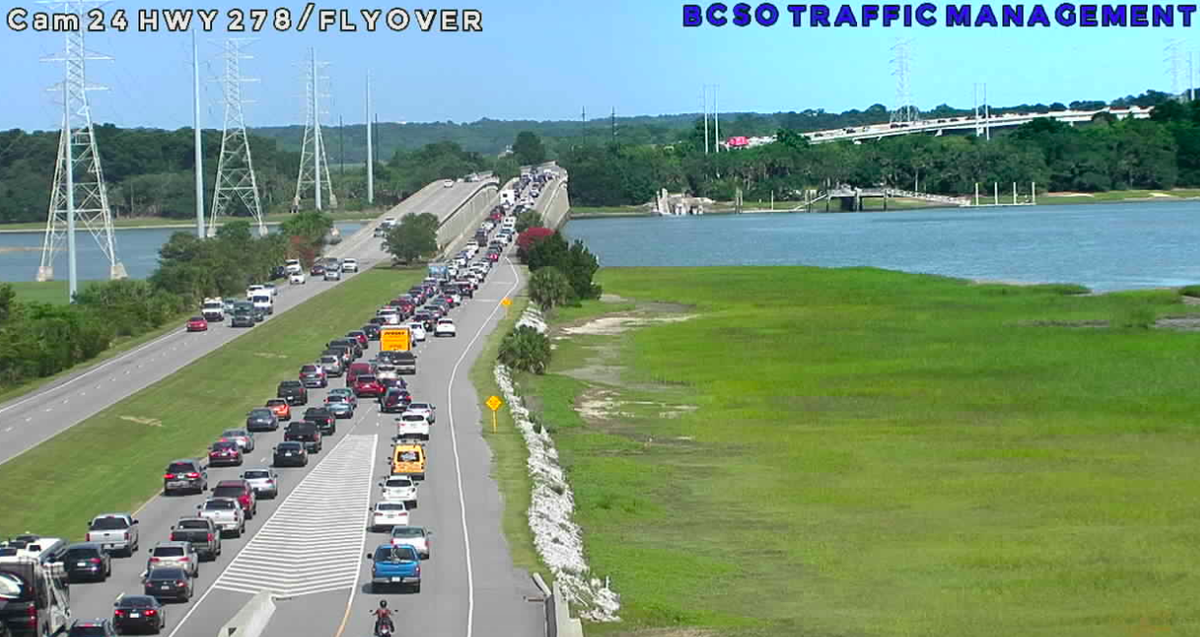
Beaufort County Administrator Ashley Jacobs and Hilton Head Island Town Manager Steve Riley said the project was needed to cut down on traffic on the bridges and ensure public safety.
Between 2012 and 2017 on the U.S. 278 corridor, Riley said, there were three fatal automobile crashes, 151 crashes that caused injury and 512 crashes that caused damage to property.
Jacobs confirmed during the presentation that the county would not be constructing the planned Jenkins Island project because that project “would essentially be done” in the U.S. 278 corridor project.
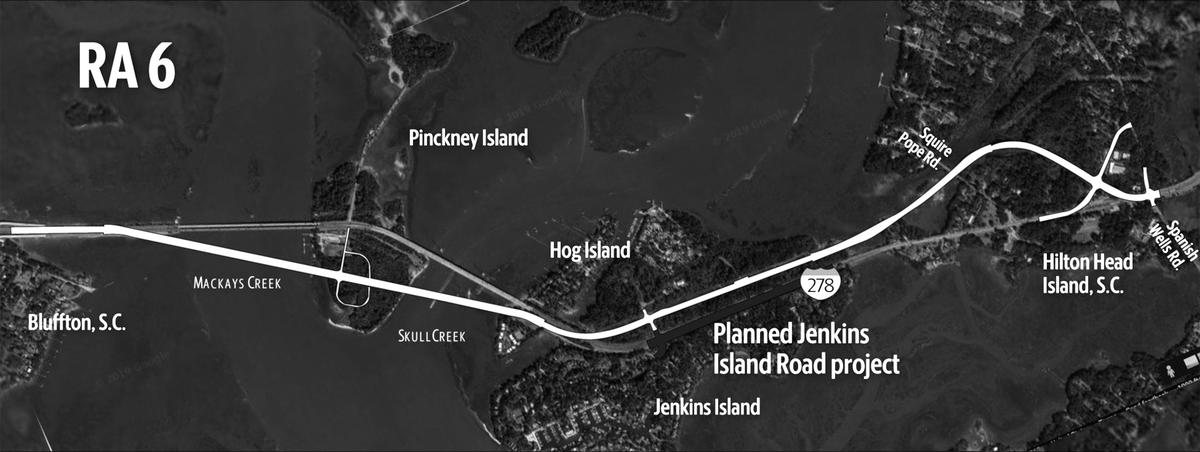
The Jenkins Island road project — which was intended to lessen traffic congestion and eliminate dangerous left-hand turns onto U.S. 278 from the foot of J. Wilton Graves Bridge to the causeway that leads onto Hilton Head Island — has been discussed since 2009. However, the project was publicly delayed for years and bogged down in bureaucracy in recent months.
Jacobs said the funds that were earmarked for the Jenkins Island project would be used for the larger corridor project.
The entire $272 million project is expected to be funded through several revenue streams, according to Monday’s presentation:
▪ Beaufort County’s one-cent sales tax: $80 million
▪ Beaufort County road impact fees: $12.3 million
▪ Federal Guideshare/local money for the environmental assessment/Preliminary Engineering: $4.2 million
▪ SCDOT bridge replacement funds: $43.5 million
▪ Beaufort County funds for the Jenkins Island project: $9 million
▪ Town of Hilton Head right-of-way dedication: $3.35 million
▪ Total local/non-bank funded match: $152.37 million
▪ SCIB grant: $120 million
During the presentation, committee chairman John White Jr. asked Jacobs how the county would make up for a potential shortfall in funds in future years.
The administrator responded that the county could pursue federal funding, implement another one-cent sales tax in 2022 or consider adding a toll to the bridge.
She offered no details on those possibilities. Jacobs did not immediately return a call for comment Tuesday.
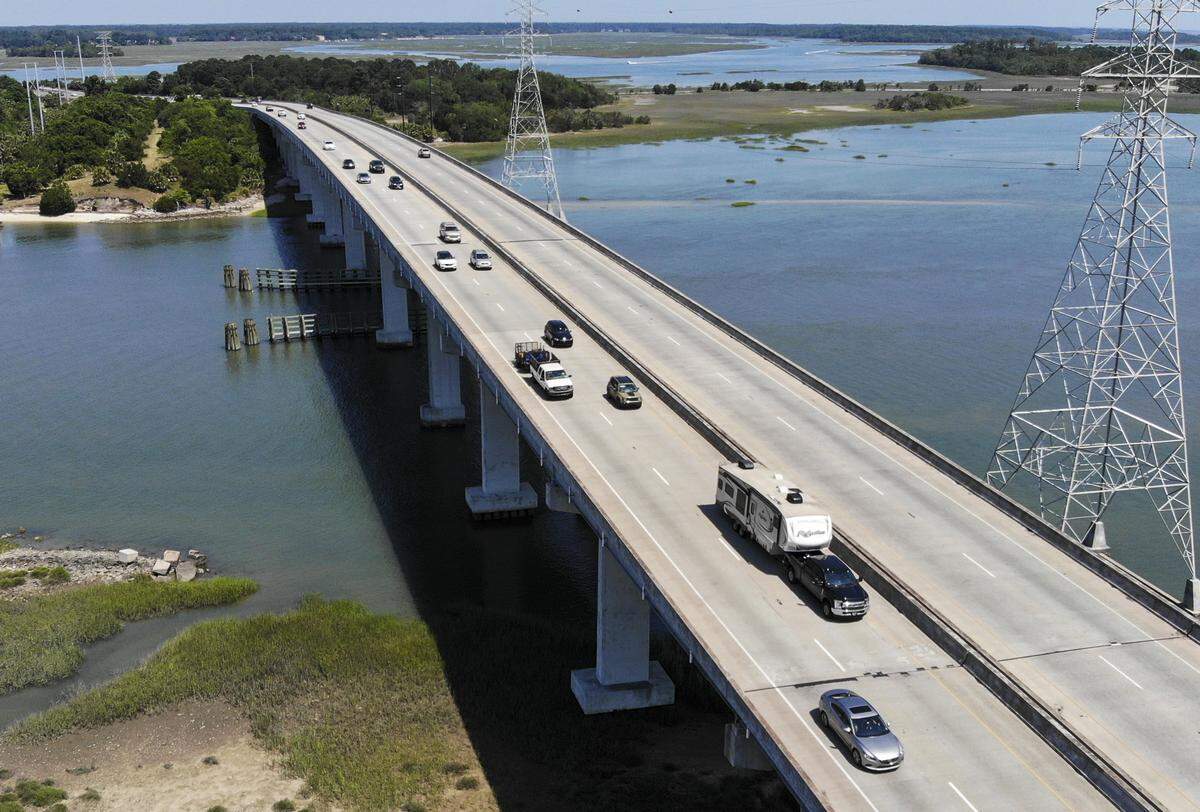
Hilton Head bridge construction project
The S.C. Department of Transportation announced three new possibilities in April for remaking the corridor.
The new alternatives change the alignment of the corridor and involve some clear cutting in the section of U.S. 278 considered the “gateway to the island.”
Plans 4A, 5A and 6A were made public in the DOT’s spring newsletter, and project manager Craig Winn said they were developed from existing plans after utility companies and the public weighed in.
But the new alternatives came as a complete surprise to most. In 2019, DOT announced six options for the corridor and said project managers would spend the next year narrowing them down to one alternative, to be announced in September.
Instead, the number of plans has grown to nine. Here are those alternatives:
ALTERNATIVE 1
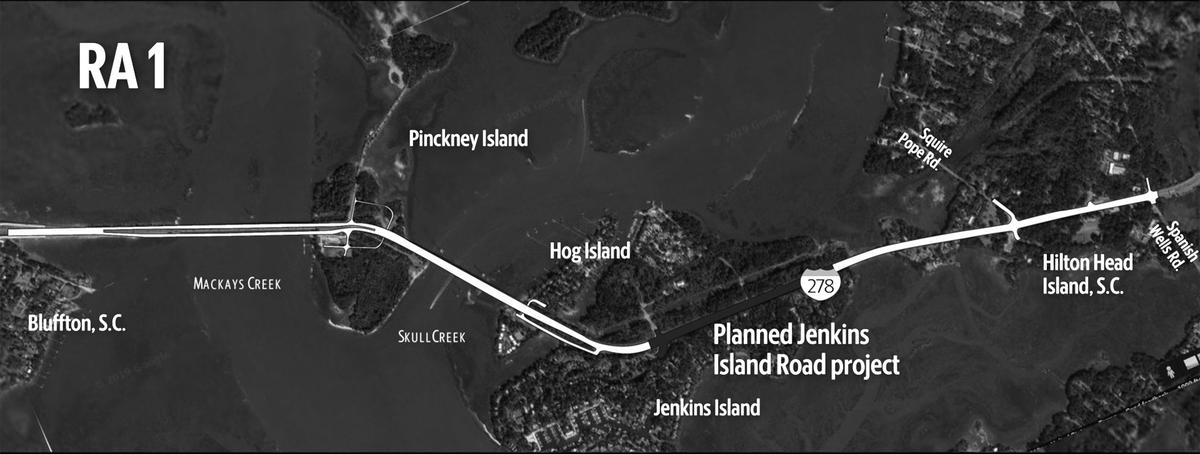
Closest to the original configuration of the bridges to Hilton Head, the plan would build a new bridge over Mackays Creek south of the existing eastbound lanes and demolish the old lanes. The access point to Pinckney Island would incorporate an underpass to allow only right turns from U.S. 278.
ALTERNATIVE 2
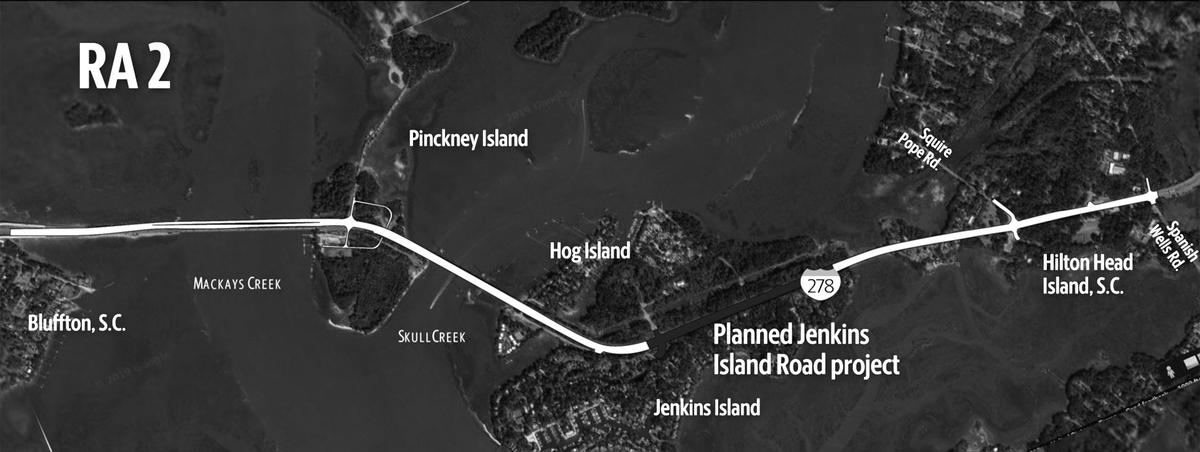
The second alternative would also maintain the configuration of the corridor. A new bridge would be built north of the existing lanes over Mackays Creek, and the eastbound bridge to Pinckney Island would be demolished. The existing westbound lanes would be switched to eastbound from Bluffton, and westbound traffic would use the new bridge.
ALTERNATIVE 3
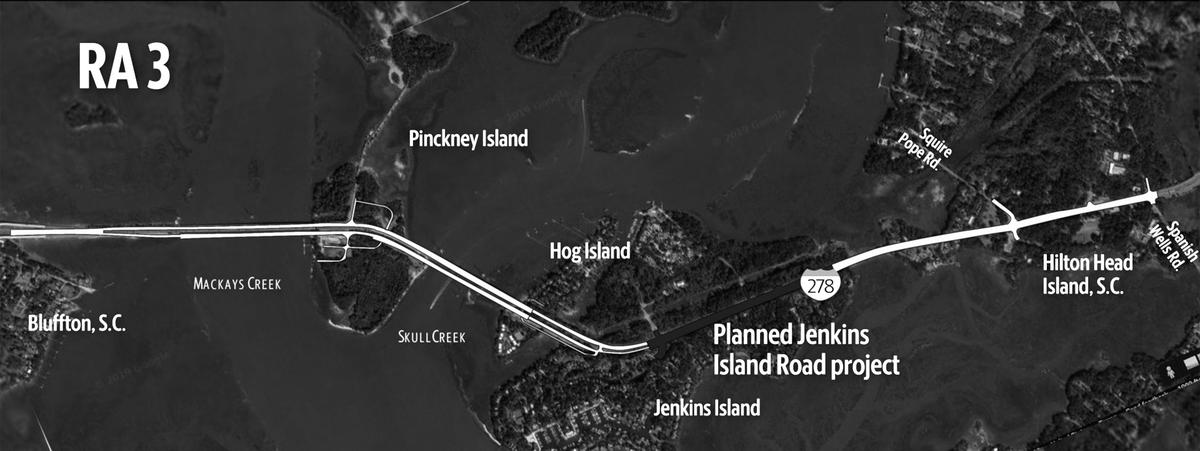
In this plan, there would be two new eastbound bridges: One over Mackays Creek and one over Skull Creek. The existing eastbound Mackays Creek bridge would be demolished, and the existing bridges over Skull Creek would be converted to westbound lanes.
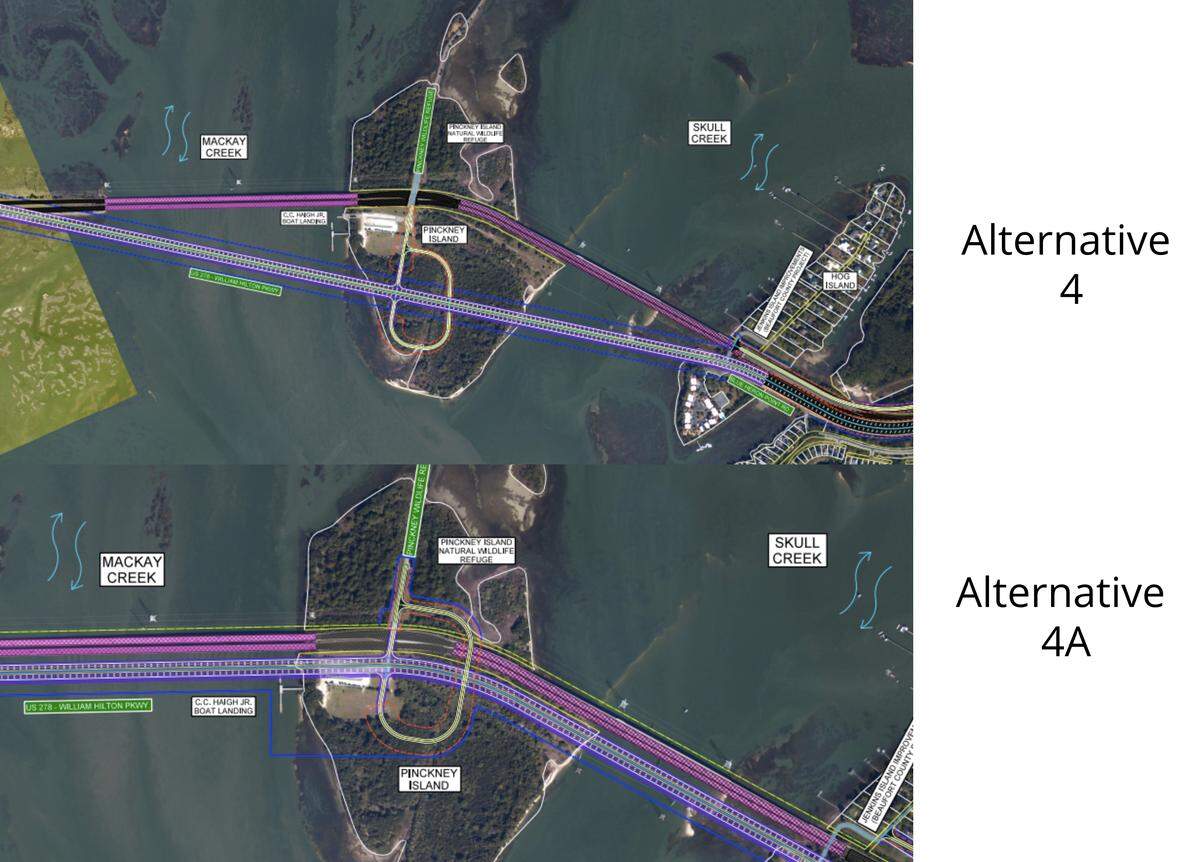
ALTERNATIVE 4
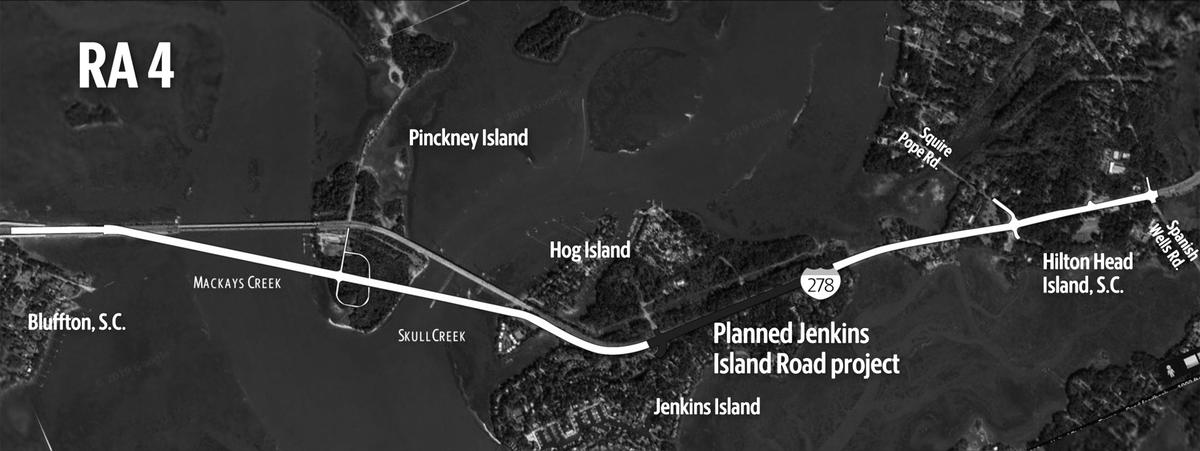
In the fourth alternative, crews would build an entirely new bridge significantly south of the existing roadway.
A new, six-lane bridge would start at the base of the Bluffton flyover and head east, crossing Pinckney Island south of the C.C. Haigh Jr. boat landing, and crossing Skull Creek south of the old bridges. All four existing bridges between Bluffton and Hilton Head Island would be demolished.
ALTERNATIVE 4A
The new plan is the same as alternative 4 but instead builds new bridges over Pinckney Island directly south of the existing bridge footprint instead of further south.
The change comes at the request of wildlife refuge officials who want to disturb as little of the refuge as possible.
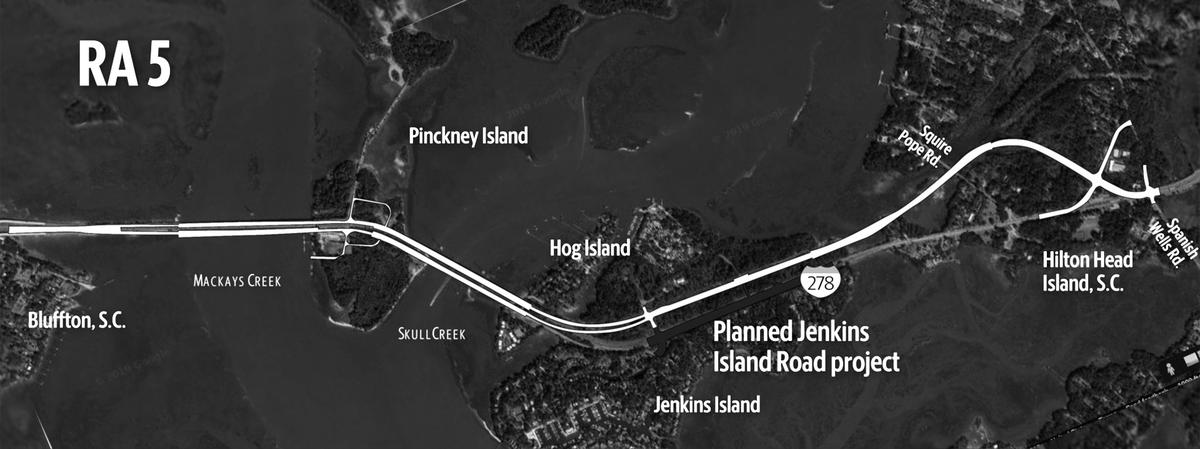
ALTERNATIVE 5
This plan would add two new bridges next to the old ones: One over Mackays Creek and one over Skull Creek. The existing eastbound Mackays Creek bridge would be demolished.
It also includes a completely different approach from Skull Creek to Spanish Wells in which a six-lane bridge from Jenkins Island to the Cross Island Parkway would cross marshland and historic communities north of the highway.
That bridge would cross the marsh north, running to Squire Pope Road, before meeting existing U.S. 278 at Spanish Wells Road.
ALTERNATIVES 5A AND 6A
These new plans are also the same as alternatives 5 and 6, respectively, but the plans change the alignment of the highway once it lands on Jenkins Island. Instead of running 6 lanes underneath the existing power lines, these alternatives put the highway directly next to the clearing.
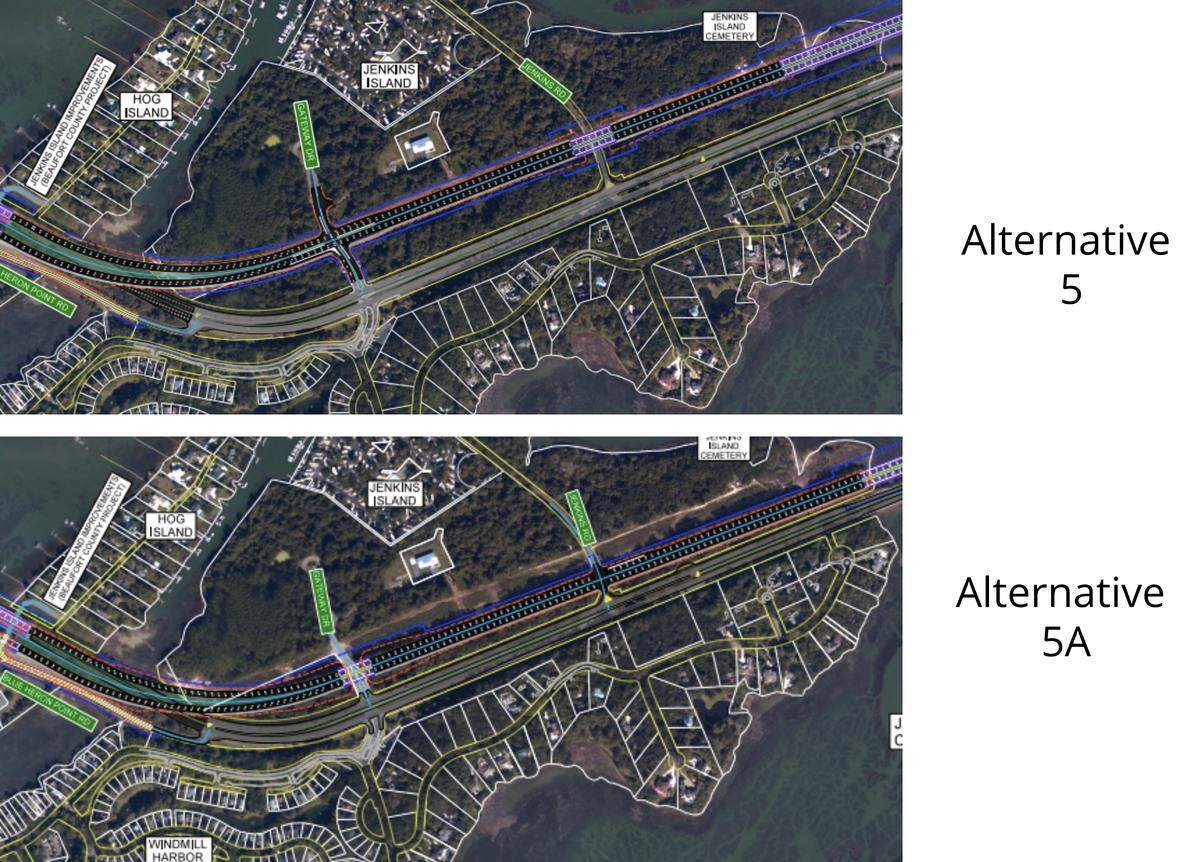
The change is due to push back from Santee Cooper, the power company that owns the lines, Winn said.
Both plans also change the alignment of a second bridge near the Stoney community on Hilton Head. The bridge would still cross marsh land, but would not be aligned with the power lines that cross Squire Pope Road.
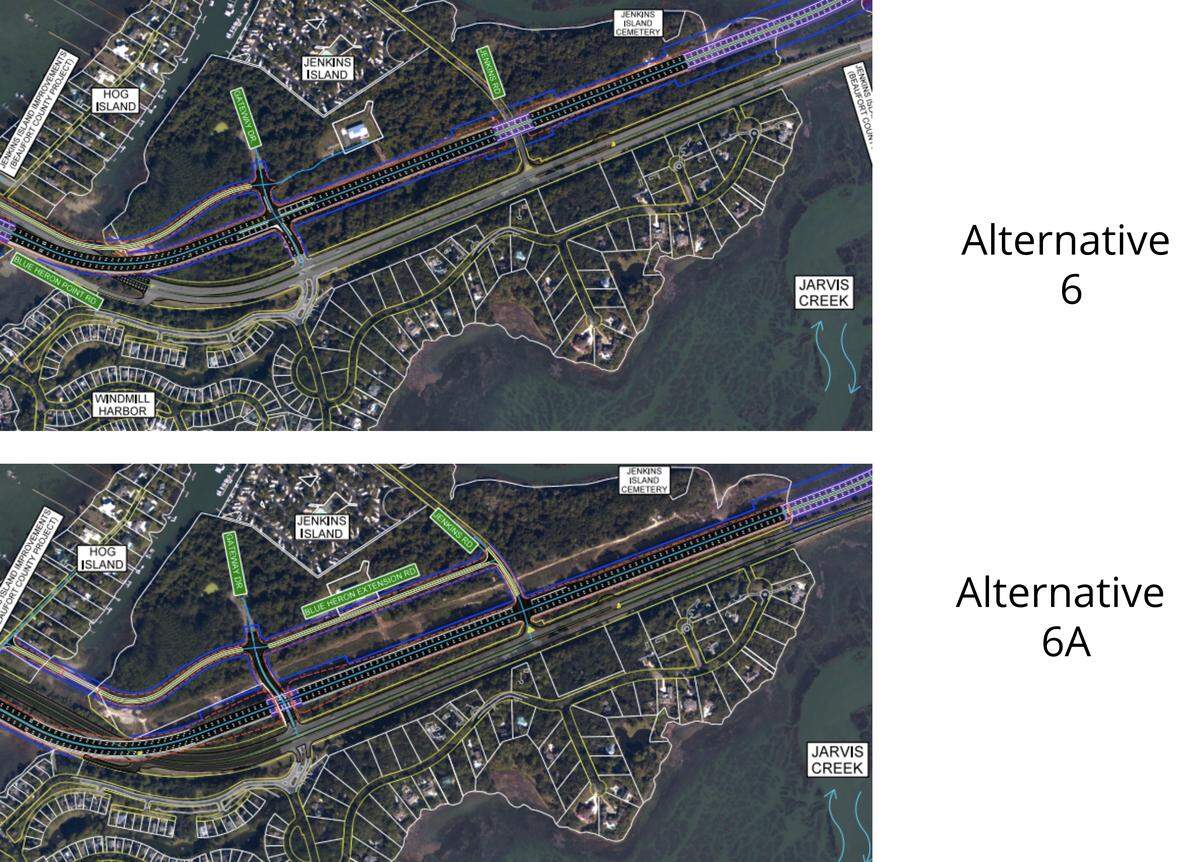
ALTERNATIVE 6
This alternative is a combination of two others by building two new bridges. A new, six-lane bridge would start at the base of the Bluffton flyover and head east, crossing Pinckney Island south of the C.C. Haigh Jr. boat landing, and crossing Skull Creek south of the old bridges.
A second new bridge from Jenkins Island to the Cross Island Parkway would cross marshland and historic communities north of the highway on Hilton Head.
This story was originally published July 7, 2020 at 12:04 PM.