
Odds are, another hurricane will strike Beaufort County
God's nook. A catcher's mitt. The South Carolina triangle.
Local residents use analogies to explain how the shape of the S.C. coast has protected Beaufort County from a direct hurricane hit for the last 56 years.
It's a topographical twist of luck, they say. While the Charleston area and the state of North Carolina jut farther out into the Atlantic Ocean -- and into the typical paths of storms -- Beaufort County is tucked in. Additionally, weather systems tend to push hurricanes to the Gulf of Mexico, lessening the likelihood of a major storm hit the farther north you travel along the Atlantic coast.
"The odds (of a hurricane hit) here are extremely low," said Beaufort resident Daryl Ferguson, who has spent the last several years researching hurricanes and contends some insurance assessors and disaster planners overstate the risk. His work led to a 2013 state law to help keep insurance rates in check. "It should be seen as a real advantage to Beaufort County to attract tourists and get lower insurance rates."
But some hurricane experts say there's another big reason for the quiet spell: sheer luck.
And as Beaufort County fills with new residents who have never lived along the coast before, they fear too many residents don't realize that another storm is coming.
"There is no scientific reason Beaufort County won't get hit. It has happened before and it will happen again" said Ron Morales, a meteorologist with the National Weather Service in Charleston. "It's just a matter of when."
 This image from a NOAA website for researching historic hurricane tracks shows the tracks of all known hurricanes to pass through Beaufort County. It excludes tropical storms and depressions, which have been much more numerous.
Low risk doesn't mean no risk
The notion that Beaufort County's hurricane risk is relatively low has been validated by a half century of near misses. Hurricanes Floyd, Hugo and most recently, Charley, brought wind gusts and only minor property damage to Beaufort and Hilton Head Island.
So while history proves the county is relatively safe from storms, the sense of protection is easily overstated, say hurricane researchers.
"Storms that typically come this way are more likely to hit the pieces of the coast that stick out more," Morales said. "But it doesn't take much to hit us. All it needs is a slight nudge in the track and you get a direct hit."
It is also true that the risk of a hurricane hitting Hilton Head Island is less than in places in the gulf like Florida and Louisiana, according to historical data from the National Weather Service.
Hurricanes from the past 164 years indicate that a major hurricane will pass within 50 miles of Hilton Head Island once every 34 years on average, compared with an average of every 22 years in Charleston and every 23 years in New Orleans.
In any given year, there is a predicted 12.66 percent chance that a hurricane will hit Beaufort County.
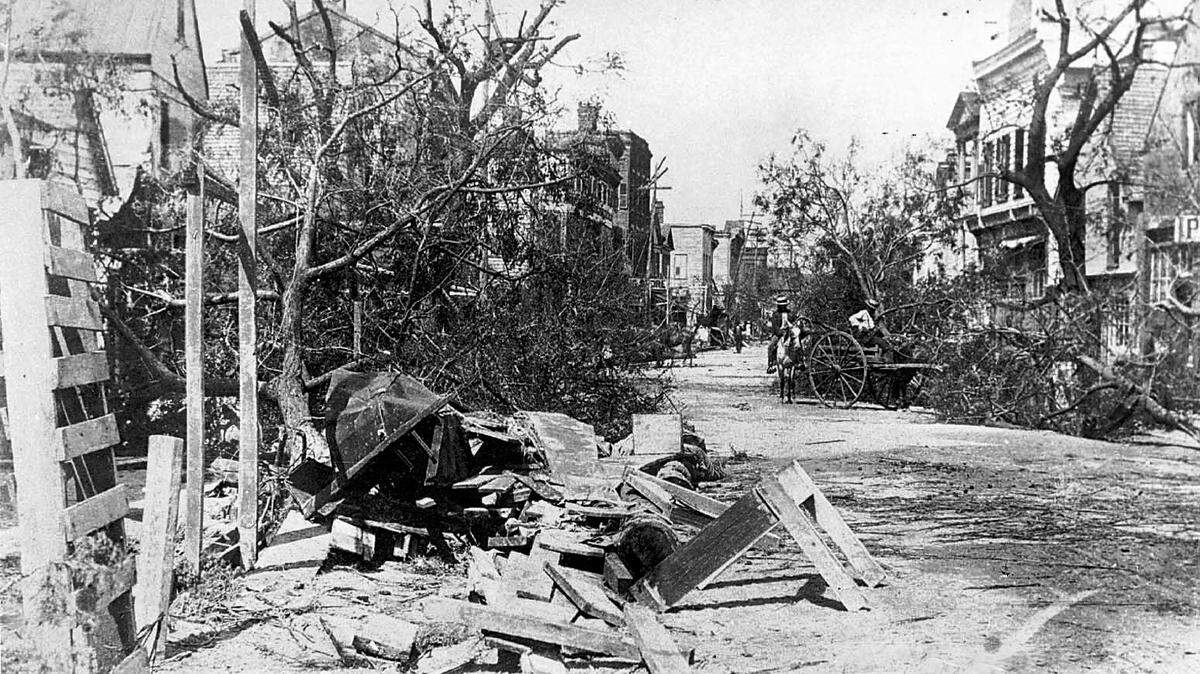
And when a storm hits, it will likely be devastating. Another Category 3 storm -- as happened on Aug. 27, 1893 -- would bring a storm surge that could wipe out more than 75 percent of property with severe damage in Beaufort, Hilton Head Island and the sea islands, according to Beaufort County estimates.
"You have to keep in mind that hurricanes are low probability, high impact," Morales said. "I worry that people hear 'low probability' and think 'no probability.'"
Short memories
Thursday marks the 122nd anniversary of a killer storm that made landfall within 15 miles of Beaufort. Still considered one of the deadliest storms in North American history, between 1,000 and 2,000 people were killed, most of them freed slaves on St. Helena Island and other sea islands.
For those left behind, crops, homes and livelihoods were left in ruins.
"My grandfather and my great uncle remembered the 1893 storm," said Paul Sommerville, a longtime Beaufort resident and Beaufort County Council chairman. "My uncle was out on a phosphate barge that started deteriorating in the storm. They decided to ride it out and that was, of course, a mistake of biblical proportions. They took shelter in a praise house that was blown away. He was lucky to have survived." For 60 years after the storm, local residents held a vigil every August, praying that the area would be spared from more devastation, according to "The Great Sea Island Storm of 1893," a book written by Beaufort County residents Fran and William Marscher.
Those vigils are no longer held.
Today, many residents have never heard of the storm from just a few generations ago.
Chris Emrich, a research professor at South Carolina University's Hazards & Vulnerability Research Institute, suspects that Beaufort County's fading collective memory explains today's downplaying of hurricane risk.
"We're living in places that are risky, especially in super low-lying areas like Beaufort County," Emrich said. "But I don't see a widespread culture of preparedness there."
A shrinking number of locals have lived through a storm. Beaufort County was last hit 56 years ago on Saturday when Hurricane Gracie made landfall.
"Memories are short," Emrich said. "Newcomers go off their experience and what they're told. I worry no one tells them they're moving into harm's way."
Follow reporter Erin Heffernan at twitter.com.IPBG_erinh.
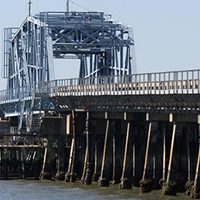
Beaufort County bridges that must be used in future hurricane evacuations are old and may not be up to the task. | READ
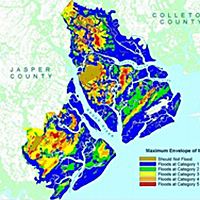
Beaufort County is so low-lying that a minor hurricane would cause major damage to property and prosperity. Flood plains make up 61 percent, or more 224,209 acres, of Beaufort County's land area. | READ

Almost three times the number of people live in Beaufort County today than in the 1970s. Yet the number of roadway miles used in an evacuation have mostly stayed the same. | READ
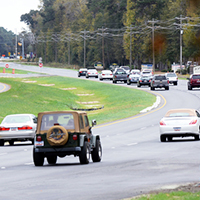
The biggest point of congestion in a Beaufort County evacuation now has planned lane reversals -- at least in some parts. | READ
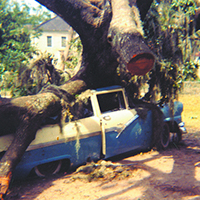
Some hurricane experts say there's a big reason for Beaufort County's quiet spell when it comes to hurricane hits: sheer luck. | READ

A Beaufort woman and her family were planning on evacuating to Augusta. Hear how they ended up in Tennessee ... 18 hours later. | READ

NOAA's interactive tool lets you find out for each category of storm. | READ
This story was originally published August 20, 2015 at 2:16 PM with the headline "Odds are, another hurricane will strike Beaufort County."