Fines. Fees. Jail. Black drivers at high risk as license suspensions triple over 10 years
READ MORE
Fined Out
Fined Out tells the story of Trevor Heyward, a Black man in South Carolina who would become trapped in a cycle of poverty for 21 years after a traffic stop in 1999.
But it’s not just in South Carolina – it’s likely happening in your community, too.
Across the United States, 11 million people have suspended drivers licenses simply because they can’t pay their traffic tickets. When they’re driving under suspension, they’re fined out of working, spending time with their families and leading productive and happy lives. Here’s one man’s story and what advocates around the country are doing to stop it from happening to another person.
Expand All

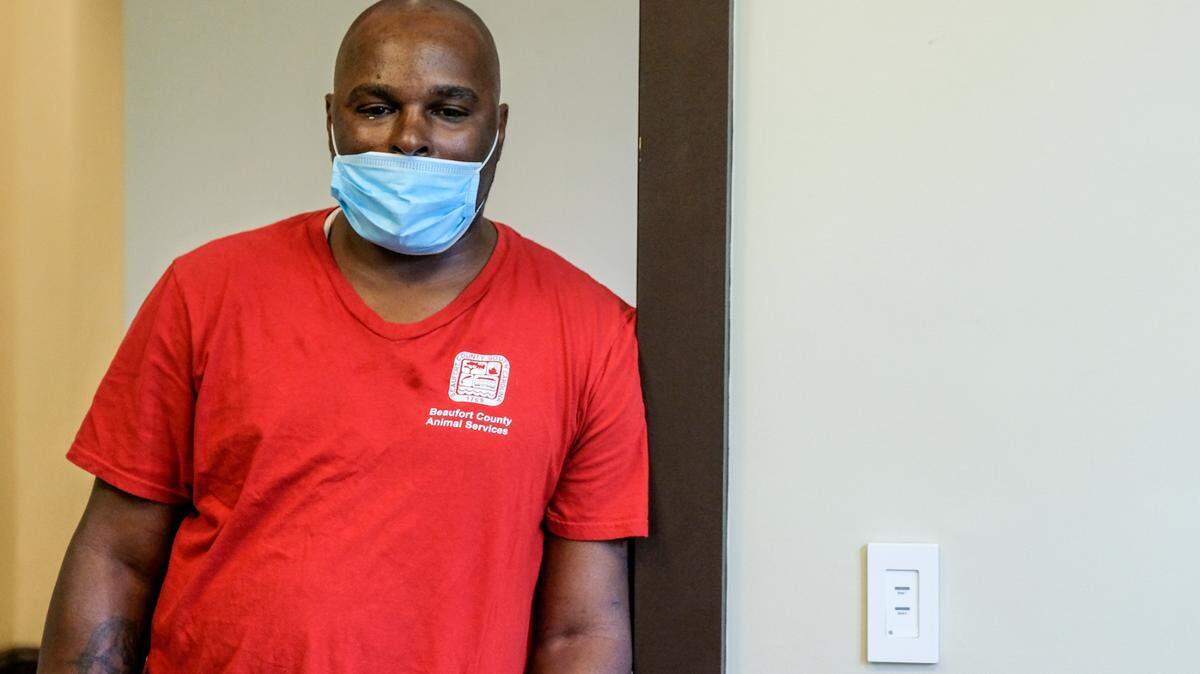
A traffic stop 21 years ago took an SC man’s driver’s license. His life went with it
Fines. Fees. Jail. Black drivers at high risk as license suspensions triple over 10 years
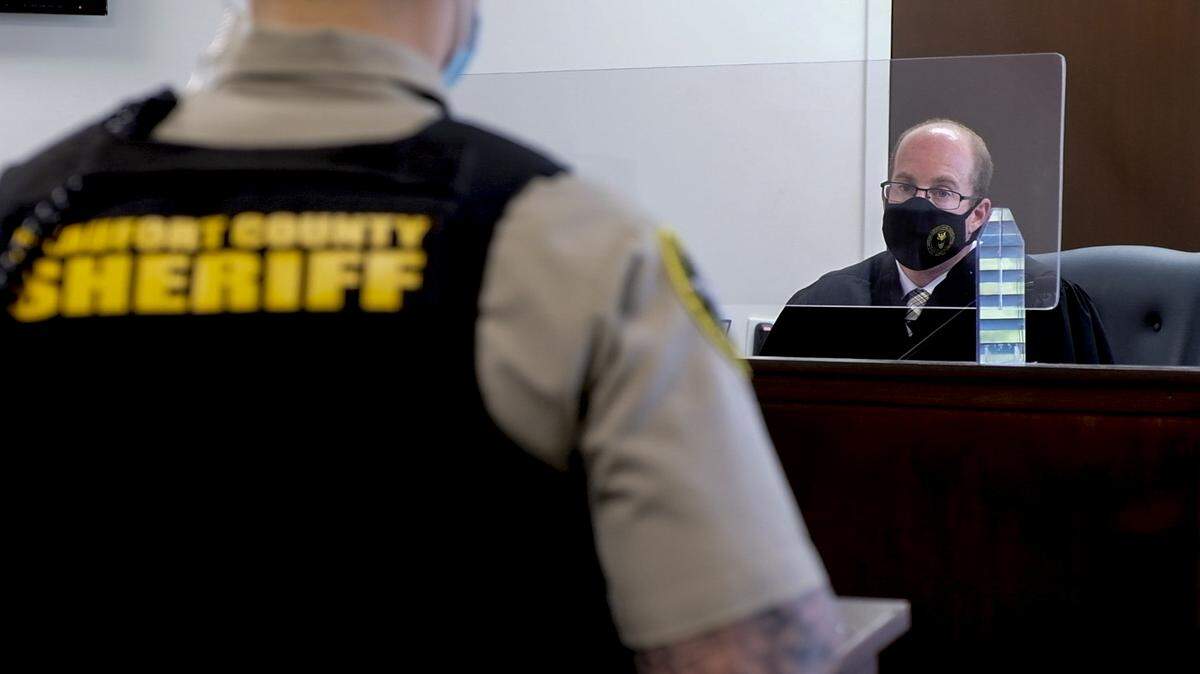
Will SC man get his license back after 21 years? An inside look at a day in traffic court

Watch: A behind-the-scenes look on the vicious cycle of SC suspended licenses
Lea este artículo en español.
The number of Beaufort County drivers losing their licenses is surging, having reached more than 5,000 per year the past two years, and it has little to do with drunken or dangerous driving.
Instead, the surge is being driven by money, or more specifically, the failure to pay traffic tickets. One unpaid ticket can land a driver in a cycle of fines, fees and penalties that follows the person for years. It particularly affects people of color and the poor, data shows.
The numbers are startling.
In 2010, 1,368 drivers in the county lost their licenses due to unpaid traffic tickets. In 2019, that number reached 5,708. Last year, 5,200 licenses were suspended over unpaid fines. Even taking into account a rise in population, the numbers are hard to dismiss.
The result is a system where people who can afford to pay tickets can move forward with their lives, while people who cannot find themselves in a legal quicksand they struggle to escape.
Priya Sarathy Jones, national policy and campaigns director at the Fines and Fees Justice Center, said the license policy is wrong-headed.
“Governments think if we suspend these drivers licenses, people will pay them back,” she said. “But who is likely to have unpaid debts? People who can’t afford to pay them.”
Her work highlights how suspended licenses perpetuate poverty.
“There are consequences that are lingering all the time,” she said. “People struggling with basic things, add an additional layer on top of citations with fines and fees. ... Almost everyone continues to drive on a suspended license. The minute you get in that car and drive to the grocery store, or job, or medical care, you get pulled over, and now you’ve committed a crime.”
These policies don’t just affect people with suspended licenses. They affect taxpayers.
Driving under suspension is among the top five adjudicated charges in every state and county where the center has data.
“Taxpayers are going to continue to pay more to have all these systems working at such scale that don’t really benefit what we want the system to do,” Sarathy Jones said.
A dilemma for SC police
When officers pull someone over, check the driver’s registration and see a suspended license, they find themselves in a bind.
They have to decide whether to take the person they pulled over to jail or to ticket them. They can call a tow truck — or allow a family member to retrieve the car.
“If a person is not authorized to drive a motor vehicle, ... allowing them to drive off at that point could put the public in danger,” said Maj. Bob Bromage, Beaufort County Sheriff’s spokesperson. “There’s a reason their license is suspended.”
Deputies with the Sheriff’s Office filed 108 charges of driving on a suspended license in 2014. The year after, there were 507.
The numbers continued to rise: 780 in 2018, 864 in 2020.
Yes, there are more drivers on the road now than in 2014.
Between 2014 and 2019, the county has been a hotbed of growth and development, increasing in population by around 17,000 residents to 192,122, according to recent census data.
However, the rise in suspensions and enforcement of suspensions has been disproportionate. Thousands more drivers were suspended for unpaid traffic tickets. They kept driving and were caught by police at increased rates.
In Beaufort County, unpaid ticket suspensions were at 1,300 in 2010, jumped to around 4,000 in 2014 and hit more than 5,000 last year.
Only a small sliver — about 8% — of the drivers being pulled over by deputies are people whose license was suspended for a DUI.
Jim Brown, a criminal defense attorney in Beaufort, said officers have a practical concern when it comes to public safety, though the costs of arresting every driver with a suspended license in the county can add up.
“It certainly takes less effort to get a tow truck and take a car than to take a person through the arrest process,” he said.
Reporters for the Island Packet and Beaufort Gazette sat through two days of traffic court in Bluffton and Beaufort in March and April.
Several driving on a suspended license cases came up, but none reached a conviction or a plea.
A judge gave defendants ample opportunities to handle their suspensions outside of court, with the understanding their charge could be dropped later.
Several other defendants came to court, showed deputies that they’d paid their fines or obtained insurance they didn’t have before, and had the charges dropped.
During those two days, in every instance where a driving on a suspended license came up, the deputies either dropped the charge or agreed with the judge to postpone a decision.
“More often than not, the officers dismiss the charges,” said David Bartholomew, an assistant public defender for the 14th Circuit who handles dozens of suspension cases each year.
Problem solved, right?
The charges get dismissed frequently because the alternative — jail and fines — is much worse.
For example, if a person gets a traffic ticket and does not pay, the system suspends the license. If they’re caught driving, they’re then required to appear in court.
But from there, the fines and fees that got them into trouble just compound.
In the event they plead guilty, they face the following:
They owe $647.50, which includes the new fine and court fees.
They have to pay back the original traffic tickets, which can range from $76 for speeding to $440 for driving an uninsured car.
They have to wait out the rest of their 30-day suspension and refrain from driving, or hope they don’t get caught driving again.
They have to pay at least $100 as part of a reinstatement fee to the DMV to get their license back.
They face at least another 30-day suspension after paying the fee.
The single ticket, in effect, could cost one person between $823 and $1,187, in addition to 60 days without a license.
Someone with a minimum-wage job would have to work between 113 and 163 hours to pay those costs off.
“The punishments get worse and worse,” Bartholomew said.
From that point, if the person is again caught driving with a suspended license, they face $1,270 in Beaufort County court fines and fees or 60 days in jail for a second offense.
For a third offense, the person could face $2,100 in fines and fees, in addition to detention in their own home for up to 90 days.
Bartholomew said his clients have been confused about how the process works.
“A good portion of my clients don’t even have knowledge that their license was suspended due to changing homes or moving,” he said. “They may not receive notice that their license was suspended before they’re pulled over.”
The DMV is required to mail a notice when a license is suspended because of unpaid fees.
Adding to the confusion, the defendant has to pay Beaufort County courts and the DMV separately. The courts have no power over whether a person gets their license back.
The punishments “weigh on me a little bit because I want to help,” Bartholomew said. “Fines sometimes can be the difference between being evicted and getting into trouble.”
Black drivers face more tickets, punishment
Beaufort resident Iteia Green wanted to be out of jail before her kids got home from school.
She was arrested just before 3 a.m. on a Monday and stayed in jail the rest of the morning. A friend came to watch her two kids and saw them off to school, but it was crucial she be home by the afternoon.
“I don’t want them to think going to jail is normal,” said Green, 27. “I want them to know the difference between right and wrong.”
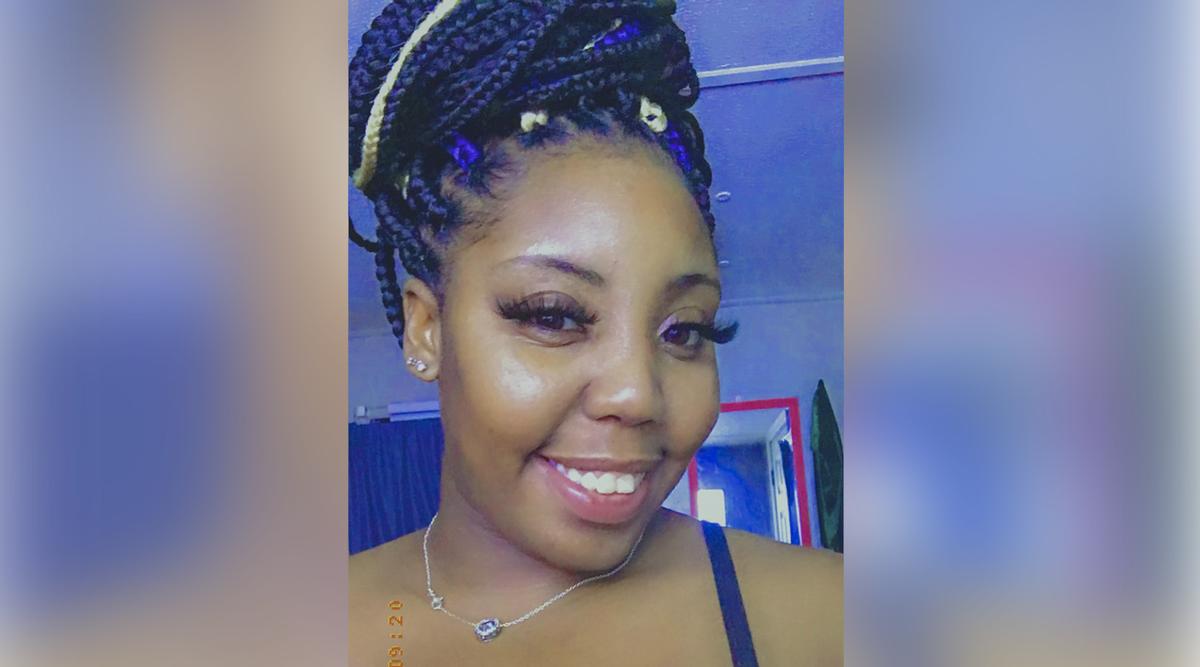
Green said she had just had some work done on her car and was taking it on its first test drive with her friend after her kids went to bed on March 28. When they saw police following her, Green said she turned off her headlights and pulled into a nearby driveway to let them pass.
Instead, she was arrested.
Green’s license was suspended because she’d failed to pay previous traffic tickets for driving without carrying her license, so she was charged with driving under suspension, as well as license plate and headlight violations.
Green was booked into the Beaufort County Detention Center. Her friend went back to Green’s house to stay with her sleeping children.
The Island Packet and Beaufort Gazette newspapers collected data for a 30-day period between March and April from the Beaufort County jail log to track trends in who was being arrested for driving under suspension and when those arrests were occurring.
The data showed 47 people were arrested and charged with either driving with a suspended license (DUS) or driving without a license, an average of more than one per day.
Forty of those 47 were people of color — 25 Black people and 15 Hispanic people.
In a county where 17% of the population is Black and 11% of the population is Hispanic, according to the most recent census counts, their representation in those arrests is disproportionate.
Green, a Black woman, was also arrested between midnight and 6 a.m., one of most common times to be charged with DUS.
More than one-third of those arrested between March 13 and April 13 were pulled over during those hours. It’s an active time for late-night partiers, but it’s also when workers are coming home from second- and third-shift jobs.
The expenses for Green, who was arrested at 3:55 a.m., have only mounted.
“Right now I’m looking at $4,000 just to pay off everything, and that’s just traffic tickets,” she said. “A lot of people out here try to do their best and do the right thing, but you can’t do anything with so many tickets.”
Green made it home to be with her kids the day after her arrest, but now she’s trying to make a plan for the next several months’ expenses.
She used to work at Fedex in Savannah but was laid off during the pandemic.
She has her IRS refund and the latest stimulus payment to help cover her rent, but getting a job means taking a risk just to get there.
“They don’t make it easy for us out here,” she said. “You don’t have a job, you don’t have any help. They want us to be stuck.”
What police department trends show
Black drivers make up a majority of driving-under-suspension charges for two Beaufort County police departments, according to data obtained under the Freedom of Information Act.
Of the four county law enforcement agencies asked to produce DUS statistics by race, only Bluffton and Port Royal police departments were able to do so.
Both agencies patrol major thoroughfares, like May River Road and Ribaut Road, where traffic stops occur.
Since 2015, Black drivers made up 45% of DUS charges in Bluffton, compared to 40% of white drivers and 14% of Hispanic drivers.
In Port Royal, the majority of DUS charges each year since 2010 were Black drivers as well, the data shows.
Though not all drivers charged with DUS are residents of Port Royal or Bluffton and may just be passing through, it is worth noting the discrepancy: Black residents make up only 18% of the population of Port Royal and 7% of the population in Bluffton.
SC could enact legislative change
Thirty-four states suspend, revoke or refuse to renew driver’s licenses due to unpaid fines, according to the Fines and Fees Justice Center, which advocates on behalf of drivers with suspended licenses for failing to pay.
Since 2017, 14 states — Utah, Arizona, Montana, Texas, Virginia, Mississippi, California, Idaho, Maine, New York, Michigan, Illinois, Oregon and Hawaii — have enacted legislative reforms to change debt-based suspension.
South Carolina has made no effort to change its practice. A lawsuit filed by the American Civil Liberties Union against the S.C. Department of Motor Vehicles in 2019 revealed that more than 190,000 South Carolina residents had their drivers’ licenses suspended because of unpaid traffic tickets.
In 2017, the United Nations’ special rapporteur on extreme poverty, Philip Alston, visited the U.S. and issued a damning report on the country’s use of punitive justice, imposing traffic tickets that keep people in poverty.
“So-called fines and fees are piled up so that low level infractions become immensely burdensome, a process that affects only the poorest members of society, who pay the vast majority of such penalties,” he wrote.
He also addressed suspension of drivers’ licenses for non-driving related offenses such as failing to pay fines. “This is a perfect way to ensure that the poor, living in communities that have steadfastly refused to invest in serious public transport systems, are unable to earn a living that might have helped to pay the outstanding debt,” he wrote.
Alston said there are two paths once someone’s license is suspended: Extreme poverty or driving illegally and risking more arrests.
The root of the problem in the U.S., Alston said, is the criminalization of poverty.
“It is difficult to imagine a more self-defeating strategy. Federal, state, county and city governments incur vast costs in running jails and prisons,” Alston wrote. “The criminal records attached to the poor through imprisonment make it even harder for them to find jobs, housing, stability and self-sufficiency.”
“Families are destroyed, children are left parentless and the burden on governments mounts,” he continued. “But because little is done to address the underlying causes of the original problem, it continues to fester.”
Click here to read the final installment of the Fined Out series.
MORE FROM THIS SERIES

This story was originally published April 29, 2021 at 9:30 AM.