Should Hilton Head increase taxes to fund workforce housing? You may be voting on it
Hilton Head Island taxpayers may be asked to increase their taxes to pay for workforce housing.
For the second time in two years, Mayor John McCann is pushing plans for a referendum to increase the town’s budget. This time, he’d like money raised to go into a workforce housing program to help stimulate development that would house the island’s massive workforce.
McCann first pitched the idea Monday afternoon at a Town Council workshop on affordable housing. It was the first time the mayor had talked in public about using public dollars for development and subsidizing workforce housing.
But those dollars wouldn’t be coming from the town’s existing $75 million annual budget.
Instead, McCann said he’d like to put a question in front of voters in November asking them to decide whether they’d like to be taxed more to fund workforce housing efforts on the island.
“There should be a fund where that money only goes in towards workforce housing — whether it be trailers or multistory buildings or rehabbing old commercial space,” McCann said. “I’d hate to do anything where we don’t have the proper funds for a lot of years after we all leave.”
He offered no details about how much money he’d like to raise or its timeline. Instead, he said he’d put the issue on the May 5 Town Council meeting agenda. Then he attempted to quickly adjourn the meeting with little opportunity for input from other council members. Ward 3 representative David Ames objected, after which Ward 6 representative Glenn Stanford asked Town Manager Marc Orlando how Bluffton had tackled the issue.
McCann’s unexpected move comes 16 months after his first attempt to get a tax increase on the ballot. In December 2019, McCann and then-Town Manager Steve Riley revealed a $65 million parks and arts referendum they wanted on the ballot just six months later. The effort fizzled after the speed turned off voters and questions arose about how the mayor and Riley chose the organizations that stood to benefit from the funds.
From the beginning, McCann, elected in 2018, has rejected the idea of using public money toward incentives for workforce housing.
“We shouldn’t be using our money or our land,” he told The Island Packet just six months into his term.
And as recently as February, McCann has downplayed the importance of workforce housing, instead favoring transportation solutions such as increasing the capacity of the Hilton Head bridges.
Still, McCann’s move toward a referendum represents two distinct issues: Hilton Head continues to face a workforce housing and staffing crisis, and the town, which was incorporated as a limited services government in 1983, continually looks to increase taxes to fund its initiatives.
If the town were to agree to the referendum, only the minority of the workforce who live on the island would be able to vote.
Council divisions
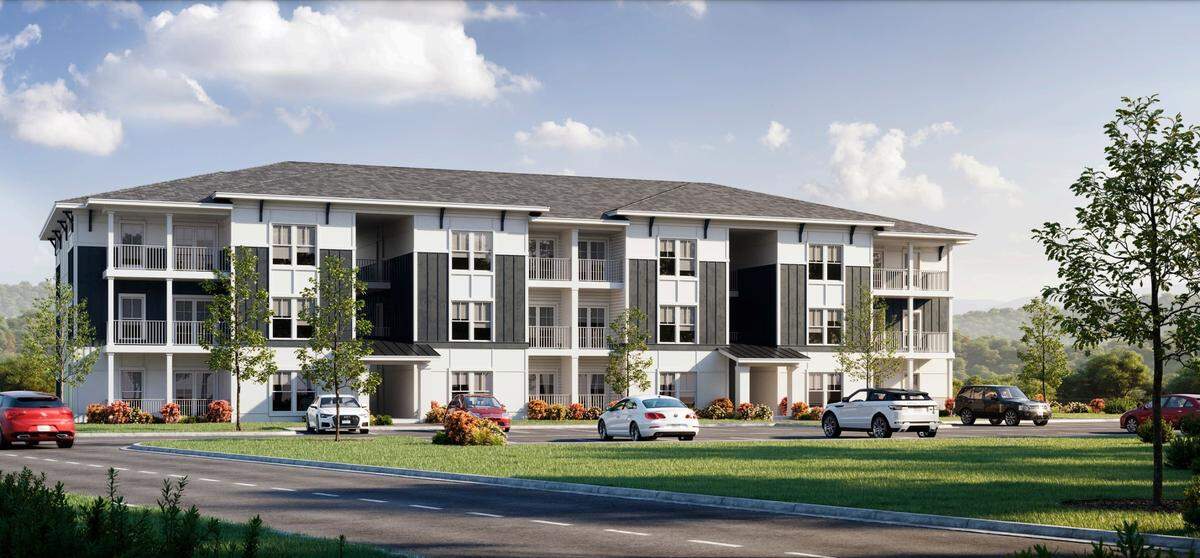
In November, the town voted to create a workforce housing program and allow the conversion of empty commercial property to market-rate or workforce housing units. Nearly 30% of the island’s commercial buildings are idle.
In February, the council approved a second element of the program, a bonus density proposal that allows developers to double the number of units they can offer in a given space under specific conditions as long as the development includes workforce housing.
Both programs give developers a profit motive to create affordable housing. Yet several council members, including Ward 1 representative Alex Brown and Ward 3 representative David Ames, have expressed frustration that the programs do not go far enough to address workforce housing on the island.
At the meeting Monday, Deputy Director of Community Development Jennifer Ray announced that no developers had applied for either workforce housing program, though the department had received several inquiries. Brown and Ames pointed to this fact as evidence that the program needed to be expanded, while other members of council suggested workforce housing on Hilton Head Island might not be feasible after all.
Ward 5 representative Tom Lennox said the key to solving Hilton Head’s workforce housing crisis might be “on the mainland,” citing the high cost of land on the island.
Ward 6 representative Glenn Stanford suggested that developers may not be aware of the programs Hilton Head is offering, and said the town should do a better job advertising them.
Hilton Head’s workforce housing initiative has been whittled down significantly since the town set out to address the crisis several years ago.
Only 160 acres on the island are eligible for the density bonus, as the proposal was reduced by 91% after council members expressed concerns in the fall about its reach. Other proposals, including the use of town-owned land for workforce housing, have simply failed to take flight due to a lack of consensus from council.
Minutes before McCann floated the referendum, Ames called for council members to overcome their divisions and issue a public statement acknowledging Hilton Head’s workforce housing crisis.
“That is at least a first step for the public to say, ‘Ah, the leadership is cognizant of the challenge and is now going to do something about it,’” Ames said. “Well, what are we going to do about it?”
‘A people issue’
Island leaders’ focus on workforce housing development began in earnest in 2017, after the town learned nearly 16,000 people travel from the mainland to work each day.
They invested $46,000 on a workforce housing study the following year that found only 8.6% of the units for rent on the island were affordable for an employee making between $20,000 and $40,000 per year.
Since the study released its findings in April 2019, council members have pared down the recommendations. Some say the council is prioritizing the recommendations to tackle depending on their timeliness, while others say the paring is a commitment to inaction on the development of any workforce housing at all.
Meanwhile, the island’s workforce housing crisis and staffing shortages have grown with the coronavirus pandemic, when the hospitality industry all but shut down for six weeks. The effects linger.
For Brown, a seventh-generation Native Islander, the issue is personal. He reminded council members that workforce housing is not just a worker issue, but “a people issue.”
“If I had not had the blessing of my family owning land on Hilton Head, and me myself being able to place a mobile home on a portion of that inherited land, I would not have been able to afford to live on Hilton Head when I was first starting out,” he said.
Ames agreed.
“Community is built by the people who live in it,” Ames said. “And if we are saying that we will provide housing off-island, then we are robbing this community of the very vitality it requires to move forward.”