What happens to Hilton Head neighborhoods when 10-bedroom rentals go up? It’s ‘disturbing’
A single-family home once stood on Bradley Circle on Hilton Head Island.
It was understated, like many of the homes in the area.
A long staircase led to its front door and a surprisingly large side yard. From the street, you could see the beach’s dunes rising toward the sky.
Today, the same plot of land contains 30 bedrooms and 36 bathrooms.
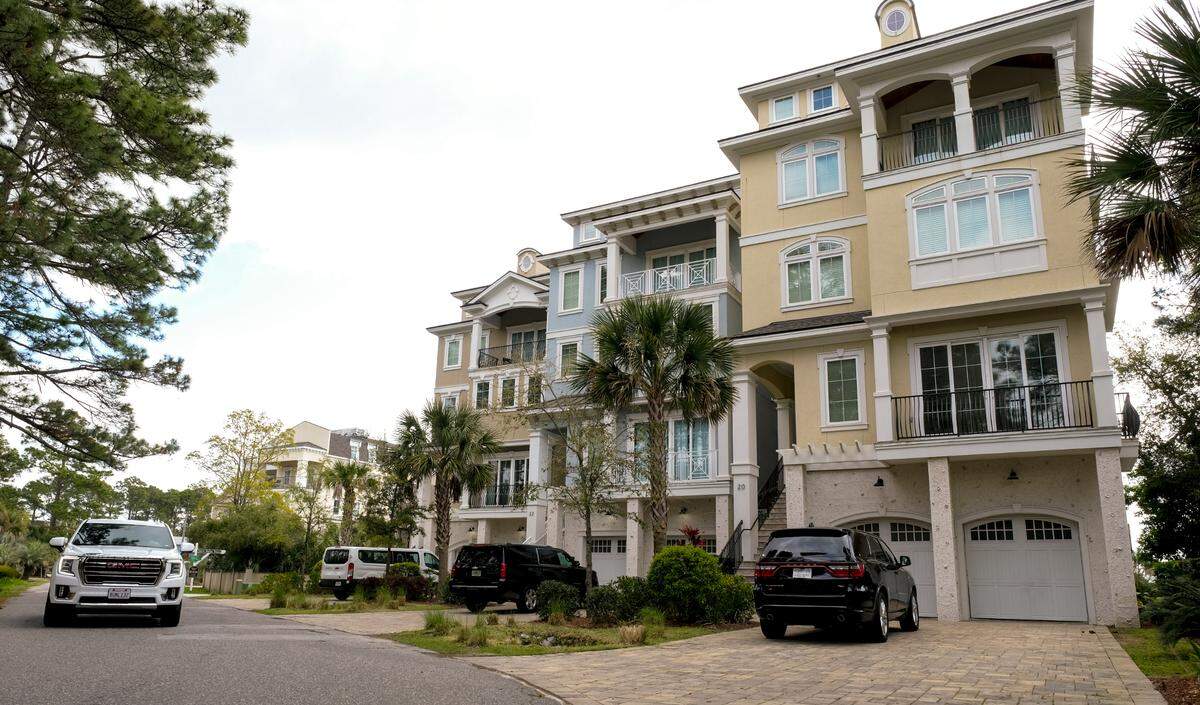
The property, divided among three homes, lost its view of the dunes. In its place are homes that neighbors not-so-affectionately call “the towers.” Ads for the homes boast space for 24 people in 10 bedrooms.
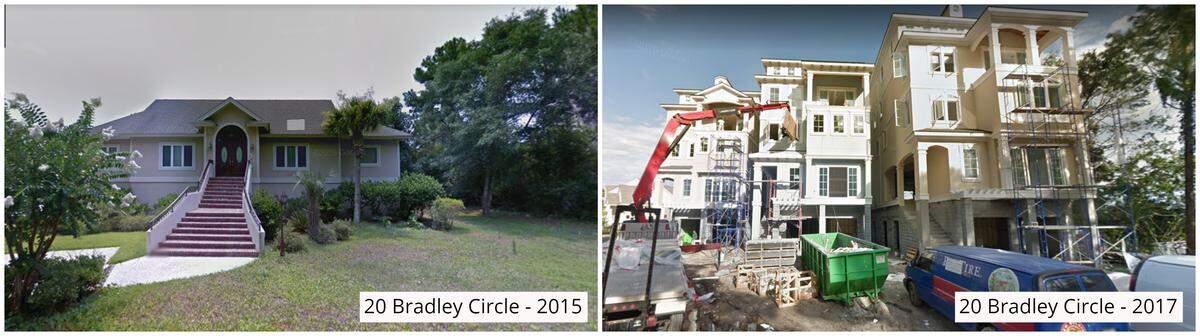
“It taxes our quality of life as a whole, it taxes our fire and rescue, and it taxes our beaches and resources,” resident and Ward 4 Town Council member Tamara Becker said of the development. “It’s not adding to the overall quality of the single-family residential neighborhoods that you thought you moved into. It’s more like living in the middle of a commercial zone.”
What’s happened on Bradley Circle, where more than half the homes are now high-volume, short-term rentals, has happened in gated and non-gated communities across Hilton Head Island. Responding to market pressure to build large homes for entire families to rent, developers are tearing out buildings from property line to property line and replacing once-modest beach homes with what island residents have come to call “McMansions.”
In the process, community feel and culture dissipate and once-residential areas become quasi-commercial districts with a near-steady stream of cars coming into and out of rental properties. The residents who are left question what they can do to save their neighborhoods and preserve their views of the beach.
From residential to commercial
On North Forest Beach, stilted and ranch-style homes used to dot the beachfront along tree-lined roads. On a walk through, you can still spot the original homes: A-frames and small, square-shaped stucco ones with key locks instead of keypads.
Over the past decade, Dune Lane, which runs parallel to the beach, has been built up with dozens of several-bedroom homes, each worth between $1 million and $5 million and rented out throughout of the year.
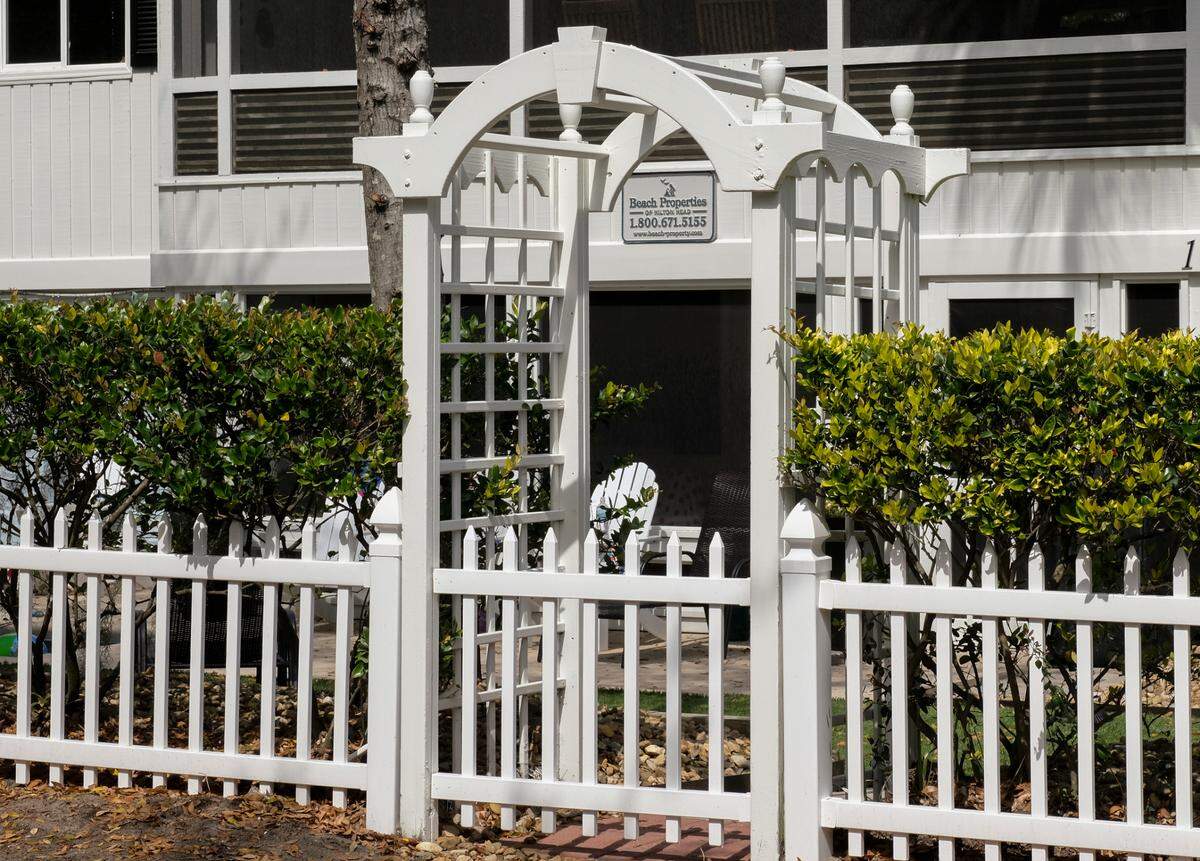
Walking to the ocean from the remaining single-family homes on North Forest Beach Drive feels more like walking through a canyon, where massive houses with pools and small plaques with rental company names and phone numbers rise on each side.
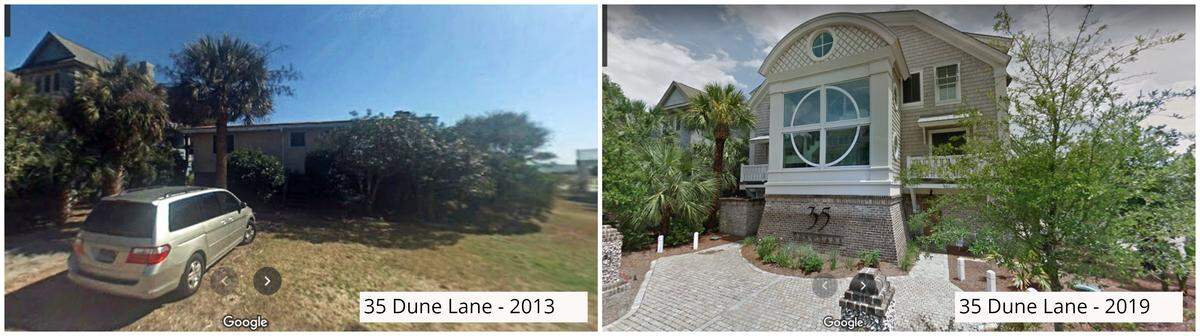
The Forest Beach Owners Association has noticed.
“Forest Beach looks at Dune Lane like something that happened that we couldn’t do anything about,” Mira Scott, the association’s vice president who lives in North Forest Beach, told The Island Packet. “It’s not a neighborhood anymore, it’s a commercial area.”
The community is considering applying for a historical district designation that they hope would encourage buyers to keep the footprint and style of their home instead of demolishing it and rebuilding large rental homes.
But property owners who live out of state looking to make money on their Hilton Head homes may not be so inclined.
Airbnb gentrification?
The phenomenon isn’t unique to Hilton Head. Short-term rental development that alters a community’s landscape is often called “Airbnb gentrification,” and has been heavily criticized for displacing communities in cities such as Nashville, San Francisco, Amsterdam and Barcelona. The result of the rental gentrification is new buildings that don’t fit in with the neighborhood, created to house large groups for party weekends.
A 2017 study by the University of Pisa reported that the entities making the most money on Airbnb rentals were brokers, specialized real estate agencies and a select few advertisers who rented many apartments — not single private tenants.
On Hilton Head, rental companies that manage homes for non-resident property owners are most common on North Forest Beach and Bradley Circle. But the residential-turned-commercial character isn’t affecting just those two communities.
Folly Field and neighborhoods in Shipyard and Sea Pines have also experienced the influx of new rental homes. At least five gated communities, Hilton Head Plantation most recently in 2019, have banned short-term rentals from inside their gates.
“Many of the new structures are three and four times the size of the previous house and are rented short term to 16 to 24 people instead of perhaps a family of four who might be renting long term,” Town Council member David Ames, who represents Ward 3, said. “This trend radically changes the atmosphere of the neighborhood, the sense of security and friendship.”
He said the problem goes beyond a cultural erasure, because large new homes reduce vegetation and separation between neighbors “in exchange for concrete and building mass.”
And these “mini hotels” affect the utilities built for single-family homes on the island, he said.
“It significantly increases the burden on island infrastructure, facilities and services, all of which threatens the island’s quality of life and reputation,” he added. “It physically removes affordable housing for workers while at the same time increasing the cost of real estate.”
Responding to rental demand
Hilton Head is in a tough spot, because total home rentals are considered the new way of vacationing — just like timeshares were in the 1980s.
Especially in a year marred by the coronavirus pandemic, tourism professionals have acknowledged that home and villa rentals on the island have carried all rentals on the island. Families seeking to spread out and cook their own meals look for homes with beach access and open kitchens instead of hotel rooms.
Home and villa rentals on Hilton Head outpaced hotel bookings every season last year, sometimes by more than 25%, according to statistics from the Hilton Head Island-Bluffton Chamber of Commerce.
The trend leaves leaders and residents asking how the island will adapt: Will it allow unregulated development of massive beach houses or step in to stop it?
Becker, who lives on Bradley Circle and reiterates how she disagrees with more regulation, said the capacity issue may force her to change her tune because it affects the experience of the visitor, too.
“How many people can you pack into a place? Is it totally and completely dependent on how many beds you can shove in?” she asked. “What are we saying about the quality of experience on Hilton Head when we ask that?”
Meanwhile, the people who moved to Hilton Head to live away from timeshares and the roar of Saturday traffic have seen their streets change so much they’re not confident they can turn back time.
“It’s disturbing. I feel like I’m shoveling sand against the tide,” Scott, on North Forest Beach, said. “It’s changing so rapidly I’m not sure we can hang onto it.”
This story was originally published April 4, 2021 at 4:30 AM.