Bluffton honored for DUI enforcement, but 80% weren’t convicted. Here’s what happened
READ MORE
Over the limit
Drunk drivers in Beaufort County routinely escape DUI convictions. Here’s how.
Expand All
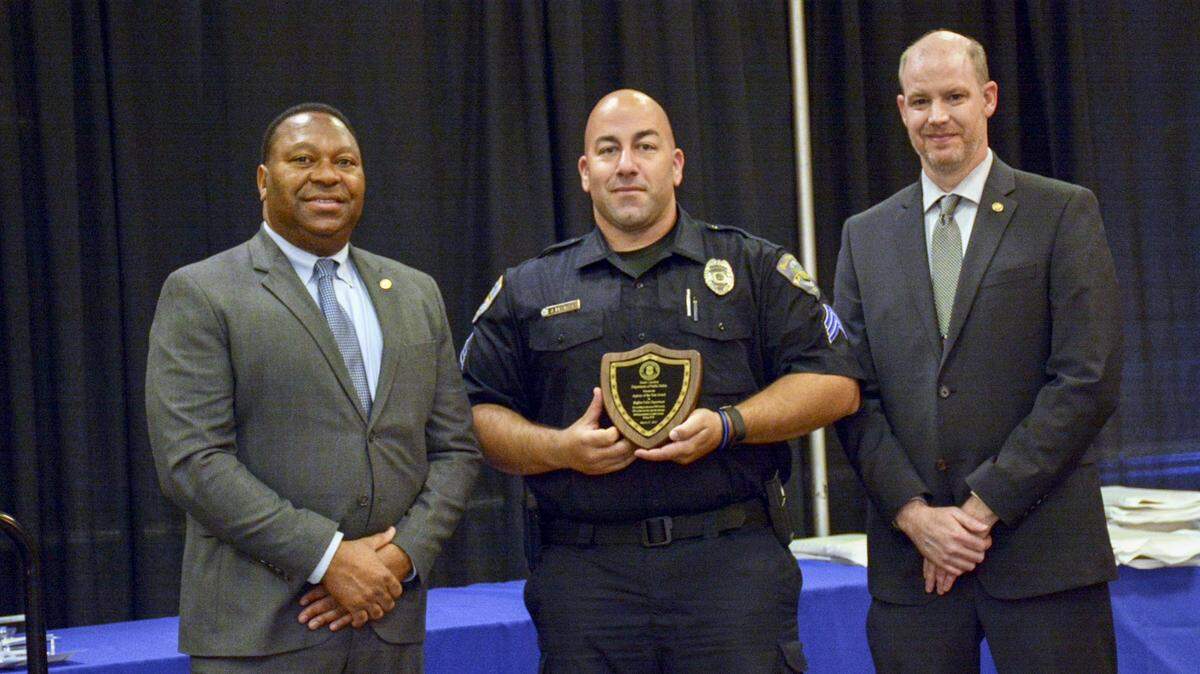
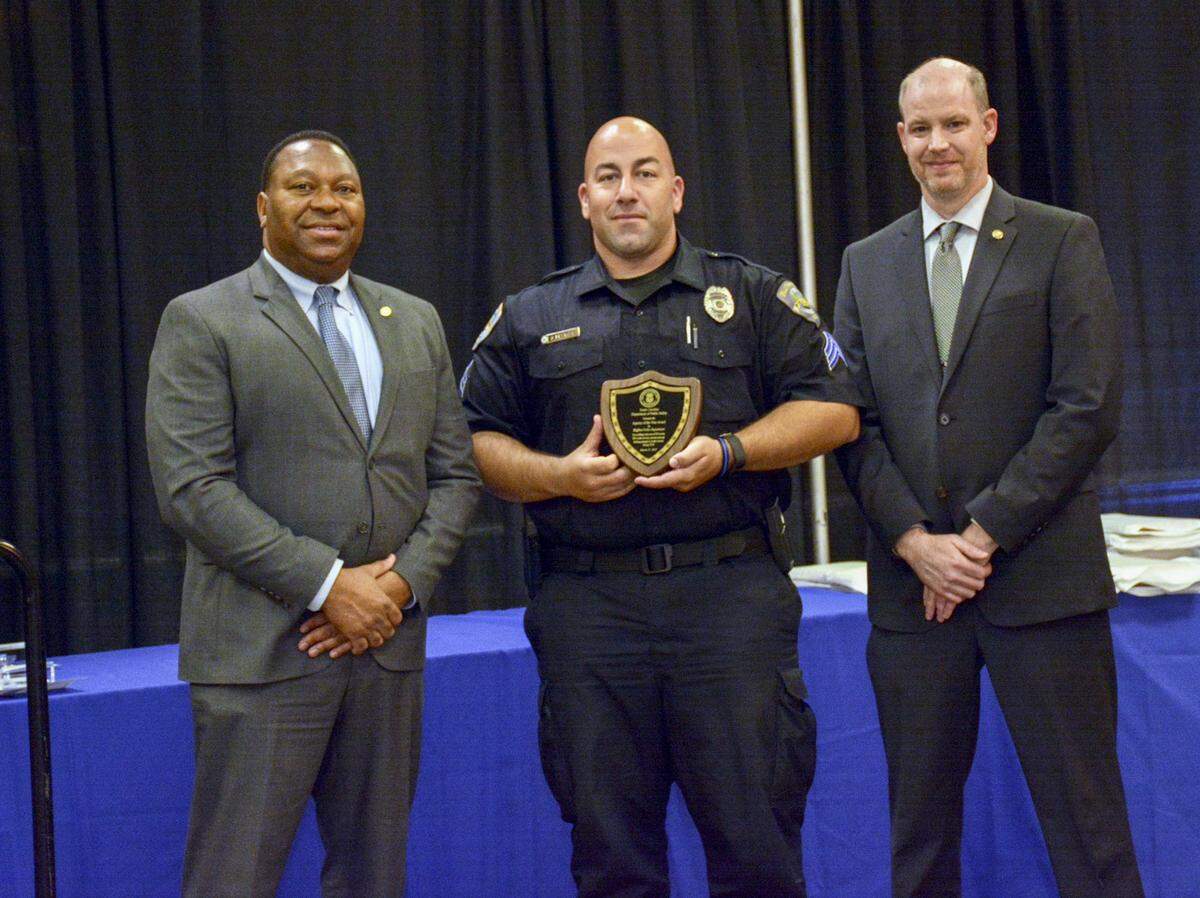
Last year, during a ceremony in Columbia, the Bluffton Police Department received a wooden plaque from the S.C. Department of Public Safety recognizing it as Agency of the Year for its 2018 DUI enforcement.
The numbers didn’t lie. According to a DPS news release, Bluffton Police had conducted almost as many impaired driving arrests as the Mount Pleasant Police Department, north of Charleston, even though Bluffton is more than four times smaller by population.
One Bluffton officer, Jeb Fay, racked up more than 100 arrests each year in 2017 and 2018, sometimes pulling three drunk drivers off the road in a single shift.
But those numbers didn’t tell the whole story.
Award-winning enforcement didn’t translate into more DUI convictions once the cases got to court. The opposite was true. As Bluffton Police upped its enforcement, adding more arrests to the court’s docket, the DUI conviction rate dropped.
In 2018, drivers charged with first-offense DUI in Bluffton Municipal Court weren’t convicted of that charge in more than 80% of cases, making Bluffton home to the lowest DUI conviction rate in the county that year, according to three years of arrest data and court records reviewed by The Island Packet and Beaufort Gazette.
Charges are lowered or dismissed at high rates countywide thanks to a state DUI law stacked against cops and prosecutors, according to an investigation by The Island Packet and Beaufort Gazette.
But a closer look at three years of Bluffton DUI arrests revealed underlying issues that threatened to undermine its otherwise exemplary enforcement record: bad arrests of drivers who showed little evidence of intoxication, officers whose disciplinary issues made their cases impossible to prosecute and an overloaded municipal court docket.
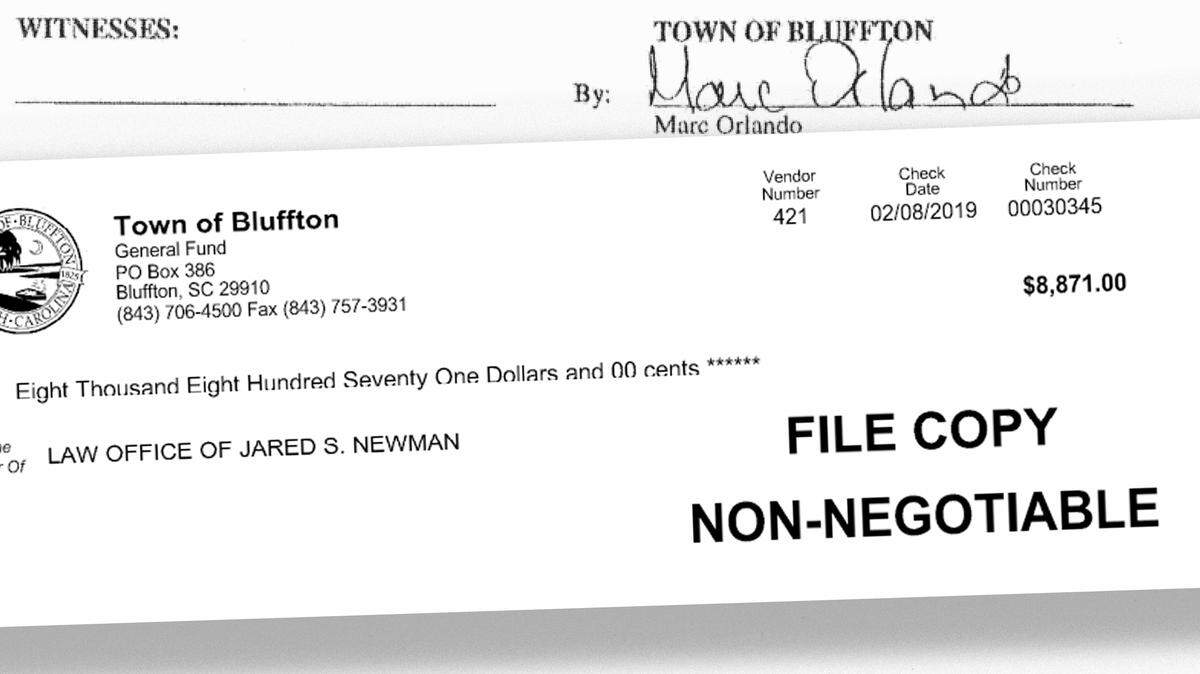
In at least one case uncovered by the newspapers, Bluffton officials quietly paid taxpayer money to make an alleged wrongful DUI arrest go away. Officials acknowledge issues with the arrest, and one of the officers involved was fired soon afterwards.
Growth fuels ‘abundance of alcohol’ in Bluffton
In response to the 400% increase in Bluffton’s population over the last decade, police turned to outside funding to stem what they saw as a rising tide of impaired driving, documents show.
In 2017, the Bluffton Police Department received a $125,000 grant from DPS for one officer focused on impaired driving. The funding required that officer patrol only on nights and weekends in high-collision areas.
“Bluffton is home to approximately 334 establishments that serve alcohol, including restaurants and bars,” the department wrote in its 2017 grant application. The proximity of Hilton Head Island, “a resort and tourist destination with an abundance of alcohol,” and the night life of Savannah and Beaufort, “lead to a high prevalence for impaired driving, where it seems to have become the norm for individuals to drive after imbibing,” added the department.
Today, there are 293 active alcoholic beverage licenses in Bluffton, according to an online S.C. Department of Revenue database. Countywide, there are 1,232.
The new impaired driving enforcement position supplemented funding Bluffton already had for traffic enforcement officers, and DUI arrests rose steadily, peaking at 263 in 2018. It was an almost 300% increase from 2014, according to grant application documents and the newspapers’ analysis of arrest data.
In 2017 and 2018, Bluffton’s DUI arrest numbers out-paced all other local law enforcement agencies in Beaufort County.

Officer misconduct, turnover hobbles 2018 conviction rate
But as Bluffton’s yearly DUI arrests grew, those arrests resulted in a DUI conviction less frequently, making Bluffton the most lenient jurisdiction on drunk drivers in 2018, the newspapers’ analysis of arrest data and court records shows.
In Bluffton, prosecutors secured a conviction for 29.9% of first-offense DUI arrests made in 2017 — in line with the county average. But for 2018’s first-offense arrests, that figure fell to 20.4%. (In both years, approximately 30% of defendants pleaded to reckless driving, a lesser charge.)
The newspapers’ analysis uncovered one major contributing factor behind this reduction: individual officer’s arrests led to conviction at widely variable rates.
In 2017, Fay, then Bluffton’s DUI officer, made 109 first-offense arrests, which resulted in DUI convictions 38.5% of the time — a rate above the department average.
The next year, Officer Jonathan Bates made 60 DUI arrests. Bates, hired while on probation with the Beaufort County Sheriff’s Office, broke a handcuffed man’s nose while pushing him to the ground during an arrest outside a bar on Promenade Street in Bluffton, the newspapers previously reported. An investigation found he lied to officials and broke department use of force policy. In August 2018, while awaiting a chief’s ruling on the case, Bates resigned.
DUI cases take an average of almost seven months to be resolved in Bluffton Municipal Court — the newspapers identified some cases that dragged on for two years without resolution.
And S.C. law says a case cannot be tried without a prosecuting witness. Only seven of Bates’ cases in municipal court were resolved before he left the department.
Two resulted in convictions after that point. The other 51 were dismissed outright.
“If you can string a DUI out long enough, something may eventually fall in your favor from the defense perspective,” said Terry Finger, Bluffton’s town attorney, whose firm is contracted to provide part-time prosecution in Bluffton Municipal Court.
“Once Bates was gone, we were unable to even negotiate those deals,” he said.
Officer turnover makes securing convictions difficult, even in cases where no misconduct is involved, the newspapers’ analysis found. After Fay left Bluffton for the S.C. Highway Patrol in September 2018, only 11% of his 55 pending cases in Bluffton Municipal Court resulted in a DUI conviction. Almost all of the rest were pleaded down to the lesser charge of reckless driving.
Expanding DUI docket in Bluffton Municipal Court
As enforcement increased, Bluffton Municipal Court’s DUI docket became one of the busiest in the county, according to the newspapers’ analysis. The docket saw almost 40 more cases added in 2018 than the year before. And while arrest numbers fell slightly in 2019, there are still currently at least 61 pending cases from DUI arrests made between 2017 and 2019.
The town contracts two part-time prosecutors from the Finger, Melnick & Brooks law firm to handle these cases. Ben Shelton is one of those attorneys.
“Officers make, by and large, despite all the hurdles that they face, quality arrests,” he said. But the municipal court faces the countervailing pressure to keep its docket clear, while also prosecuting complex and time-consuming DUI cases.
“There’s voluminous discovery that’s required in these cases, despite the fact that they’re in summary courts that really aren’t built for that,” said Shelton. Hours of dashcam video files, reports and toxicological evidence must be shared with the defense.
The result is the vast majority of cases are resolved by a plea agreement between prosecutors and the defense. In a one-year span between July 2017 and 2018, one DUI case in Bluffton Municipal Court went to a jury trial, according to the S.C. Court Administration’s annual judicial survey. (This is the norm nationally. Among 18 states that report this data to the Court Statistics Project, none had jury trial rates over 1% for misdemeanor crimes in 2018.)
For arrests made in 2017 and 2018, about a third of the corresponding first-offense DUI cases were pleaded down to reckless driving — sometimes called a “wet reckless” — which still carries a six point penalty on a driver’s license and can lead to revocation if a defendant has prior offenses, on top of a fine or up to 30 days jail time.
Shelton says plea deals are a necessity to maintain a manageable docket. “You can’t try every single case,” he said.
But a first offense DUI conviction still carries greater consequences, including the possibility of extended jail time, greater fines and a six month license suspension as well as increased insurance premiums and issues for professional license holders. These penalties escalate with repeat offenses.
And there’s still the approximately 35% of charges that are dismissed and expunged completely from a driver’s record, according to the newspapers’ analysis. This happens in Bluffton, and other Beaufort County jurisdictions, at rates significantly higher than those observed in a Mothers Against Drunk Driving court monitoring project conducted in other parts of South Carolina.
In Bluffton Municipal Court cases resulting from arrests made in 2018, 40% of defendants charged with first-offense DUI saw their charges dropped.
High-profile arrests generate controversy, result in dropped charges
Two of those dropped cases last year provoked public criticism based on what the drivers said was shaky evidence. A former May River High School band director, who was arrested by Bluffton Officer Baker Odom, blew .04% on a breathalyzer test, half South Carolina’s legal limit. When her DUI charge was dropped two months later, she wrote on Facebook: “When people abuse their authority, it is devastating for those who are innocent.”
The arrest came two months after the arrest of the 19-year-old son of Bluffton real estate agent Nickey Maxey, who blew zero on a breath test. Immediately after the arrest, Maxey announced his candidacy for Bluffton Town Council, saying he was campaigning to improve policing in Bluffton. He ended the campaign shortly after, and his son’s charges were also dismissed several months after his arrest.
Bluffton officials say criticism of the arrests is misguided. An officer’s decision to arrest during a DUI stop is based on an evaluation at that point in time, said Bluffton Police Detective Zatch Pouchprom. Field sobriety tests conducted on the roadside are the “heart and soul of the case,” he said.
Everything collected after a driver is placed under arrest, including breathalyzer and toxicology test results, are “evidentiary,” meaning they will be used to assess a defendant’s guilt or innocence in court, Pouchprom said.
“Once you’ve made that arrest, you don’t necessarily get to un-arrest,” said Bluffton Chief Chris Chapmond, even if a breathalyzer test indicates no intoxication. No blood alcohol content also does not mean other substances could be causing impairment, Chapmond said, pointing to the increased prevalence of drugged driving.
A prosecutor or officer’s decision to drop charges is just part of the “checks and balances” built into the system, he said.
New structure to DUI enforcement in Bluffton
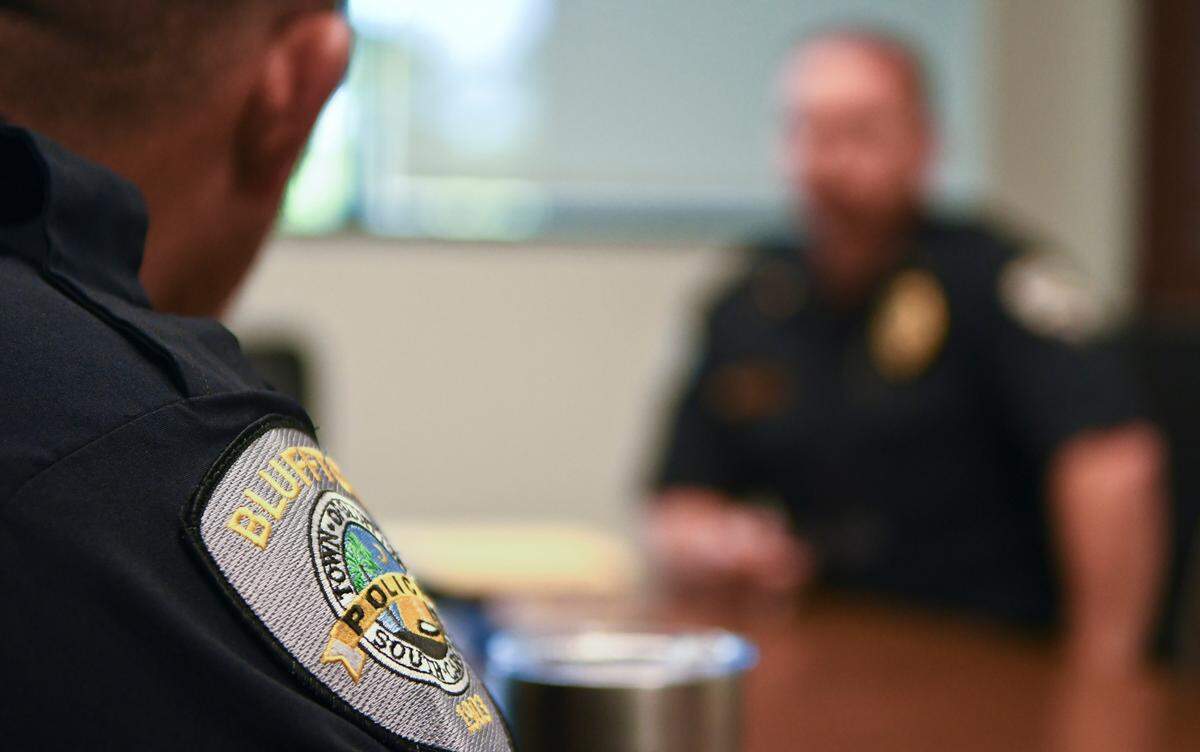
Last year, Bluffton Police restructured its approach to DUI enforcement, suspending the grant-funded DUI unit and moving the officer on it, Baker Odom, to general patrol duty.
“It is the mandate of every police officer that works here to enforce DUI,” said Chief Chapmond, referring to the both the past and present. He said demands on his patrol officers, coupled with staffing shortages, motivated the change. Lt. Scott Chandler added that one of the down sides of a grant-funded position is the restrictions it places on where an officer can be assigned.
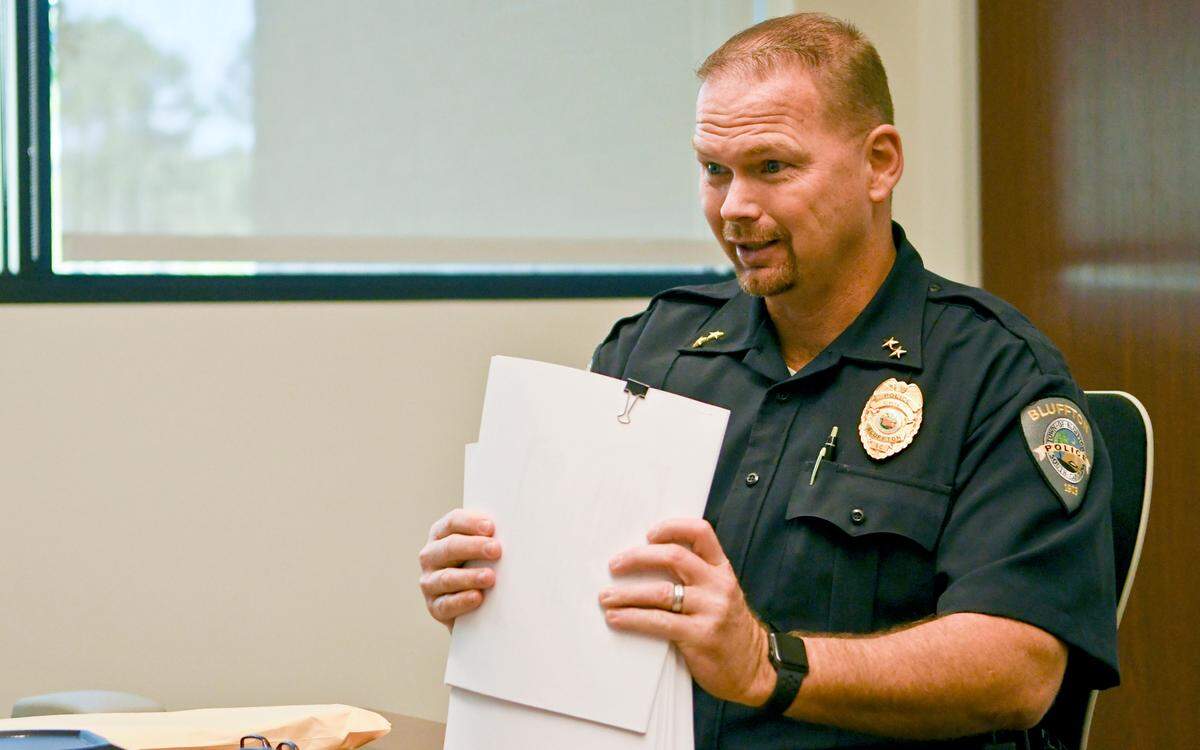
Chapmond hopes a renewed emphasis on impaired driving across his patrol team will be a “force multiplier.” He said he wants to establish a dedicated traffic unit in his department but didn’t provide a concrete timeline for when this would happen.
The move away from a DUI-specific unit, will have the effect of spreading DUI arrests out over a broader pool of officers. But since Fay’s departure, Bluffton’s DUI arrest rate has slowed. For the first time in at least five years it fell in 2019. The department saw a 36% reduction in arrests from its award-winning record the year previous.
“We’re not slowing down on the enforcement issue,” Chapmond said. “It’s our desire to focus on DUI. We’re just doing it in a different fashion.”
Mandy Matney contributed reporting.
BEHIND THE STORY
MOREWhy we chose to report on DUI
The Island Packet and Beaufort Gazette decided to investigate DUI enforcement and prosecution in Beaufort County, in part because it seemed no one else was. Data on convictions was fragmented between state and local agencies. Click the drop-down icon for our methodology.
What we learned has implications for all of South Carolina — read all of our three-part series.
How we collected data on DUI in Beaufort County
In order to conduct our data analysis, we requested basic information from police departments for almost every DUI arrest that took place in Beaufort County over the past three years using the South Carolina Freedom of Information Act. We asked for similar information for all resulting DUI charges from local courts, but many administrators referred us to the S.C. Court Administration, which denied our requests on the grounds that the information we were seeking was already available online. It is, but not in a format that is easily searchable for the purposes of a conviction analysis.
So we tracked down each of the approximately 2,000 Beaufort County cases in the state’s database, one-by-one, to figure how what happened as it moved through the system — a task complicated by the fact that plea deals are entered as new charges, separate from the initial case under a different case number. We verified conflicting information in our arrest data with police reports and from a S.C. Law Enforcement Division database of breathalyzer test results. We made efforts to include the Port Royal Police Department’s arrests, but since Port Royal Municipal Court’s case information isn’t available online key details couldn’t be verified and those arrests were excluded from our analysis. (All other agencies actively enforcing traffic violations in Beaufort County were included.) Traffic offenses, such as DUI, cannot be expunged in South Carolina, so we were able to rely on the publicly available information for each case. We made efforts to verify our results by comparing them to conviction totals reported to the S.C. Department of Motor Vehicles, accepting that some degree of inaccuracy was unavoidable because of the quality of arrest data and court records available to us.
We focused on first-offense charges because they are by far the most common, representing the majority of all cases filed. Our analysis grouped DUI charges with driving with an unlawful alcohol concentration (DUI per se) charges — a separate charge based on a blood alcohol content reading but carrying identical penalties. Repeat offense and felony DUI cases are tried in the higher General Sessions Court, and we chose to exclude them because they are frequently dismissed as part of plea deals related to multiple charges and they carry much more serious penalties. Our analysis also excluded first-offense DUI arrests that resulted in a plea to an associated drug charge but no DUI conviction (a small percentage of cases). We used arrests made in 2017 and 2018 because many made in 2019 and 2020 haven’t moved through the court system yet.
When we refer to “DUI conviction rate” we are referring to the percentage of DUI cases resulting in subsequent DUI convictions. Some members of law enforcement and prosecutors argued to include pleas to lesser charges, like reckless driving, in this rate, but we chose not to because of the unique penalties a DUI conviction carries, including higher car insurance rates, greater fines and jail time, driver’s license suspensions and potential implications for employment and professional licensing. For about half of the arrests we reviewed, law enforcement agencies provided arrest data in a format that made it difficult to distinguish between a plea deal to a lesser charge and a dismissed case or not guilty verdict. Where possible, we included percentages of pleas to lesser charges, dismissed charges and not guilty verdicts (less than 1% of cases) separately. Much of our methodology mirrors that used by S.C. Mothers Against Drunk Driving’s court monitoring project.
This story was originally published March 12, 2020 at 4:55 AM.