Port Royal demands access to land where enslaved people rang in freedom 163 years ago
The town of Port Royal is renewing a call to the federal Naval Hospital to restore public access to a site where thousands of freed slaves and soldiers gathered under a large oak tree near the Beaufort River 163 years ago to hear one of the first readings of the Emancipation Proclamation.
Calling public access to the “Emancipation Oak” site “a matter of civil rights and historical justice,” the town is requesting the federal government to transfer it to the town, or grant a permanent easement allowing the public to freely visit the area even if it is federally owned.
The move comes amid a renewed effort in Port Royal and Beaufort to showcase key historic sites in the backyards of the communities.
‘Most glorious day’
The site, located on Old Fort Road Old, is part of Camp Saxton, where members of the 1st South Carolina Volunteers, the first Black regiment mustered into service during the Civil War, camped from early November 1862 to late January 1863.
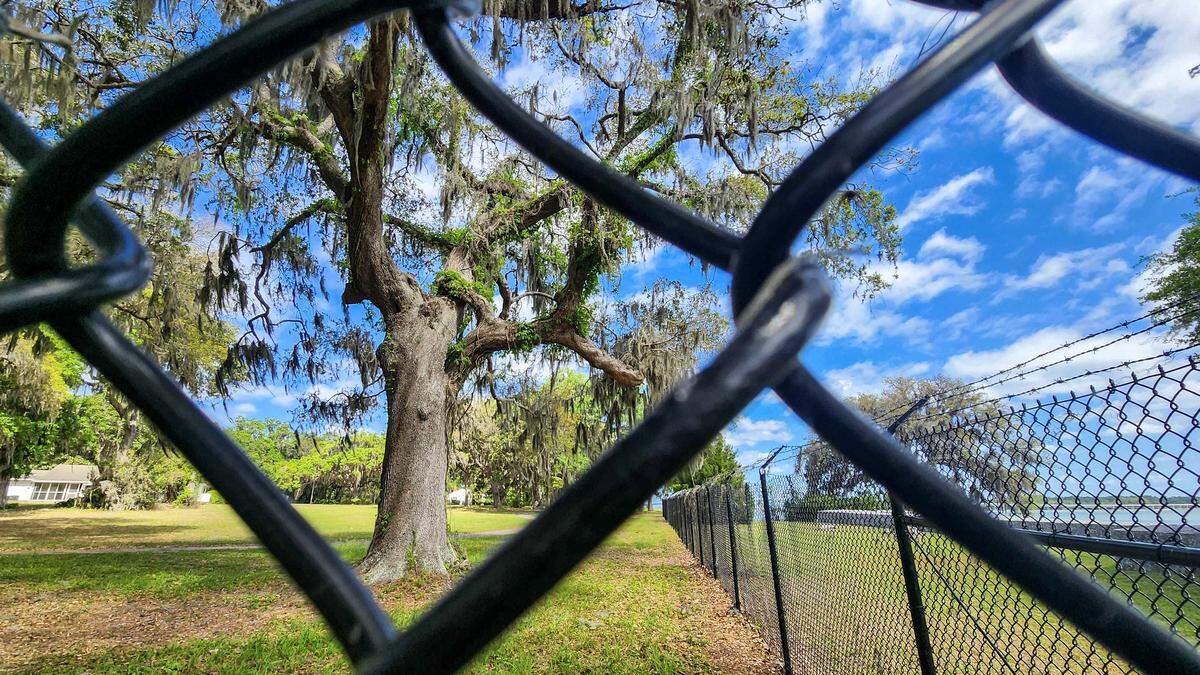
On New Year’s Day 1863, as the Civil War raged, the soldiers stood in formation under a large live oak tree, at what was then the John Joyner Smith Plantation, to hear the first formal reading in the South of President Abraham Lincoln’s Emancipation Proclamation. They were joined by newly freed slaves, free Black and white people. One of the most moving moments was the spontaneous singing of “My Country, Tis of Thee” by the estimated crowd 5,000.
Charlotte Forten, a young Black missionary teacher who witnessed the ceremony, called it “the most glorious day this nation has yet seen.”
Today the site is a federally recognized historic site and part of the Reconstruction Era National Historical Park.
A call for action
For 75 years, ever since construction of the Naval Hospital, it has been off limits to Port Royal residents including descendants of the people who heard the words, the town says, because the area is located behind the fence surrounding the federally operated hospital, which opened in 1949.
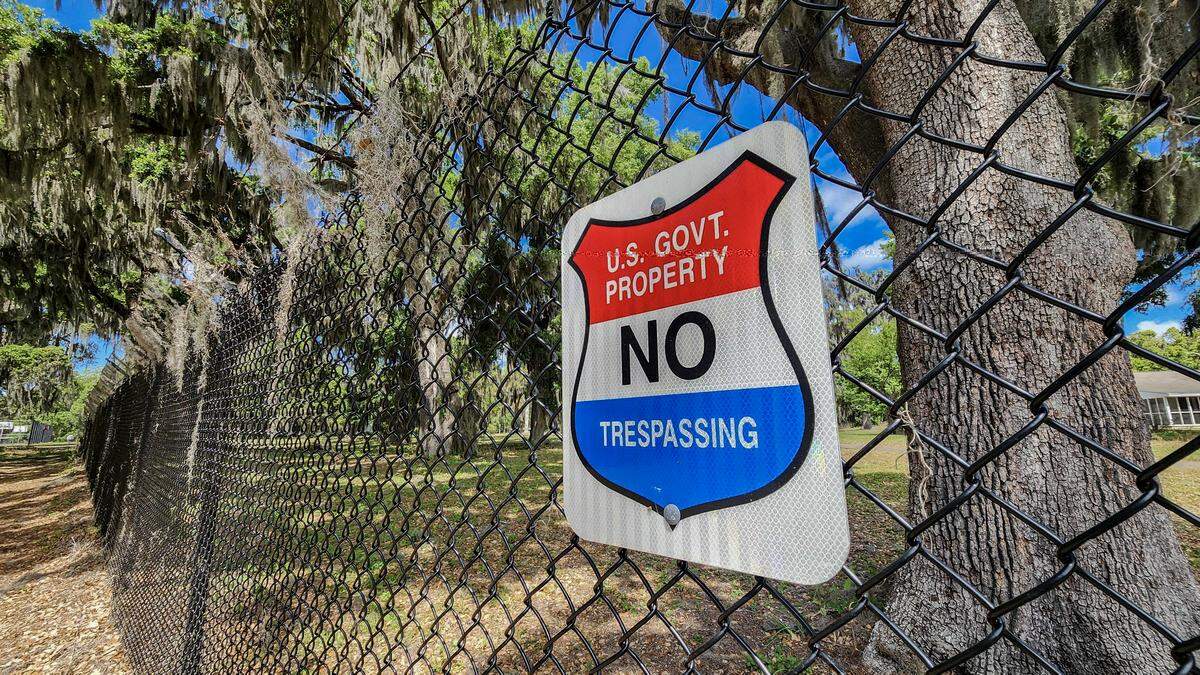
On Wednesday, the town passed a resolution calling for an end to the lockout and urged South Carolina’s congressional delegation to press the federal government for a land transfer or easement. The resolution says “this jewel on the Beaufort River belongs to the town of Port Royal.”
“What a moment in the world’s history happening literally on the banks of the Beaufort River,” Mayor Kevin Phillips said.
The resolution states that a nation preparing to celebrate its 250th anniversary “bears a special obligation to ensure that the places where that freedom was won are accessible to all Americans.”
New push for access
The town has been down this road before.
It unsuccessfully lobbied the federal government for access when discussions were occurring before the creation of the National Park Services’s Reconstruction Era National Historical Park in 2017, Town Manager Van Willis said. The park, centered in Beaufort County, is a network of important sites dating to the Civil War through the start of Jim Crow segregation.
The town decided to renew the call for access after it was contacted by a group called Call to Action, which agreed to assist in the effort, Willis said. “I think it’s worth pursuing once again,” Willis said.
Is the Emancipation Oak tree still around?
The Emancipation Oak site is part of the six-acre wooded Camp Saxton, a federally recognized historic site bounded by the Beaufort River, the Naval Hospital and Fort Frederick Heritage Preserve, which contains the ruins of the oldest surviving British tabby fort in South Carolina. Camp Saxton also is part of Reconstruction Era National Park, but it falls within the fence line of the working federal hospital base and is only accessible via scheduled tours.
The Emancipation Proclamation ceremony occurred in a grove of live oaks near the Smith plantation house. But it isn’t likely the majestic “witness tree,” where the crowd gathered, is still standing today, said Michael Murphy, a local tree expert who has unofficially investigated its location. Based on the description given in the historical record, the tree would have likely already been very large in 1863. If it was still standing today, it would be obvious because it would be “spectacular,” he said.
Part of broader effort to recognize history
The push for access coincides with other efforts to cast a spotlight on the area’s cultural heritage.
Beaufort County and the city of Beaufort are developing six acres between Boundary Street and Battery Creek into a park to honor the 1st South Carolina Volunteers, who made history as the first Black infantry to fight for the Union.
And the Beaufort County Black Chamber of Commerce has rebranded as the BCBCC Center for Culture and Commerce to better reflect a new mission that includes more support for entrepreneurs and artists whose business ventures are tied to culture and community.