Chasing wild shrimp in St. Helena Sound and niche markets as imports face scrutiny
The 80-foot-long Gracie Bell, with two 68-foot-wide nets dragging behind it, is trawling at 2.5 knots in 25 feet of water in an area known as Egg Bank in St. Helena Sound.
Capt. Craig Reaves peers through the windows of the pilot house and points to the white waves crashing nearby on the sandbars. Filled with shoals, this stretch between Edisto and the Harbor islands requires careful attention or the scene could quickly turn treacherous. But Reaves is chasing white shrimp, and this is where they live.
Lately, Reaves and other local shrimpers have faced additional perilous political and economic conditions, including poor prices, rising costs and a glut of imports of foreign farm-raised shrimp. The headwinds have forced many passionate Beaufort County shrimpers out of the industry in a state where shrimp is the No. 1 seafood.
But rays of light have appeared recently on what was an increasingly gloomy horizon giving Reaves hope for the industry. A lawsuit filed earlier this year exposed several South Carolina restaurants allegedly selling imported shrimp but advertising them as local. Some have dubbed it “shrimpgate.” Then came the news this fall that “nuclear shrimp” imported from Indonesia had been discovered in U.S. markets.
“Shrimpgate” and the tainted imports have cast a glaring spotlight on foreign shrimp. Reaves and other local shrimpers are welcoming the scrutiny. Finally, they hope, the public might recognize the superiority of the locally-caught product, which is wild shrimp netted in the clear waters right off the Atlantic coast including Beaufort County in South Carolina.
“I couldn’t have come up with something as crazy as nuclear shrimp,” Reaves says.
Another reason for Reave’s optimism is the Trump administration's new tariffs, which have been controversial in some sectors. But shrimpers are thrilled to have an ally in the White House. They say the trade deals are bringing more accountability to countries like Indonesia, which are dumping large quantities of largely unregulated farm-raised foreign shrimp into the domestic markets, undercutting local fishermen.
“Hopefully, the times are changing,” says Reaves, “and the winds are shifting.”
‘It’s kind of awesome’
Each fall, dating back generations, South Carolina commercial fishermen have been netting the sweet-tasting shrimp and Reaves, like his father before him, is carrying on a family tradition. He loves the chase and the man-against-nature challenge that comes with making a living scraping wild shrimp from the ocean’s bottom, miles from land and the red lights and honking horns of the city.
Out here, it’s just him and his crew, dolphins and sharks, incessant birds, crashing breakers, the outlines of the Lowcountry Sea Islands and their connecting bridges and a single-minded purpose: Find shrimp.
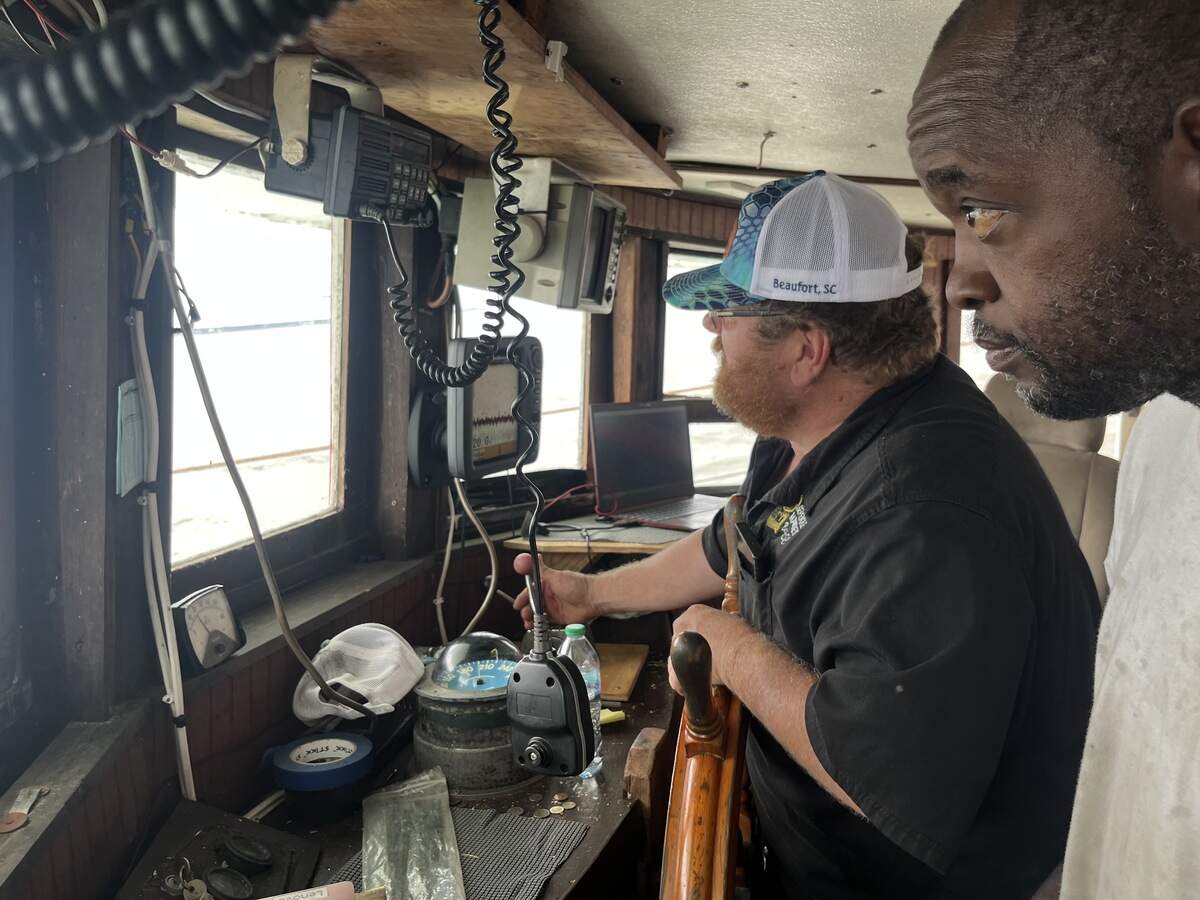
“It’s hunter-gatherer primitive,” Reaves says as he turns the large wheel in the pilot house as seagulls squawk and the big white boat with red trim plows through the water. “You’re feeding people. You are producing product. It’s kind of awesome.”
Great tides and clean water
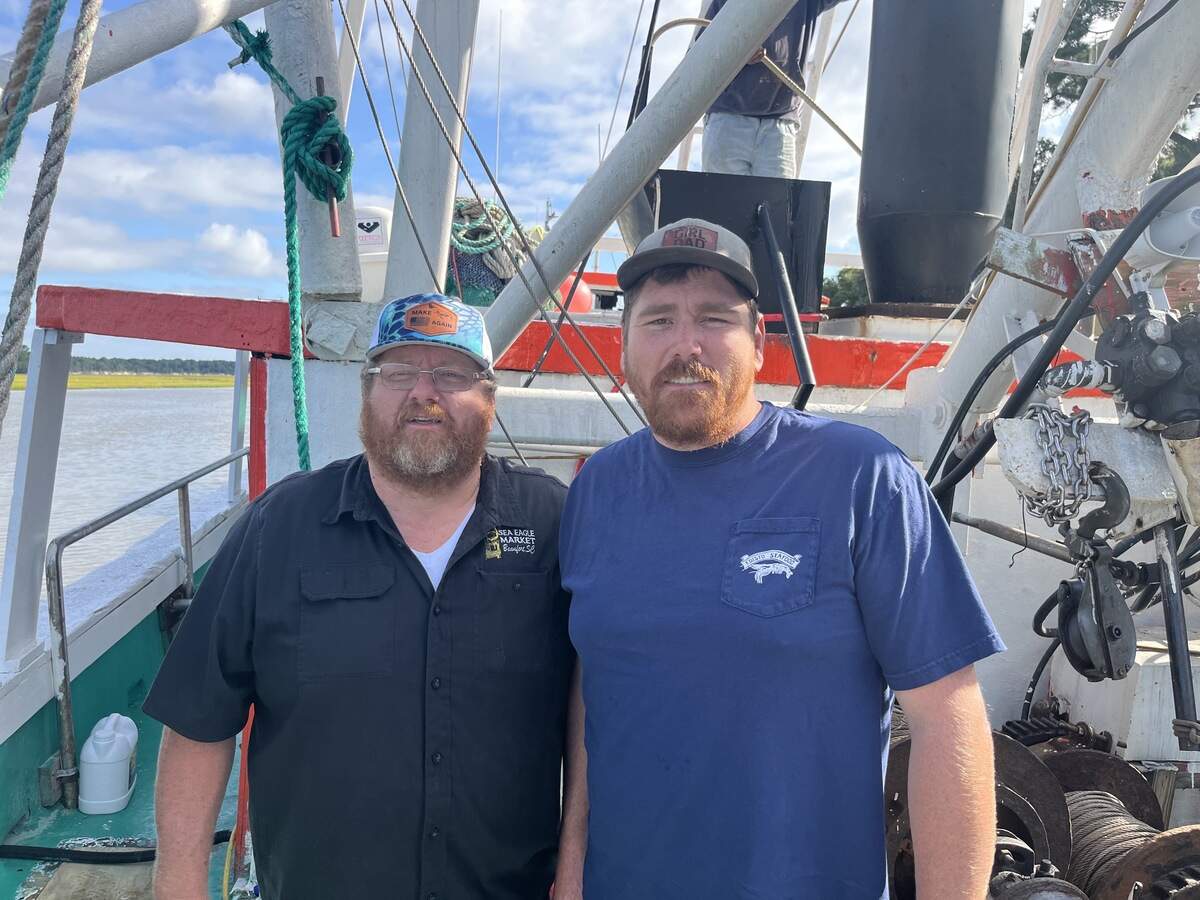
On a breezy morning one day earlier this week, Reaves and his crew, Arthur Duncan and Rodney Brown, boarded the Gracie Bell at Reaves's Sea Eagle Market docks at St. Helena Island’s Village Creek, a hub for the local shrimping industry, and headed north through the marsh-lined Elk Creek.
Then the 52-year-old trawler, named after Reaves’ grandmothers, turned east toward the Morgan River, the gateway to the Atlantic Ocean’s St. Helena Sound. The pristine water and giant tidal influxes make it a perfect habitat for shrimp that hang out on the ocean bottom, sometimes rising in the water column.
“We have great tides in South Carolina and Georgia so we have an influx of ocean, in and out,” Reaves says.
Morgan, Pine, Harbor, Fripp and Edisto islands are part of the passing scenery as the boat marches on. The Harbor Island bridge arches over the Harbor River like a rainbow.
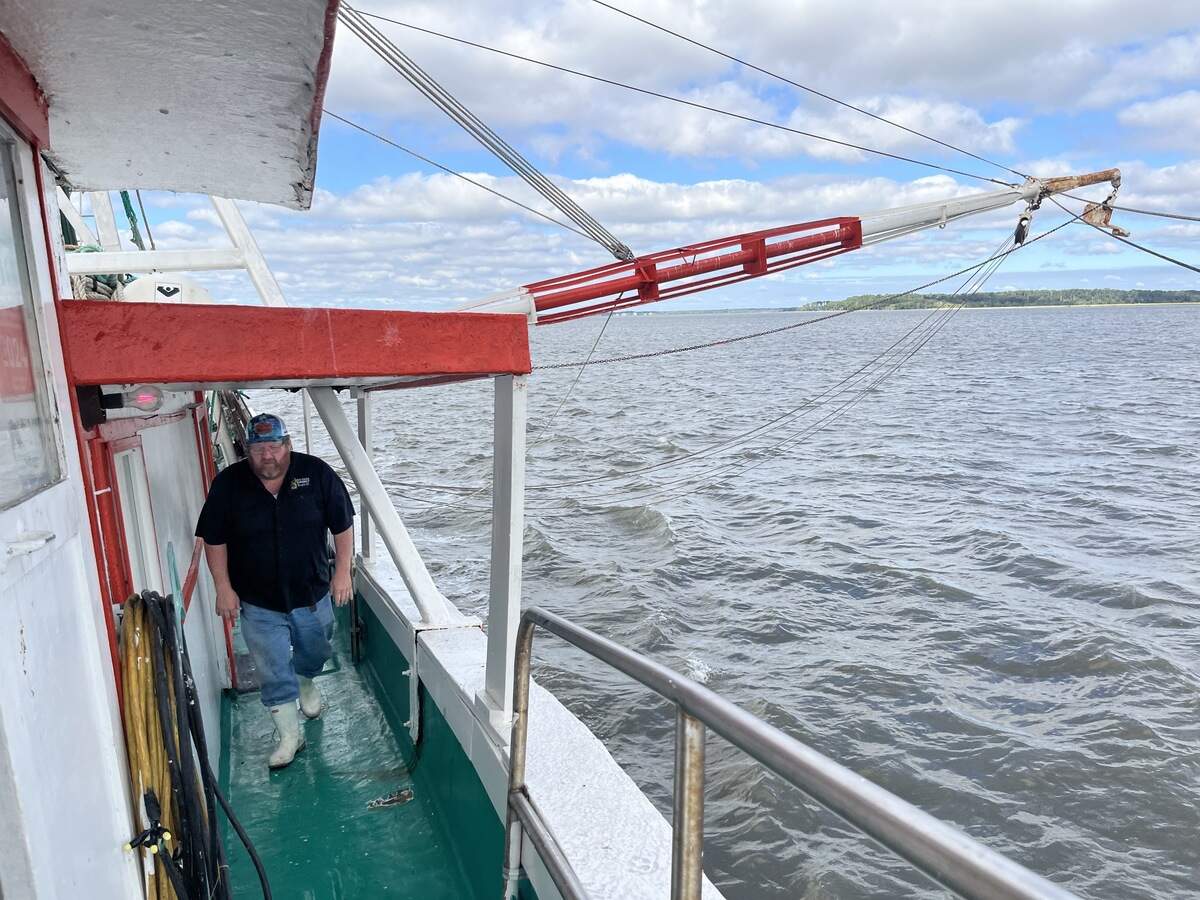
“It’s a privilege to come to work on the ocean and very few people get that opportunity,” says Reaves.
Anticipation of the catch was in the air -- and in the water. Bottlenose dolphins trailed the boat, with one occasionally hurling itself from the water in a display that tourists would pay to see. In a scene reminiscent of Hitchcock’s terrifying film “The Birds,” hundreds of seagulls descended on the boat, anticipating an easy meal, perching wing-to-wing on the cables that connect to the boat’s large outriggers.
Shrimp is it. It is what we do.
From mid-April through the end of January, Reaves fishes for shrimp and he’s begun harvesting the fall white shrimp crop now. The season will continue until the end of January.
In 2024, South Carolina commercial fishermen landed 2.5 million pounds of shrimp with a dockside value of $7.4 million, according to the Department of Natural Resources.
Reaves owns Beaufort-based Sea Eagle Market, a “vertically integrated” seafood business in which he controls the supply chain, from the shrimp he catches or buys from independent contractors to processing and catering the seafood to retail and wholesale operations. The motto: Our boats to your table.
“Shrimp is the No. 1 thing we do,” Reaves says.
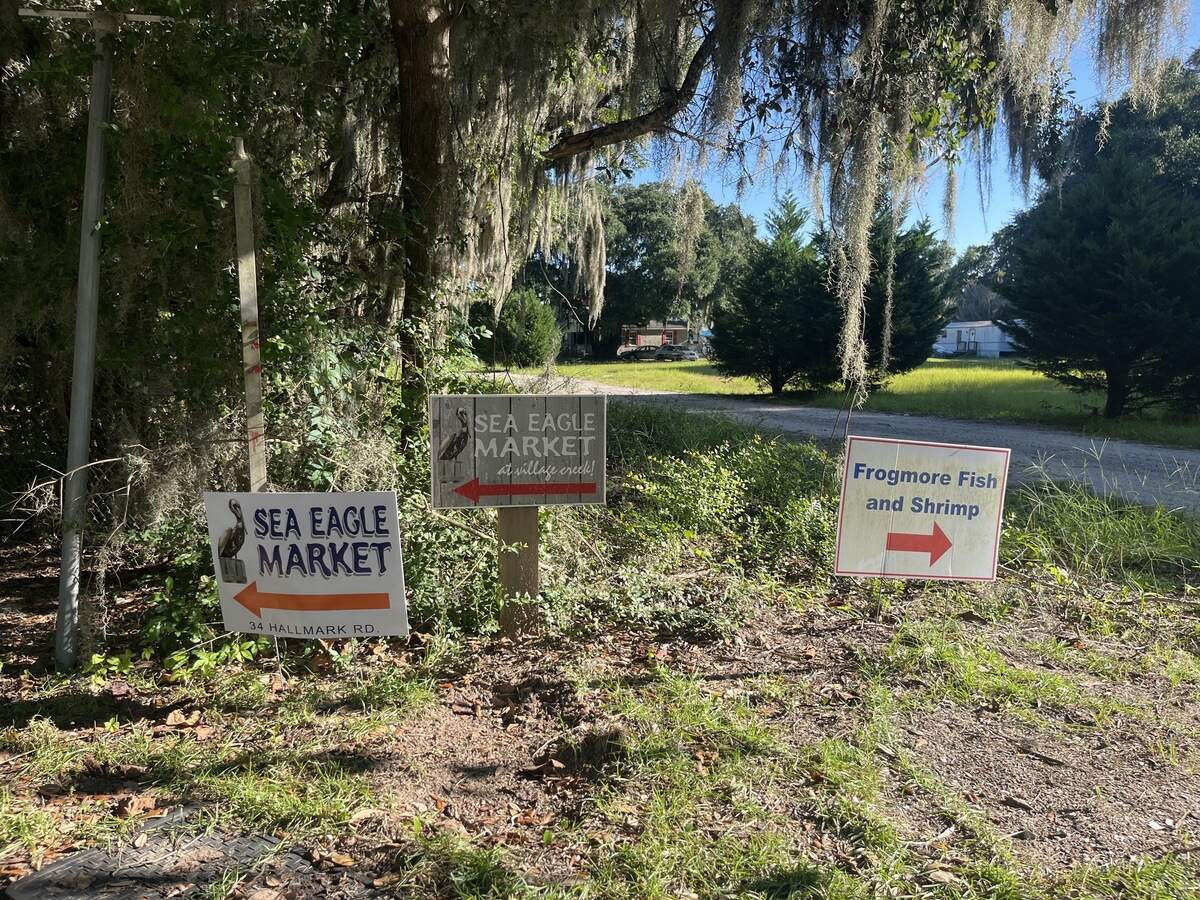
The catch ends up for sale locally at two retail locations, the Sea Eagle Market at Boundary Street and the Sea Eagle shrimp boat docks on Hallmark Road at St. Helena Island. Local customers range from the Piggly Wiggly at Coligny Plaza on Hilton Head to restaurants on Fripp Island. Reaves also sells to some 65 restaurants, farmers markets and other markets across South Carolina. This time of year, Reaves also sells hundreds of pounds of shrimp to wholesale buyers in Maryland.
South Carolina shrimpers will never feed the masses as they did in the 1960s and 1970s when there were hundreds of shrimpers instead of a handful, says Reaves.
To survive today, it’s a must for local shrimpers to develop niche markets, Reaves says. He markets the advantages of locally caught shrimp and tries to pay the boats he buys from the best price he can. But the margins are slim, and that’s why fair prices and competition are so important to the local industry, he says.
While shrimp prices have increased over the years for the consumer, Reaves says, the wholesale price local commercial fishermen are getting for their locally caught product has been deflated by imports. He fears the consumer is unaware of this paradox.
“The value of our product has to go up so we’re sustainable and can make a living wage,” Reaves says.
While the nuclear shrimp story was a ding on imports and a reminder of the value of local shrimp, Reaves says a bigger issue is the use of forced labor and hormones and antibiotics in farm raised shrimp exported to U.S. markets.
“This wild caught fish doesn’t have any of that,” Reaves said. “”People should want local wild caught shrimp.”
‘It’s like riding a bike’
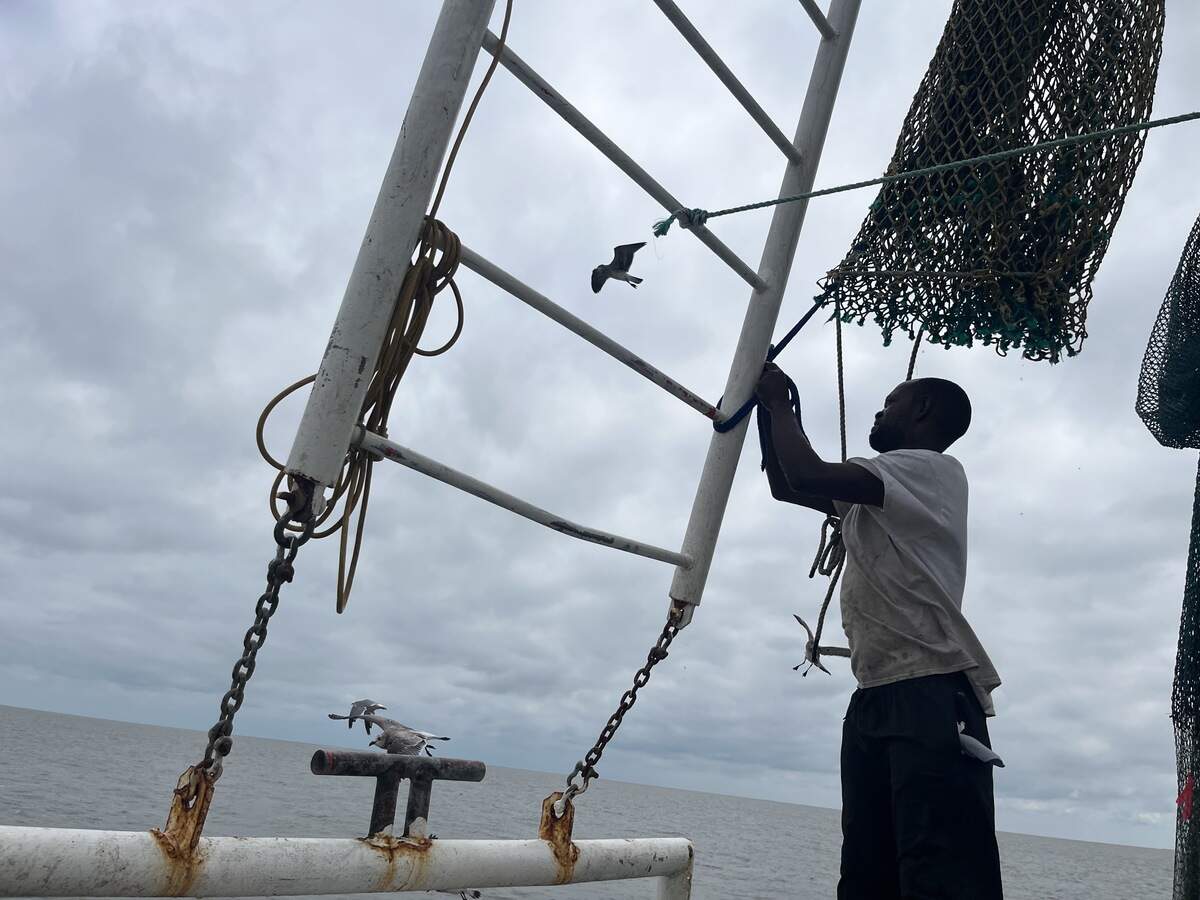
As Reaves drives the boat toward the destination, crew members Brown and Duncan, prepare to fish.
A block and tackle rope system is used to lower the long metal poles known as outriggers, while a hydraulic winch sets the nets and wooden trawl doors in the water. The outriggers jut horizontally on both sides of the boat. The nets, which are attached to the outriggers, drag the ocean bottom 300 to 400 feet behind the boat. The wooden trawl “doors” spread the nets on the ocean floor.
Empty green, blue and orange baskets sit on the deck, awaiting the catch.
“I would rather be on the water than up here on land,” Duncan, who has been shrimping since he was 9 years old, says during a lull. “Once you get to know it, it’s like riding a bike. You never forget it.”
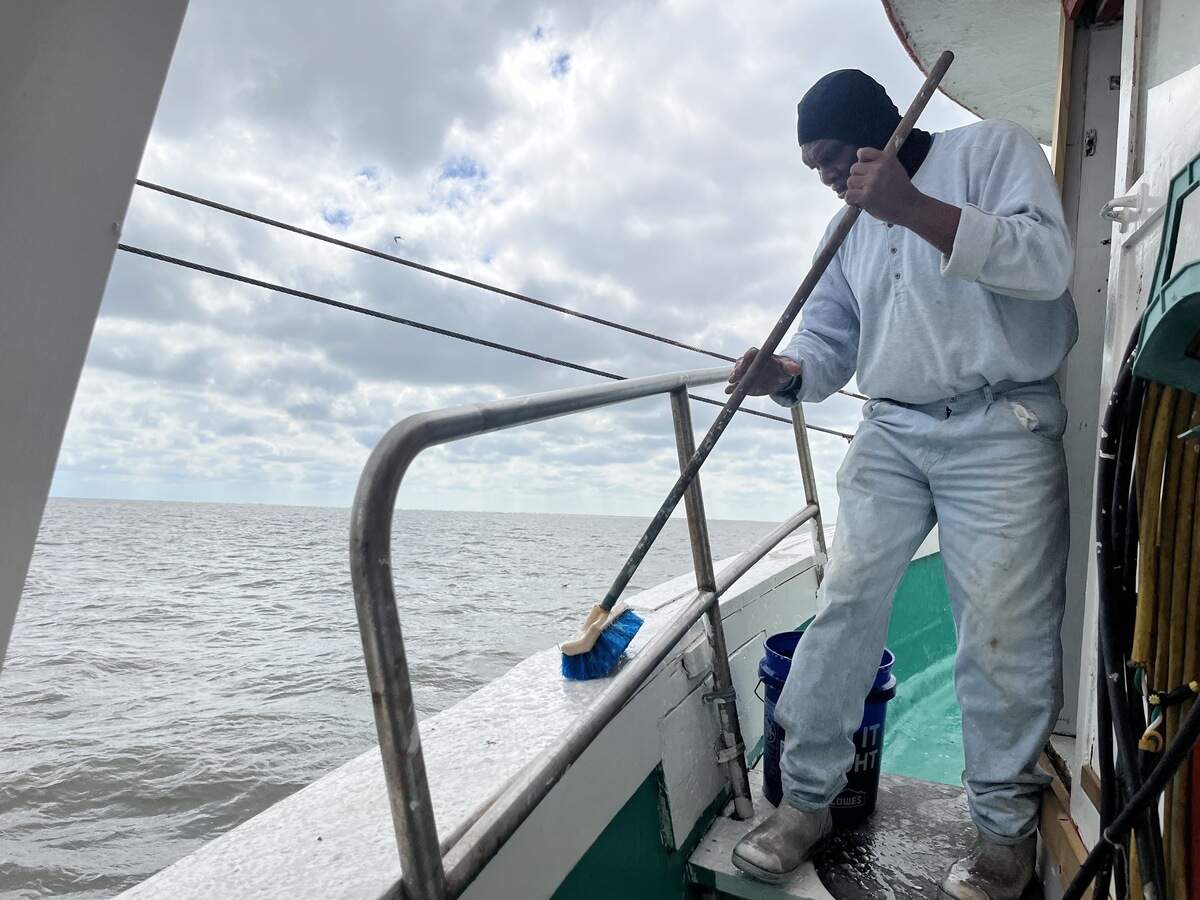
The boat makes figure eights over 5 nautical miles for nearly two hours as crew members Duncan and Brown scrub the boat, eat lunch and nap. The trawler, all arms and cables and ropes, chugs past three-story beach houses on Harbor Island and breakers that send water flying.
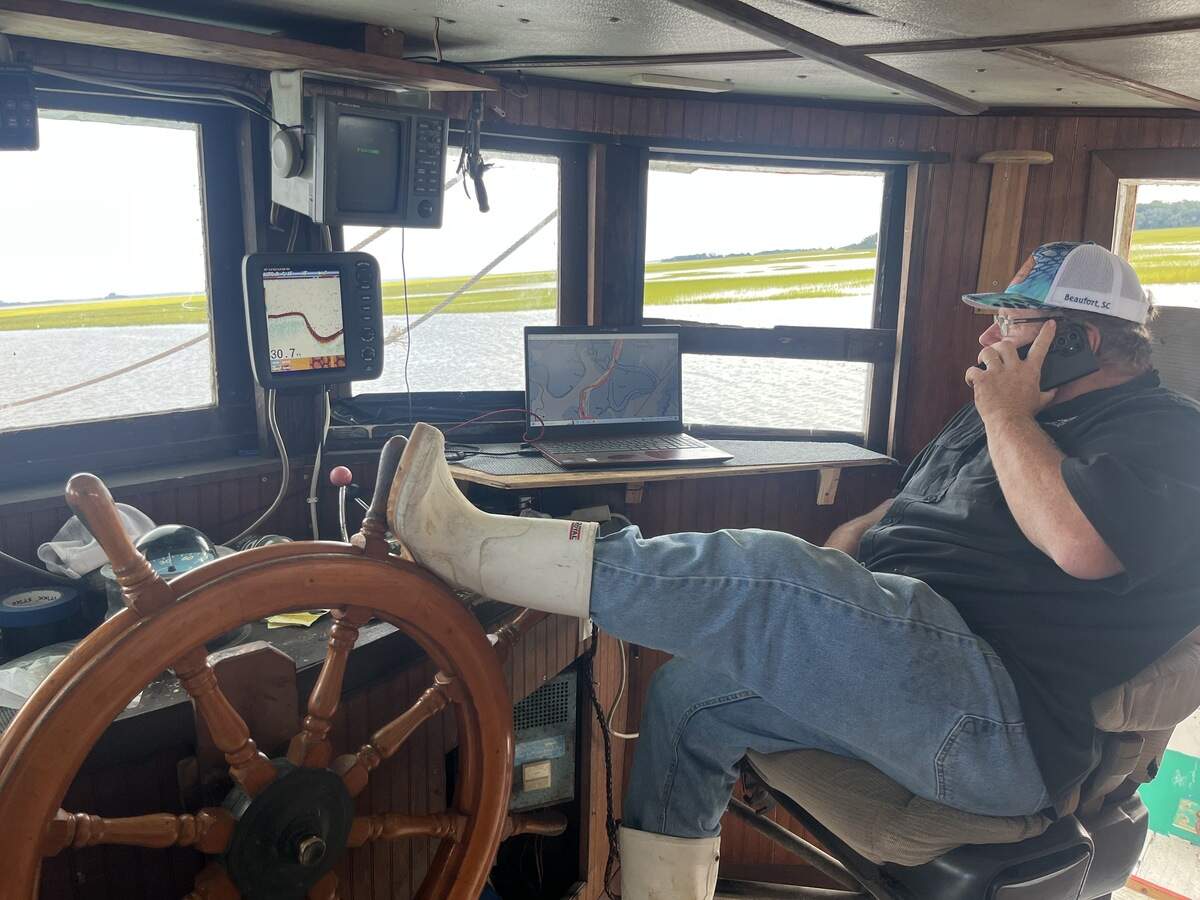
It’s a waiting game now for the crew and the birds, dolphins, and sharks. How much shrimp will those nets hold when they are hoisted from the deep? Reaves props a white boot on the heavy wheel to hold it in place and leans back in his chair.
“We’ll get what the good Lord gives us,” says Reaves.
‘There’s very few of us left’
The blacktip, bull and spinner sharks that sometimes tear into the nets are nowhere to be seen when the nets are pulled in. But the appearance of the nets at the surface sets off a flurry of feathers as the seagulls pounce and continue to twirl inches above the shrimpers as the nets are emptied. With shrimp piled high on a flat surface on the back of the boat, Duncan and Brown go to work separating them from bycatch that includes fish such as whiting, squid and horseshoe crabs, which are returned to the sea.
The trawl even produced an old crab pot.
“We catch all kinds of stuff,” says Reaves, including goggles, golf balls and baskets of trash.
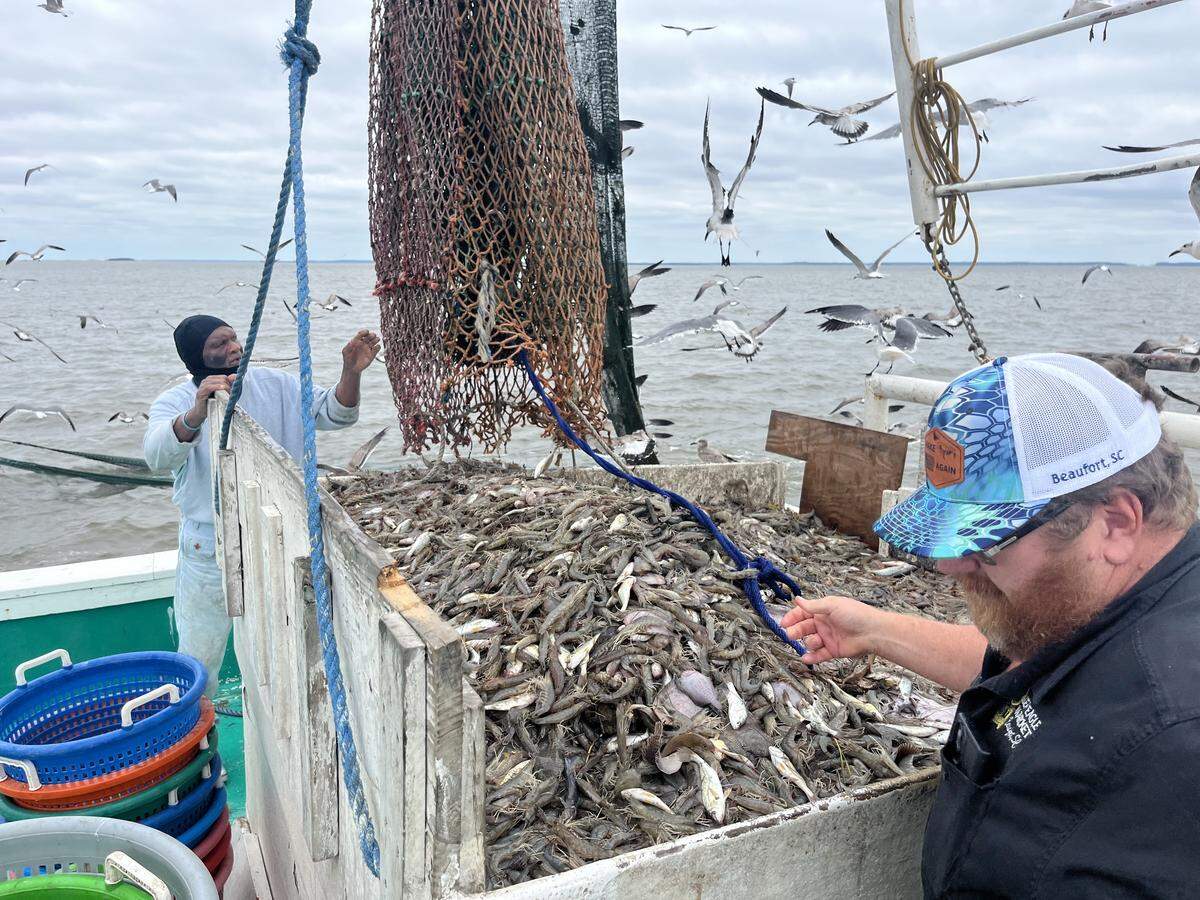
The hovering birds create a chaotic scene as the men sort the catch. Some pounce and make off with a fat shrimp or fish, prompting a bark and a wave of the arms from Duncan.
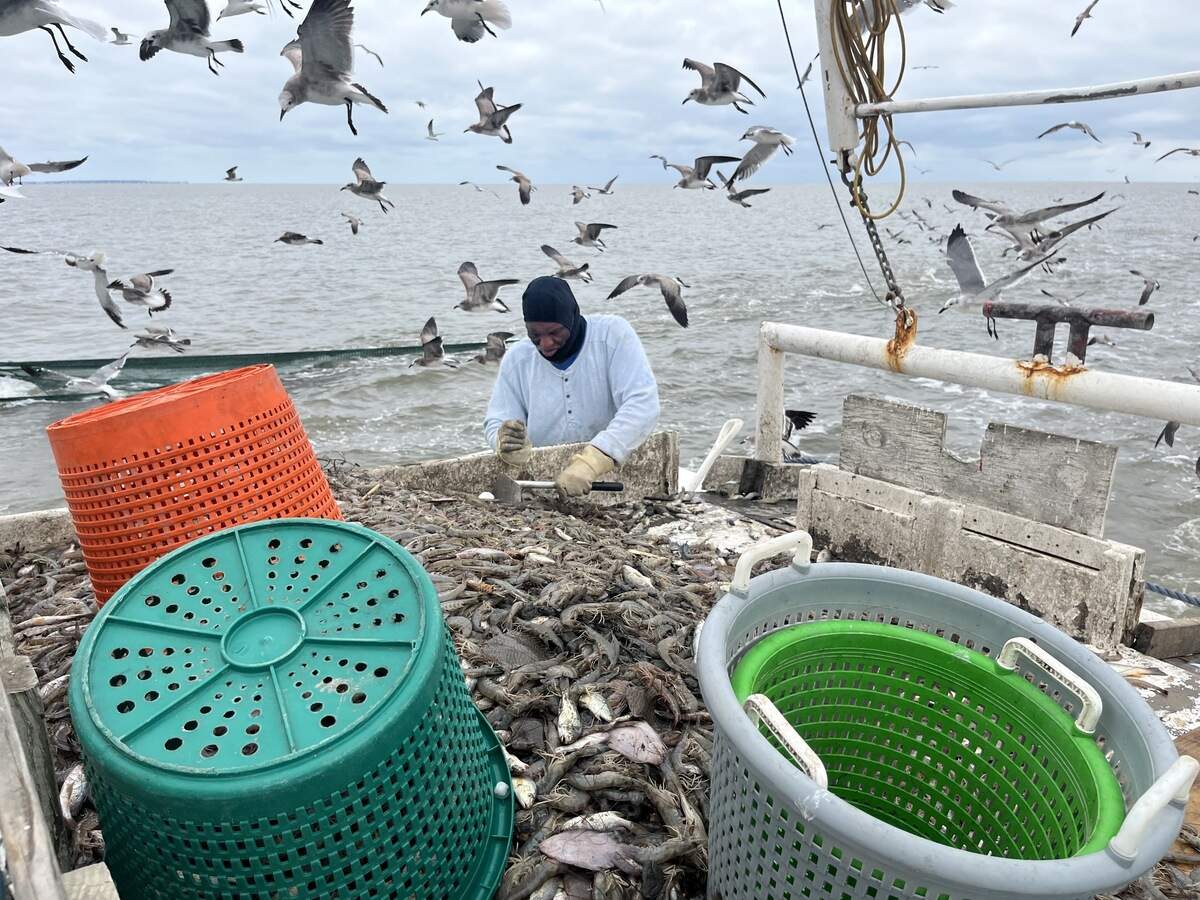
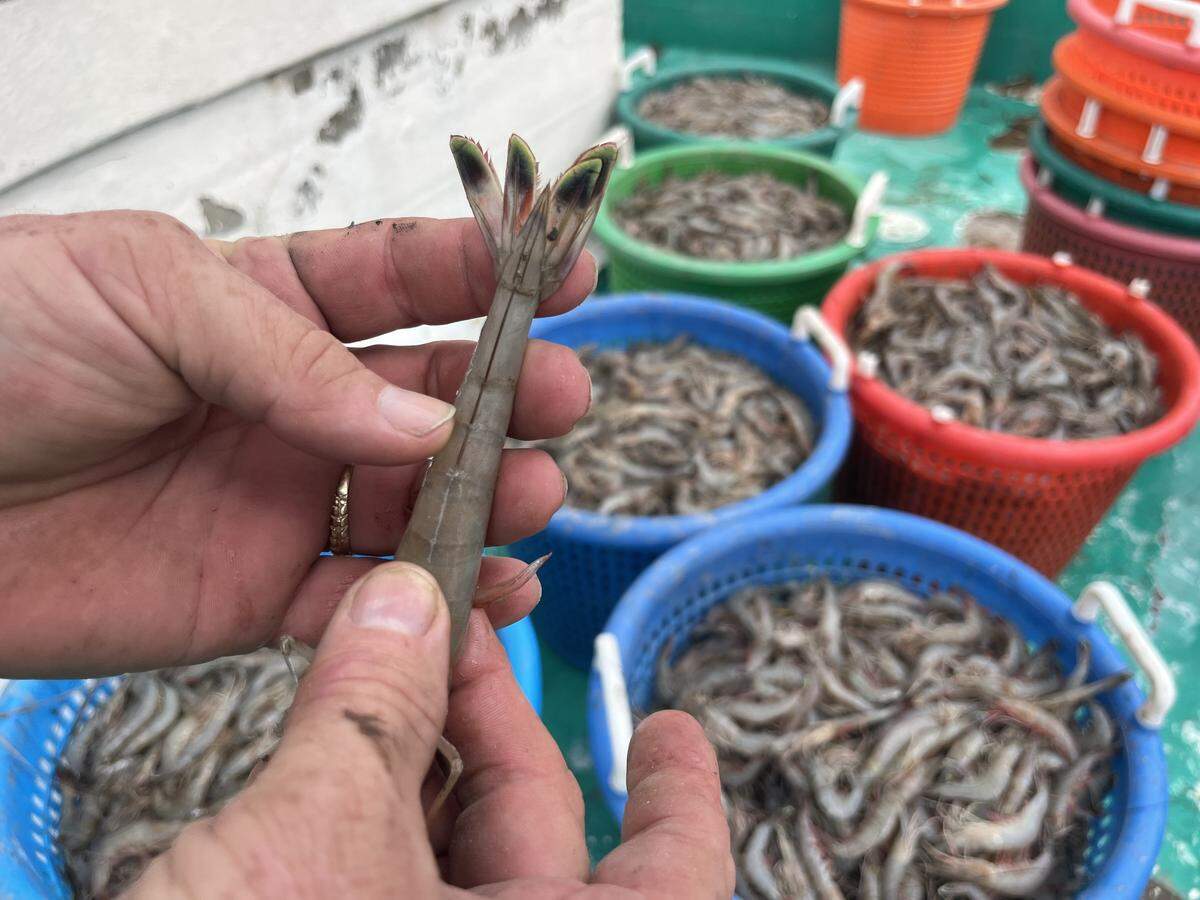
For 90 minutes of trawling, the catch is an estimated 700 pounds of white shrimp. Not bad, says Reaves.
‘Nothing but beauty’
This was a scene that was once common off the shores of Beaufort County.
But on this day, Reaves, 54, encountered just one shrimp trawler, and it was captained by his brother Cameron, 18 years his junior, who was headed to a different location.
The brothers are following in the footsteps of their father, Laten Reaves, who started shrimping in the 1960s.
Reaves remembers the 1980s and 90s, when he would encounter 50 to 60 shrimp boats on St. Helena Sound each time he set out in the fall.
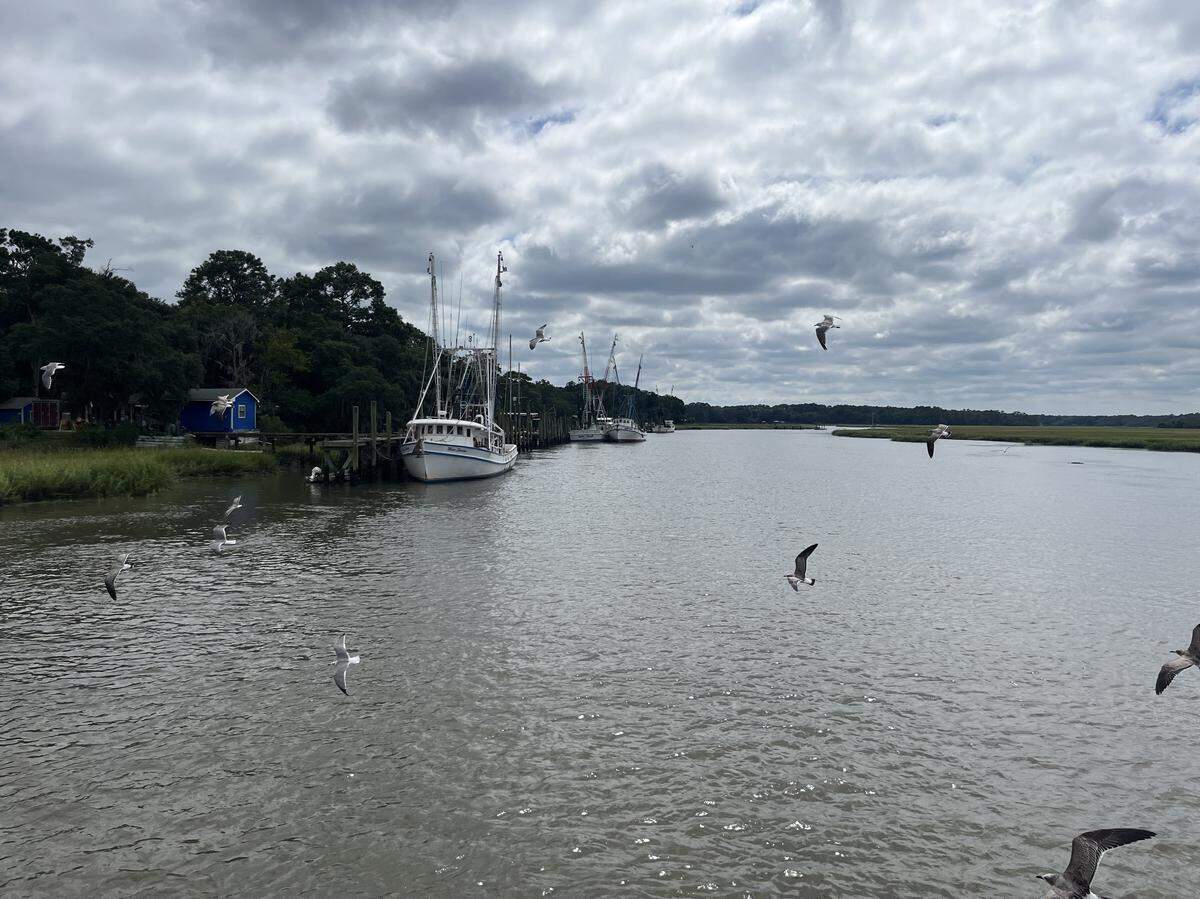
Today, there’s maybe 8 or 9 commercial shrimp boats operating in Beaufort County, and most days you see zero, he says. “For the most part,” says Reaves, “the fleet was devasted over the last 15 to 20 years.”
The struggle continues
The downfall started in the 1990s with an increase in imports, which drove down prices for locally caught wild shrimp, Reaves said. That was followed by a jump in fuel prices in the early 2000s. “It was like a perfect storm to destroy us,” he says.
Meanwhile the working waterfronts needed to sustain the fishing industry began to disappear as deep-water real estate prices soared and owners began to sell. In short, says Reaves, the docks, boats and older fishermen disappeared.
“It’s a good honest living,” he says. “It’s just sad there are so few of us left. It’s a dying breed.”
Despite the challenges, which include bad weather and maintaining old boats, Reaves still loves getting out on the water. The biggest attraction, he says, is “freedom from land.”
“No cars. No red lights. No horns,” he says. “Nothing but beauty.”
This story was originally published September 22, 2025 at 7:02 AM.