Did you recently test positive for COVID-19? You may not get a call from DHEC about it
READ MORE
COVID-19 in the Lowcountry
Here’s the latest on the omicron variant surge, COVID-19 guidance and more in the Lowcountry.
Expand All
Have you recently tested positive for COVID-19 at a public testing site in South Carolina? Don’t hold out hope that a state case investigator will call you and your close contacts to talk about your coronavirus diagnosis.
Faced with the ultra contagious omicron variant, which has cut through the Palmetto State’s population with ferocious speed since January, the S.C. Department of Health and Environmental Control early last month started to prioritize case investigations among vulnerable people in high-risk settings, such as nursing homes.
In other words, if you’re an employee at an office in Columbia who is working remotely, and you test positive at a DHEC-run testing site, you probably won’t get a phone call from a case investigator for a voluntary interview about where you have recently been, and who you came in contact with.
And your friends and family shouldn’t rely on an investigator to warn them of a possible COVID-19 exposure.
“I consider this, to my medical brain, to be a public health example of triage,” said Dr. Brannon Traxler, DHEC’s director of public health, in a recent briefing with reporters. “Should everyone expect to be contacted at this point? Not necessarily, especially if it is beyond the time frame in which our recommendations to them would be in effect.” (Some residents last month experienced long wait times for COVID-19 test results.)
“We want to target the people that we know are in those highest-risk settings,” Traxler said. “(The process is) getting closer to ... what is done with surveillance and case investigations and contact tracing for things like other respiratory viruses — things like the flu — where we don’t investigate every single case, but we target specific scenarios that are high risk to break the chain of transmission.”
The agency is paying close attention to infections among residents and employees in nursing homes, assisted living facilities, correctional facilities, “high-density workplaces or other settings with potential ongoing transmission.”
A DHEC spokesperson confirmed Thursday that the agency still is prioritizing case investigations, even as the omicron surge recedes and the number of new coronavirus infections continues to drop in South Carolina.
DHEC is urging people who test positive for COVID-19 to inform their close contacts on their own. The agency defines a close contact as someone who’s been within six feet of a person with COVID-19 for at least 15 consecutive minutes (indoors or outdoors) over a 24-hour period.
It’s a numbers game — and a matter of practicality. A DHEC spokesperson confirmed that the agency, as of Jan. 28, had only 408 active “case/contact investigators.”
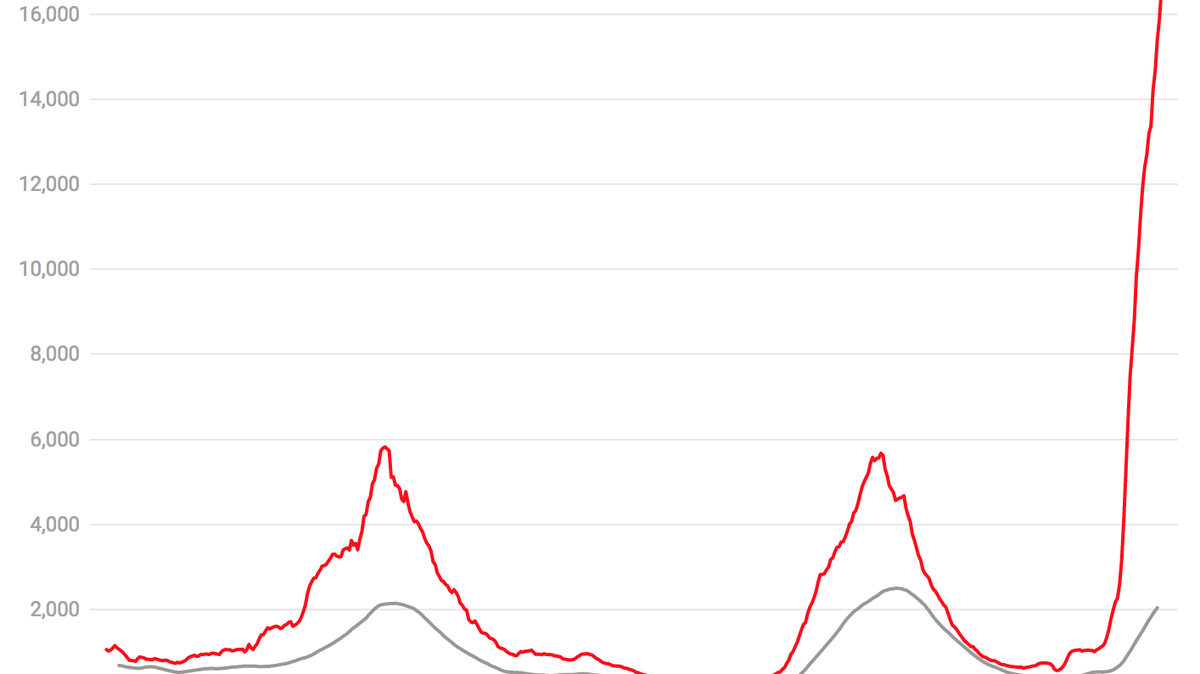
By comparison, South Carolina recorded more than 63,000 new COVID-19 cases from Jan. 23-29.
Given the sheer number of infections, DHEC early last month decided to follow the U.S. Centers for Disease Control and Prevention’s contact tracing guidance for COVID-19 crisis situations, according to a DHEC spokesperson.
The CDC has recommended that when facing an overwhelming coronavirus surge, states should focus on investigating cases among people who tested positive for COVID-19 within the past six days and should prioritize contact tracing for those living or working in congregate living facilities and high-density settings, among other places.
“In some instances, further prioritization may be necessary,” the CDC has said.

A hint at what’s to come?
Traxler said the state’s COVID-19 case investigation and contact tracing process is “getting closer” to what’s typically done to combat other respiratory viruses, including the flu.
As experts predict that SARS-CoV-2 — the coronavirus that causes COVID-19 — will become endemic, her comments offer some insight into how DHEC could continue to battle the pathogen in the future (after the omicron surge ends.)
Endemic viruses circulate from year to year.
The Association of State and Territorial Health Officials, or ASTHO, and other public health organizations recently issued a statement in support of states moving away from “universal case investigation and contact tracing” to focus on targeted investigations in high-risk settings.
The state of Virginia on Jan. 25 announced that it was shifting to the ASTHO-endorsed approach.
“This response is more effective when a virus spreads very easily and quickly and many infected people do not have symptoms,” a health department news release read. “Omicron is now the most common COVID-19 variant and is spreading so quickly, it is not possible or fruitful to track every case.”
Omicron seems to cause milder symptoms than past coronavirus variants, but it spreads much faster, even among people who have been vaccinated, which is why health-care systems still can become inundated with COVID-19 patients.
Calling close contacts
If you recently tested positive for COVID-19, DHEC has advice on which close contacts you should call and what quarantine information you should give to them.
The agency’s guidance can be found online: bit.ly/CloseContactsSC
This story was originally published February 13, 2022 at 6:00 AM.