Women in politics: Just how weak was South Carolina’s judicial reform? Now we know
READ MORE
Women in politics
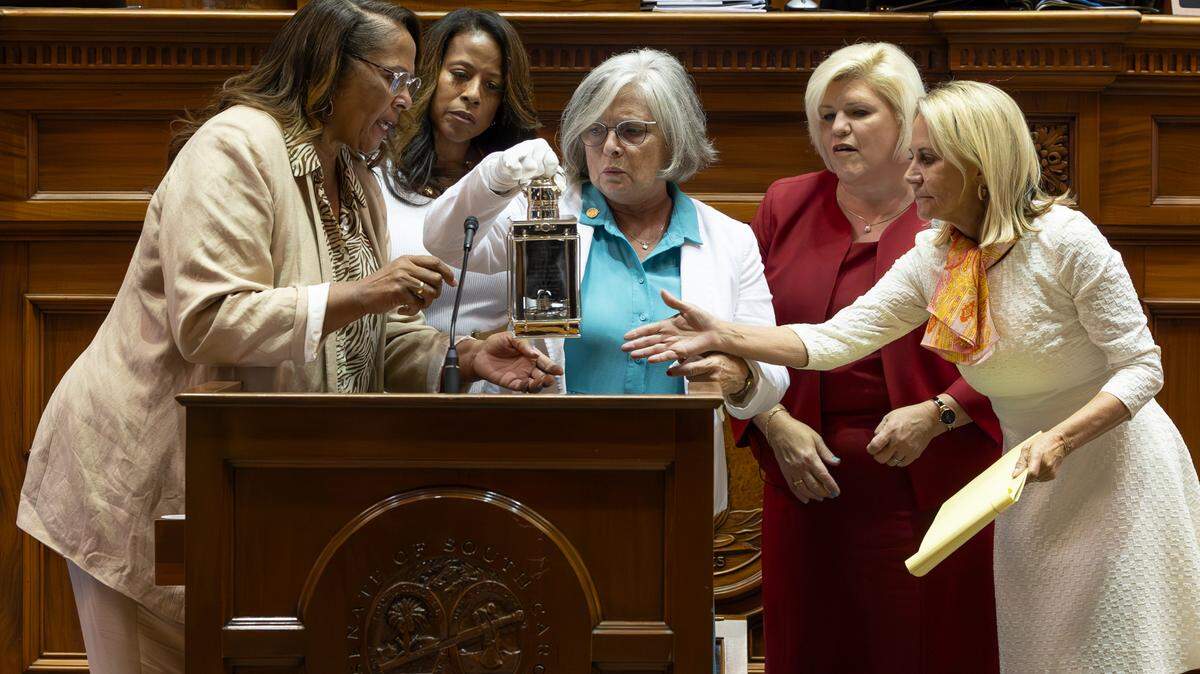
South Carolina set a record with six “sister senators.” Now it has two. Columnist Matthew T. Hall asked why.
Expand All
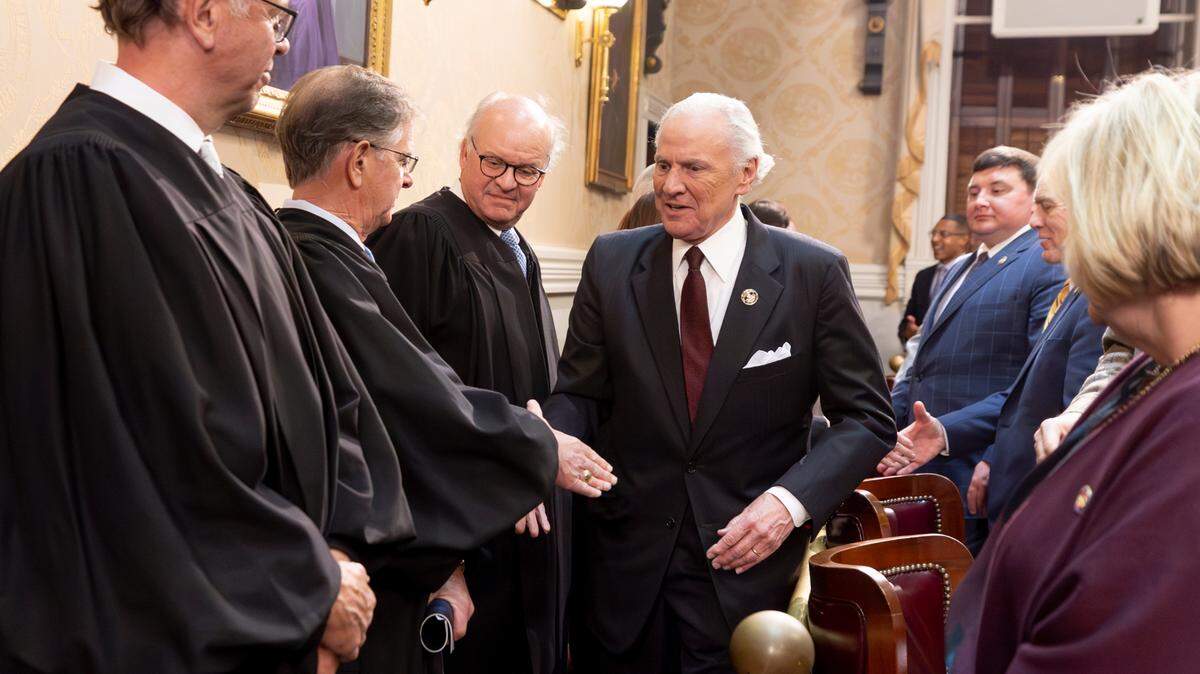
A year ago, Gov. Henry McMaster reluctantly signed a bill that changed how South Carolina’s lawmakers elect judges, expanding an advisory Judicial Merit Selection Commission from 10 to 12 people, imposing term limits for the panel and empowering himself to name four members.
As overhauls go, it was underwhelming. It wasn’t incremental reform. It was infinitesimal.
The new panel’s composition shows how little has changed. In fact, it shows a step backward.
In a July 3, 2024, letter to Senate President Thomas Alexander, McMaster called his signature a step toward meaningful reform. He said letting governors pick a third of a panel previously appointed only by the House Speaker, Senate president and Senate Judiciary Committee chair would “help ensure that judicial candidates and sitting judges do not feel beholden to a small cadre of lawyers who appear as perpetual gatekeepers, repeatedly controlling the keys to a candidate’s eligibility to stand for election by the entire General Assembly.”
He also said the law would “not significantly change or sufficiently improve the current screening process.” And he called the overall selection process, which involves candidates seeking votes from lawyer-legislators who may later appear before them in court, “demeaning, inordinately time-consuming, and completely unprofessional for those willing to stand for judicial office.”
There was no doubt how he felt.
A frustrated McMaster said other actions were needed “promptly,” because “giving the Executive Branch an immediately outnumbered proportion of JMSC’s membership” likely would do little.
It’s no surprise that new members were appointed several weeks ago without a splash at all.
They don’t reflect the state
The new commission that will recommend which judicial candidates make it to up-or-down votes of the General Assembly next year was seated July 1, and it looks a whole lot like the old one.
Six of the panel’s members — so 50%, down from 60% — are still the lawyer-legislators McMaster considers part of the problem because they’re “perceived as receiving favorable treatment when they appear in court before the judges they select and elect.”
Such favorability is certainly up for debate, but the appearance of a potential conflict is real.
Also, the new panel is less diverse than its predecessor, with fewer women and fewer Black members than before and a far lower percentage of both because the panel is bigger in size.
The former 10-member commission had three Black members, two of whom were lawmakers, and two women. The new 12-member commission has two Black members and one woman, and McMaster named two of those three people with his four appointments.
McMaster’s appointees are lawyers Mary Agnes Hood Craig, Lanneau Lambert Jr. and Peter Protopapas and Master-in-Equity Joseph Monroe Strickland. House Speaker Murrell Smith’s appointees are lawyer Christian Stegmaier and state Reps. Micah Caskey, Jay Jordan and Leon Stavrinakis. Alexander’s two appointees are lawyer John T. Lay and state Sen. Chip Campsen. Senate Judiciary Chair Luke Rankin’s two appointees are himself and state Sen. Overture Walker. Strickland and Walker are Black men. Craig is the lone woman on the panel.
Caskey, Jordan and Rankin are the only holdovers from the earlier 10-member Judicial Merit Selection Commission. Among those cycling off are state Reps. Todd Rutherford and Ronnie Sabb, who are Black; Hope Blackley, a Black woman, and Lucy Grey McIver, a woman.
The new commissioners should certainly get the benefit of the doubt as they prepare to evaluate judicial candidates. They will be busy. There are five seats on the state Supreme Court, nine on the state Court of Appeals, 46 on the Circuit Court, 66 on family court and six on the administrative law court, 132 judgeships in all, with staggered terms of varying lengths.
Geographic disparity, too
Some will view this differently, but it’s hard not to see that the new group has an inherent conflict and is once again dominated by white men. That’s worth noting even in a state where many lawmakers are leading a national charge against diversity, equity and inclusion programs.
In a state where 51% of the residents are women and 25% are Black people, 17% of the commission will be women and 8% of it will be Black, a third of the actual proportionality.
To be fair, the lawyer-legislators on the panel are smart, experienced, respected leaders at the State House and in their communities and the civilian lawyers are accomplished and known. The issue is not with them individually, but with them collectively: They don’t reflect the state.
And that is a problem in a state where the judges also don’t really reflect the population — even though we’re all one mistake away from appearing in those judges’ courtrooms.
Much has been made historically of the fact that South Carolina has too few female and Black judges. That might not matter to everyone. But it is important.
There is a geographic disparity at play on the new commission as well.
The state’s 46 counties are divided into 16 judicial circuits and those in turn are further segmented into five areas for the purposes of creating five Citizens Committees on Judicial
Qualifications to help the commission evaluate candidates.
The five areas are in the Lowcountry, the Midlands, the Pee Dee, the Piedmont and the Upstate.
Seven of the commission members are from the Midlands, three are from the Lowcountry and two are from the Pee Dee. That means there is no one on the commission from the Piedmont or the Upstate, creating a pretty noticeable geographic imbalance on the panel evaluating judges.
Important life-changing stuff
The American Bar Association reports that South Carolina has the fewest lawyers per capita: a little more than two lawyers for every 1,000 residents, or roughly half the national average.
That’s still a lot of qualified attorneys who could populate a more diverse selection commission.
The ultimate consideration, of course, is the judges themselves who wield so much authority, and the realization they don’t reflect the state’s diversity is not new. Nor is the work to change it.
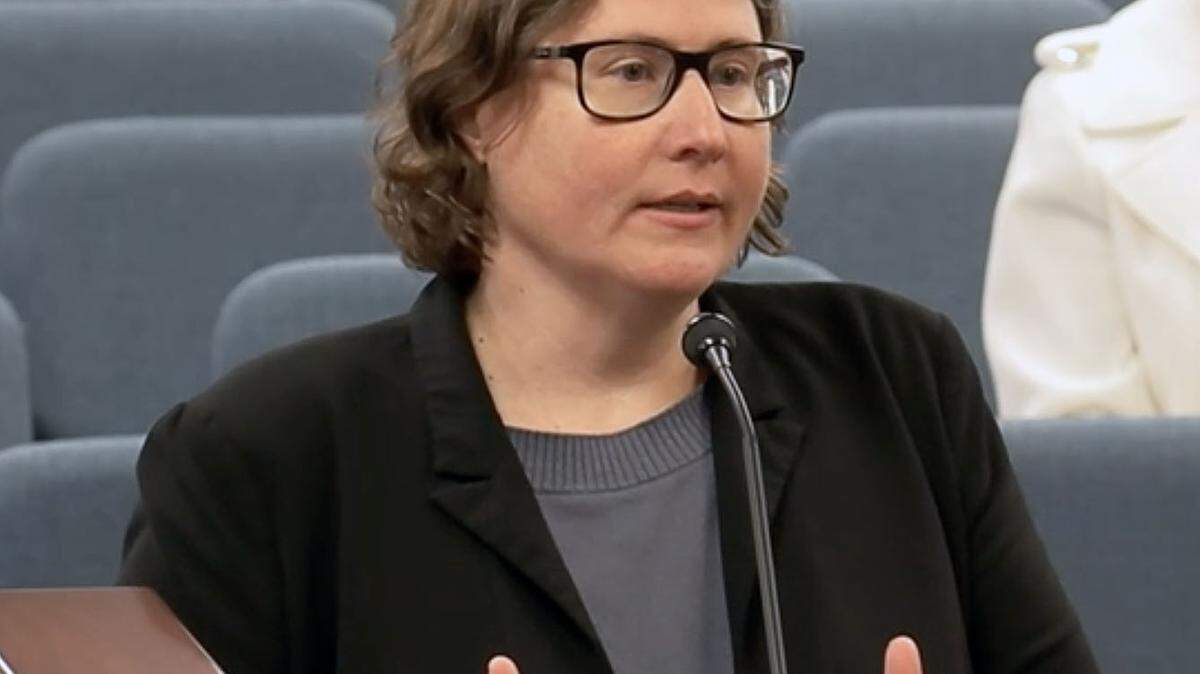
“Judicial merit selection is about the law and those sorts of qualifications, but we just hate to see the same types of people represented over and over again and not really including those other perspectives,” said Sara Ballard, executive director of South Carolina Women in Leadership.
“Diverse perspectives in science and business have shown us that it uncovers blind spots that we don’t realize we have. It helps us innovate and solve problems that if we only have one perspective we’re not able to do as efficiently and effectively.”
That’s the case in courtrooms, too, she said.
“It’s really important life-changing stuff for people to go in front of the judges of South Carolina.”
This story was originally published July 24, 2025 at 5:00 AM with the headline "Women in politics: Just how weak was South Carolina’s judicial reform? Now we know."