Women in politics: ‘It makes me feel helpless.’ SC’s two female state senators discuss the future.
READ MORE
Women in politics
South Carolina set a record with six “sister senators.” Now it has two. Columnist Matthew T. Hall asked why.
Expand All
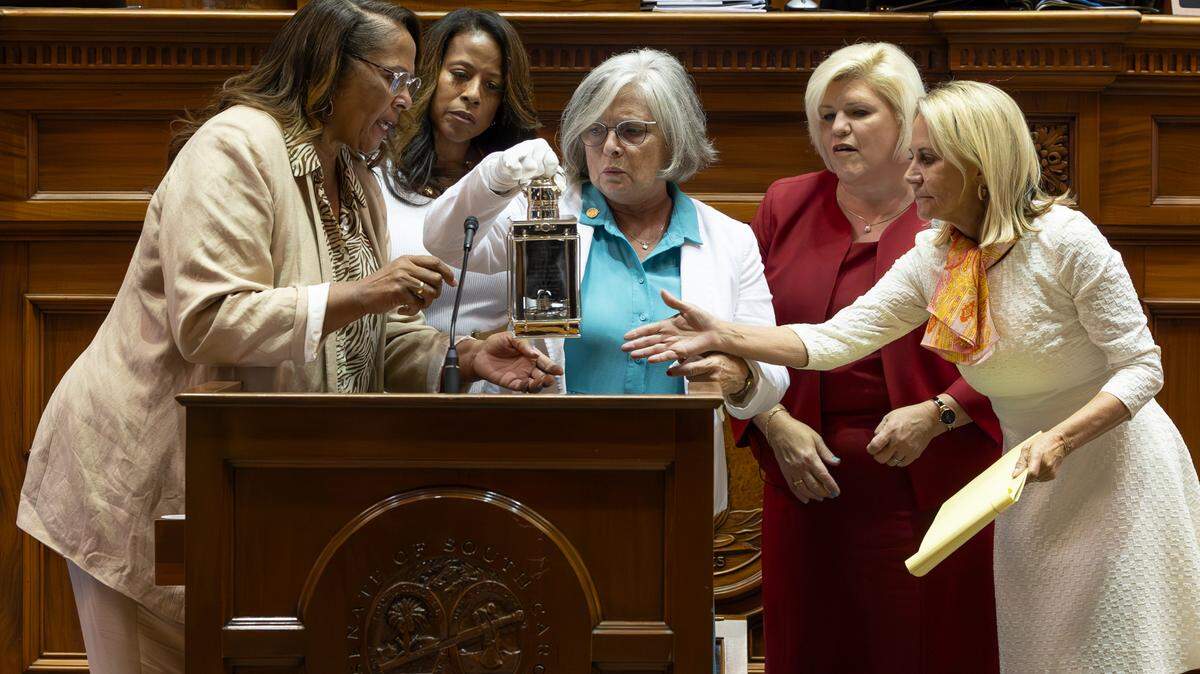
A year ago, all five female state senators from South Carolina won the John F. Kennedy Profile in Courage Award for their bipartisan effort to block a near-total abortion ban in the state. That it’s cause for celebration and condemnation shows how tough it was and how tough they are.
A death in the 46-member state Senate led to the election of a record sixth woman in January, but it’s been downhill from there for female representation and reproductive rights in the state.
In May 2023, South Carolina lawmakers banned abortions about six weeks after conception — before many women know that they are pregnant — and in June 2024, voters ousted the three GOP female state senators at the heart of the debate — Katrina Shealy, Sandy Senn and Penry Gustafson.
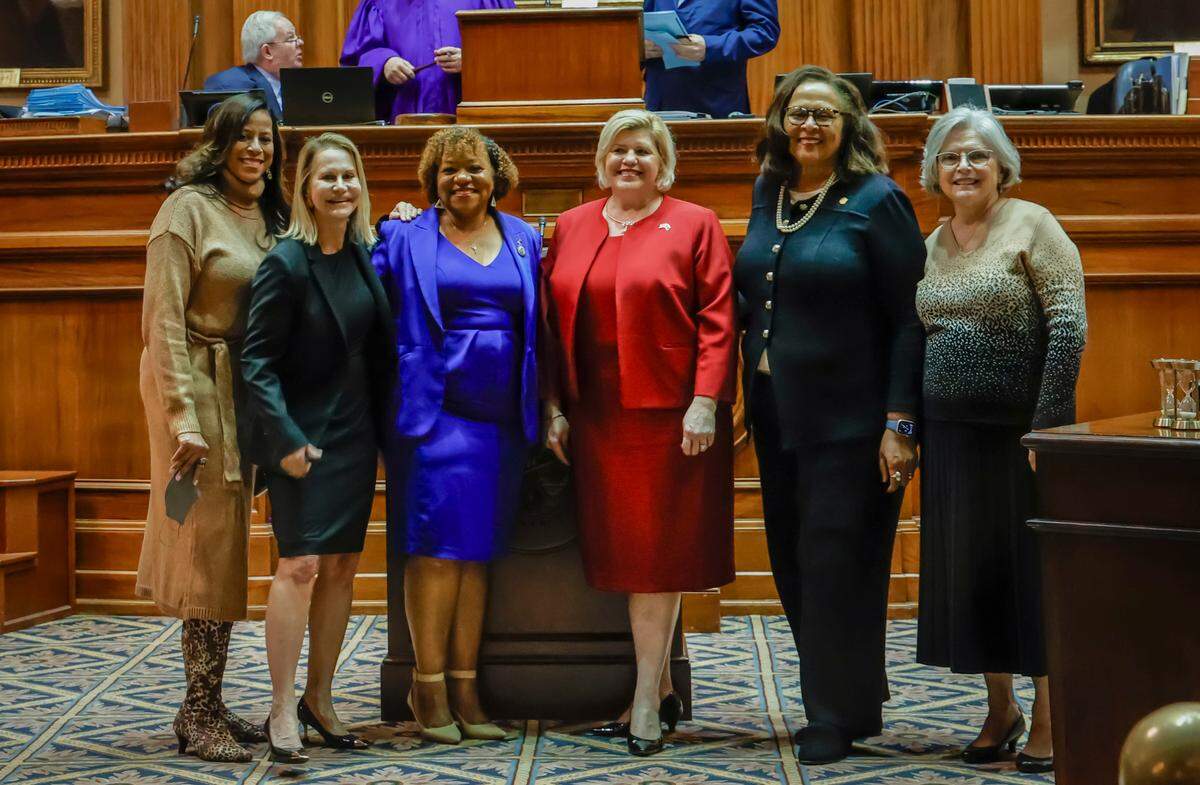
Now, with independent Sen. Mia McLeod not seeking a new term, South Carolina has just two female state senators, the fewest in the country. Because they’re Democrats who will be outside of a controlling Republican supermajority without any female senators at all, it won’t just be the debates about women’s health that will have fewer women in them. Sen. Tameika Isaac Devine, D-Richland, and Sen. Margie Bright Matthews, D-Colleton, know there’s a ton of work ahead.
“We were sent to the Senate with a job to do,” Isaac Devine said. “You can’t say, ‘Only two women so we can’t do anything.’”
“I can tell you that the two women who are left in the Senate, I don’t think that either of us are ones who would wither away if we are approached in an unprofessional manner,” Bright Matthews said. “I don’t plan on it because I like to respect people and I like to be respected.”
While the pair may be known nationally for their opinions about abortion, neither should be pigeonholed. Voters reelected them Nov. 5 for many reasons beyond their gender. Isaac Devine is focused on childcare, the juvenile justice system and economic development. Bright Matthews wants to protect public education, ease traffic congestion and oppose tort reform.
In recent interviews, both women relayed a sense of inevitability if not hopelessness about next year. They can see a future with more women in the state Senate and in politics in general, but Bright Matthews said she will “be silent” if and when a near-total abortion ban bill advances.
“I am going to be silent because the people of South Carolina have spoken,” she said. “One thing I can do is count. And if the numbers aren’t there, you don’t go across the aisle. In politics, the most important thing you need to learn is to read the tea leaves.”
South Carolinians have had complex views about abortion since the U.S. Supreme Court overturned Roe v. Wade in 2022 and state lawmakers began to pursue a ban. The Winthrop Poll, which surveys South Carolinians on public policy issues, found “the typical citizen definitely believes in some exceptions” in August 2022 and that “the majority of South Carolinians believe in the ability to get a legal abortion at least under some circumstances” in November 2022. It found 37% support for a ban on most abortions after six weeks but 43% opposition in May 2023. Those views had shifted to 31% support for a six-week ban and 48% opposition by May 2024.
Bills will be pre-filed on Dec. 11, offering a glimpse of new priorities in the session that runs from January to May. Bright Matthews expects the abortion issue to come up early in the session.
But Senate Majority Leader Shane Massey, who leads the Republican caucus, isn’t so sure. He said abortion is a harder and more personal issue for senators than many other subjects. And he said they haven’t discussed in detail where they stand. Some voted in favor of the state’s current ban about six weeks after conception, but their positions may have shifted, he said.
Massey said the new state Senate, with the largest incoming class anyone can remember with 13 new senators, will miss their departed women colleagues, but that the GOP caucus will still “do good work” and that senators are expected “to be in touch” with all their constituents.
“It’s important to have as many perspectives as possible, and that certainly includes having women,” Massey said. “Those three ladies added a lot of perspective and that was very helpful, but I also think more than about gender, necessarily, it’s about issues. There were a whole lot of women who voted for the male candidates in those races, so I think it’s important that we focus on the issues and understand where people are and try to advocate for those positions.”
It’s a fair point, but who gets to make important decisions is and always has been as important.
The loss of so many women still stings, months later, because this is bigger than the past and present women of the state Senate. It’s about the future of not just abortion but women in power.
What comes next will happen without any Republican women in the Senate. That’s a problem.
“I’m just very concerned that the lack of those voices will ultimately lead to legislation that harms our community,” Isaac Devine said.
“It makes me feel helpless,” Bright Matthews said. “That’s why there’s no need for me to waste time on the issue. (Before) I at least had some folks to fight with. I walked across the aisle and had common friends that could fight for this issue and understood how important that issue was.
“Aren’t we better when we hear from other people’s points of view?”
This story was originally published November 22, 2024 at 6:00 AM with the headline "Women in politics: ‘It makes me feel helpless.’ SC’s two female state senators discuss the future.."