
Why Allen University is the perfect place for a new tribute to the Emanuel 9
READ MORE
What emerged from tragedy 10 years ago
Powerful reflections on the 10-year anniversary of the Charleston church shooting
Expand All
What a Charleston church shooting survivor and a descendant of slave brokers can teach us | Opinion
Why Marjorie McIver, the sister of one of the Emanuel 9, champions literacy | Opinion
Ten years after the Charleston church shooting, a prayer for us all | Opinion
Why Allen University is the perfect place for a new tribute to the Emanuel 9
“Your beginnings will seem humble, so prosperous will your future be.” — Job 8:7
Before Richard Allen founded the African Methodist Episcopal Church and became North America’s first Christian bishop of African descent and the namesake of Columbia’s Allen University, he found himself in Philadelphia in the 1780s.
As a church service began there, he and two other Black men bent in prayer. One was grabbed.
“You must get up,” a white man said before threatening more force. “You must not kneel here.”
Allen got up and moved on, and because of a determination lit in that moment, he established the AME Church. It now has millions of members in 7,000 congregations in 20 Episcopal districts in 39 countries on five continents.
Nearly a century after the church’s humble beginnings, a tiny school founded by the church moved from Cokesbury near Greenwood to Columbia, renamed itself Allen University in honor of Allen, and renewed its commitment to teaching Black students courses in law, theology and the arts.
For 10 years in Cokesbury, “the school prospered in fulfilling its mission of developing an educated clergy in the face of repression and violent opposition,” Allen University’s website reads. In Columbia, it became “rich in the tradition of promoting personal and spiritual growth and educating men and women to become productive leaders and citizens in an ever-changing world.”
Allen opened its doors in Columbia in 1881 with 60 students and six faculty, and by 1890, it had graduated 75 students. More recently, its alumni have become state politicians, presidents at Allen and other universities and bishops in the AME church.
Its alumni also include three of the nine people killed after closing their eyes in prayer at a Bible study on June 17, 2015, 10 years ago this coming Tuesday, at the Mother Emanuel AME Church in Charleston. A white man was with them for 45 minutes, welcomed in with open arms, before he opened fire.
.JPG "IMG_emanuelMAIN1_2_1_7Q8EPEK8_L230969226 (1).JPG")
We need not name him, but let’s say the names of the Emanuel 9 together. They are Tywanza Sanders, Myra Thompson, Susie Jackson, DePayne Middleton-Doctor, state Sen. Clementa Pinckney, Ethel Lance, Cynthia Graham Hurd, Sharonda Coleman-Singleton, Daniel Simmons.
The church. The university. The shooting. They are inseparable now, tied by time.
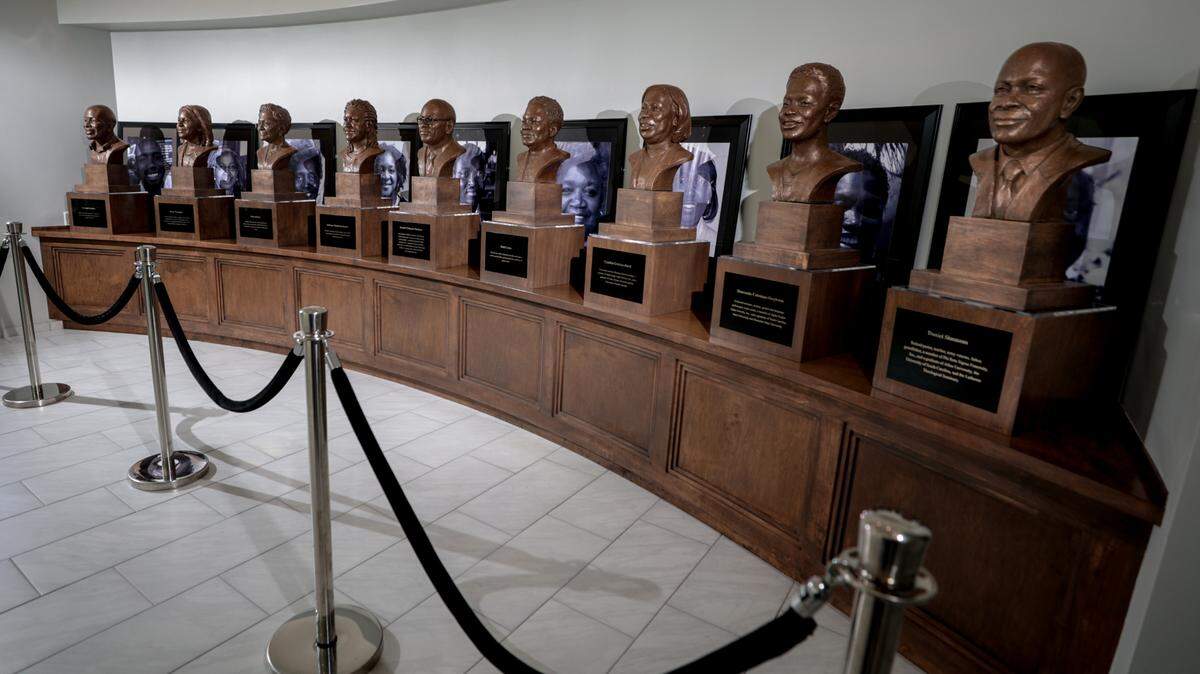
The stories of these nine lives have become a single story. And now nine bronze busts and photos of each victim greet visitors at Allen University’s Waverly-Clyburn Building on Hampton Street in Columbia on hallowed occasions like anniversaries and on days like any other.
As Allen University President Ernest McNealey told WLTX at the memorial’s recent unveiling, “When my great grandson is the president here, he’ll be able to come by and look at the busts.”
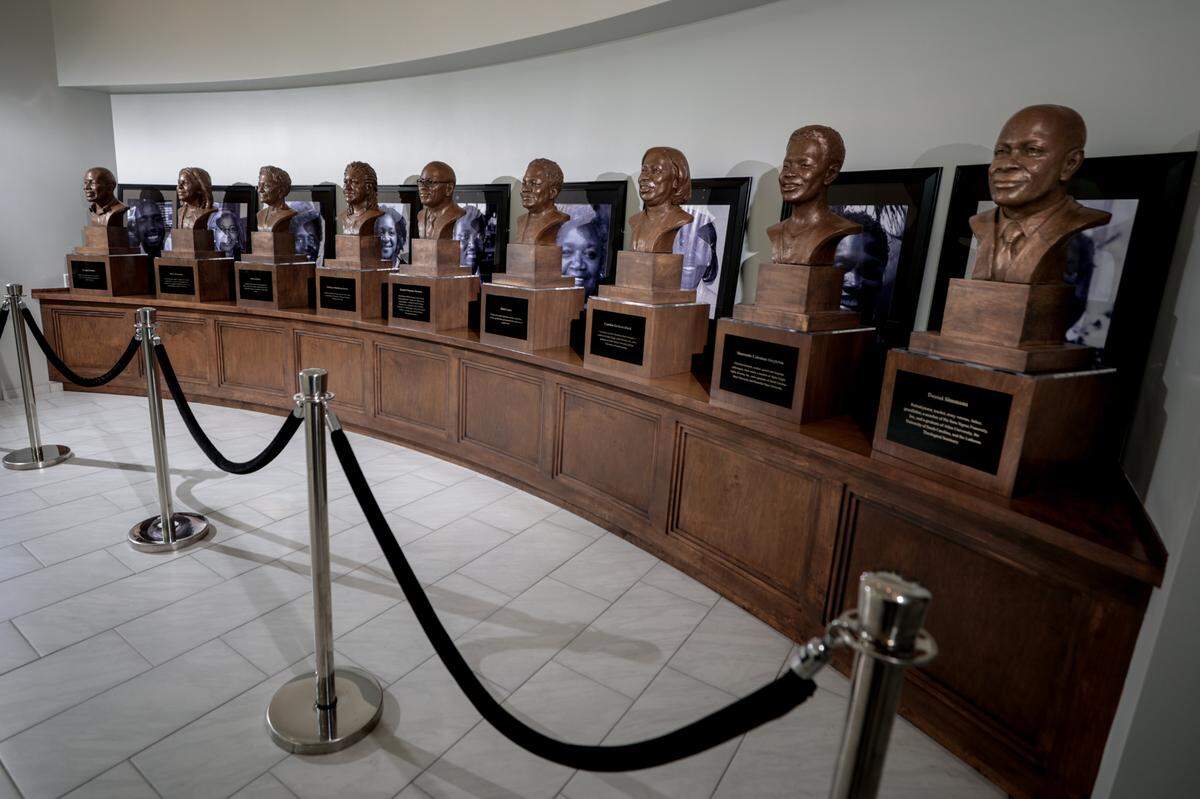
Importantly, it’s their lives, not their deaths, memorialized in plaques beneath each bust, listing family titles and words like “longtime church member,” “teacher,” “counselor,” “lover of gospel music.” The victims still have much to teach us about the ties that bind a community together.
The busts speak to us. They say that Columbia — the killer’s hometown — remembers, that Columbia — where the Emanuel 9 will now always watch over us — will never forget.
”Hatred stirs up conflict, but love covers over all wrongs.” — Proverbs 10:12
The National Park Service remembers, too. That’s how big the footprint of this small school is.
The park service website says Allen University was among a number of private schools and universities for African Americans founded during the Reconstruction Era and one of the first founded and operated by Black faculty and scholars in South Carolina. The site says it opened “shortly after the University of South Carolina barred African American students from attending the school” and “was created to help fill the need for black education in South Carolina.”
Allen University was listed in the National Register of Historic Places 50 years ago in 1975.
The oldest building from the 1880s is still in use, but now the campus has 28 buildings spread over 12 acres of land just outside downtown Columbia. Its student body has similar reach.
About 90 percent of the students who have enrolled at Allen come from across the Southeast., according to the school’s 2024-2029 strategic plan. Forty percent are from South Carolina, 20% are from Georgia, 16% are from Florida, 7% are from Alabama and 6% are from North Carolina.
The student body is 97% African American, with 98% requiring some form of financial aid and 95% receiving federal Pell Grants intended to help families of high financial need afford college. About 600 students attend now. The goal is to double that by 2026.
In an interview on campus Thursday, President McNealey said the university is an extension of Richard Allen’s focus on “the greater good.”
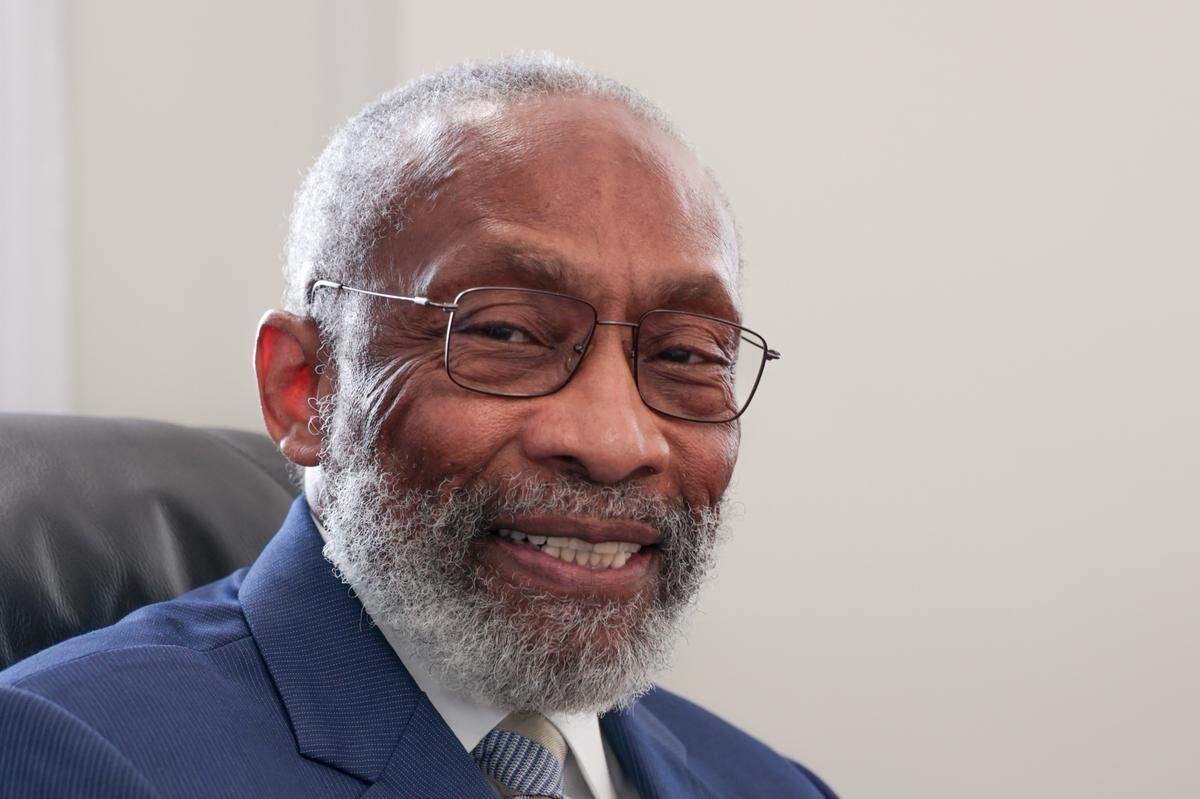
“If you want your community to be a home,” McNealey said, “then not only must people have a life of the spirit, but a life of the mind.”
McNealey uses that word again — life — to relay that the Emanuel 9 busts are meant to be a celebration of the value of it.
“What we would hope is that people will stop and have their own reflections,” he said. “We don’t want or expect there to be a universal narrative, but that each individual will reflect on their own humanity.”
Visits will be by appointment for security reasons.
Allen is one of eight Historically Black Colleges and Universities in South Carolina where HBCUs are a staple of life in a state with a history of racism. It was only 10 years ago that that white supremacist walked into a Black church with a .45-caliber Glock handgun, and it was only then that the political will materialized to remove the Confederate flag from the State House grounds.
“Unfortunately, nine lives had to be given for the conscience of people to recognize that that flag represented hate, slavery, segregation, division,” 82-year-old Columbia resident Dorothy Stewart said the day the flag came down on July 10, 2015. “Even though it is just a symbol, it is now something we don’t have to visually look at as a representation of all of that, and we can come together — Black and white, brown, whatever color. It is so marvelous. I’m just excited.”
As symbols and visual representations, as the antithesis of that flag, the busts at Allen University also carry great weight. They are imbued with loss but also life and love, community and connection. Somehow, their faces seem to be solemn and smiling, haunted yet peaceful.
Those smiles suggest there is something the gunman couldn’t take away, that which makes us “us.” Our shared humanity and hope in the future. Our ability to transcend troubles seen, to move on.
“And now these three remain: faith, hope and love. But the greatest of these is love.” — 1 Corinthians 13:13
On Jan. 31, 2015, when no one knew what tragedy lay ahead, Allen University held a grand opening celebration for its Langston Hughes Poetry Center and Library, which contains nearly 1,000 books.
“Allen University’s embrace of this initiative puts it, once again, at the forefront of civic leadership and visionary innovation in Columbia, South Carolina,” Center co-founder Kwame Dawes said that day, as quoted in the Carolina Panorama.
Langston Hughes, of course, is a legendary American poet whose words will always echo through space and time, so it was a fitting tribute for Allen University to name a venue after him.
In “Dreams,” Hughes wrote,
“Hold fast to dreams
For if dreams die
Life is a broken-winged bird
That cannot fly.”
In “Let America Be America Again,” Hughes wrote,
“O, let America be America again —
The land that never has been yet —
And yet must be — the land where every man is free.”
Hughes, like many, saw a future with peril and promise, and he surveyed it with words.
On June 26, 2015, six months after that campus celebration, the president of the United States was eulogizing Rev. and state Sen. Clementa Pinckney, pastor of the Mother Emanuel Church.
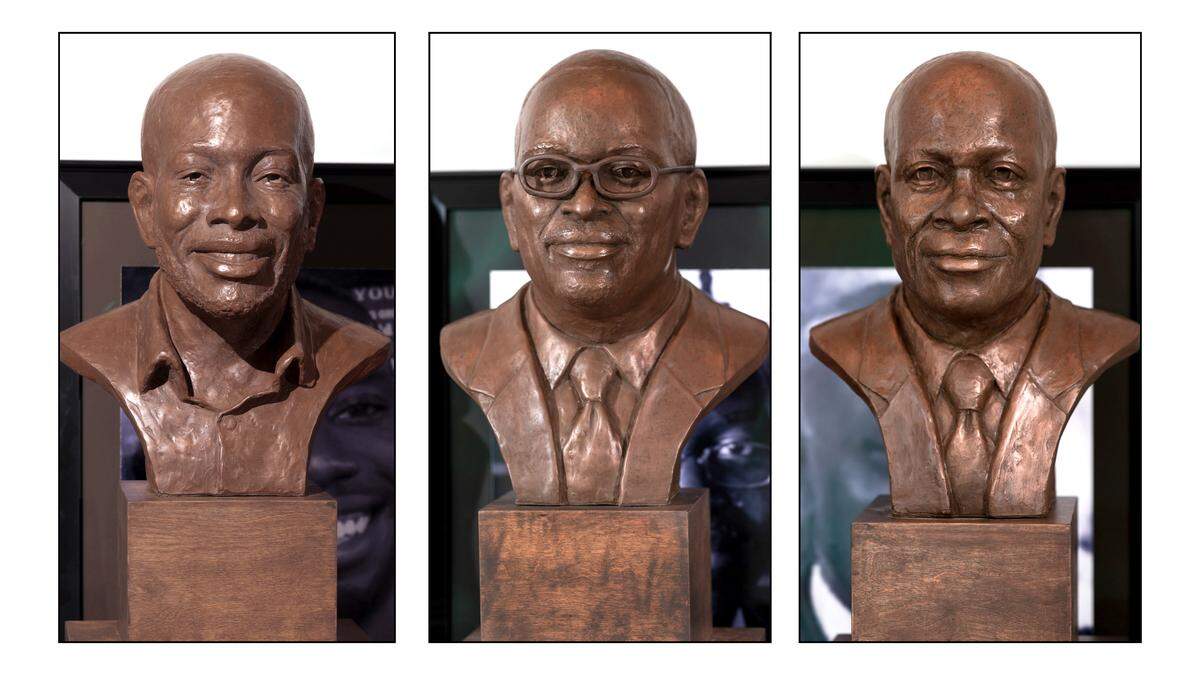
Pinckney, 41, was an Allen alumnus who like Rev. Daniel Simmons Sr., 74, and Tywanza Sanders, 26, died inside the church. Sanders, who was trying to protect his aunt Susie Jackson, was a poet, too. A poem of Sanders’ read at his funeral ended, “divided by color/So we are all trying to be equal.”
In retirement, Simmons had still led Bible study most weeks at Mother Emanuel. He was a Vietnam veteran and a Purple Heart recipient. He tried to reach Pinckney after he was struck.
At Pinckney’s funeral, then-President Barack Obama said, “When Clementa Pinckney entered a room, it was like the future arrived; that even from a young age, folks knew he was special. Anointed. He was the progeny of a long line of the faithful — a family of preachers who spread God’s word, a family of protesters who sowed change to expand voting rights and desegregate the South. Clem heard their instruction, and he did not forsake their teaching.
“He was in the pulpit by 13, pastor by 18, public servant by 23,” Obama said. “He did not exhibit any of the cockiness of youth, nor youth’s insecurities; instead, he set an example worthy of his position, wise beyond his years, in his speech, in his conduct, in his love, faith, and purity.”
Let it not be lost that the latter ages Obama listed bookend the times when Pinckney was at Allen University, seizing moments afforded him by higher education and the movement of hope.
On that terrible day 10 years ago, three generations of Allen graduates — Simmons Sr. from the class of 1967, Pinckney from the class of 1995 and Sanders from the class of 2014 — and six of their fellow faithful died after reading the Gospel of Mark.
Their light can guide us still, if we let it, its brightness a function of what Richard Allen still pays forward at a small campus in Columbia: the value of life.
“Others, like seed sown on good soil, hear the word, accept it, and produce a crop — some thirty, some sixty, some a hundred times what was sown.” — Mark 4:20
This story was originally published June 13, 2025 at 5:00 AM with the headline "Why Allen University is the perfect place for a new tribute to the Emanuel 9."