
Black history is our history: Life lessons from Hilton Head native Ben White Sr. | Opinion
It wasn’t the humidity that made the work unbearable, the speaker said, it was the heat — summer heat embedded deep in your bones.
When he added that it was hard to get up for work that you hate, the audience responded with a chorus of “amen.”
But, Hilton Head Island native Napoleon White said, “You have to work for what you’ve got.”
He was looking straight at the young people in the crowd when he said it at a family gathering at St. James Baptist Church in the summer of 1981. That day, 250 people came from all over to a reunion of the descendants of Napoleon’s father, Benjamin Walter “Ben” White Sr., a farmer whose hands were his 15 children.
Napoleon White came from Philadelphia, where he’d earned a master’s degree and was a teacher and administrator in the city’s public schools.
Figuratively and literally, that was far from the butter bean fields of an isolated Hilton Head, where the story of Ben White still casts a shadow so long it should be taught in our schools.
In South Carolina, how race-related history is to be taught and presented in library books has become a matter of legislative debate and legal action.
In Beaufort County, Black history is our history. And the story of Ben White and his family would be an engaging true story with a lot of lessons to teach.
Ben White was the grandson of a slave on Hilton Head. He got all the schooling available to him, about three grades.
His mother died when he was small, and he was reared by family friends.
When he grew up, he had three different wives: Grace Gibson White, Queen Elizabeth Singleton White and Nellie Johnson White.
He was smart and wise, and he worked hard to become the island’s leading farmer. He dealt in large volume, renting land to plant in addition to his own land. He was strict. His children said he never had to tell them anything twice.
He was large in stature with a booming voice. He had opinions and plans, and when he spoke, everyone listened. He was a pillar of the St. James church and all of the Grassland community until the day he died in 1955.
Ben White stressed the major tenets of the Gullah community: buy land, get educated, go to church, cling to family.
He would amass more than 100 acres, which he bought.
Some histories have erroneously maintained that freedmen were given land by the government after the Civil War. They were not. They bought it when land was cheap, but cash was scarce.
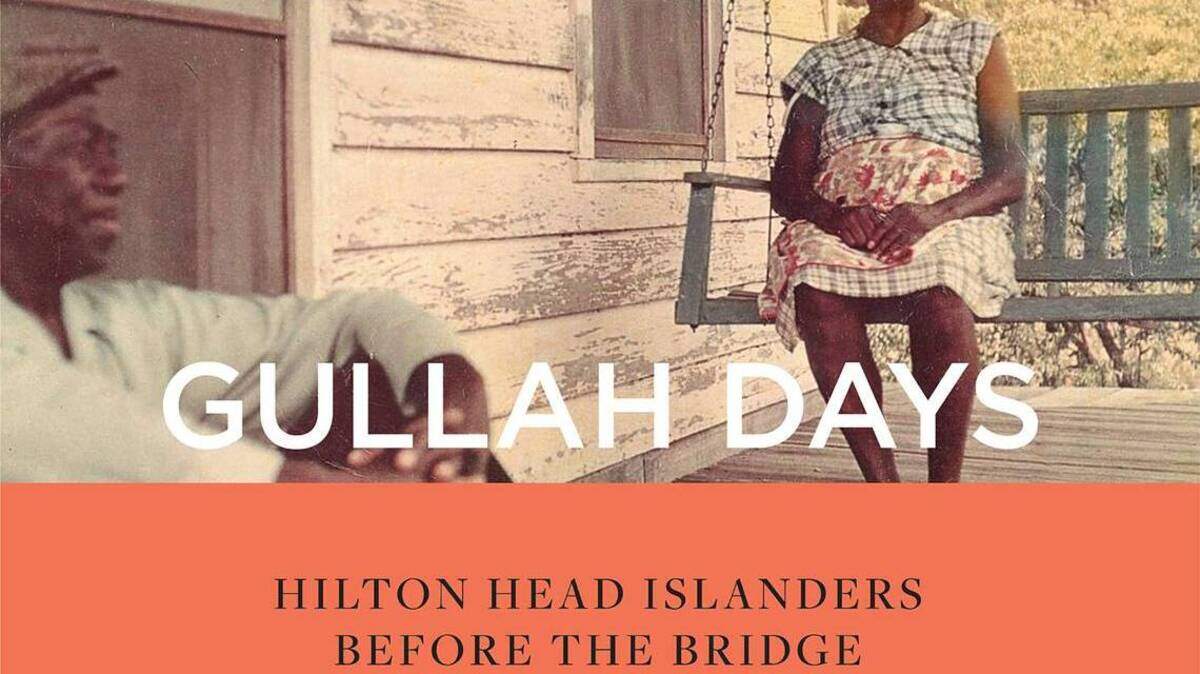
Then came the taxes, with the county taxing everything, down to the hogs and dogs, according to the 2020 book “Gullah Days: Hilton Head Islanders Before the Bridge, 1861-1956.”
The book says that in 1949 Ben White Sr. was taxed on 53 acres and three buildings. He paid the county $2,412.27. That would be $31,973.49 in today’s dollars, according to a U.S. Bureau of Labor Statistics consumer price index inflation calculator.
Yes, paying taxes was a burden. But so was everything else.
If Ben’s children were to go beyond junior high, they had to leave the island to do so.
All but a couple of them got college degrees. Three got Ph.D.s. One, Marion, became the first native islander to earn a veterinary degree.
And it went on down the line. As one example, all three children of his son Irvin, who was an assistant superintendent of the Beaufort County School District, and Irvin’s wife, Marge Grant White, who was a school teacher on the island, earned engineering degrees from Clemson University.
Ben White was the first native islander with a tractor. He had the vision to declare Hilton Head would someday be the “Garden of Eden of the South.”
When Napoleon White addressed the family reunion long ago, he told the grandchildren and great-grandchildren that just because they get a degree doesn’t mean they’re guaranteed a pot of gold.
That would require more work, and according to a story in The Island Packet, Napoleon quoted one of his mother Nellie’s basic fundamentals:
“You must be kind to yourself before you can be kind to others.”
An essay on the reunion by Johnnie Mae Mitchell says Napoleon White shared these words from his father: “A man should shade the ground he stands on, and let your word be your bond.”
And “if anyone should ask about him and his family, tell them we are rising.”