
A smart start everyone can do to reduce risk of firearm deaths in South Carolina | Opinion
Gun violence is not a political issue. It’s an American crisis, and one in Beaufort County, which had its most homicides in at least 30 years in 2023.
Guns contributed to 17 of these 20 deaths.
There’s a lot that people can do to address the problem — without waiting for the state Legislature or Congress to do something about it, or for mental health care to catch up, or for society as a whole to mend its evil ways.
That’s the message and the hope of a group of local people worried about America’s children and grandchildren, and their own.

Dr. Annie Andrews of Mount Pleasant calls gun violence “a preventable public health crisis.” She has been trying to call attention to it since her unsuccessful challenge to U.S. Rep. Nancy Mace, R-Daniel Island, in 2022.
The first step, Andrews says, is to acknowledge the problem.
Then-U.S. Surgeon General Vivek Murthy did just that last year when his office identified firearm violence for the first time as a national public health crisis. Titled “Firearm Violence: A Public Health Crisis in America,” his advisory is sobering.
Firearm-related injuries have sharply risen to be the leading cause of death for youth ages 1-19, surpassing deaths from motor vehicle wrecks, which are decreasing.
Nearly 40% of those firearm deaths among adolescents are suicides.
That’s surprising to me, but not to doctors.
Editor’s note: If you or someone you know needs help, please text or dial 988 to reach the National Suicide and Crisis Lifeline.
The Center for Gun Violence Solutions at the Johns Hopkins Bloomberg School of Public Health has seen so much of it that it has set a new goal to reduce gun violence by 30% by 2030. If health experts recognize the problem, so can we.
Strategies are available within each household to reduce the deaths.
First is to reduce firearm access.
“It is on us, as adults, to do that,” Andrews said to a Saturday-morning gathering of about 50 people at First Presbyterian Church on Hilton Head Island.
In South Carolina and elsewhere, children are being taught what to do if they see a gun: Don’t touch it, walk away, tell an adult. That’s good, but it won’t solve the problem.
It is up to adults to store their firearms safely: Locked up, unloaded, and kept separate from ammunition.
A national model that can be adopted by schools and others is called “Be SMART.”
SMART is an acronym for tactics everyone can start using now to reduce firearm deaths among children. It’s straightforward:
S: Secure all firearms in your home and vehicles.
M: Model responsible behavior around firearms. This includes talking about gun safety. Andrews said great models to follow are hunters, who represent the pinnacle of responsible gun ownership.
A: Ask about the presence of unsecured firearms in other homes before letting your children go there. Normalize the question, Andrews said. Parents are used to doing things like safely storing poisons and lowering the temperature on hot water heaters when young children are present. With the prevalence of firearms, it should be normal to ask about firearm safety before sleepovers or play dates, she said.
R: Recognize the role of firearms in suicide. If access to a loaded gun is not readily available, many lives will be saved, and adults can do more to reduce impulsive moves leading to death.
T: Tell. Nearly 1,500 American children are killed by guns each year. Talk about it. Do what you can to prevent it.
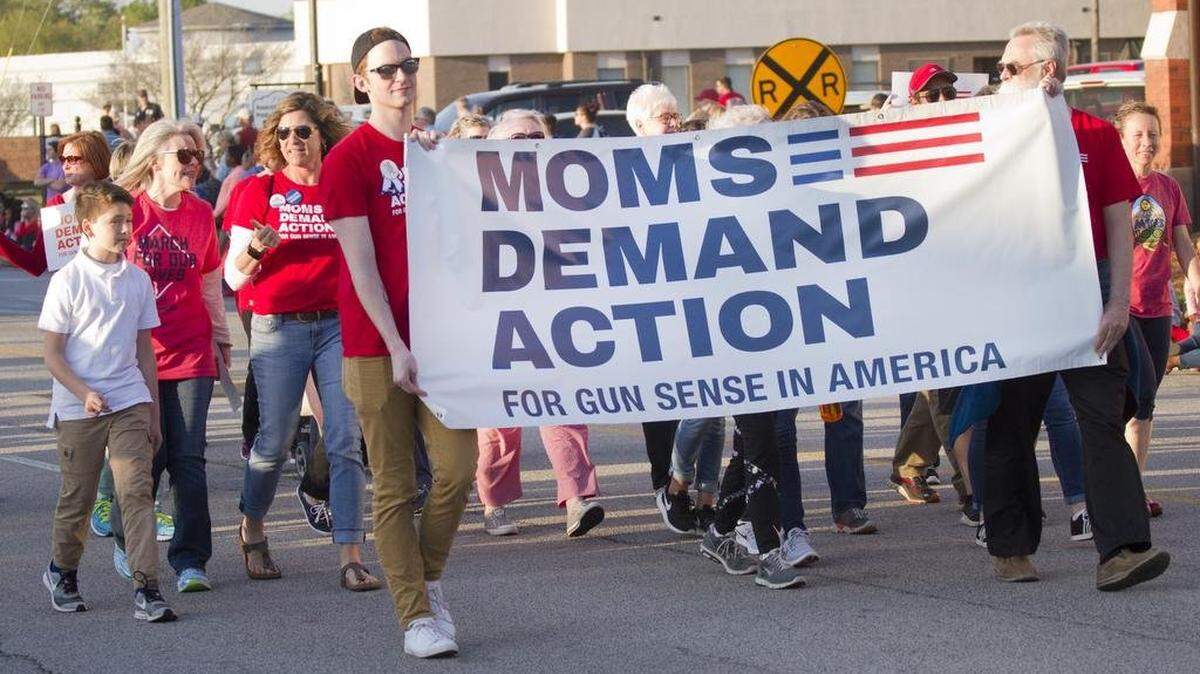
So many families have lost children to firearm deaths in our community and around the nation that a number of organizations exist to address the issue. They include Moms Demand Action for Gun Sense in America, which has a Lowcountry chapter.
Activism and attempting to influence public policy are always options, but it starts at home.
Andrews cited a study that found households with locked firearms and separate locked ammunition have a 78% lower risk of self-inflicted firearm injuries and 85% lower risk of unintentional firearm injuries.
Doing that would be a smart start.