
Bootlegging saga put spotlight on legal practices of the day and stirred calls for reforms
The Colleton County bootlegging conspiracy of 1956 put on parade South Carolina’s tradition of laws designed for corruption.
It left a visiting federal judge stunned at what he saw. And it prompted the editorial board at The News and Courier in Charleston to scold:
“A public office isn’t a gilt-edged invitation to public plunder. As this case demonstrated, not all South Carolinians are clear on that point.
“Because some South Carolinians have tolerated law breaking, winked at it or worse, the federal government had to clean up the mess. The conditions are a shame on the state.”
The Island Packet and Beaufort Gazette published a two-part series on the criminal conspiracy in South Carolina’s Lowcountry that led to the public corruption trial for 14th Judicial Circuit solicitor Randolph “Buster” Murdaugh Jr. in 1956.
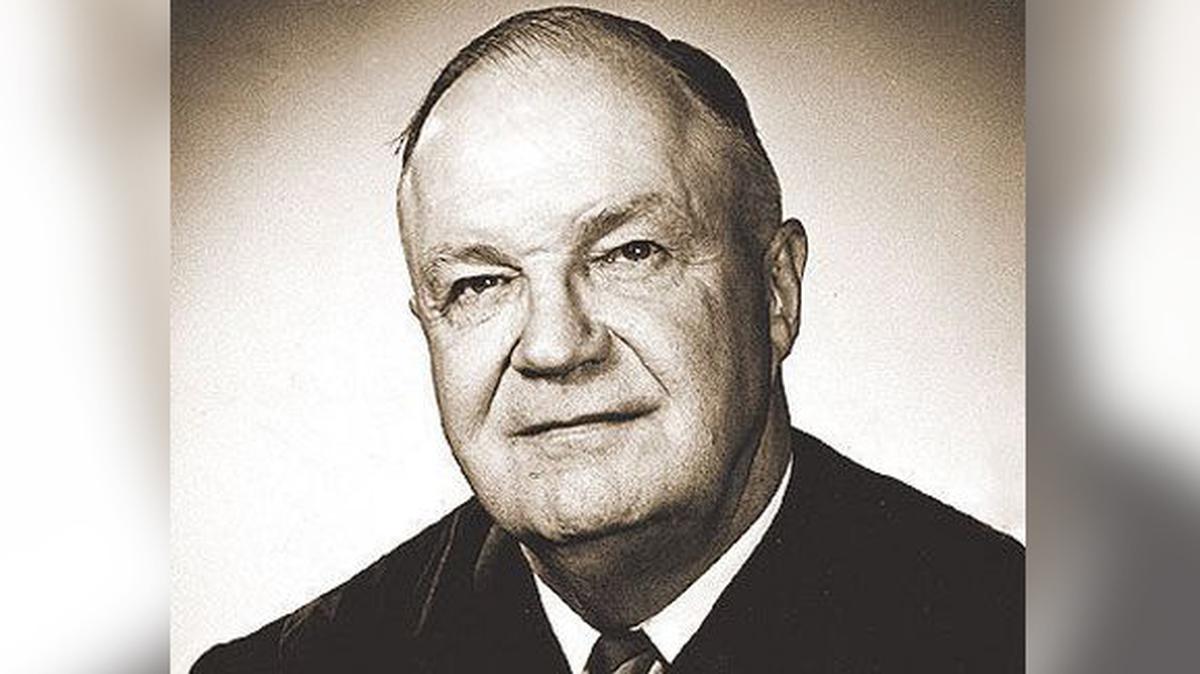
U.S. District Judge Walter E. Hoffman of Virginia, who presided over the trial, spotlighted four problems, according to reporting in The News and Courier by Jack Leland:
▪ State law permitted solicitors to practice criminal law in federal courts where no conflict of interest existed with state law. Prosecutors and the judge blasted Murdaugh, saying he ignored a clear obligation to prosecute a bootlegging allegation in state court that he was taking money to defend in federal court.
▪ Sheriffs were allowed to name unpaid special deputies to their staffs.
▪ State judges let defendants pay fines over time.
▪ Magistrates accepted cash bonds and fines without issuing receipts.
“You are asking for trouble,” Hoffman said. “It is a disgrace that you allow such practices to continue. … I would advise issuing receipts for all money, even if it is only 25 cents.”
Murdaugh belittled Hoffman, who called him “grossly unethical,” as a federal government stooge meddling in South Carolina affairs
But Hoffman’s 42-year record on the bench still stands as a model for justice and duty to the law — and as the polar opposite of the Lowcountry’s way of coddling corruption.
Hoffman was often cited for his fairness, intellect, sense of humor and skills as a teacher, mentor and administrator. It was said he knew case law better than the clerks.
He led seminars for new judges and was the second leader of the Federal Judicial Center in Washington, overseeing the work of all federal courts.
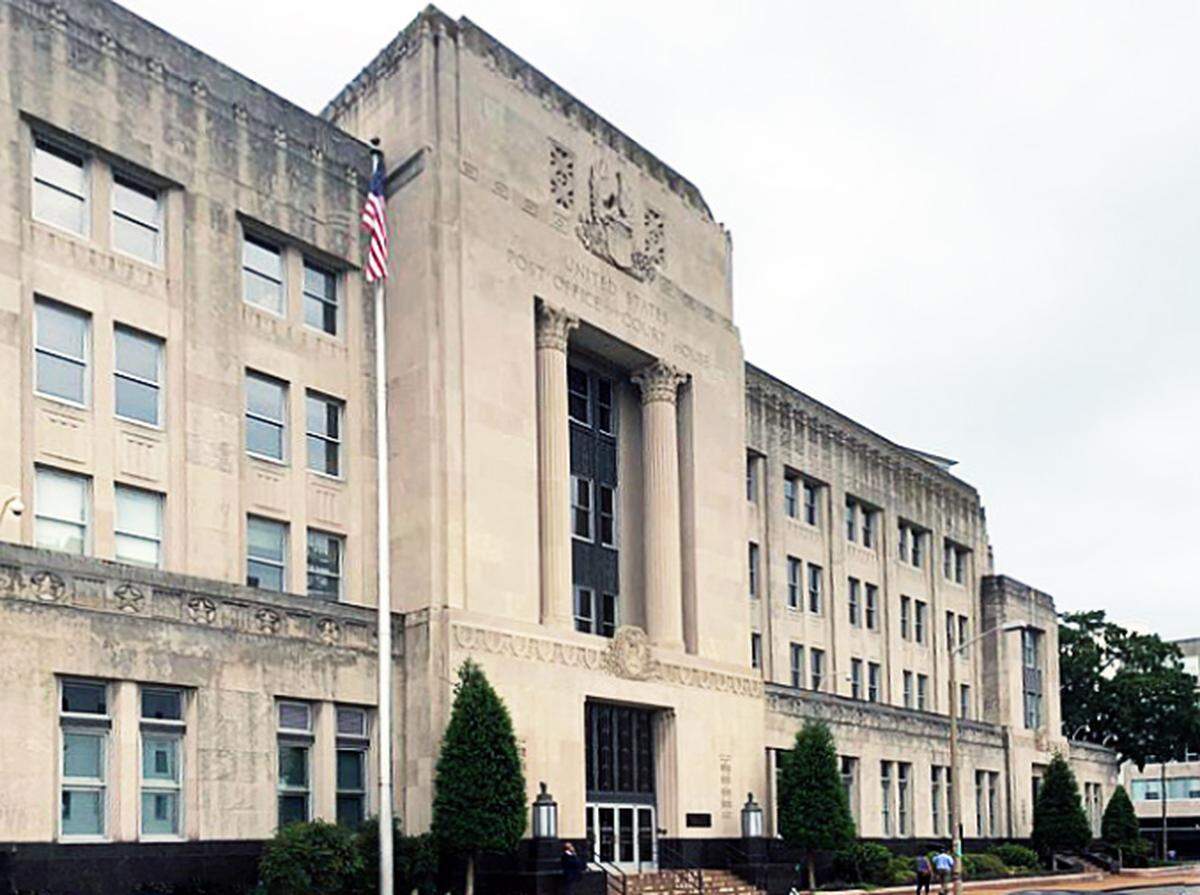
Congress named the federal courthouse in Norfolk, Virginia, for Hoffman, who also was selected to preside over the corruption case of Vice President Spiro Agnew and the first federal judge to be a felon. He had a cross burned on his lawn following rulings to uphold the 1954 Brown vs. Board of Education ruling to outlaw public segregation.
His infamous work ethic showed here as he finished in two six-day weeks a case that began with 30 defendants and 13 attorneys and involved 73 defense witnesses and 68 for the government.
BADGES FOR SALE
During the trial, lawyers pointed out that a sheriff’s deputy who turned state’s evidence had been an unpaid volunteer to the sheriff while serving as his “payoff” collector from bootleggers.
“Through testimony and argument, the lawyers indicated the appointment of unpaid deputies simply opened the door for an unscrupulous person to use his badge and gun for unlawful purposes,” Leland reported.
A magistrate who testified for the government said in court that a bootlegger asked to buy a constable’s badge from him that he could use to raid a still. He wanted to take the still from its owner, after forcing the owner to pay him $100, which would go to the magistrate. The magistrate said he declined to sell him the badge, but that the Colleton County sheriff later provided that bootlegger a deputy’s badge.
In a current case involving Buster Murdaugh’s grandson Alex Murdaugh, the younger Murdaugh is believed to be part of a state grand jury investigation into possible obstruction of justice at a time he was serving as an unpaid volunteer in the 14th Judicial Circuit Solicitor’s Office and reportedly carrying a badge from that office.
On solicitors practicing law, Leland reported that a number of lawyers at the time felt solicitors should not be allowed to handle criminal cases in private practice, but should be allowed complete freedom in civil suits.
INDICTED BUT STILL ON THE JOB
Editorials in The Beaufort Gazette and The News and Courier in Charleston questioned other state practices.
An editorial in the Gazette, then published weekly under editor and publisher Howard P. Cooper, questioned why Murdaugh was able to stay on as solicitor after he was indicted.
It was a bold move to question a Murdaugh. But Buster Murdaugh remained in office from the time of his indictment in June 1956 until voluntarily resigning a week before the mid-September trial. He resigned only after his attorneys failed to obtain subpoenas of the government’s evidence against him, according to reporting at the time.
“In the interest of proper law enforcement, regardless of what might be legally provided, a law enforcement officer under indictment should immediately relinquish his office until such time as he is acquitted,” the Gazette wrote on the week of Murdaugh’s indictment in an editorial headlined, “The Proper Respect for the Law.”
OVERTAXING LEGAL LIQUOR
Both the Gazette and the News and Courier of Charleston blamed the state legislature for overtaxing legal liquor.
Bootlegging is rare today, but in the 1950s, making moonshine whiskey was an underground industry that reporting at the time said often preyed upon the poor who couldn’t afford highly taxed legal booze.
A Gazette editorial said bootleg liquor could be bought for $6 to $8 a gallon.
But the federal tax alone on a legal gallon would be $10.50. Added to that would be a $2.50 state tax. And there was a long list of costs to the legal retailer: a $5 retail license, a $2.50 tax on each case that came into the store, a $600 annual state license and a $50 annual federal license, plus collection of a 3% state sales tax.
A Gazette editorial suggested lowering state taxes and fees — or more vigorous enforcement of existing liquor laws that would cost the bootlegger too much in money or time to keep making illicit liquor.
VOTERS IN A PICKLE
The Charleston paper’s editorial board offered a solution to a quandary Buster Murdaugh’s case placed upon voters.
By choosing Murdaugh in the June Democratic Primary, Democratic voters were morally, though not legally, bound to vote for him in November, the editorial said, regardless of what happened in the meantime.
“As we see it,” the News and Courier concluded following the trial, “the people of these five counties have more on their hands than a political dilemma.
“They face the prospect of again entrusting a vital part of their law enforcement machinery to a man whom U.S. Judge Walter E. Hoffman has described as ‘grossly unethical.’
“A simple solution to the dilemma for the five counties is in the hands of Mr. Murdaugh himself. He could withdraw from the election.”
David Lauderdale can be reached at LauderdaleColumn@gmail.com.