
A whiskey conspiracy: How ‘Righteous Randolph’ Murdaugh almost became ‘Bootlegging Buster’
Second of two parts
Defense lawyers spewed venom at those who had dared to cross the cozy law enforcement establishment of the 14th Judicial Circuit when solicitor Randolph “Buster” Murdaugh Jr. was accused in a case of widespread public corruption.
Prosecution witnesses were called “a bunch of stool pigeons, self-confessed liars, convicts and bootleggers” in closing arguments of the two-week “Colleton Whiskey Conspiracy” trial of 1956 that ensnared some 30 officials, bootleggers and businessmen.
Defense counsel James P. Harrelson of Walterboro, who also was a member of the state House of Representatives as well as a Baptist preacher, called star prosecution witness Edith Freeman “Mrs. ‘Pious Sanctified’ Freeman.” But in reality, he said, she was a “cost accountant” for a whiskey still run by her husband. His large still near Walterboro was raided by federal agents in 1951 at the outset of the case, and her record-keeping in a little blue notebook of his payoffs to local law enforcement was crucial evidence in the trial.
“This is really ‘old grudge week’ and these bootleggers finally got a chance to get even with these fine Colleton County people who have been giving them so much trouble,” Harrelson said, according to coverage by the News and Courier in Charleston.
Another lawyer called prosecution witnesses “putrid and contemptible.”
Defense counsel Claud N. Sapp Jr. of Columbia called the government’s witnesses “a bunch of self-confessed perjurers, thieves and convicts, who have taken the stand here to get even with decent people who were only trying to do their duty.”
Attorney Richard A. Palmer, representing Murdaugh, said, “The (federal Alcohol Tobacco Tax Division) agents have never said a word against Mr. Murdaugh. It is these thieves, liars and convicts you will have to believe if you are going to convict him.”
Another attorney representing Murdaugh, W. Brantley Harvey Sr. of Beaufort, then a former state senator and a relative of Murdaugh, told the court:
“Each government witness who tried to belittle Mr. Murdaugh had a very personal or political reason for doing so. There has not been one stigma placed against him by anyone of good character.”
However, witnesses for the government who testified that Murdaugh’s “truth and veracity” could not be trusted included former sheriffs of Hampton and Colleton counties, as well as the sheriff of Richland County, who was a former ATTD agent.
And the other key witness against Murdaugh was a retired U.S. Marine Corps master sergeant, a highly-trusted rank for the principal non-commissioned officer at the battalion level, and sometimes higher.
Murdaugh’s lead attorney, Henry H. “Hap” Edens Sr. of Columbia, tackled the conspiracy charge as one that can hinge on hearsay.
He held out the prospect of the government using it to indict innocent people en masse.
“Suppose you go home and ask your wife how she feels,” Edens told the jurors. “Under this law you could be indicted for conspiracy with her.”
Edens said Murdaugh came out clean after six years of “being spied on, tracked and plotted against by people who wanted to get him.”
‘RIGHTEOUS RANDOLPH’
Prosecutors had a quick response to the character issue.
“I’d rather have a self-admitted, penitent bootlegger, thief or perjurer testify than to see this bunch of hypocritical liars, thieves and perjurers come into this court and hide behind a battery of talented lawyers,” assistant Attorney General Irvine F. Belser Jr. said.
“You can’t prove a bar-room brawl by having testimony from a Methodist bishop or a Baptist preacher. They wouldn’t be in the bar in the first place. You have to fight fire with fire. You have to set a thief to catch a thief.
“The fact that you have bootleggers testifying in this case is because they are the only people who could have any real inside knowledge of the situation.”
History would repeat itself in the same Charleston courthouse 30 years later during the “Operation Jackpot” trials. The U.S. Attorney’s Office got scores of convictions in that $400 million marijuana-smuggling ring in the Lowcountry by using insiders as witnesses.
Then-assistant U.S. Attorney Bart Daniel responded to the same defense by saying he was sorry but no nuns were in the smuggling business.
Prosecutors didn’t mind blasting Buster Murdaugh’s character.
Belser told jurors: “This man Murdaugh used to be called ‘Righteous Randolph’ but now it’s ‘Bootlegging Buster.’
“If you want a solicitor who takes bribes, counsels bootleggers and takes part in deceiving the grand jury; if you want a sheriff and deputies who participate with him; and if you want bootleggers running rampant in your community, then bring in an acquittal.
“You should know, however, that a conspiracy of this sort is a vicious thing. It is a web, sending its tentacles out into the entire community. It starts with one or two; then three and four and five and ultimately drags in many people. A verdict of guilty will be a verdict against that sort of thing in your community.”
U.S. Attorney N. Welch Morrisette Jr. called the conspiracy “a sordid, sorry, sinful mess. Jesse James rode a horse but this man Murdaugh rides a Cadillac with a low license number.”
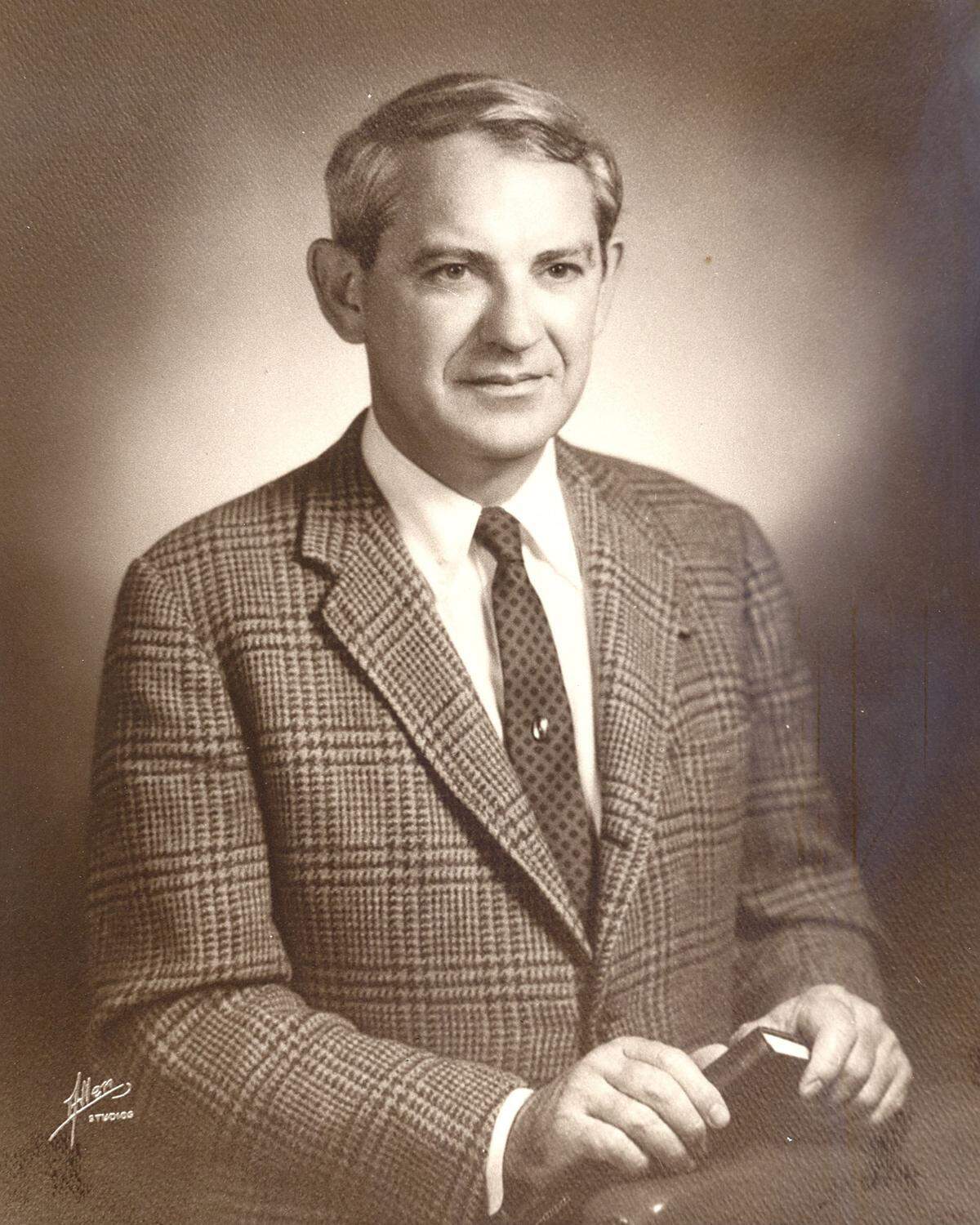
Assistant U.S. Attorney Arthur G. Howe said, “This man Murdaugh could have stopped all this in 1951 — right after the still raid — if he had carried out his sworn duty. He was duty-bound to report such things to the grand jury.
“Instead, he first tried to hush up Mrs. Freeman. Then he tried to get her little notebook away and then he refused to defend her husband in federal court because he was afraid the facts might come out.”
MURDAUGH THANKS GOD
Verdicts came in at 9:45 p.m. on a Monday after two six-day weeks of trial.
Buster Murdaugh and two minor players in the scheme were the only ones of 30 original defendants to be found not guilty.
In a hushed and tense courtroom, Jack Leland of the News and Courier reported, “Murdaugh … breathed heavily, drew his hand rapidly across his mouth and appeared about to break down when the judge intoned ‘not guilty’ after his name.
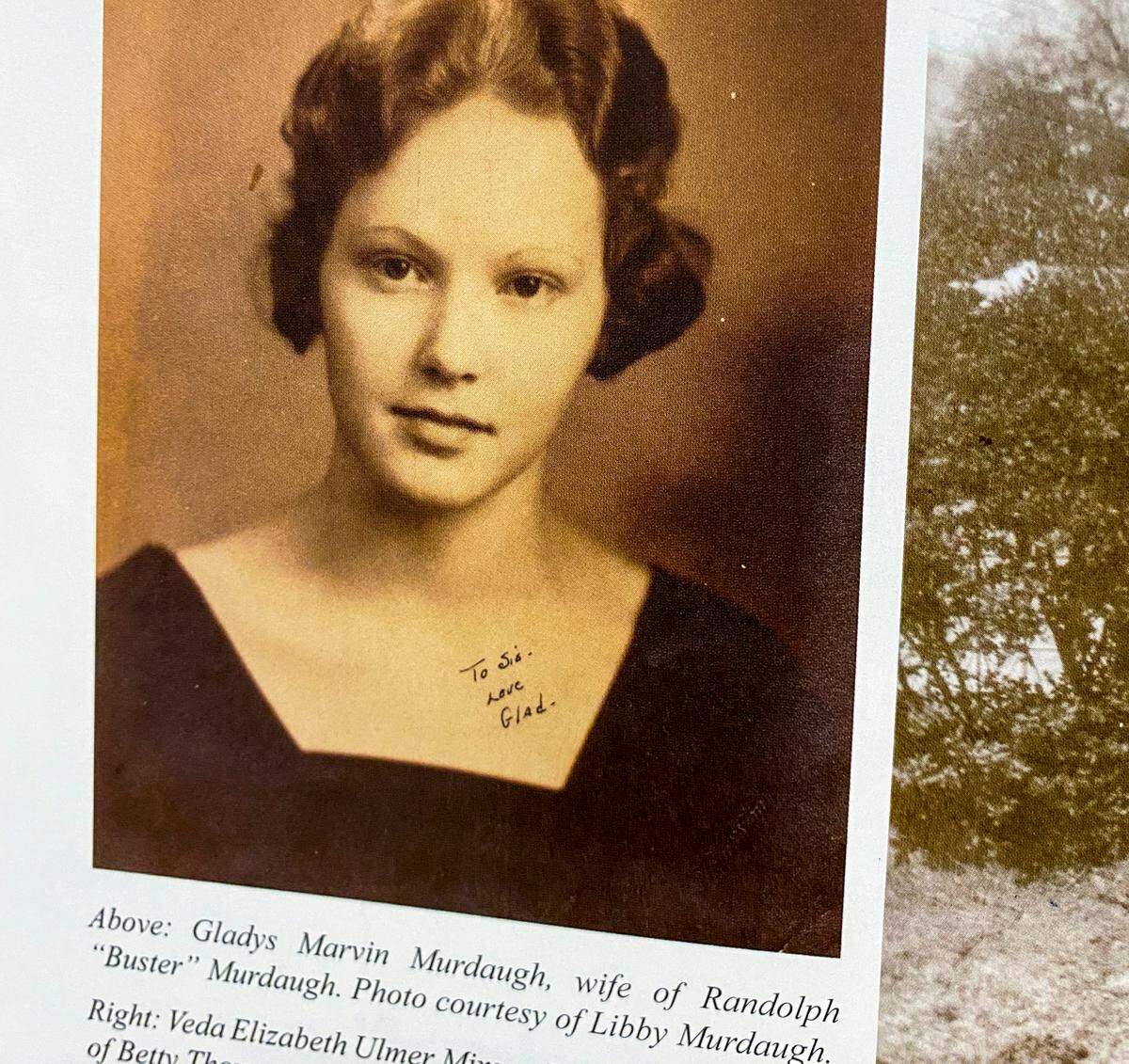
“Mrs. (Gladys) Murdaugh was in the first-floor lobby, downstairs from the courtroom, when an unidentified man raced down the stairs to tell her the news.
“She broke down and wept.”
Murdaugh thanked God “that the jury brought in a true verdict, insofar as I am concerned.
“I appreciate from the bottom of my heart and will be ever grateful for the loyalty displayed by my many friends who have openly stood by me and my family during this ordeal.”
Seventeen defendants were convicted by the jury, five entered guilty pleas after the trial started, four had charges dropped by the judge, and one had not been apprehended.
Among those to be found guilty were the former Colleton County sheriff, two former deputies and a former magistrate judge.
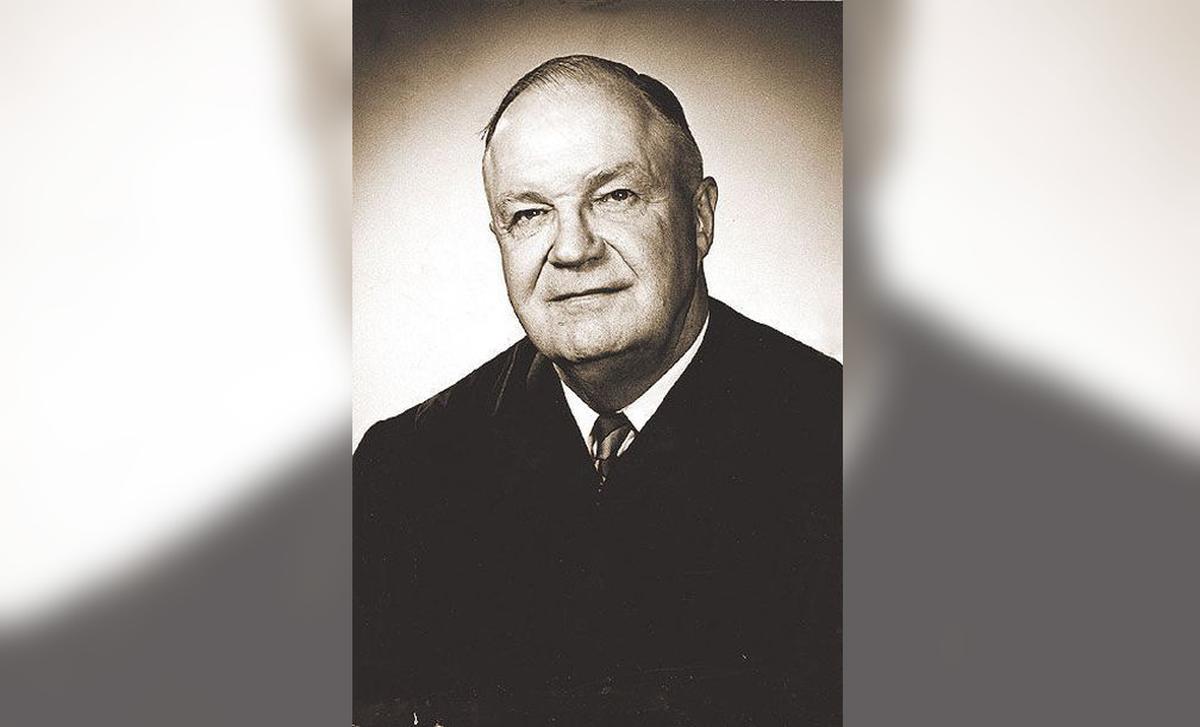
The next morning, U.S. District Judge Walter E. Hoffman sentenced the sheriff to seven years in prison and a $3,000 fine.
One former deputy was sentenced to four years. Another deputy and the magistrate judge were each sentenced to three years in prison.
The judge also sent an order to the local federal judge and district attorney suggesting “appropriate action” be taken against two uncharged prosecution witnesses — a special deputy and a magistrate — who testified to illegal acts while they were law enforcement officials, the News and Courier reported.
When a state senator pleaded for probation for a former deputy who had pleaded guilty, the judge insisted he must pay his penalty in a penitentiary.
“If you brought the president of the United States and his worthy opponent in here I would not do otherwise,” Hoffman said.
MURDAUGH ‘GROSSLY UNETHICAL’
Hoffman expressed disgust with what he saw in Buster Murdaugh’s 14th Judicial Circuit.
“I don’t think you can stop whiskey making in Colleton County or in any county, but I don’t think you’ll have such a wholesale operation any time soon,” Hoffman said during the sentencing hearing.
“This is a bad situation. The people in Colleton County began saying ‘to hell with the law’ and didn’t worry about the law at all. You people still have a lot of work to do to get the law back to its proper place in your county.”
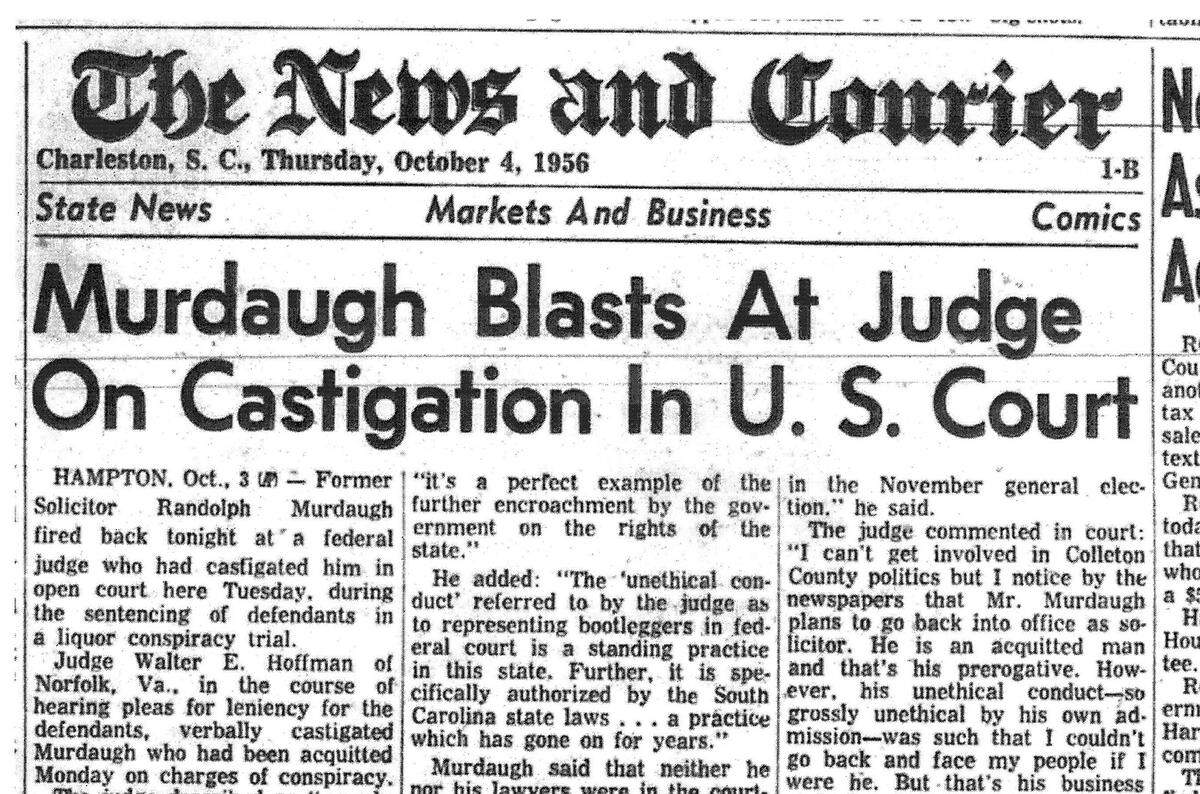
Hoffman saved his harshest words for Murdaugh, who wasn’t there because he had been acquitted by the jury.
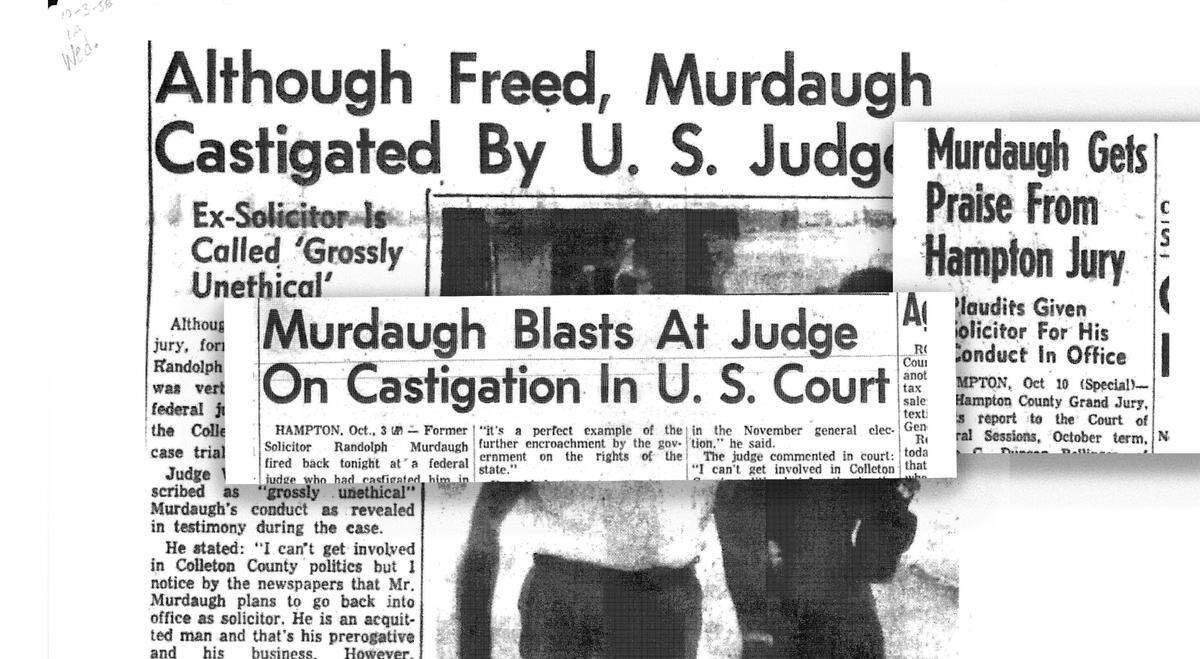
“I cannot get involved in Colleton County politics but I notice by the newspapers that Mr. Murdaugh plans to go back into office as solicitor.
“He is an acquitted man and that’s his prerogative and his business. However, his completely unethical conduct was so grossly unethical by his own admission in this court that I couldn’t go back and face my people if I were he.
“But that’s his business and it’s also the business of the people there.”
Murdaugh’s response through the media was combative, even suggesting he would sue the judge if his comments had not been privileged by being made in an open court.
As reported in an Associated Press story, Murdaugh was quick to invoke politics, and the Deep South’s favorite bogeyman: “states’ rights.”
“When the federal government sends a Republican judge into this state to tell South Carolinians how to handle their politics, it’s a perfect example of the further encroachment by the government on the rights of the states.”
Judge Hoffman’s main beef against Murdaugh was that he represented a bootlegger in federal court without prosecuting that crime at his own state level.
The judge said it was unethical.
Murdaugh said it “is a standing practice in this state. Further, it is specifically authorized by the South Carolina state laws … a practice that has gone on for years.”
‘HIGHLY QUESTIONABLE TACTICS’
Hoffman’s public statements were not the only complaints made against Murdaugh.
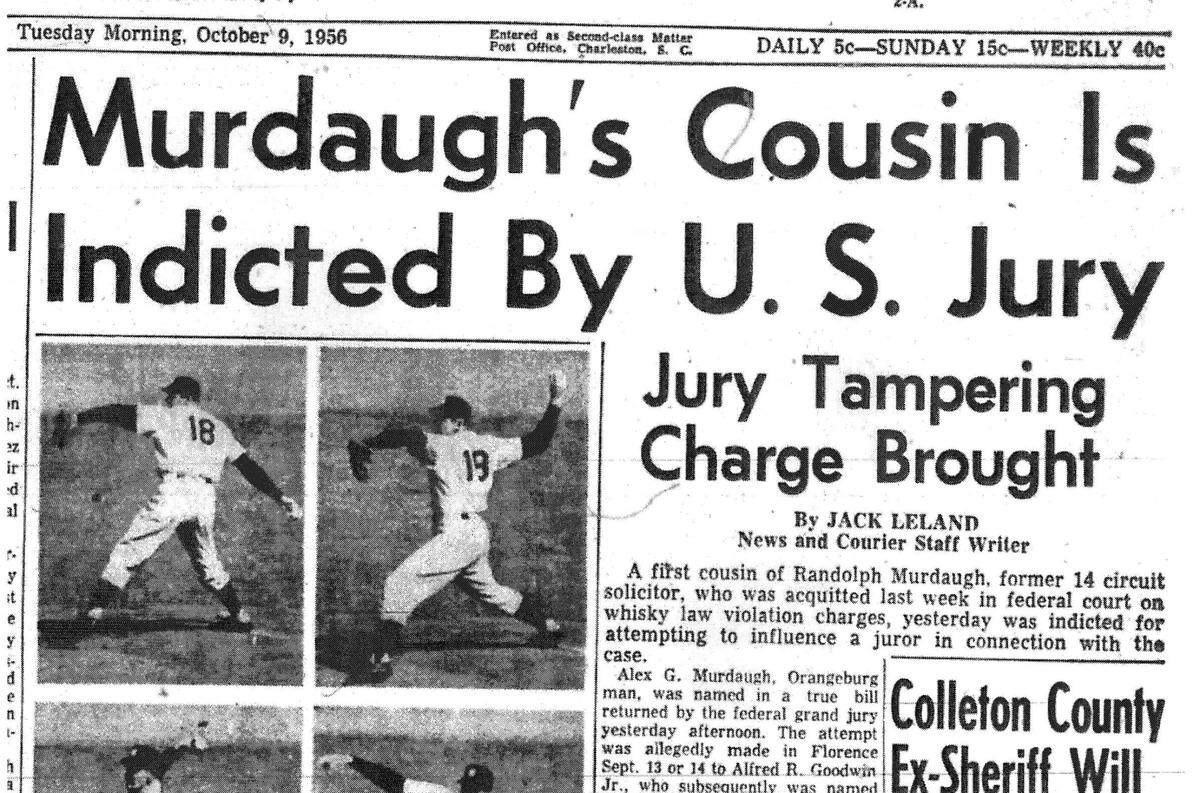
A week after the trial, Buster Murdaugh’s first cousin, Alex G. Murdaugh of Orangeburg, was indicted on charges of attempting to influence a juror in his cousin’s case.
The story about it shared the top of a News and Courier Sunday front page along with Don Larson’s perfect game in the World Series.
The federal grand jury stated that a week before the trial, cousin Alex called the man who was subsequently named foreman of the jury that acquitted Buster Murdaugh and asked to meet him at a restaurant in Florence.
The indictment said he told the juror that Buster Murdaugh had been indicted “solely for political reasons.”
A year later, a jury quickly found him not guilty. The jury foreman confirmed the facts of the indictment in court, but testified that it did not influence him.
The jury foreman showed up in another blast at the Murdaugh acquittal. It came from the U.S. Department of Justice in Washington.
In a “United States Attorneys Bulletin” newsletter published by DOJ’s Offices of United States Attorneys on Nov. 9, 1956, an ugly picture was painted of justice in Murdaugh’s 14th Judicial Circuit.
The document, reported last year by the FITSnews.com website in South Carolina, says:
“Before the trial, the court, over the strenuous objection of the government, granted the defendants’ motion for disclosure of the names of the government witnesses.
“This was followed by very questionable practices on the part of some of the defendants and their attorneys during which government witnesses were threatened, attempts were made to influence them by promises of reward for themselves or members of their families, and at least one attempt was made to intimidate or influence the United States Attorney.”
It said, “The defense resorted to some highly questionable tactics, all apparently designed to bring about an acquittal or mistrial as to Solicitor Murdaugh even at the risk of sacrificing the remaining defendants.”
And it said, “Oddly enough, too, the foreman of the jury, immediately before the case was to go to the jury for deliberation, having received a telephone call informing him that his father was dying, declined to accept the court’s proffer of release although an alternate juror was still present and available to take the foreman’s place.
“It has been admitted by the foreman that he attended school with a brother of the defendant Murdaugh and in fact had dinner with him shortly before the trial began.”
And it noted that “the judge also felt it necessary publicly to call attention to the fact that it is a separate and distinct offense for anyone to threaten a person who has testified in a court proceeding.”
‘REJOICE IN HIS VINDICATION’
But in the South Carolina Lowcountry, Murdaugh found quick support from his hometown Hampton County grand jury.
Within two weeks of Murdaugh’s acquittal, the grand jury wrote to the state court:
“We commend Randolph Murdaugh for the splendid manner in which he has handled the affairs of the office of solicitor,” the News and Courier reported.
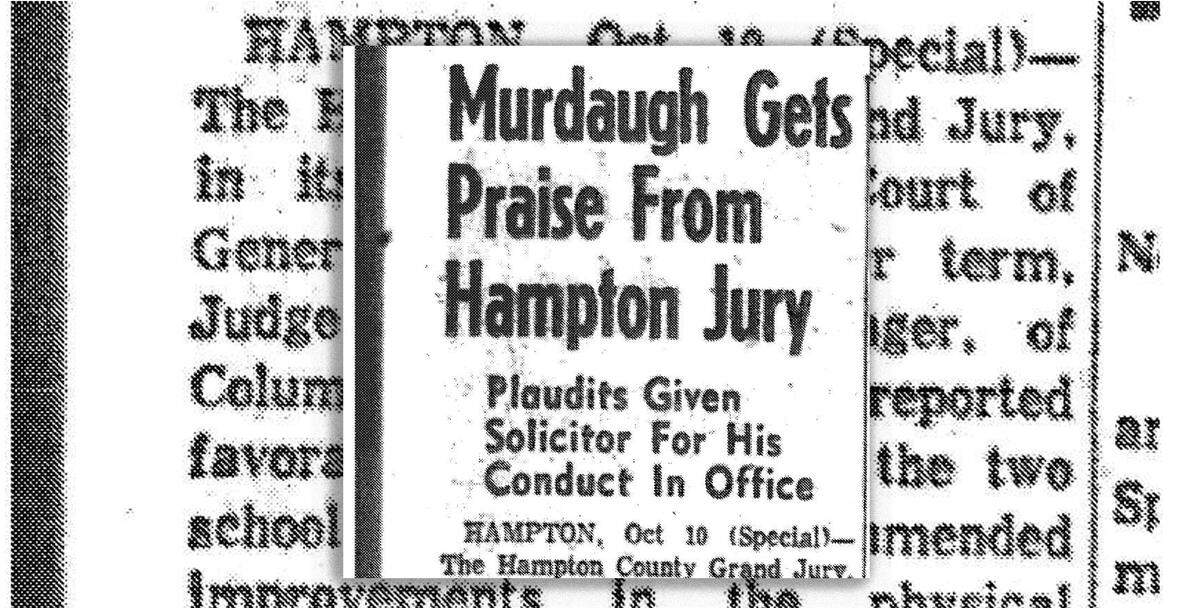
“We deplore the outrageous charges brought against him and rejoice in his vindication. We sincerely hope he will return to the office of solicitor in the very near future and will continue to serve that office as long as he desires.”
Murdaugh did just that.
He ran unopposed on the November ballot and resumed his position in January 1957, taking over for Beaufort attorney G.G. Dowling, who had been appointed to fill the post after Murdaugh resigned a week prior to his trial.
Murdaugh held the position for 46 years. He left it in 1986, when his son, Randolph Murdaugh III, took over and held it until 2006.
Randolph Murdaugh III’s son, Alex Murdaugh, who was a prominent Lowcountry lawyer, faces 79 charges for alleged schemes to steal some $8.4 million from clients.
Alex Murdaugh was a volunteer with the 14th Circuit Solicitor’s Office on the fateful night in 2019 that his boat, allegedly driven by his drunken son, Paul, crashed into a bridge at Parris Island, killing 19-year-old Mallory Beach.
Alex Murdaugh and his father dashed to the hospital where witnesses were being treated.
They knew what to do.
David Lauderdale may be reached at LauderdaleColumn@gmail.com.
This story was originally published May 19, 2022 at 4:50 AM.