Marion Burns, Beaufort Co. leader whose vision, smarts transformed the Penn Center, dies
Marion Burns, interim executive director and president of the Board of Trustees at the renowned Penn Center, the man who helped turn the historic facility around, died Friday. He was 77.
St. Helena Island-based Penn Center, where freed slaves went to school for the first time, preserves and tells the story of African Americans in South Carolina during Reconstruction following the Civil War, and later in the civil rights movement.
Burns, a retired New York Life executive, took over the reins three years ago.
He used his business, budgeting and people skills to revive the center, infusing critical funding streams needed to successfully operate the center, said those who knew him. Driving him was a vision to relay Penn’s important story to the world.
“I’m going to miss him terribly,” said Deloris Pringle, a trustee on the Penn Center board who worked closely with Burns. “He had such a vision for Penn Center.”
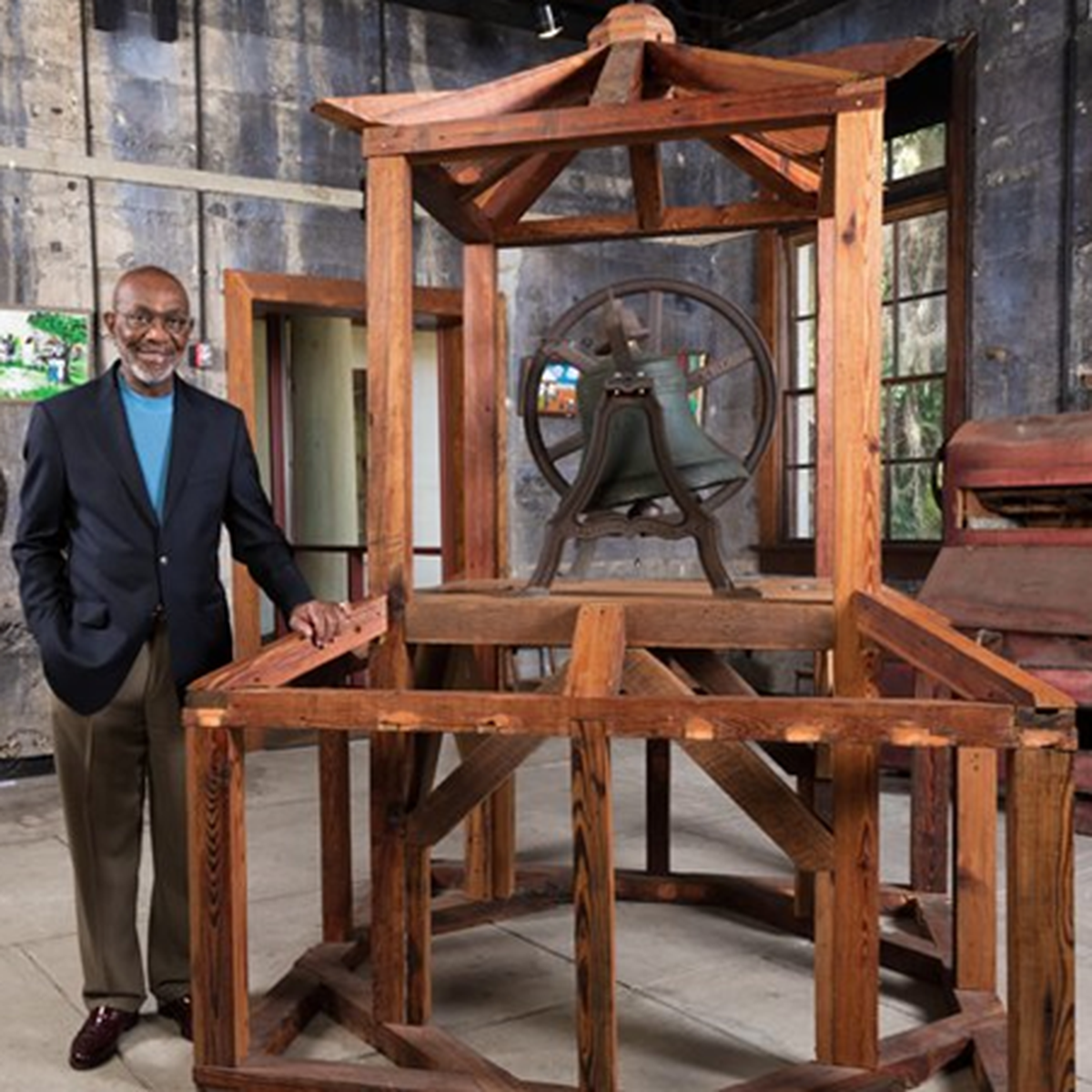
Burns, a long-time Bluffton resident who had recently moved to Hilton Head, died at 7:30 a.m. after a 9-month battle with T-cell lymphoma, Penn Center said.
The Vietnam veteran, who served in the U.S. Army, will be interred at Beaufort National Cemetery.
Penn Center is the site of one of the first schools for newly freed African Americans during the Civil War. It also served as a retreat for Martin Luther King Jr. Today, it’s one of the nation’s most significant African American historical and cultural institutions. Darrah Hall on the center’s campus is a national monument of the Reconstruction Era.
Pringle described the contribution of Burns to Penn Center as “tremendous.”
He took over at a difficult time, she noted, with Penn Center trying to regroup after the departure of an executive director.
“He really rebuilt our funding streams, reconnected with funders and supporters,” Pringle said.
Then COVID-19 hit.
Even in the midst of the pandemic, when Penn Center was open only part time, “Marion kept the revenue streams coming in as best he could.”
“He really turned the organization around with some critical things that needed to happen,” she said.
He had knack for raising money.
He worked with Beaufort County on funding to restore buildings at Penn. He also secured funding from the Gaylord and Dorothy Donnelley Foundation for a museum. And he obtained help from the 1772 Foundation for staff positions.
His vision was to ensure that an institution that is so important to the country’s history operated at maximum capacity. That included providing leadership for staff and the board, Pringle said, and hiring and training new staff members. To do that, Pringle said, money is required, along with good budget management. Burns could raise the money, she said, and he knew how to manage it well.
“He was dedicated to ensuring the whole country understood that Penn Center was the beginning, was the defining moment in time for Reconstruction history,” Pringle said.
Center tells Reconstruction history
The Reconstruction era of 1861-1898 is the period in which the United States grappled with how to integrate millions of newly freed African Americans into social, political, economic and labor systems.
It began when the first U.S. soldiers arrived in slaveholding territories, and enslaved people on plantations and farms and in cities escaped from their owners and sought refuge with Union forces or in free states. This first happened in November 1861 in southeastern South Carolina, Beaufort County in particular.
Burns was from a tiny town in Jasper County called Switzerland. He enjoyed having some fun when people asked him where he was from. “He would say, ‘Switzerland,’” Pringle said, “and they would give him a double-look.’”
Fallon Williams of Bluffton, a fellow New York Life executive and friend who knew Burns for 40 years, said Burns ran the New Jersey operation for New York Life before retiring and returning to South Carolina in 1999 or 2000.
Williams tried to get Burns to retire to Las Vegas, where he was. Instead, Williams moved to South Carolina, where Burns was. Burns was a great salesman with a wonderful smile who made many loyal friends during his life, Williams said.
“He was easy to know,” Williams said.
Burns also persuaded Williams to join him on the Penn Center Board of Trustees, telling him that with their business skills, they could make it better.
“He was paid no money, no expenses, no nothin’,” Williams said.
Burns was committed to the Lowcountry and seeing Penn succeed, and he’d talk to anybody who would listen about the center. He used the same skills he used successfully running one of New York Life’s largest offices and recruiting and development agents, Williams said.
“He turned that place around completely, 100%,” Williams said.
A viewing is planned at 9 a.m. Friday, Aug. 6 at Penn Center followed by a 10 a.m. service. Burial is at 1 p.m. at Beaufort National Cemetery. A Penn Center tribute and celebration of Burns’s contribution to Penn Center will follow at 2 p.m. The Penn board, staff and community are invited.
This story was originally published August 1, 2021 at 5:55 AM.