He developed 30-year-old film of Black farmer in Beaufort. Why images blew him away
During a visit to Sheldon 45 years ago, Andy Tate took photographs with an automatic camera, but the film was forgotten after he returned to his busy life in New York.
A Beaufort Arts Council exhibition, its first event in more than a year since the outbreak of COVID-19, will celebrate the life and times of Rufus Daniel Mitchell, his family and the historic Sheldon farm community.
It is centered on photos of Mitchell that Tate took but didn’t develop for 30 years. At the time, Tate and his wife, Bernice, lived in New York and were visiting the Lowcountry farm where she grew up with eight brothers and sisters. Mitchell was her father.
The photos, it turns out, captured a moment in time and the unvarnished history of one man, a South Carolina community — and perhaps the plight of all Black farmers of the period. One shows Mitchell in 1976, tilling the land behind a horse and plow.
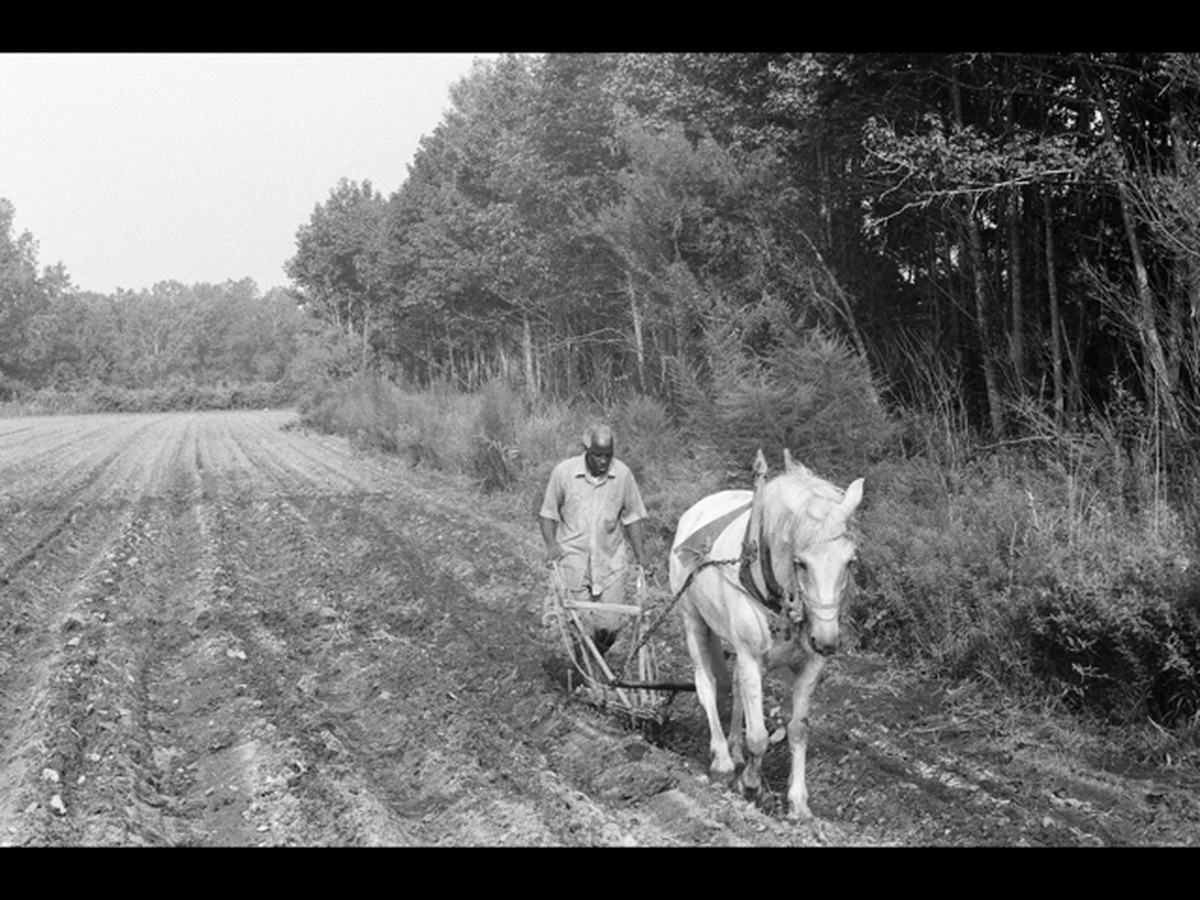
”It’s part of a history of the rural American Black farmer in Beaufort County,” said Gregg Steele Heppner, the Art Council’s executive director.
The grand opening of “Ancestor of the Land” exhibit, which is free and open to the public, is from 5 to 8 p.m. Thursday at the Beaufort Art Council’s Exhibition Hall at the Mather School Museum on the Technical College of the Lowcountry, 921 Ribaut Road.
After that, the exhibit can be seen from 11 a.m. to 4 p.m. Thursdays through Sundays.
The visual, digital art, material culture exhibition centers on Tate’s photographs, and includes old farm equipment and other artifacts of the period.
Andy Tate says the photos and farm equipment show real Gullah culture.
”This is backstory of the little people who never get their stories told,” he said. “This is real history to us. Real, unvarnished history.”
”You can’t put a value on it,” adds Bernice Tate. “We could never do enough to honor my dad.”
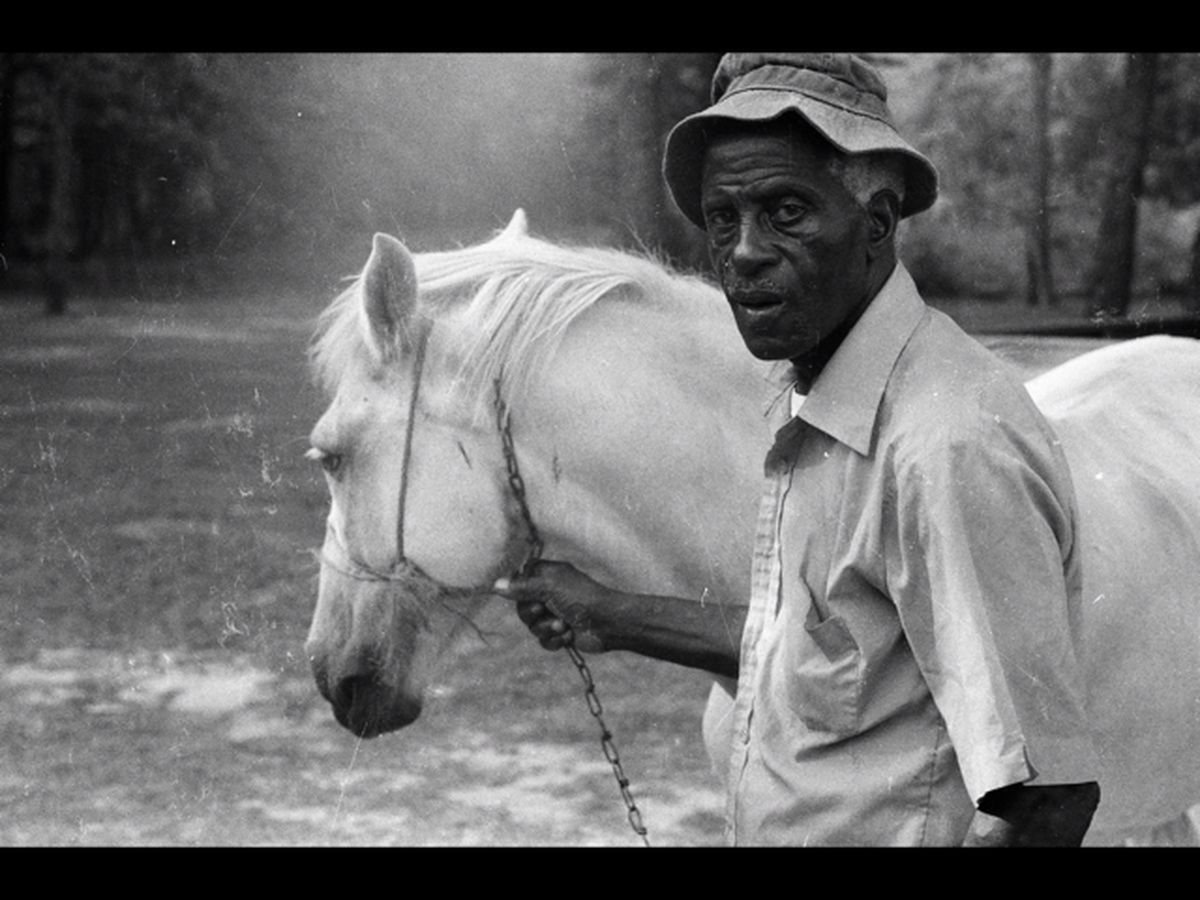
Mitchell died in 1987. He was 74. He worked the same piece of land with a horse and a mule and a plow, just like his father before him. He always wanted his nine kids to get away from the farm, his daughter said.
”He had very little education, but he knew the value of education,” Bernice Tate said.
In 1976, while on a family vacation, Andy Tate spontaneously shot a roll of film while trying to operate a new automatic camera as his father-in-law worked in his fields planting.
Camera forgotten for 30 years
The camera remained packed away in a storage box and forgotten for 30 years.
After retiring in 2006 to Bluffton, and unpacking old boxes, the Tates discovered the camera and the photos when the film in it was developed.
They had no expectations of what they might find.
”Totally blown away,” Andy Tate said when he saw the photos.
He and his wife were so shocked because of the high quality of the photographs. The camera, they said, was basically “like a trinket” they had packed away before returning to work and their busy lives. But the minute he started unpacking and saw the camera, Andy Tate said he instantly recalled the film was still in it.
Artists and philanthropists Andy, 77, and Bernice, 78, who still live in Bluffton, have been married for 52 years.

They say the Ancestor of the Land exhibition was inspired by their son Derek Mitchell Tate, a psychiatrist who encouraged them to produce the exhibition, which he sponsored.
Andy Tate is a self-taught digital illustrator who grew up in the Bronx. He and Bernice, an artist and author, have independently published five children’s books featuring themes of multiculturalism, empowerment, acceptance, anti-bullying, the power of diversity and food choice awareness.
The exhibit, he said, is ”a microcosm of not only Mr. Mitchell but of the Sheldon community and maybe rural farmers in general.”
This story was originally published May 19, 2021 at 12:00 AM.