‘It’s the payoff.’ Tiny turtles are emerging from sand on SC’s Hunting Island
The little buggers are hatching daily. A perilous journey awaits them.
The 2021 sea turtle nesting season at Hunting Island has officially closed, meaning no more big mama loggerhead sea turtles are emerging from the Atlantic Ocean onto Hunting Island beaches to nest.
But volunteers continue to monitor the booty buried in the sand: Eggs that will produce hatchlings so tiny they can fit in the palm of your hand. Some of those tiny turtles, if they survive, will become 350-pounders and live 70 years. They’re the future of a species that’s federally designated as threatened.
As of Thursday, about half of the 130 nests documented this season on the beaches of Hunting Island still had not hatched.
It’s rare to actually see the baby turtles, which tend to emerge at night, says Buddy Lawrence of the Friends of Hunting Island sea turtle conservation team that monitors the nests.
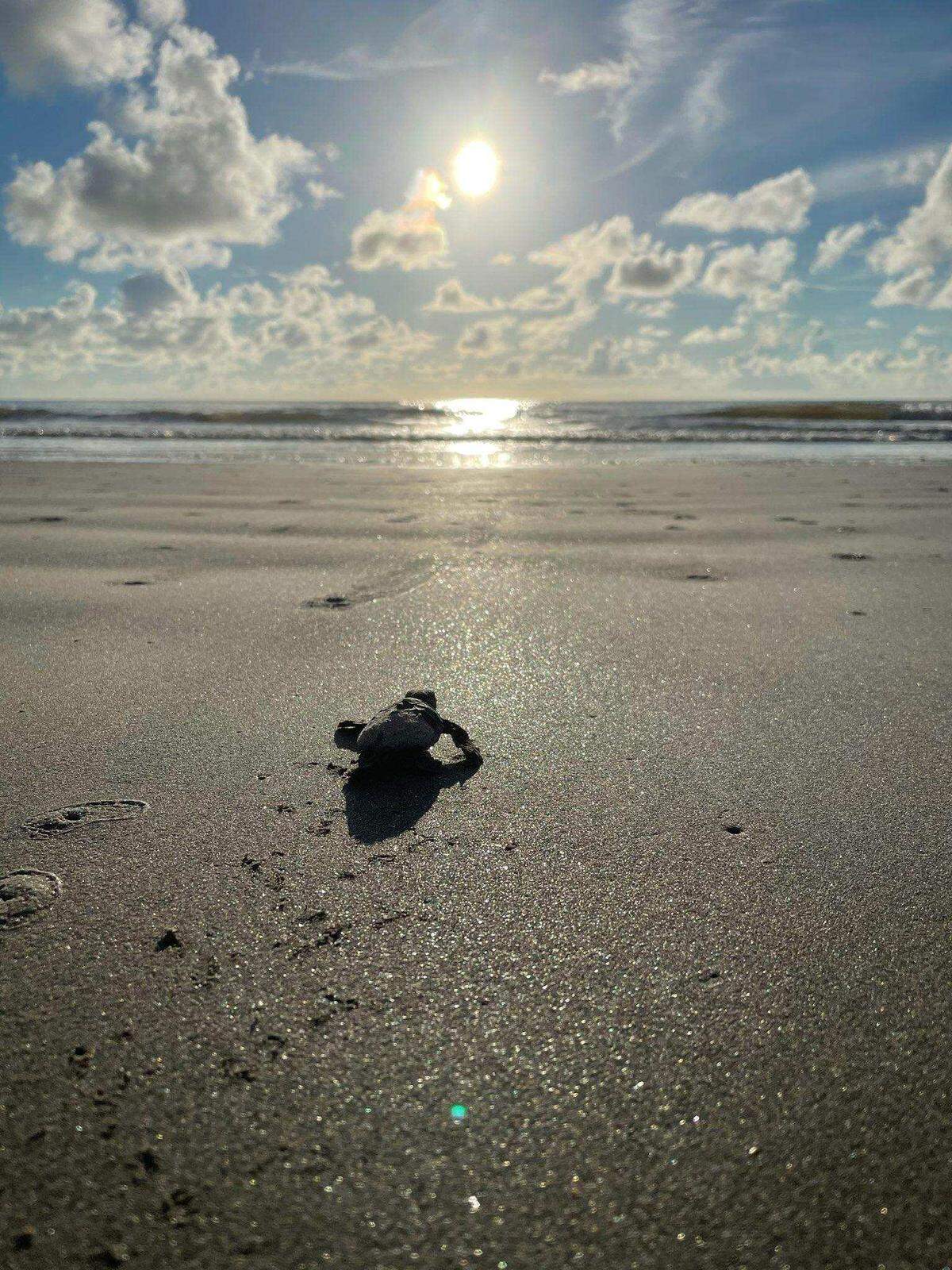
When volunteers actually witness turtles taking their first steps out of the nest, he says, “It’s the payoff and the reward [for] getting up so early.”
In May, when adult turtles still were arriving, volunteers began their day at 6:15 a.m. Now Lawrence and the others are out on the beach at 6:30 a.m. or 7.
When dozens of baby turtles finally emerge simultaneously from a nest, it’s called a “boil” because it looks like the sand is boiling. Once free, they flop and flail, using their tiny flippers to propel them. Then, attracted to the blue and green wavelengths of light naturally reflected off the ocean, they make a beeline and disappear into the unknown.
In the past two weeks, no adult female loggerheads have emerged from the ocean to lay eggs at Hunting Island. That means the nesting season is over, but it doesn’t mean a latecomer won’t show up.
“We’ve had no crawls for two weeks,” Lawrence said of adults crawling across the beach to nest. “Now we move into hatching. Could there be another nest? It could happen. They didn’t get the memo they were supposed to stop.”
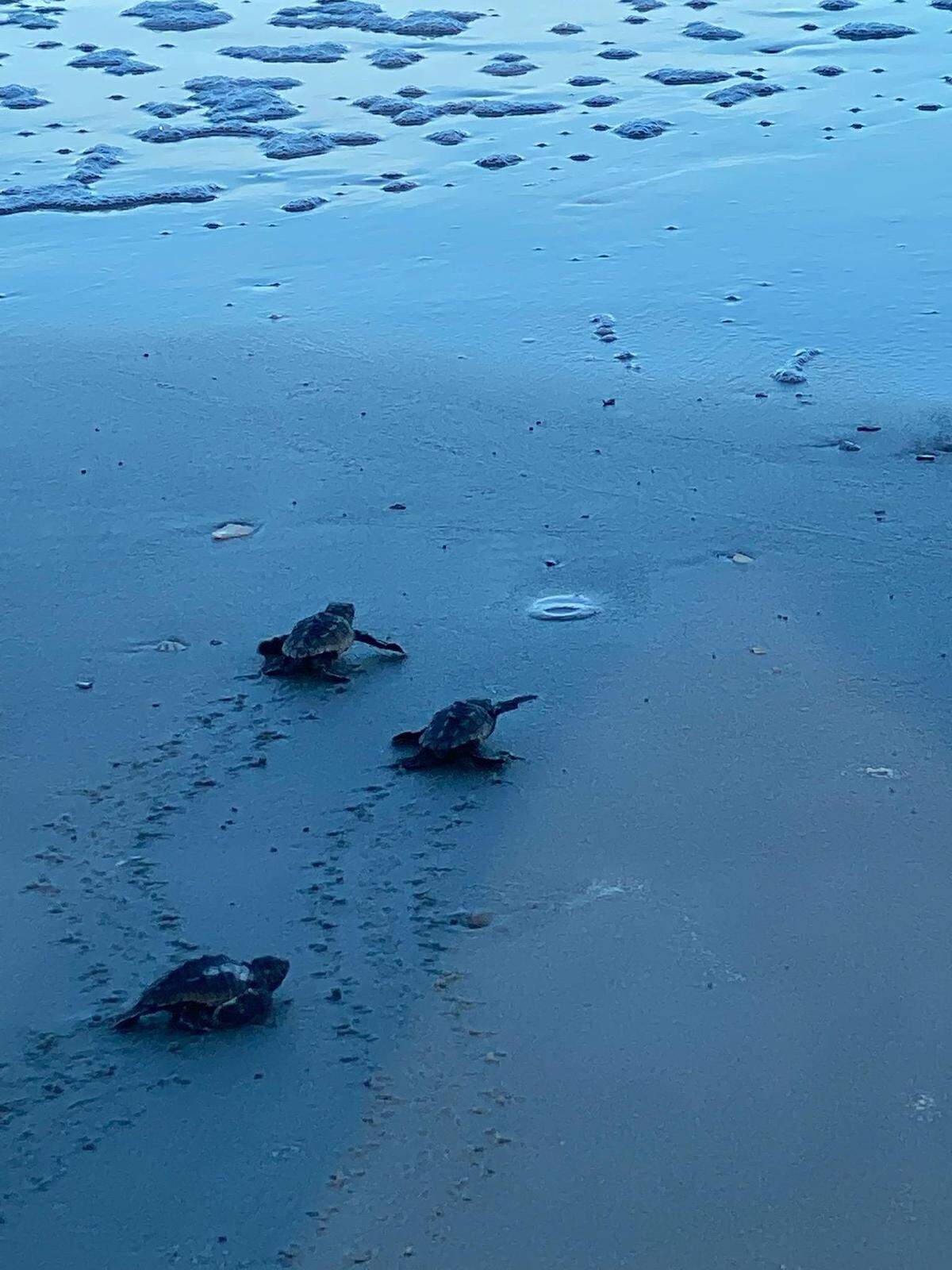
In South Carolina, nesting season for sea turtles, including loggerheads, is May through October. Females come ashore on the state’s 186 miles of ocean-facing beaches to deposit some 120 eggs in a nest cavity in the dry sand dune system.
The 4 miles of beach at Hunting Island, 18 miles east of Beaufort, is prime loggerhead nesting grounds, and it’s patrolled at dawn each day.
This year, the first nest was recorded on May 15. The last nest was recorded July 27.
Volunteers documented 129 turtles that nested after they came ashore. But one turtle managed to give them the slip. It nested on Johnson Creek on the island’s north end, which is not patrolled because turtles rarely nest there. Emerging from the so-called “wild nest” were 123 hatchlings. “Did pretty good,” Lawrence said.
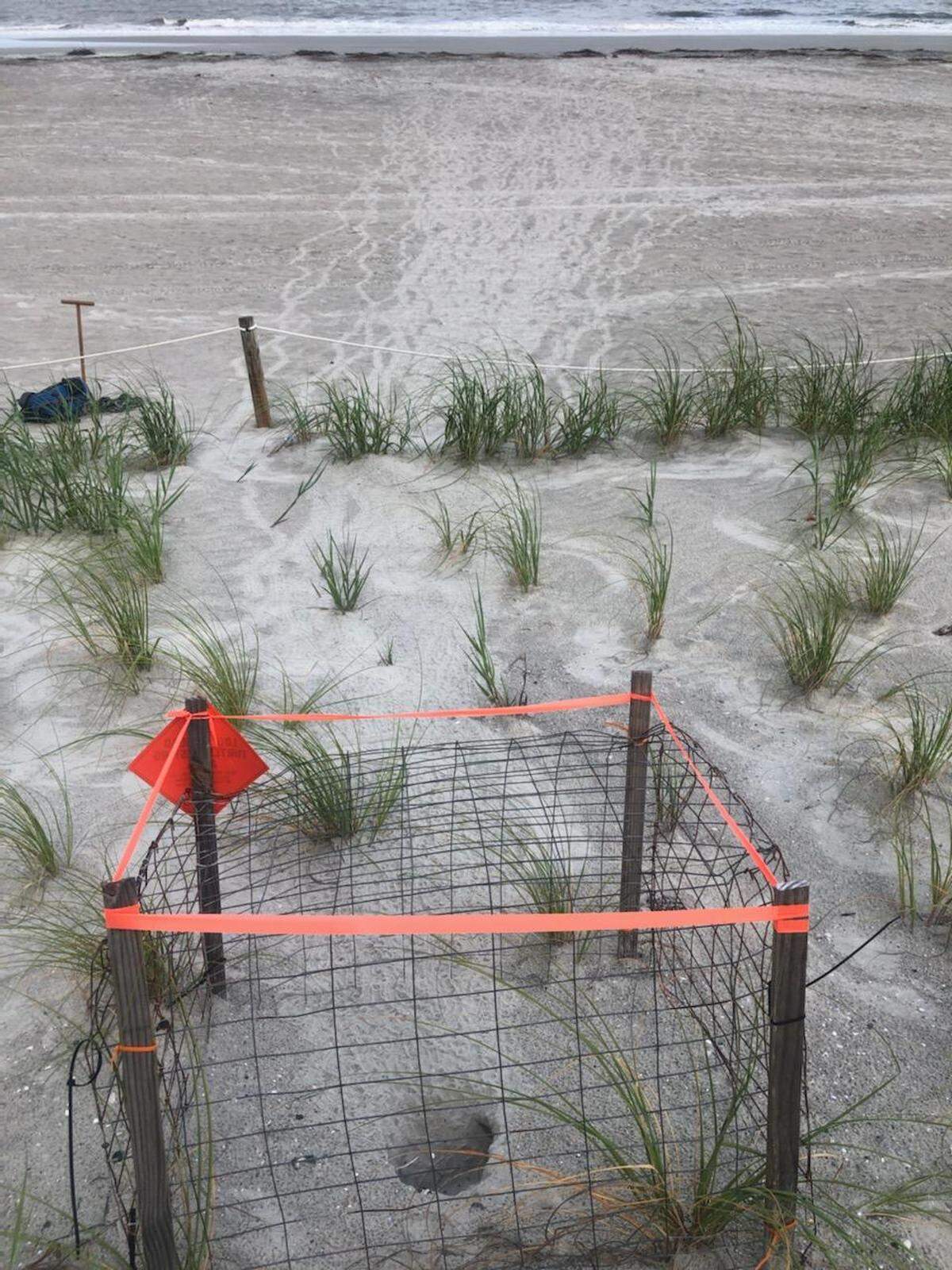
That wild nest, discovered a week ago, brought the total number of nests this year to 130.
Lawrence calls this year’s nest number “decent.” Last year, it was 134. It was 153 in 2019.
Loggerheads are listed as threatened under the Endangered Species Act, and the nesting population in the southeastern United States continues to decline.
A primary threat to the sea turtle with a big head and powerful jaws is getting caught in fishing gear, according to the Fisheries division of the National Oceanic and Atmospheric Administration. Coastal development also is leading to the loss of nesting habitat. More artificial lights deter nesting females from coming ashore and disorient hatchlings trying to reach the ocean, NOAA says.
The incubation period for the eggs desposited at Hunting Island this year has averaged 62 days, Lawrence said. Usually, it’s in the mid-50s. He suspects cooler temperatures and rain.
“Longer incubation times are a good thing,” Lawrence said. “It seems to produce healthier hatchlings.”
After breaking free from the egg, hatchlings remain in the nest about two days while their shell hardens, Friends of Hunting Island says. And they must be allowed to walk to the water unaided because it allows them to imprint on the sand and orient themselves to the earth’s magnetic field. It has been shown, the group says, that adult females may return to nest in the same region, or even the same beach, on which they were hatched.
Once they reach the ocean, the hatchlings swim toward floating Sargassum seaweed found as far as 60 miles offshore, Lawrence said. It’s a long and dangerous swim, he says, “for something that can fit in the palm of your hand.”
The turtles use the seaweed as camouflage, and feed on small crustaceans.
Hatchlings and juveniles spend the first 7 to 15 years of their lives in the open ocean, NOAA says. Then they migrate to nearshore coastal areas, where they forage and continue to grow for several more years.
This story was originally published August 19, 2021 at 2:35 PM.