Sunrise sea turtles put on show at Hunting Island. ‘It’s like Christmas morning’
Giant loggerhead sea turtles are putting on a show at Hunting Island, which is not unusual. But in this nesting season, double the number have deposited their eggs then departed land, in full view just as the sun rises, to return to their preferred habitat, the sea.
“It’s like Christmas morning,” volunteer Buddy Lawrence says of watching the big turtles, which can weigh up to 350 pounds, move atop the sand in the daylight.
Loggerhead sea turtle nesting season in South Carolina begins in May and continues through August.
The turtles climb onto the beach looking for softer or drier sand where they can lay eggs — at Hunting Island, the nests usually have about 125 eggs. They make a “body pit” and dig a nest chamber. The process takes about an hour to 90 minutes. Then they head back to the water, usually under the cover of darkness, using claws in their flippers to shuffle forward in the sand, said Lawrence, who is part of the Friends of Hunting Island turtle team.
Most sea turtles nest at night because it is cooler. Because of their size, they could overheat. Loggerheads also feel safer emerging on land in darkness. Females mating for the first time haven’t been on land since they were a 1-ounce hatchling.
“Bottom line, home is the sea, and land is scary and foreign,” Lawrence said.
However, each season a couple of turtles return to the ocean as daylight appears, which is about the same time volunteers who monitor and protect the turtle nests are arriving, Lawrence said.
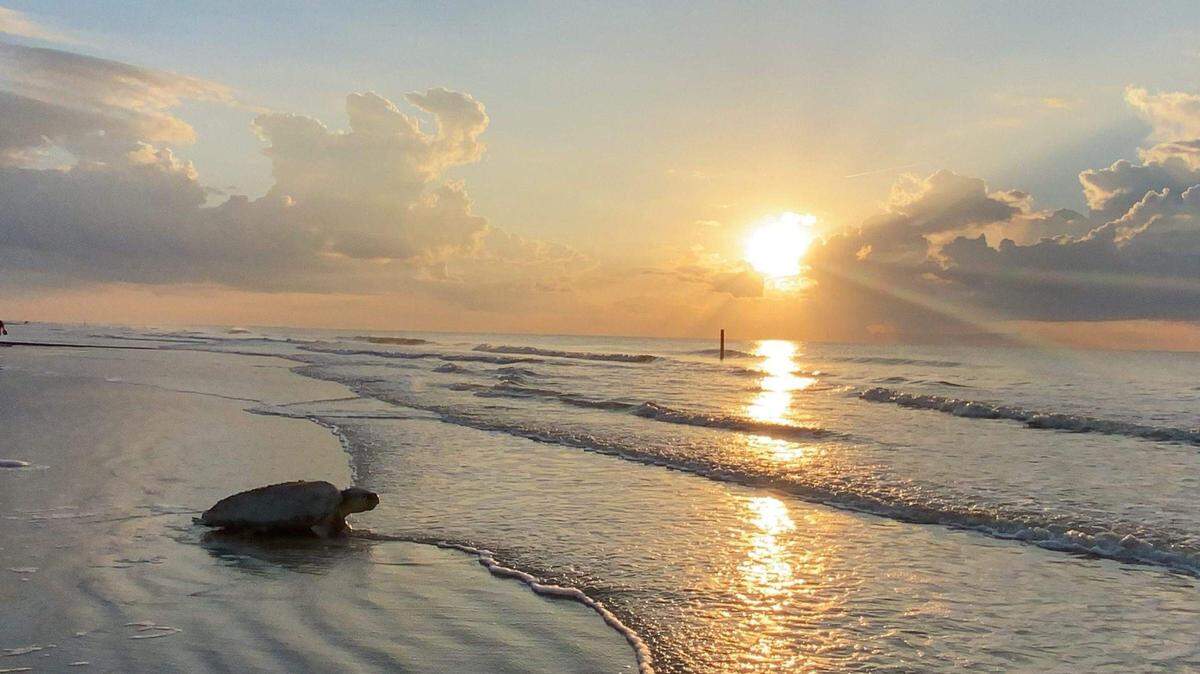
Seeing a sea turtle, especially at sunrise, is a volunteer’s dream, Lawrence says.
This year, five turtles have gotten a late start nesting, giving volunteers with five teams at Hunting Island front-row seats as the state reptile of South Carolina does its thing.
There’s only one thing better than seeing an adult loggerhead sea turtle, Lawrence says, and that’s witnessing a morning hatchling, which usually emerge at night, when the sand is cooler.
“That is rare to see that happen,” Lawrence said.
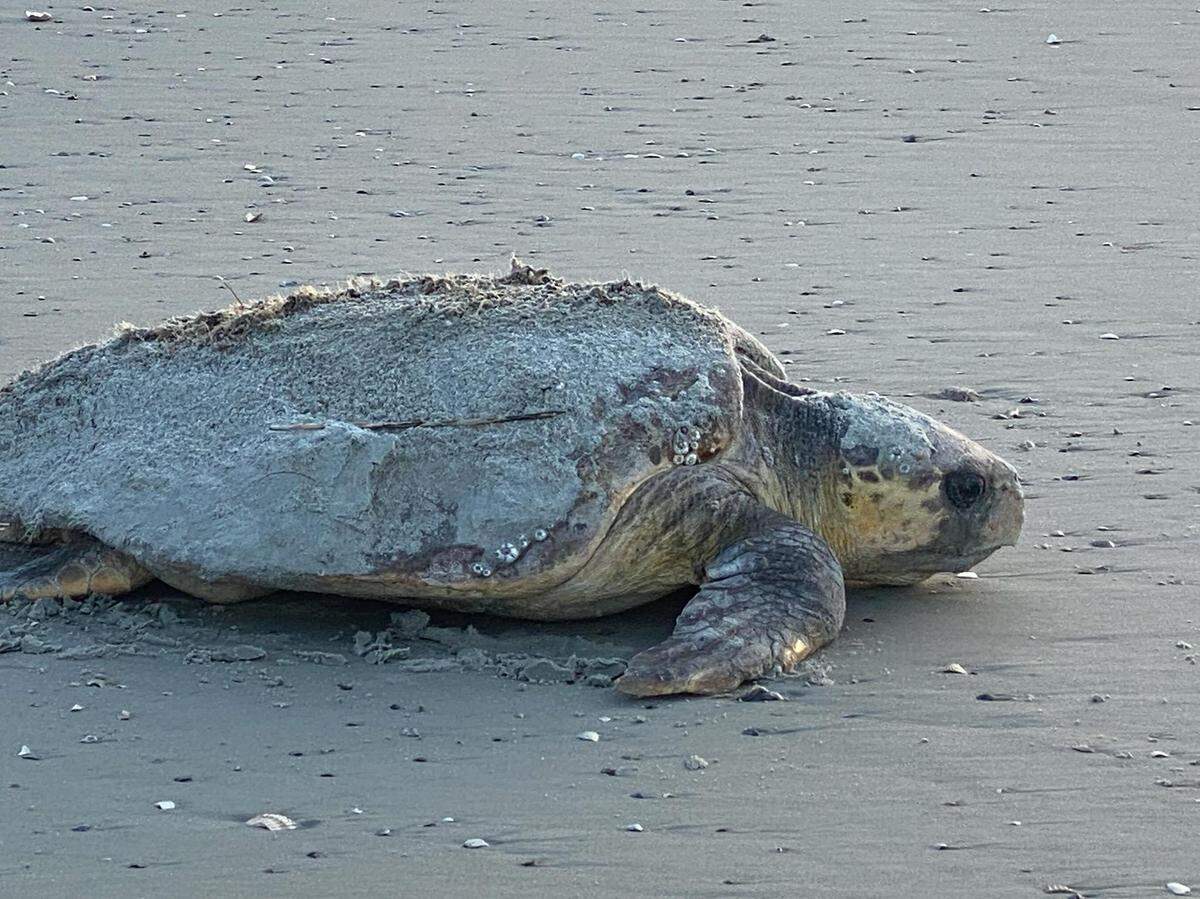
No turtles have hatched yet at Hunting Island, but hatchlings will be inching across the beach any day.
Incubation typically is 60 days, and the first nest was documented May 15.
Hilton Head Island’s first baby loggerhead sea turtles of 2021 crawled out of the sand and into the world around 11:30 p.m. Tuesday, according to Amber Kuehn, director of Sea Turtle Patrol Hilton Head Island. Eight to 10 turtles emerged in a first wave of hatchlings, Kuehn said. Another 100 crawled out Wednesday morning. Hilton Head has recorded 227 loggerhead nests so far this year, according to the S.C. Department of Natural Resources.
Nests survive storm
Tropical Storm Elsa hit Hunting Island about midnight last Wednesday and was gone by 3 a.m. Thursday. Although storms can wash away turtle nests, none was lost at Hunting Island, Lawrence said.
“We got pretty lucky,” Lawrence said.
Elsa tracked to the west, which lessened its impact. It also hit when the water was low, which also helped soften the blow.
One turtle actually came onto the island’s four miles of beach just before the storm hit, Lawrence said. The storm washed away its tracks, but volunteers found the nest on the top of a sand dune because raccoons got into it and gobbled up about 30 eggs.
Another turtle came in and did a “nesting crawl” but returned to the water without nesting.
Volunteers recorded the 112th sea turtle nest of the season at Hunting Island Wednesday, which is a “good low year” number, Lawrence said. He expects the final number will be in the 120s. In 2020, there were 134 nests, and 153 in 2019. Prior to that, the island saw a few years of about 90 nests, Lawrence says. Nesting numbers are cyclical, he says.
This story was originally published July 15, 2021 at 4:30 AM.