Manatees are on the move again. How one named Gar ended up on Hilton Head Island
Manatees, the gentle giants of the ocean, are returning to South Carolina waters. Among the visitors is a go-getter named Gar who is chilling on Hilton Head after nearly freezing earlier this year in Florida.
For five years, biologists with the Florida-based Clearwater Marine Aquarium Research Institute have been tagging rescued manatees in an effort to study migration habits outside the state of Florida.
One is Gar.
Monica Ross, a senior research associate at the Marine Aquarium, said Friday she wasn’t expecting the 9-foot-long manatee to leave Florida, much less make it to South Carolina’s Hilton Head.
On Jan. 18, Gar was rescued south of Jacksonville, Fla., suffering from cold stress. After recovering, he was released Feb. 16 at Orange City, Fla. Ross figured the small adult, 5- to 7 years old with scars on his back, might go next door to Georgia.
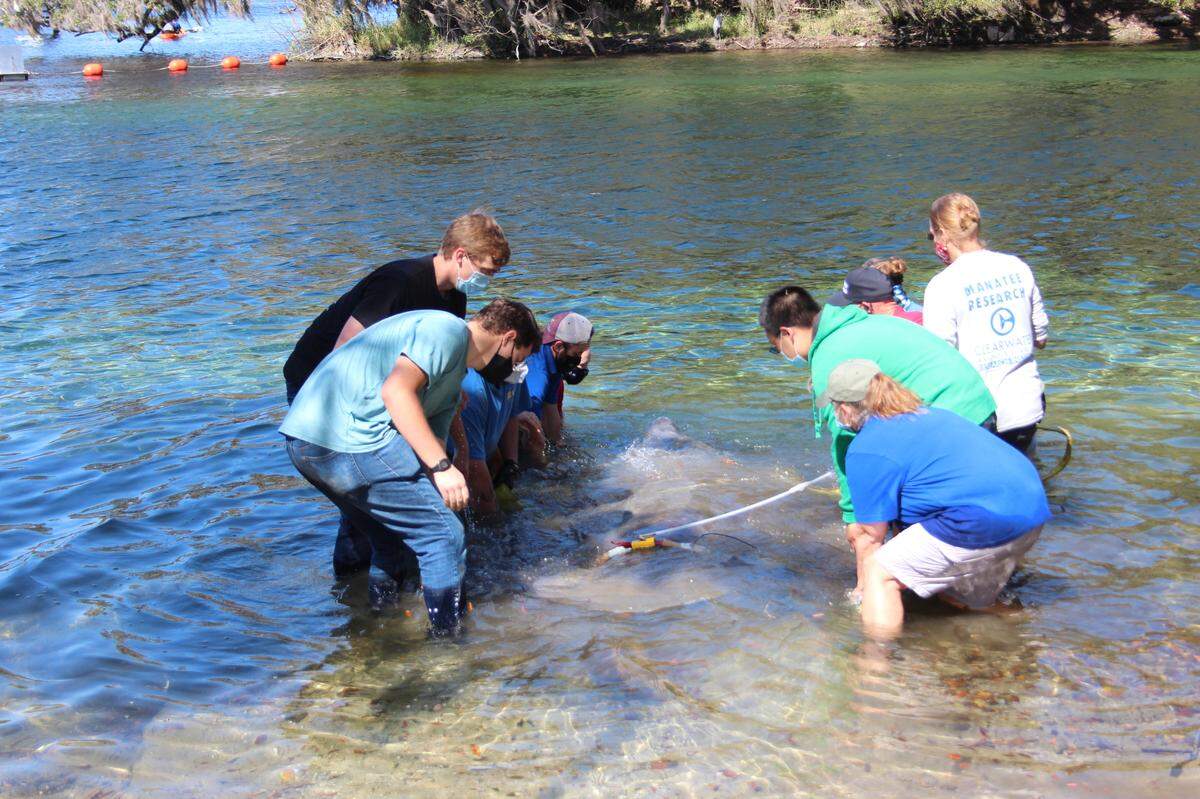
“Then he took off and barreled right through Georgia and settled in on Hilton Head, so it was a nice surprise,” Ross said.
Orange City to Hilton Head is 285 miles.
Gar is still on the island.
Ross would not release his exact location because “we don’t want people bothering him,” but she noted that manatees take refuge in a few marinas on the island.
Gar’s far-flung journey illustrates that manatees ignore state lines, traveling great distances using diverse habitat. In short, they go where the eating is good.
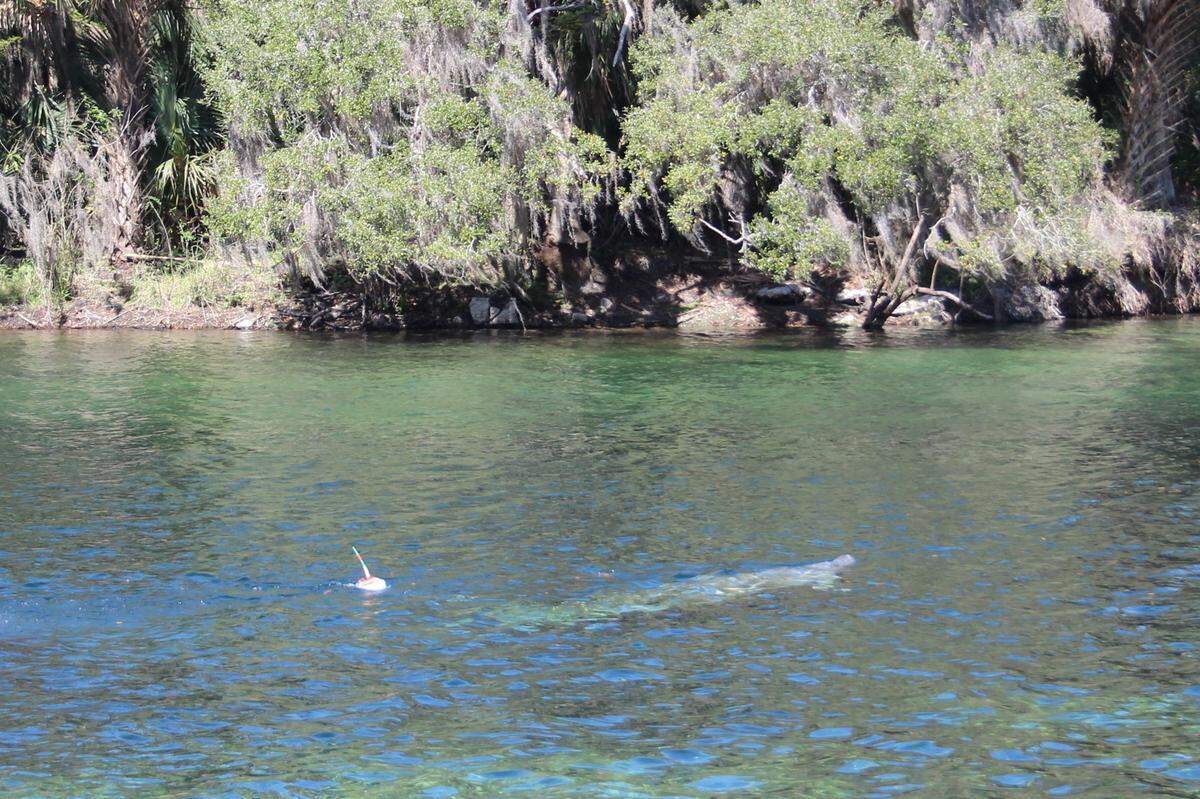
It’s been a tough year for manatees.
An alarming number of the sea cows have died in Florida, with scientists pinning the blame on cold weather and a decline in sea grass, contaminated waterways and human activity.
Chris Kehrer, a naturalist with the Port Royal Sound Foundation, said manatees return to Beaufort County each year, feeding on abundant marsh grasses. They’re often found chowing down in freshwater outlets near marinas, he said.
A number of tagged animals have made their way to South Carolina-Georgia waters again this year, including ones bearing satellite transmitters, the state Department of Natural Resources (SCDNR) confirmed last week.
Tagged animals have showed up near Charleston.
Artax, another rescued manatee, is in Savannah.
And Palmetto is at St. Simons Island in Georgia. Palmetto was previously rescued on Hilton Head Island after a king tide trapped it in a culvert. “She’s doing well,” Ross said.
With manatees on the move to summer coastal haunts, biologists with the SCDNRC and U.S. Fish and Wildlife Service are reminding residents and visitors to be on the lookout for — and be kind to — the slow-moving marine mammals, which are susceptible to boat propeller strikes.
The big water-grass eating lugs, a relative of the elephant, can reach 10 feet in length and weigh up to a ton while living as long as 60 years.
“I have been looking for them!” said Michelle Scott Harral of the Fishcamp on 11th Street on the waterfront in Port Royal.
To be sure, she said, her photos will be plastered all over her Facebook page when they show up.
“How awesome,” Explore Beaufort, SC said on a Facebook post of a manatee photographed May 27 in the Beaufort River near Beaufort Memorial Hospital.
The visitor guide reported manatees hanging around local boat landings.
A manatee named Van Halen, named after the rock band, has hung out in previous summers near Beaufort in the Broad River. “He visited the Marines quiet a bit,” said Ross, referring to Marine Corps Recruit Depot on Parris Island.
Chessie was rock star manatee
The real rock star manatee is Chessie, the first manatee tagged by the U.S. Geological Survey in the 1990s, Ross said. He showed researchers that manatees traveled hundreds of miles from Florida. Chessie made trips up the Chesapeake Bay, once swimming past New York City to Rhode Island.
The goal of the monitoring study is tracking manatees outside of Florida to understand their movements and the habitat they use, and also when they migrate back.
To date, no trends have emerged.
“We have some animals that will make their way back to Florida in August,” Ross said. “Some will wait until the cold fronts roll in before they make their way back.”
Sea grasses are declining in Florida, Ross noted, so researchers are interested in learning whether manatees will stay in the north longer once the grass is gone.
Manatees have a hard time surviving in water less than 68 degrees.
As a result, the herbivores with the tell-tale spoon-shaped tail and big front flippers are warm-weather visitors to South Carolina, typically arriving in May and swimming off by November.
The estimated manatee population in the United States is 6,600. Most live in Florida.
For 44 years, the Florida manatee was protected as “endangered” under the federal Endangered Species Act. In March 2017, as a result of increasing numbers and improving habitat, USFWS reclassified its status as “threatened.”
Because of the difficulty of counting them in murky waters, South Carolina’s manatee population is currently unknown, but it’s a fraction of the total, the SCDNRC said.
Manatees still are protected under federal and South Carolina law, and they face a number of threats on their path to recovery, including boat strikes, entanglement in fishing gear, harmful algal blooms known as red tides, and warming water caused by climate change, SCDNR says.
What you shouldn’t do to a manatee
It’s illegal to hunt, play with or harass manatees, which includes touching, providing water to or attempting to feed them.
Feeding and watering manatees encourages the animals to spend time at docks and marinas, making them more susceptible to boat strikes, said USFWS biologist Melanie Olds.
“In addition to being one of the main causes of mortality for manatees, it is also illegal,” Olds said.
How you can help a manatee
SCDNR staff encourage anyone to report sightings and provide photographs (if possible) of live manatees online. Photographs of scars on manatees’ backs and tails are particularly useful, because they can often be used to identify previously known individuals. However, manatees should never be approached to obtain pictures.
Report injured or dead manatees at 1-800-922-5431.
If a boat accidentally hits a manatee, SCDNR biologists ask that the boater stand by and immediately contact SCDNR or the U.S. Coast Guard on VHF Channel 16. Doing so provides biologists the best chance to help the animal and gather valuable scientific data.
In addition to reporting sightings, coastal residents and visitors can help manatees by staying alert while on the water and avoiding harmful interactions.
This story was originally published June 4, 2021 at 4:04 PM.