Beaufort Co. parent leads push as review committee recommends banning 10 more books statewide
READ MORE
South Carolina Book Bans
The state now has 22 books banned from all public school classrooms and libraries, becoming the nation’s leader in book bans.
Expand All
A review committee recommended banning 10 more books from all South Carolina public schools on Thursday.
Following past precedent, the full 15-member state board is expected to approve the recommendation when it votes on April 1. If approved, the total number of books banned statewide will rise to 21.
Beaufort County resident Elizabeth “Ivie” Szalai, who previously sought to remove 97 books at the district level, requested the removal of all 10 books. She argued that while they may explore important themes, they contain explicit sexual descriptions that are inappropriate for K-12 students.
Under Regulation 43-170, books can be banned in public schools statewide if they contain descriptions or visual depictions of sexual conduct. With local school district officials declining to act on Szalai’s challenges within the required 90-day period, the decision now rests with the state.
This isn’t the first time Szalai has challenged books. In January, the state approved Szalai’s recommendations to ban four books, marking the first time a Beaufort County resident successfully achieved a state-level book ban. Her efforts may lead to a ban of all 97 books on her original list — not just for the Beaufort County School District, but for every public school in the state.
Author Ellen Hopkins, whose books “Collateral” and “Identical” are among those recommended for removal, attended the meeting and read letters from readers who felt empowered by her work. She expressed frustration with the process, saying it was clear that showing up to speak was unlikely to change the outcome.
During the meeting, Families Against Book Bans member Mary Foster also presented past decisions, highlighting that “1984” by George Orwell had previously been recommended for retention despite containing some sexually explicit content.
Robert Cathcart, policy and legal advisor at the South Carolina Department of Education, explained the reasoning behind that decision, saying that the explicit passages in “1984” were too brief, lacked sufficient explanatory detail and did not create a fully developed scene in the reader’s mind. In contrast, the books now being removed were found to contain longer passages with more detailed descriptions that fully set the stage for readers to understand the sexual content.
Books being reviewed
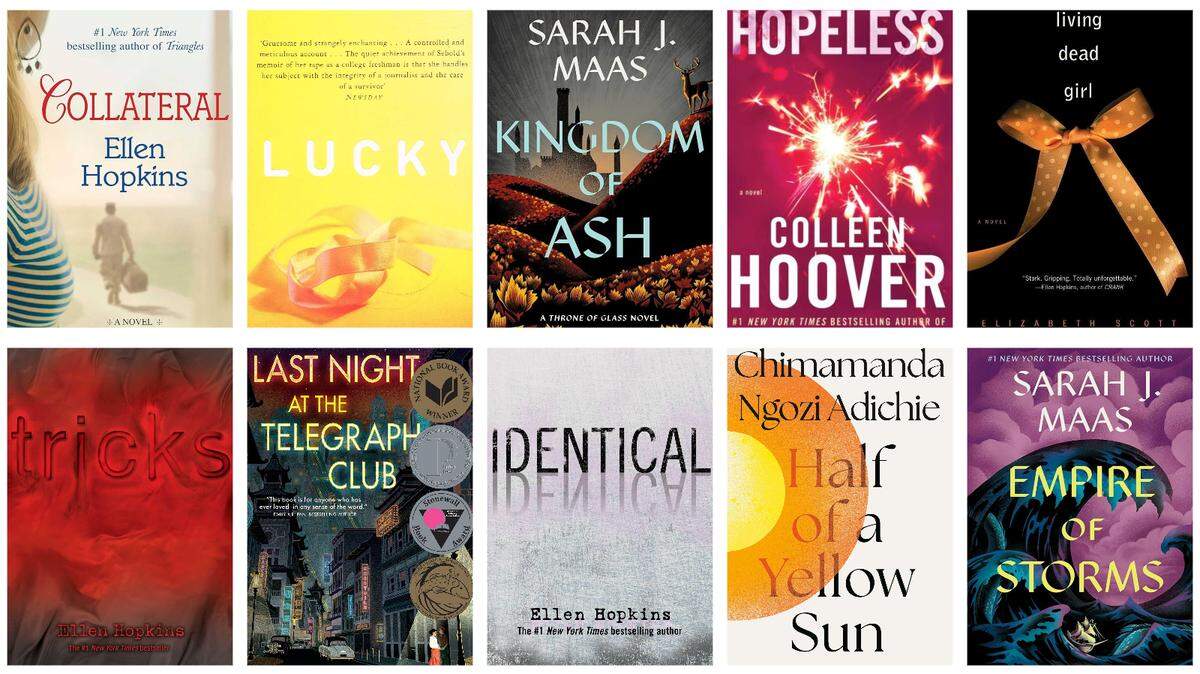
The ten books being reviewed are listed below:
“Collateral,” a novel by Ellen Hopkins, tells the story of a woman conflicted by her love for a Marine and her resentment toward the war he must fight
“Empire of Storms,” a fantasy novel by Sarah J. Mass and the third book in the series “Throne of Glass,” depicts a young adult’s journey to reclaim her kingdom
“Half of a Yellow Sun,” a novel by Chimamanda Ngozi Adichie, explores themes of moral responsibility, colonialism, ethnic allegiances, class and race during the Biafran War in Nigeria
“Hopeless,” a novel by Colleen Hoover and the first book in the “Hopeless” series, shows the challenges of navigating new relationships
“Identical,” a novel by Ellen Hopkins, dives into tough topics such as incest, drugs and attempted suicide
“Kingdom of Ash,” a fantasy novel by Sarah J. Mass and the seventh book in the series “Throne of Glass,” depicts a young adult’s journey to reclaim her kingdom
“Last Night at the Telegraph Club,” a young adult historical novel by Malinda Lo, explores a Chinese American teenager’ life as she explores her sexuality, societal pressures and the Red Scare
“Living Dead Girl,” a young adult novel by Elizabeth Scott, depicts the sexual abuse of a young teenage girl as she attempts to escape from her predator
“Lucky,” a memoir by Alice Sebold, recounts the author’s sexual assault and its impact on her life
“Tricks,” a young adult novel by Ellen Hopkins, conveys the narratives of five troubled teenagers as they navigate through challenges like sex and drugs
Total books banned
The total books not allowed on any South Carolina public school shelves has risen to 11. They are as follows:
“Perks of Being a Wallflower” by Stephen Chbosky*
“All Boys Aren’t Blue” by George M. Johnson*
“Flamer” by Mike Curato*
“Push” by Sapphire*
“Normal People” by Sally Rooney
“Damsel” by Elana Arnold
“Ugly Love” by Colleen Hoover
“A Court of Thorns and Roses” by Sarah J. Maas
“A Court of Mist and Fury” by Sarah J. Maas
“A Court of Wings and Ruin” by Sarah J. Maas
“A Court of Frost and Starlight” by Sarah J. Maas
The asterisk indicates the titles Beaufort County resident Szalai brought to the attention of the state review board in an effort to get them banned throughout South Carolina public schools.
This story was originally published March 14, 2025 at 12:34 PM.