
What is an ICE hold? Beaufort County jail’s immigration enforcement, explained
As President Donald Trump’s administration looks to local-federal partnerships to achieve its goal of mass deportations, questions remain about the role of county police and local jails in enforcing immigration law.
In Beaufort County, Sheriff P.J. Tanner is seeking to reestablish a 287(g) “task force” agreement with U.S. Immigration and Customs Enforcement (ICE) — a move that would allow at least one of his deputies to directly participate in immigration enforcement efforts.
It would also give the county access to critical federal databases and intelligence that would keep the county safe, he said. If accepted, Beaufort would be among the nearly 20 other South Carolina counties to participate.
But even without that agreement currently in place, the county’s jail has long been holding individuals at ICE’s request.
Known as ICE Holds or detainers, ICE asks jails to hold someone in custody locally after they would otherwise be released, giving the agency time to decide whether to take them into federal custody. Legally, the holds are limited to 48 hours.
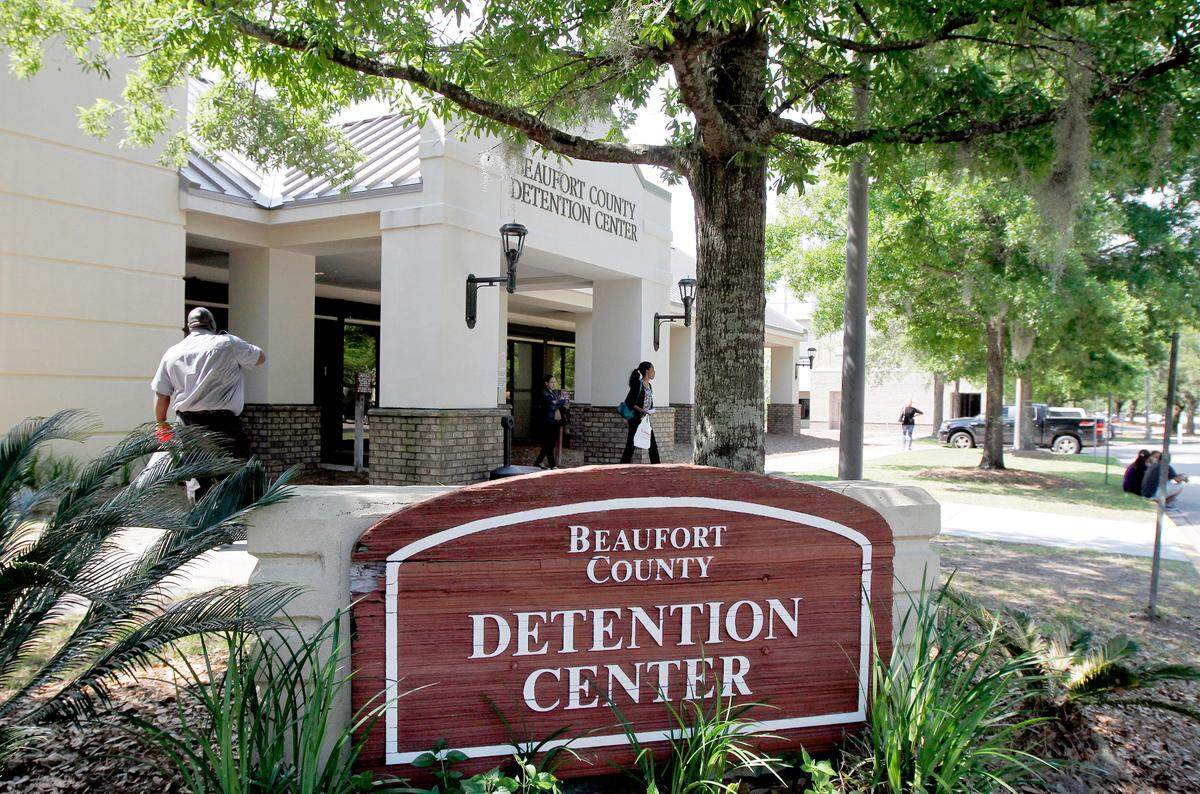
Jails are not legally obligated to honor ICE’s requests for a hold, but the Beaufort County Detention Center has taken a firm stance in honoring nearly all of them since 2012.
In May alone, 14 people were placed under ICE holds while in custody at the detention center, according to the county’s inmate inquiry system. Their charges ranged from common misdemeanors to violent felony charges.
Of those, six were released to ICE agents. Where they were taken remains unknown to the detention center.
How do ICE Holds operate in Beaufort County?
The process that can lead someone from a minor arrest in Beaufort County to the custody of federal immigration authorities unfolds behind jail walls, primarily out of the public’s view. It hinges on a fingerprint, a federal request and a 48-hour clock.
The Island Packet and Beaufort Gazette asked Beaufort County’s Detention Center Director, Colonel Quandara Grant to explain this process. Those questions were redirected to county spokesperson Hannah Nichols. With assistance from Grant, Nichols responded to the newspaper’s questions.
The process begins when someone is booked into the Beaufort County Detention Center and fingerprinted. The jail will send a request for ICE to check on the person’s immigration status if an analysis of their fingerprints determine they were not born in the United States.
ICE reviews the information and, if needed, may have an agent call the jail to interview the person over the phone. Based on what they learn from that phone call, ICE decides whether to request a detainer.
If there aren’t any other criminal charges or legal holds keeping the person in jail, and the jail gets paperwork from a judge saying the person is to be released, then the clock starts ticking. The jail has a two-hour window to release them once they’ve received formal documentation to do so from a court.
During that two-hour window, ICE can request the detainer. If no detainer comes in time, the person in custody will be released. ICE sends detainer requests by fax or email, and the person in custody will get a copy of it.
Once the detention center receives the detainer, it gets added to the inmate’s list of charges. After the person in custody satisfies all local charges, the intake supervisor will make a copy of the detainer, write the date and time of the 48-hour window expiration, fax it to ICE and call the ICE agent to confirm they received it.
ICE then informs the jail when they’ll be coming to pick the person up — but they have to do it within 48 hours. The county was adamant that no inmates are held beyond that window.
If a federal agent does not come before then, the person in custody is released. The county spokesperson also clarified that if someone is in ICE custody, the jail doesn’t get any updates on where they’re being taken or who they’re being transferred to.
When asked whether there is any oversight to ensure ICE holds are being carried out lawfully, Nichols wrote that the jail uses a logbook to track each step of the process.
The log includes the inmate’s name, when local charges were cleared, when ICE was notified, which agent was contacted and the expiration time of the 48-hour hold. It also documents when the person was either picked up by ICE or released.
No other forms of oversight were mentioned.
BCSO applies to take part in local ICE task force program
On January 28, Beaufort County Sheriff’s Office Chief Deputy Michael Hatfield sent a letter to Tom Homan — appointed by Trump as the nation’s “Border Czar” — seeking guidance on how to reestablish the office’s previous partnership with federal immigration enforcement, according to public records.
Five months after their initial letter, Tanner submitted a formal letter of interest to an ICE field office director on June 26 expressing the department’s intent to participate in the program. So far, Tanner’s office has not been added to ICE’s list of pending agencies, although agencies are added to the list on a daily basis.
Tanner’s office is looking specifically to reestablish its local “task force” with ICE.
The task force model, which Beaufort County previously used from 2008 to 2012, is one of three frameworks under 287(g). Under this model, ICE trains and equips local officers to enforce federal immigration laws. Trained officers can question individuals about immigration status and detain them for potential deportation.
The other two models, by contrast, focus on investigating people who have already been arrested and booked into local jails.
The 287(g) program has been rapidly expanding since Trump took office for his second term. Only 135 agreements between individual agencies and ICE were in place in January. Now, more than 800 agreements are in place nationwide.
Twenty of the Palmetto State’s 46 counties were among the list of participating agencies as of Friday.
Sheriff insists his office does not deport people
On July 8, Tanner took questions from the public about his office’s previous and potentially future involvement with federal immigration enforcement. This kind of meeting has been a rare occurrence among other South Carolina law enforcement officials, according to a spokesperson from the state’s branch of the ACLU.
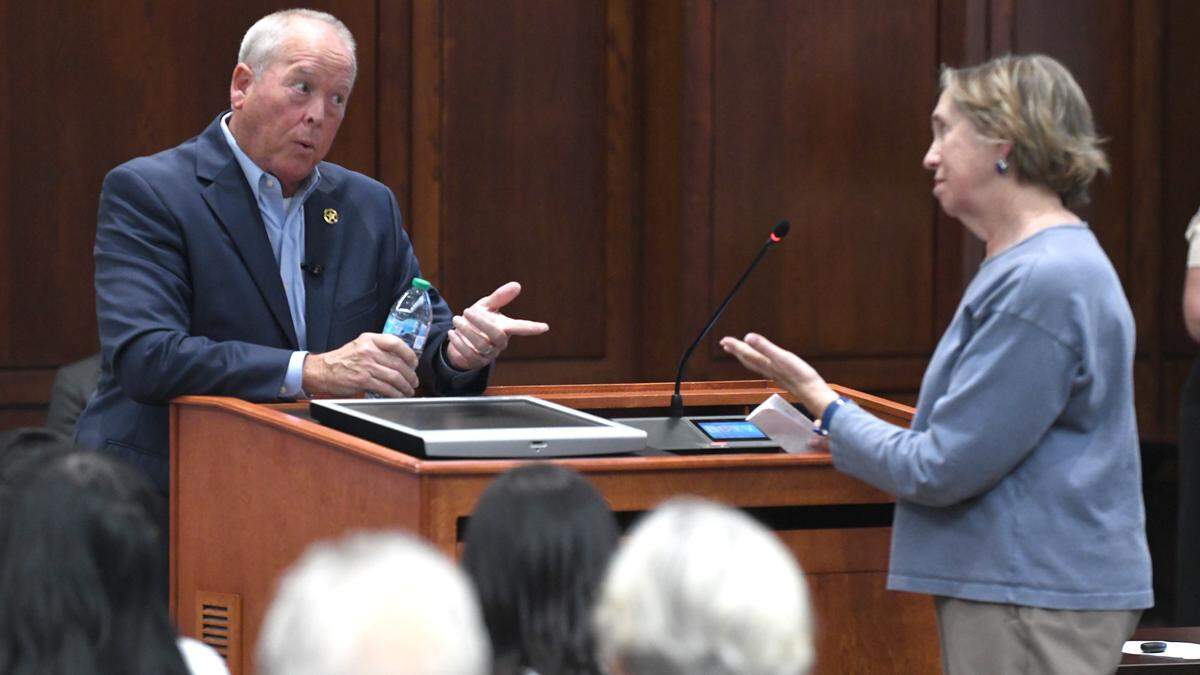
Upwards of 150 community members filled the former federal courtroom at the Beaufort County Sheriff’s Office Headquarters on Bay Street. Nearly 1,000 people joined the meeting virtually.
Many of them had questions about the 287(g) program. Others scrutinized the sheriff’s department for its previous involvement or pleaded with Tanner to withdraw the department’s application to take part in the future. Several approached the lectern to speak to the very personal nature of the department’s decision to apply, drawing from personal accounts of family members being deported.
Tanner repeatedly insisted that his office does not deport individuals and said he is not involved in how the county detention center handles ICE holds, nor does he run the detention center.
But audience members challenged that claim, suggesting the sheriff’s office plays a key role in funneling people into the federal system.
“You can’t separate what happens when you pick someone up for not having a license and where they are actually going to end up,” said Will McCorkle, an assistant professor at the College of Charleston.
Beaufort County was previously one of just 18 law enforcement agencies nationwide to operate under a task force model. During those years, the detention center reported a rise in the number of ICE Holds.
A second public meeting with the sheriff is scheduled for 5:30 p.m. on July 22 at the Bluffton branch public library.