Beaufort Co. deputies cite Black, Hispanic residents more than white people, report says
The Beaufort County Sheriff’s Office is a mostly white department, in a majority white county, and officers ticket more Black and Hispanic residents than white ones, according to a new police accountability report.
Black and Hispanic residents made up nearly 58% of citations from the Sheriff’s Office, though they represent less than one-quarter of the county’s population. Meanwhile, white residents received about 53% of warnings from the department, the report states.
The grassroots Citizens Task Force for Law Enforcement Accountability, formed in July 2020 after the killing of George Floyd, released its first report on Wednesday of its countywide audit of police agencies.
The task force, made up 30 residents across the county, gathered data by Freedom of Information Act request and met with the Sheriff’s Office twice to go over its goals.
Those include using data to make sure Beaufort County law enforcement are policing equitably and find out what needs improvement.
Diversity?
The Sheriff’s Office has 221 sworn deputies, but 144 make up the enforcement division. That division includes the most front line positions: enforcement, investigations, victims’ advocates and the violent crimes task force.
These officers also patrol the county.
Of the 144 deputies, only one is black. The division is 93% white and 87% male, according to the report.
The department said it tries to add diversity by recruitment through its school resource officer program and through job fairs at various places like the University of South Carolina, Technical College of the Lowcountry, Parris Island, and Chamber of Commerce events.
The Sheriff’s Office is hardly alone in this problem.
A New York Times analysis found that of 467 U.S. police departments with at least 100 officers, between 2007 and 2016, that two-thirds became whiter relative to their communities.
Department diversity has been in focus following last summer’s racial justice protests.
“When you have diverse police departments, diverse governments broadly speaking, that sets in motion dynamics that filter down to the community that galvanizes trust. That helps reduce crime,” María Vélez, a University of Maryland associate professor of criminal justice told the Washington Post in June.
Beaufort County is 78% white, about 18% Black, and 11% Hispanic or Latino, according to a recent census count (the concept of race is defined separately from Hispanic origin, where a resident could be Hispanic and of a different race).
Enforcement
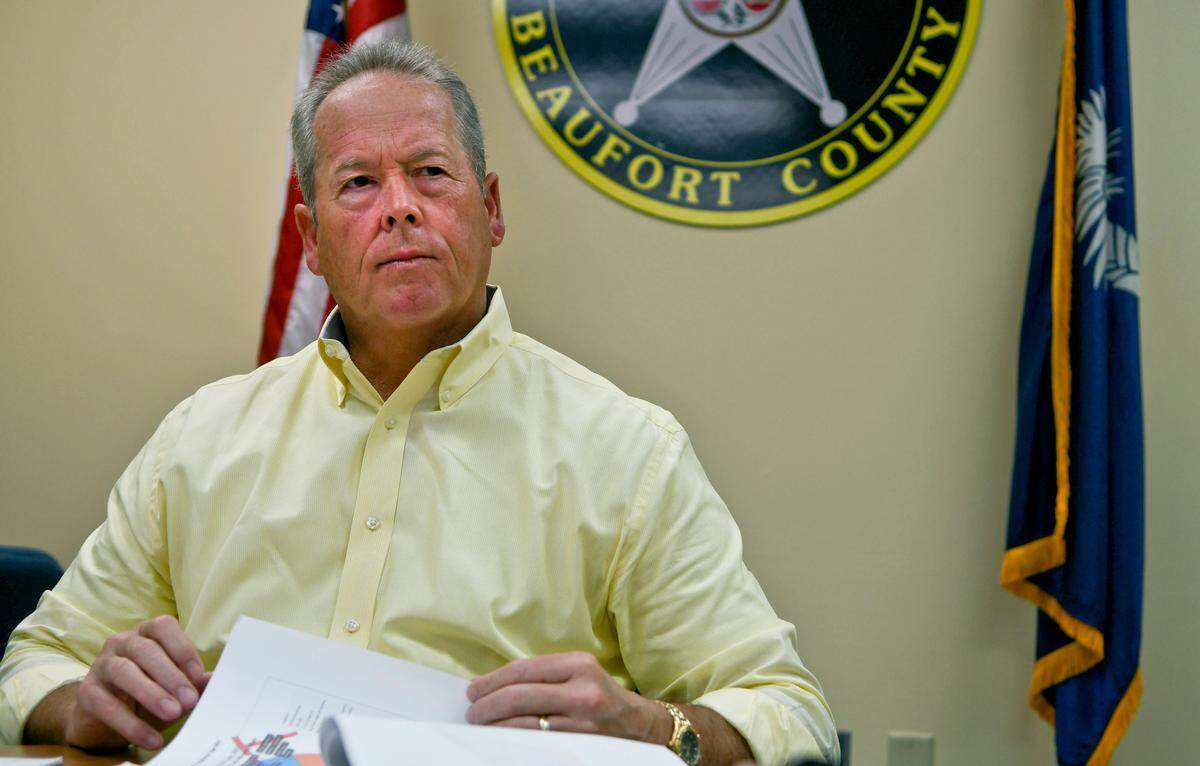
White residents of Beaufort County received more warnings, while Black and Hispanic residents were more likely to be cited, according to 2020 data.
“Based on data provided to the task force regarding warnings and citations, it appears that White citizens enjoy that benefit more often than do Black and Hispanic citizens,” according to the task force report.
Sheriff P.J. Tanner, in a press release on the report, maintained that the Beaufort County Sheriff’s Office “enforces laws impartially. ... We remain open to discussions that help us achieve our mission of better understanding and addressing the diverse issues affecting Beaufort County.”
The task force report said numerous factors can play into the data discrepancy, like some traffic stops related to poor vehicle repair.
Offenses that result in tickets from law enforcement, like marijuana use in Beaufort County, aren’t necessarily the result of one group committing more crimes. For example, Black and white American adults reported using marijuana at around the same levels in 2018 and 2019, according to the National Survey on Drug Use and Health.
The task force suggests there could be unintentional bias.
“Countless studies reveal that people are subject to unintentional bias, starting as children. It takes a herculean effort for every individual to recognize its existence her- or himself, and work to overcome it,” the report said. “However, that work must be supported — and led — by our institutions, including law enforcement.”
Misconduct and use of force
The report lauded the Sheriff’s Office for swiftly firing or accepting resignations from deputies when misconduct allegations were substantiated.
Within one day of Cpl. Todd Ferguson being charged with driving under the influence in November, he was fired from the Sheriff’s Office.
The report also referenced how Lt. Brian Baird was reassigned within 24 hours after The Island Packet and Beaufort Gazette reported controversial Facebook posts from the department’s internal investigator.
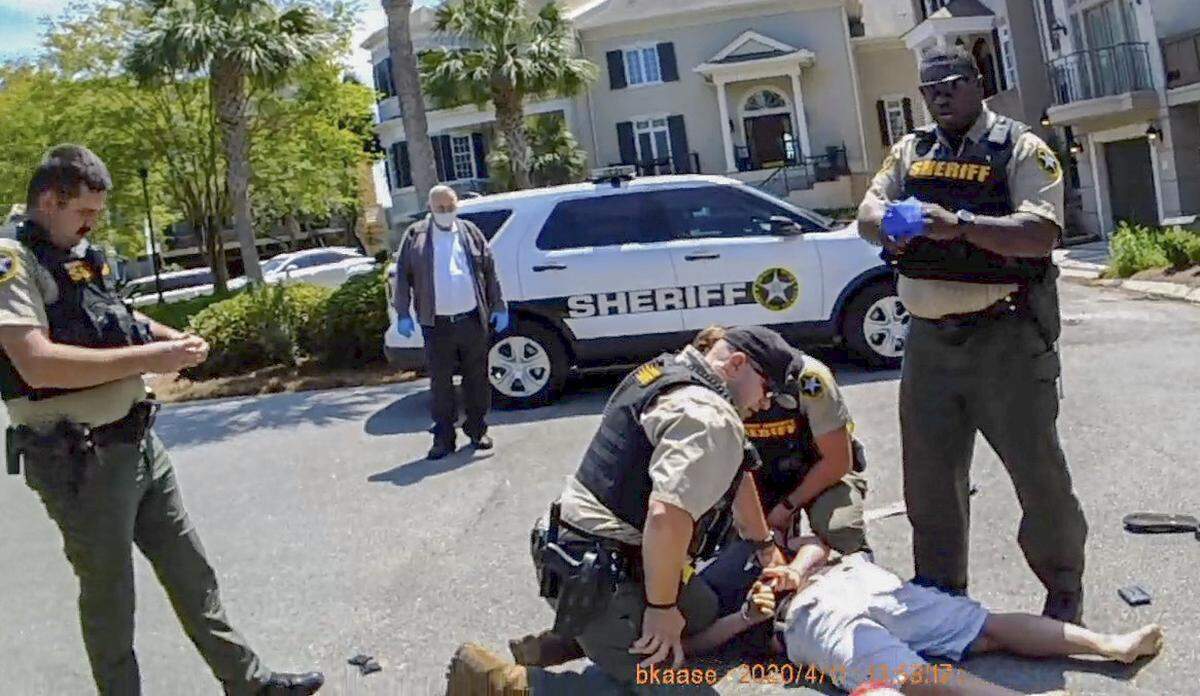
There were only 16 instances of force used by deputies during arrests in 2019, the Sheriff’s Office data shows.
That makes up one-half of 1% of total arrests that year.
“Even though force is rarely used, it is noteworthy that force is used predominately against Black men. The possible causes are many and difficult to prove,” the report states.
Solutions
With regard to recruiting more officers of color, the task force recommends the Sheriff’s Office recruit at Historically Black Colleges and Universities, work with Black churches, and host block parties and other events to make community inroads.
It also states that a more diverse agency and a heightened emphasis on community policing could cut down on unintentional biases.
In the coming weeks, the task force will be releasing a report on the Beaufort Police Department. It is also collecting data from the Bluffton Police Department and Port Royal Police Department.
This story was originally published January 14, 2021 at 4:30 AM.