Beaufort looks to control short-term rentals, but rejects ban in The Point
The city of Beaufort is the latest coastal city in South Carolina to consider new rules to rein in the rapid growth of short-term rentals.
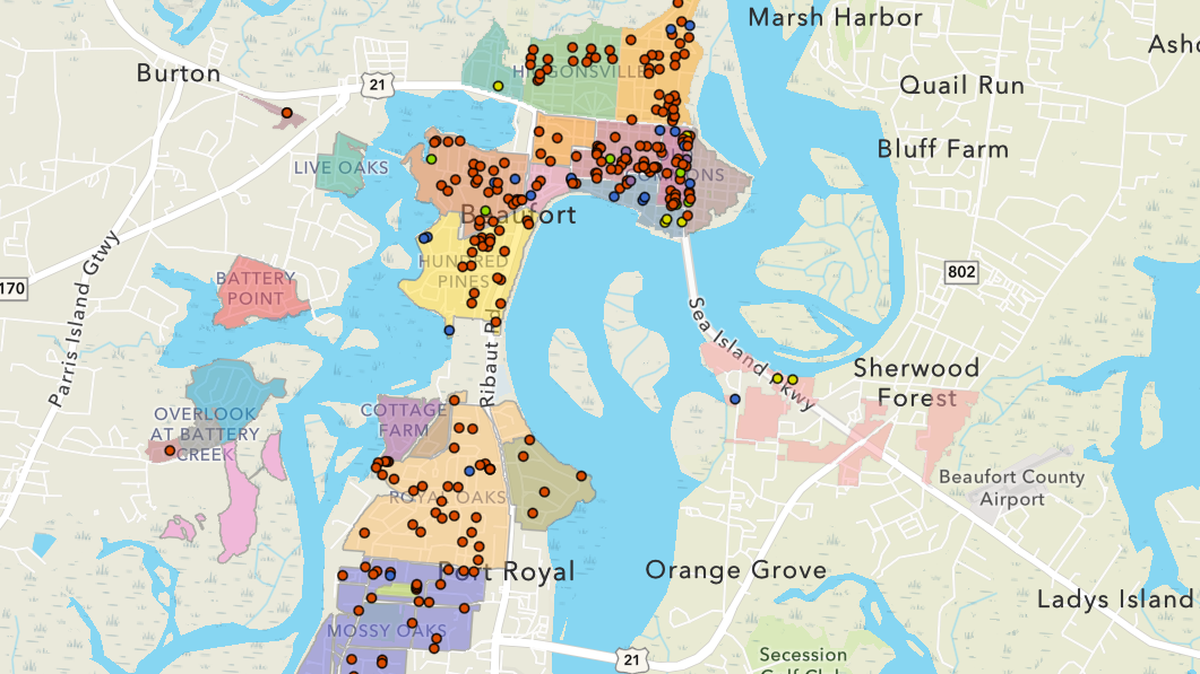
On Tuesday, the City Council approved a spate of new licensing requirements and density controls to limit the spread of STRs across the historic city of 14,600. STRs, defined as rentals of fewer than 30 days, increased by more than 40% between 2022 and 2025, from 175 to 249.
But in a controversial move, council members decided to remove an STR ban already in place in The Point, a neighborhood overlooking the Beaufort River known for its historic houses. Neighbors in The Point strongly support the ban.
The sudden rise has prompted some residents to complain that STRs are bringing too many rental units into residential neighborhoods, creating noise and parking issues and driving up housing costs for long-term residents.
On the other hand, some residents who operate properties have pushed back, arguing STRs provide income for them and attractive places to stay for tourists, including military families who come to town for Marine Corps graduations.
The trick in changing the city’s STR rules, Community Development Director Curt Freese said, has been finding a balance between preserving housing affordability and tourism promotion.
A committee of city staff members has been wrestling with proposed changes to address the rapid growth in STRs for months. The City Council is on the verge of enacting them.
A second vote is needed before the revised rules take effect.
The proposed requirements include:
- Separating STRs by at least 300 feet to prevent single blocks from having multiple STRs. Freese said this rule is a major change in the code designed to prevent clustering of short-term rentals. Most of the city’s some 300 STRs are clustered in the historic downtown area.
- Allowing just one STR per lot.
- Capping STRs at 6% of the total number of residential lots per neighborhood citywide. A 6% cap is currently in place, but many downtown neighborhoods are exempt.
- Grandfathering STRs operating prior to April 14, 2026 into the 6% cap.
- Creating a wait list of new applicants when a neighborhood reaches the 6% threshold.
- Requiring short-term rentals to get a city business license regardless of the number of units owned.
Beaufort is the latest tourist destination to take up rapid growth of STRs, which are apartments or houses whose owners rent them for short periods for income, often to vacationers. Other communities tackling the issue include Hilton Head, Port Royal, Charleston and Folly Beach.
Nationwide, Freese noted, 500 cities have updated rules in recent years to address the increasing number of STRs, which he said can drive up rents and housing prices in a city.
“How do we protect those neighbors being affected by them when rents and housing prices go up?” Freese said.
At the same time, he added, the city wants to continue to promote tourism. Most people, he noted, have stayed in an STR before.
On Tuesday, the City Council, at the urging of Councilman Josh Scallate, narrowly approved an amendment that stripped three provisions recommended by city staff.
Scallate acknowledged that The Point proposal in particular would be controversial. A ban was previously requested by residents of the neighborhood and currently exists. City staff proposed extending the ban in the revision of the STR rules.
But Scallate and Councilman Mitch Mitchell argued it wasn’t fair or legally prudent to allow a ban in one neighborhood but not others.
A provision allowing only one STR per lot will stand, but Scallate successfully pushed for an amendment allowing property owners to seek a special exception allowing multiple STRs. However, they would need to go before a city panel for approval.
A provision that would prevent investors from using accessory structures such as carriage houses or pool houses as STRs was also removed from the proposals. The city staff said only owner-occupied properties should be allowed to use accessory dwelling units like carriage houses as STRs.
The growth of STRs has come in part, city officials have said previously, from investors who don’t live on site who use properties for multiple STRs. But Scallate said an investor should be able to use either the main house or an accessory unit as a short-term rental, as long as it is the only STR on the lot.
The amendments and the entire STR ordinance passed on a 3-2 vote with Councilman Neil Lipsitz and Mayor Phil Cromer voting no. Lipsitz said he voted no because The Point should be exempt from STRs. Scallate, Mitchell and Councilman Mike McFee voted yes.
The Planning Commission recommended a ban on STRs where the owner does not live on the premises. But city staff recommended against it and that provision is not included in the current version before the City Council.
The number of STR permits took off in the city after the COVID-19 pandemic hit, Justin Rose, a city business license inspector, said previously.
During the pandemic, more people wanted to stay in STRs, he said. At the same time, the popularity of buying houses with the intent of renting them as STRs as another means of income increased, Rose said.
This story was originally published March 11, 2026 at 12:29 PM.