Once again, St. Helena blueberry farm works to protect its crop from winter storm
For the second consecutive year, a blueberry farmer on St. Helena Island is preparing for a dangerous winter storm to save the crop 2 1/2 months before its harvest.
“We’re definitely going to be impacted,” said Cal Hucks of Coosaw Farms.
Farmers and residents across the Lowcountry are bracing for a Saturday-through-Monday winter storm that the National Weather Service in Charleston says will bring dangerously cold Arctic air to coastal South Carolina where winters usually are mild. As of Wednesday’s forecast, it was too early to say whether freezing rain or snow would fall on the coast. Ice accumulation from freezing rain appeared to be the primary threat, with lows dipping to the mid- to upper-20s.
Coosaw Farms is South Carolina’s largest blueberry producer with its main fields located in Fairfax and on St. Helena Island east of Beaufort.
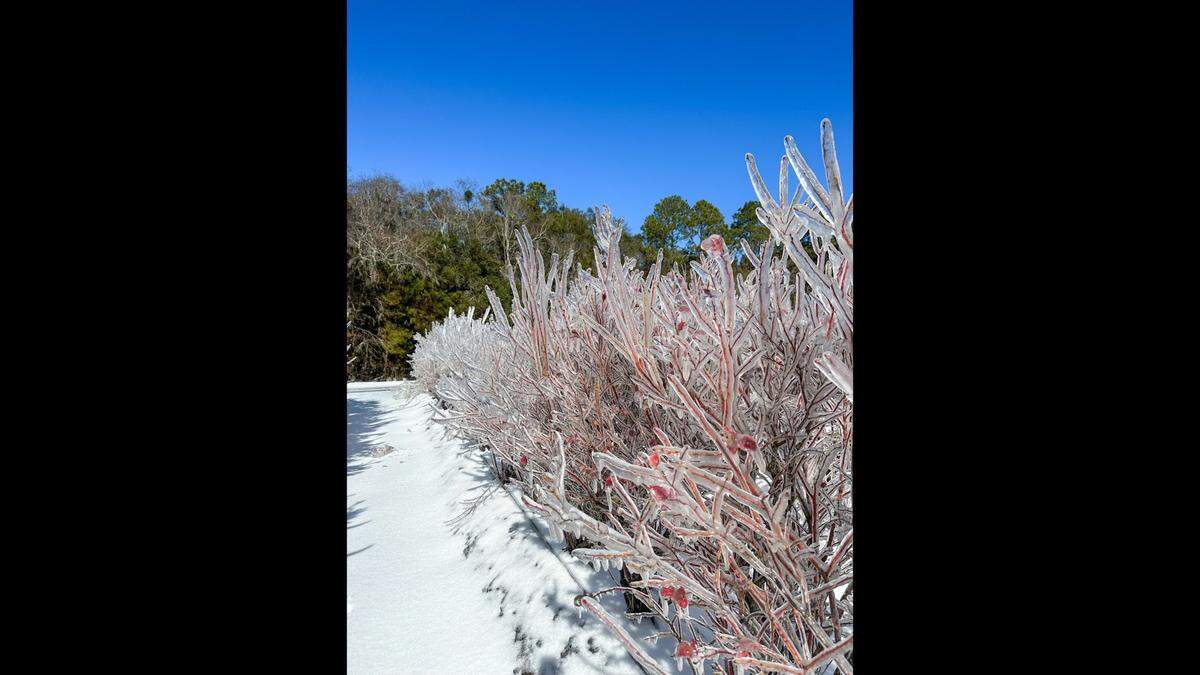
It’s the second year in a row extreme winter temperatures have forced Hucks and his Coosaw Farms crews to take extreme measures to protect the valuable blueberry bushes, which were planted eight years ago and bloom each spring before the April harvest.
To protect crops during cold snaps, Coosaw Farms runs “frost protection” operations that involve pumping water onto the plants to form ice that insulates them from the cold.
Blueberry farm’s successful frost protection efforts
A year ago this week, several inches of snow covered the region for the first time in seven years, threatening Coosaw Farms’ 100,000 blueberry plants. The frost protection measures were successful, Hucks said.
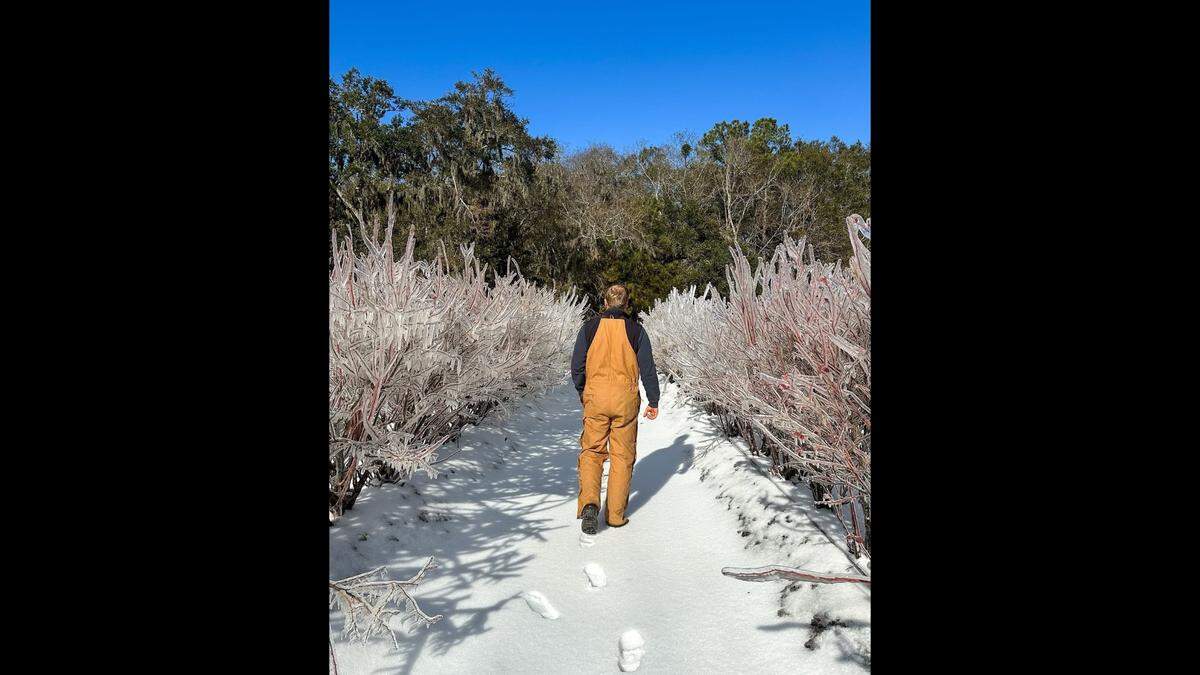
“We might have lost 10% potential yield,” Hucks said. “All in all, we count that a success because we could have lost 50%.”
Coosaw Farms began frost protection late last week because of cold overnight temperatures.
Because of the coming storm, Hucks expects frost protection will be required for an additional eight days, beginning on Sunday. In a typical winter, frost protection is usually only required about three days.
“Everything is cyclical,” Hucks said. “We’ve had a couple warm years, and we’ve had a couple of cold years.”