Want to spot a manatee in SC this summer? Here’s where to look in Beaufort County
Each summer, visitors and locals to the South Carolina Lowcountry are likely to spot a number of aquatic creatures.
From alligators, jellyfish, stingrays, dolphins, turtles and even sharks, the Lowcountry’s many waterways are home to an abundance of creatures.
But one gentle and elusive animal has increasingly been noticed in this lineup of visitors to the shallow waters of Beaufort County: the Florida manatee.
These massive marine mammals, which can weigh more than a ton and reach up to 13 feet long, typically arrive in South Carolina around May, as ocean temperatures rise. The manatees travel north from Florida in search of warmer coastal waters and tend to stick around until the fall, heading south again when water temperatures dip below 68 degrees.
Here’s what to know about these creatures and some of the best places to spot them this summer.
Where to look for manatees
Manatees can be spotted anytime between April and November in the Lowcountry and favor sheltered or shallow areas like marinas, inlets and estuaries — places where waters are slow-moving.
In Beaufort County, common hotspots include Broad Creek, Skull Creek, Broad River, Shelter Cove Marina and the Harbour Town Marina, according to Kelly Lambert, manatee response coordinator for the South Carolina Department of Natural Resources.
Manatees can live in salt and fresh water, so these areas provide ideal conditions for manatees and are easy-to-spot locations for observers hoping to catch a glimpse.
If you have trouble seeing a manatee in the waters, wearing polarized sunglasses can reduce glare, making it easier to see manatees below the surface.
How common are they?
Though manatees are sometimes tricky to spot due to South Carolina’s naturally murky waters, sightings in the state have been on the rise.
So far this year, about 142 official manatee sightings have been reported to the SCDNR — 53 of those in the Beaufort area alone.
“In just the past month, 24 sightings came from the Beaufort County region,” said Lambert.
Safety tips if you encounter a manatee
It’s important to admire manatees from a distance.
“While it can be tempting to get close, remember these creatures are wild and it’s best to just let them be wild,” Lambert said.
Federal and state laws make it illegal to touch, feed or provide water to these protected animals. Harassing, pursuing or attempting to interact with a manatee could result in fines or even imprisonment.
Manatees face a number of threats, with some of the greatest dangers to the species including boat strikes, entanglement in fishing gear and harmful algal blooms known as red tides.
The SCDNR provides these additional safety tips to keep in mind as manatees inhabit Lowcountry waters:
- Boaters should look around for manatees before cranking their boat’s motor and watch for large swirls in the water that may be caused by manatees diving away from the boat.
- Follow all “slow speed” and “no wake” warning signs, especially around docks. Use caution when navigating in shallow water and along the edge of a marsh, as manatees cannot dive away from boats in these areas.
If you see a manatee with a tag on its tail, know that it is harmless to the animal and designed to break free in case of entanglement. These tags are used to transmit and collect data that sends information about the animal’s location, providing insight into their patterns and habitats from Florida up the Atlantic Coast.
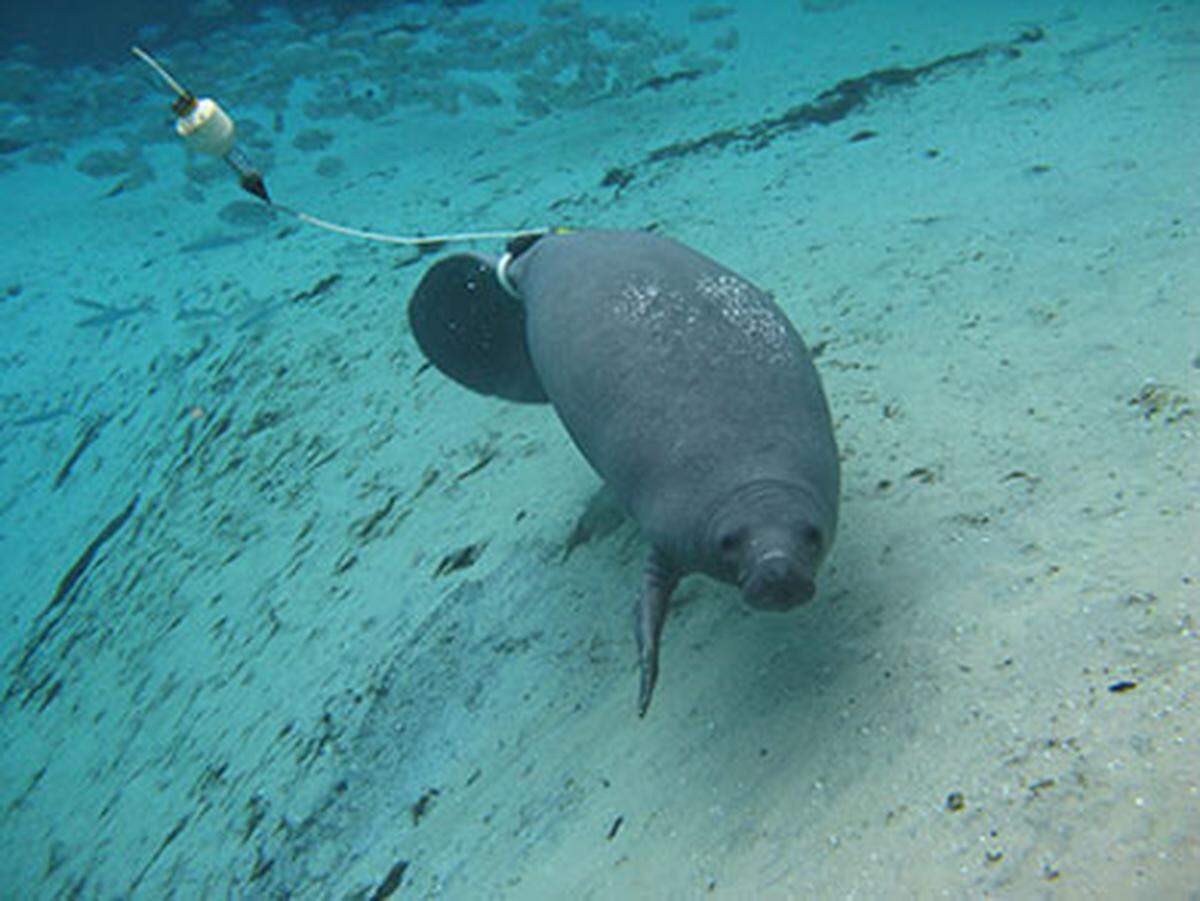
Manatees on the move
Manatees have been observed in Lowcountry waters since 1850 and while the total number of manatees in South Carolina is unknown, they represent a small portion of the estimated 8,000 in the United States.
Most reside in Florida year-round, but some make seasonal journeys up the Atlantic coast. Manatees are migratory animals, and since they have a small layer of blubber, they need to stay in warm water.
While more and more sightings are reported each year, Lambert says the uptick in reports reflects both manatee behavior and increased public awareness.
“The more outreach we do, the more people report sightings, the more the data builds,” she said. “It kind of has to have both sides — the manatees showing up and the people noticing them.”
If you spot a manatee, you can snap a photo from afar and submit it through the SCDNR Manatee Sighting Form to help keep track of sightings across the state.
If you witness an injured or stranded manatee, call the SCDNR wildlife hotline at 1-800-922-5431.
This story was originally published July 29, 2025 at 6:00 AM.