When do stingrays return to SC waters? Sooner than you may think
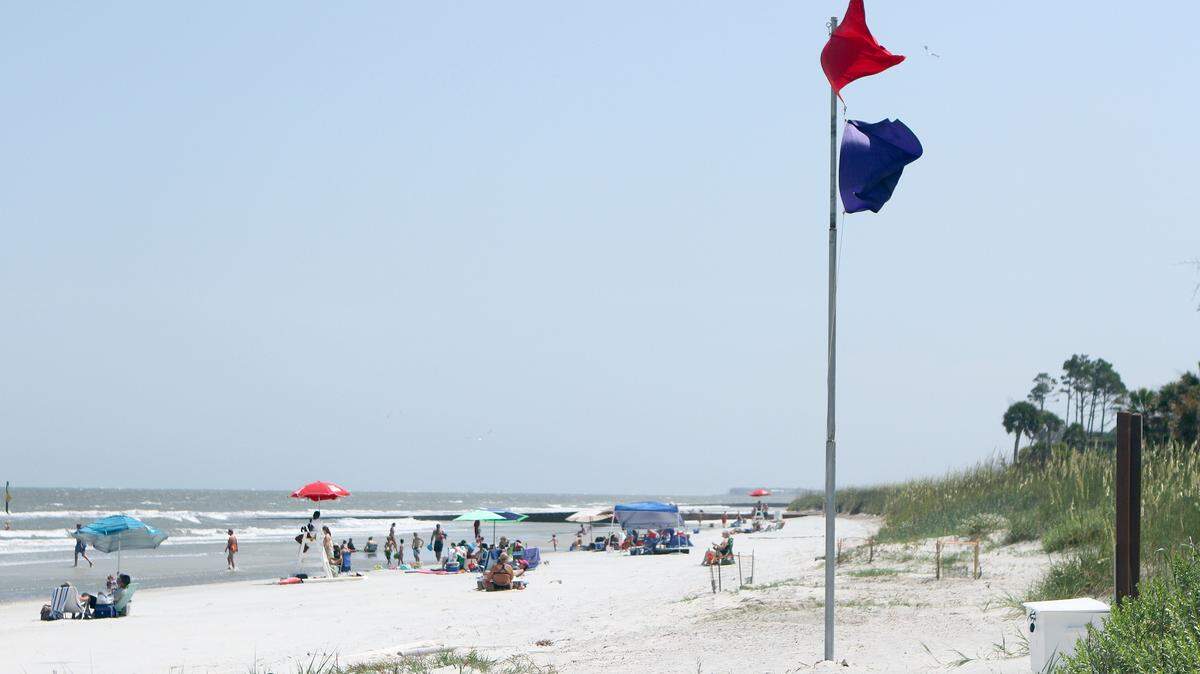
Year after year, the waters off Hilton Head shores are scattered with sea creatures exploring their natural habitat and taking a dip in the warm summer waters.
Unfortunately, some of those creatures come with an unsavory sting if you’re not careful.
In Lowcountry ocean waters, jellyfish and stingrays are frequent visitors that can easily disrupt your beach vacation.
Each year, as the water warms, stingrays return to the shallow surf, burying themselves in the sand where the sea meets the shore. Most beachgoers never notice them — and that’s exactly the point.
Luckily, stingrays are not predators. They’re peaceful bottom-dwellers, camouflaged and still, often hoping to avoid attention.
But attention finds them when a human foot comes down in just the wrong place.
Here’s what you should do — and not do — if you have the unpleasant experience of crossing paths with a stingray this year.
When do stingrays return?
Stingrays have historically returned to Hilton Head waters in the spring months, with peak activity occurring between May through July.
Some of the most common species of stingrays you’ll find in Lowcountry waters include:
Avoiding a sting: The ‘stingray shuffle’
The best way to avoid a stingray injury is also the simplest: shuffle your feet in the water.
Instead of stepping forward normally, this ‘dance’ involves dragging your feet across the sand whenever you enter the water.
Known locally as the “stingray shuffle,” it sends vibrations through the sand that alert rays to your presence. In almost all cases, they’ll swim away before you get close.
Wear water shoes. They won’t protect you completely from a sting, but they can offer a barrier and reduce the risk of other foot injuries.
Don’t run or stomp in the surf. Sudden, heavy steps can startle rays.
Avoid murky shallow waters during peak stingray season (usually mid-spring through summer), especially around dawn and dusk, when rays may be more active.
What to do if you’re stung
Most stings happen when rays feel trapped or are accidentally stepped on by an unsuspecting swimmer. That’s why it’s important to shuffle your feet as you’re entering the ocean; it serves as a warning to the rays that something is coming.
If you are stung by a stingray, remain calm. The pain can be intense, but most stings are not life-threatening.
That venom is released through one or more barbed spines on the ray’s tail — a natural defense mechanism used only when the animal feels threatened.
Most stings happen when someone steps on a ray by accident, often in shallow water no deeper than their ankles.
Exit the water immediately. Don’t risk another sting or further injury.
Soak the wound in hot water (not scalding) for 30 minutes to an hour. This helps break down the venom and reduce pain.
Clean the wound thoroughly with soap and fresh water. Remove sand and debris.
Seek medical attention if: the wound is deep, bleeding heavily, you can’t remove any broken-off spine fragments, the sting is to the chest, abdomen or neck, or if you haven’t had a recent tetanus shot.
Watch for signs of infection over the following days: redness, swelling, pus, or increased pain.
Do not attempt to remove a spine if it is lodged deep in muscle or near vital organs; leave that to medical professionals.
It is always a good rule of thumb to go seek medical help after you’ve been stung, even if the injury is not severe, as some stings can easily get infected.
“On average, we see anywhere between 500 to 1,000 stingray stings each season,” said Mike Wagner, director of Shore Beach Services.
Shore Beach Services will also fly a purple flag if there is a high volume of rays or jellyfish in the water to warn nearby swimmers. Lifeguards are also available to help treat stings or contact emergency services.
Hilton Head Hospital’s emergency room treats hundreds of stingray injuries each year, sometimes multiple in a day during peak summer months when stingrays are most active and tourists are plentiful.
It’s common enough that they often place a “stingray bucket” in the emergency room — a tub of hot water used to neutralize the venom.
The warm water itself doesn’t pull out the barb, but it does dull the pain of the toxins released from a stingray’s spine, which acts more like a hypodermic needle than a knife.
A misunderstood neighbor
Despite their painful reputation, stingrays are not aggressors.
They serve an important part of Hilton Head’s natural rhythm, often as the underwater gardener and protector for more dangerous creatures. All rays are related to sharks, but don’t have the same fearsome reputation. They’re gentle by nature, even shy.
So shuffle your feet, keep your eyes open and enjoy the ocean with a bit more awareness. The rays will appreciate it — and your feet, too.
This story was originally published April 29, 2025 at 6:00 AM.