
Look out! This creature sends more than 100 victims to Hilton Head’s ER each summer
One Lowcountry creature is responsible for sending hundreds of patients to the Hilton Head Hospital E.R. every year — and it isn’t a jellyfish, shark, alligator or a snake.
“People really seem to be afraid of snakes, but we see probably 10 times the amount of stingray injuries than we do snake bites,” said Dr. Robert Clodfelter, medical director of the Hilton Head Hospital emergency room.
Clodfelter said the stingray injuries peak from mid-May to late June. The ER typically treats more than 200 patients a year, compared to about 15 to 25 people a year for venomous snake bites.
“The injuries peak around Memorial Day, when (stingrays) tend to be hanging close to shore and more people are swimming in the water,” he said. “We see hundreds of these injuries.”
While jellyfish stings are much more common on Hilton Head, the injuries are less severe and typically treated by lifeguards. Hilton Head hospital records show that only four people were treated for jellyfish stings in 2016, while Beach Shore Service Operations lifeguards treated more than 5,300 people for jellyfish stings last year.
The good news is that stingrays don’t typically bite or sting people out of aggression. They do, however, hang out on the ocean floor and will defend themselves — sometimes with a venomous tail sting — when they get stepped on.
Stingray injuries should not be taken lightly, Clodfelter said.
“Stingray barb entries can cause serious infection and intense pain, like you stepped on very sharp glass,” he said. “I’ve seen some pretty serious injuries from stingray barbs.”
Carlos Chacon, manager or natural history at the Coastal Discovery Museum in Hilton Head, said local stingray species aren’t deadly apart from extremely rare situations such as getting stung in the heart like famed Australian naturalist Steve Irwin.
“Most people get stung on the bottom of the feet, when they step over a stingray, or sometimes in the hands or arms when trying to get one off a fishing hook,” Chacon said.
Chacon said that stingrays are found in several areas of coastal waters, including the beach and in the salt marsh.
National Geographic reports that stingray populations have increased over the last few years. In Huntington Beach, California, more than 70 people were treated in one day for stingray injuries last year.
Last year, Beach Shore Services officials told the Island Packet that 300 people were stung by stingrays on Hilton Head between March 1 and June 13.
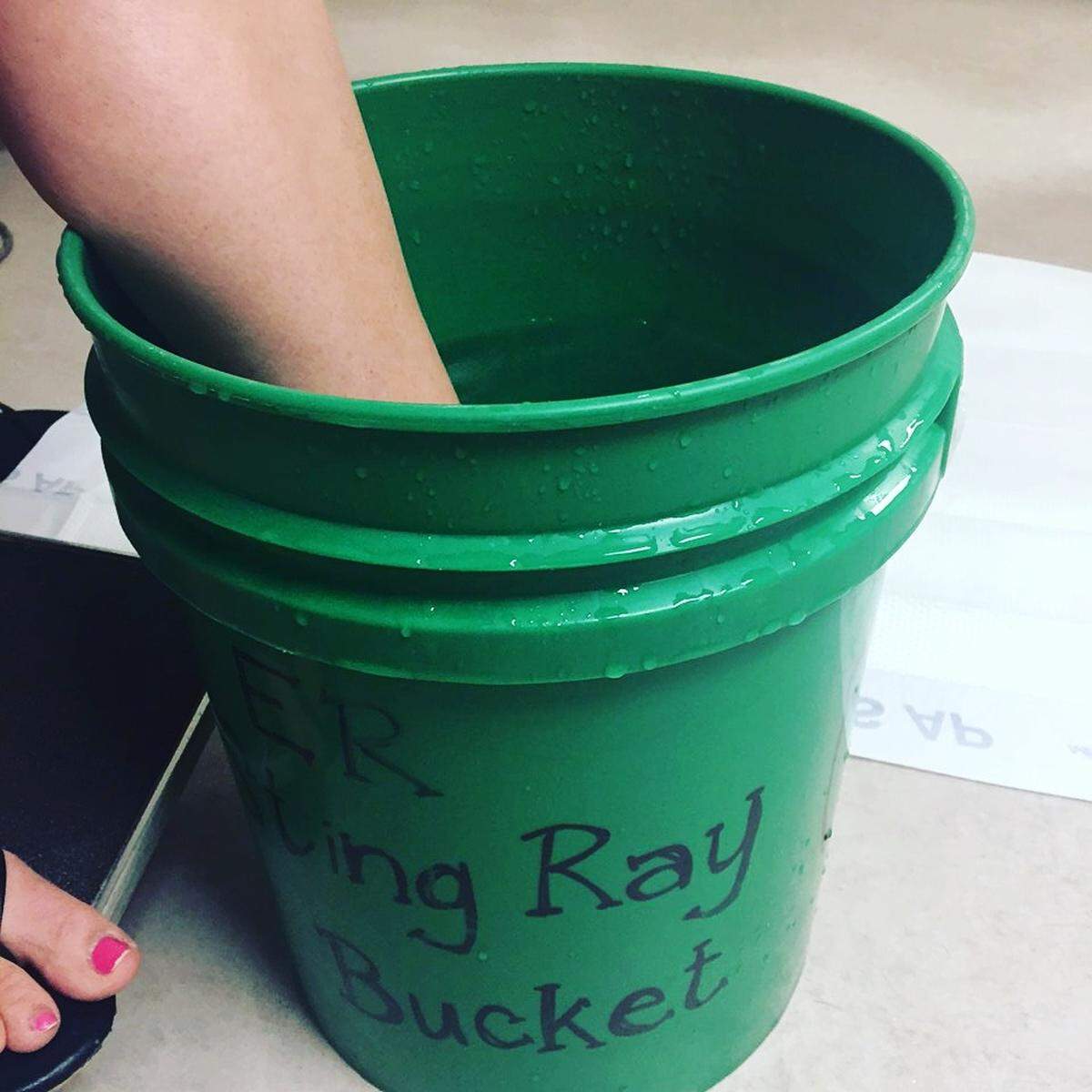
In fact, Hilton Head (Island) Hospital’s emergency room has a green bucket called the “ER Sting Ray Bucket,” containing hot water that will relieve the toxins from the stingray’s barb.
The stringray shuffle and other ways to protect yourself
Don’t let stingrays keep you from enjoying a dip in the ocean.
“Stingray injuries are almost 100 percent avoidable if you wear water shoes, keep your feet on the ocean floor and shuffle when you move,” Clodfelter said. “We like to call it the stingray shuffle.”
It’s also recommended to kick the sand up with your toes as you enter the water. Stingrays are skittish and this scares them off.
Clodfelter recommends seeking medical attention soon after the injury.
“They are venomous and wounds need to be cleaned out and treated properly to avoid infection,” he said.
Editor’s note: This is a story from the archives that was originally published in 2017, but still relevant, year after year.
This story was originally published May 25, 2018 at 11:39 AM with the headline "Look out! This creature sends more than 100 victims to Hilton Head’s ER each summer."