3 more Beaufort Co. sites added to National Park Service roster. Here’s where they are
Six South Carolina historic sites — including three throughout Beaufort County — were added to a network started by the Palmetto state’s Beaufort-based Reconstruction Era National Historical Park.
The sites were added to the U.S. National Park’s growing Reconstruction Era National Historic Network, which is now a national collection of 67 private sites and programs providing education, historical interpretation and research related to America’s Reconstruction era from 1861 to 1900, according to a news release.
That time was “one of the most transformational periods in American history,” it said.
Newly designated sites in Beaufort County
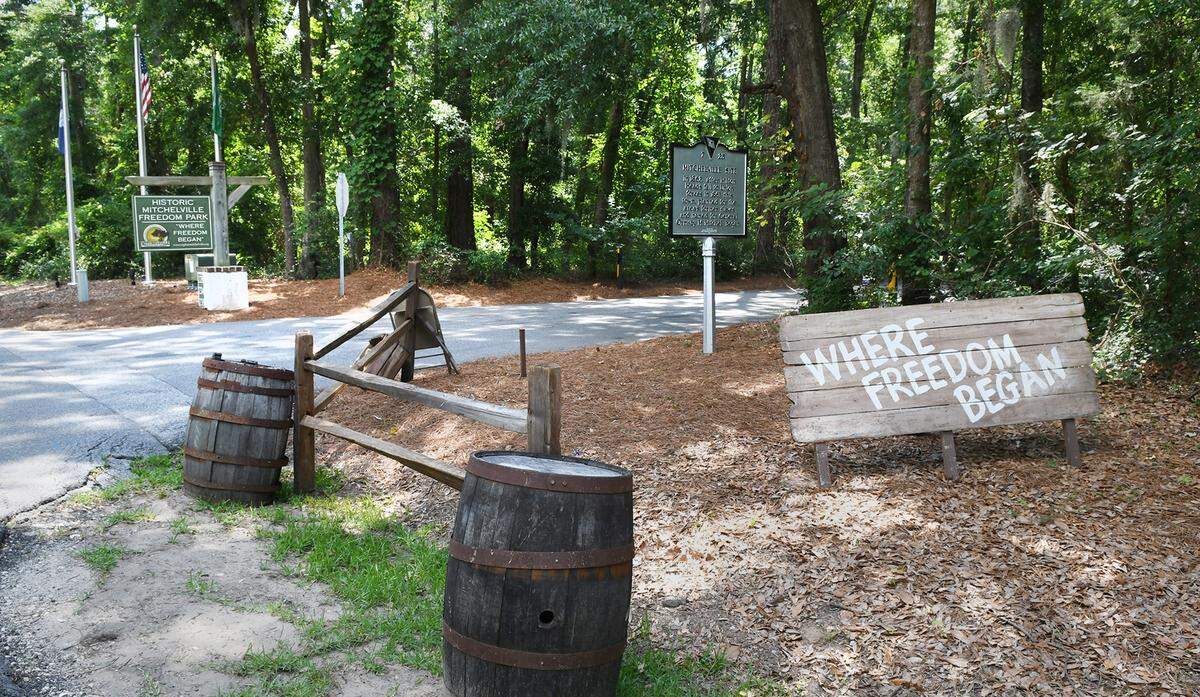
▪ Historic Mitchelville Freedom Park on Hilton Head: The park on the north end of the 12-mile island preserves the site of the nation’s first self-governed town of formerly enslaved people, a community that emerged early in the Civil War as part of what was known as the Port Royal experiment. Mitchelville Freedom Park is located off Beach City Road, Hilton Head Island, with a marker at the entrance of Fish Haul Creek Park, the Historic Mitchelville Freedom Park site, which will be redeveloped. Multiple exhibits are available for viewing, and the park periodically hosts events.
.JPG "Penn Center (6).JPG")
▪ Penn Center on St. Helena Island: The center safeguards the historic campus of Penn School that was established in 1962 and acted as one of the first schools in the country for formerly enslaved people. Penn Center, which lies within the boundary of the National Reconstruction Era National Historical Park, also interprets the importance of education and Gullah culture on the Sea Islands. The Penn Center is located at 38 Penn Center Circle West, St. Helena Island. Self-guided and docent-guided tours are available for $10 and $15, respectively, by appointment due to the pandemic.
▪ Wesley United Methodist Church in Beaufort: The church, which has an active congregation, served as a school for formerly enslaved people and as a headquarters for some Republican politicians in the region during the Reconstruction era. The church also maintains a historic cemetery. The church is located at 701 West St., Beaufort.
Other newly designated sites in South Carolina
▪ The Museum of the Reconstruction Era in Columbia: The museum at the Woodrow Wilson Home is the nation’s only museum dedicated to interpreting the post-Civil War Reconstruction period. It’s also housed in the state’s only remaining presidential site. The museum interprets Columbia’s late 19th-century history to dispel the commonly held myths of Reconstruction.
▪ Historic Harriet Barber House in Hopkins: This is the home and farmstead of Harriet and Samuel Barber, who purchased the site during Reconstruction and whose property has remained in the family ever since. During Reconstruction, some Black South Carolinians were able to purchase land through the South Carolina Land Commission.
▪ Reverend Nelson C. Nix Home in Orangeburg: This private residence is near the campus where its namesake studied and worked. The Rev. Nelson C. Nix attended Claflin University and Benedict College before later becoming founding educator and leader at South Carolina State University.
“The Reconstruction Era National Historic Network offers an opportunity to tell a more accurate and complete story of American heritage,” said Scott Teodorski, superintendent of Reconstruction Era National Historical Park, which administers the network. “By adding these treasured resources to the network, we are enhancing public discourse and understanding of a period whose issues and stories remain relevant today.”
In total, South Carolina has 18 sites in the Reconstruction Era National Historic Network, far more than any other state has.
Among those 18 sites is the Mather School in Beaufort and Beaufort’s Reconstruction Era National Historical Park, which was signed-off on by then-President Donald Trump in 2019 in a bill that redefined the Beaufort County national monument created by then-President Barack Obama in 2017. It includes Darrah Hall and Brick Church on St. Helena Island, a former firehouse building in downtown Beaufort, and Camp Saxton and the Emancipation Oak on the site of Naval Hospital Beaufort in Port Royal.
The Reconstruction Era, according to the U.S. National Park Service website, was between 1861 and 1900 when the United States “grappled with the question of how to integrate millions of newly freed African Americans into social, political, economic and labor systems.” During this time, the U.S. abolished slavery but “struggled to build a nation of free and equal citizens,” which ultimately would lead to the modern-day Civil Rights Movement a century later that’s still ongoing.
This story was originally published March 15, 2021 at 1:47 PM.