Repairs to this historic downtown Beaufort home will make it look like it did in 1804
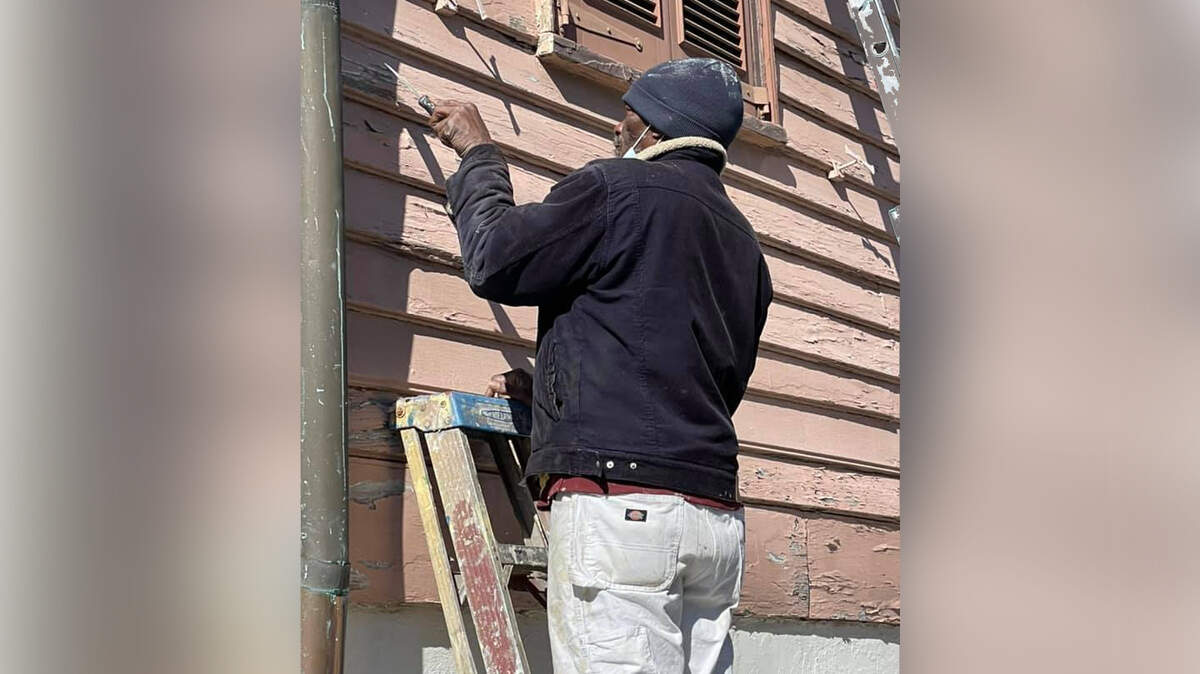
The pink house that has sat on the corner of Bay and Scott streets in downtown Beaufort for more than 200 years has been through a lot.
It’s weathered wars and hurricanes.
It’s been misused and neglected.
It’s witnessed development and tourism booms.
And now, it’s getting a fresh look. Well, kind of.
After more than three years of fundraising and research efforts to “Paint the Lady,” the John Mark Verdier House, also known as the Old Lafayette Building, is undergoing major exterior repairs, including hand scraping the building and repainting it.
Construction started Monday and is estimated to last a couple of months, Historic Beaufort Foundation executive director Cynthia Jenkins said.
The project will restore the home, the only house museum in Beaufort, to its original, 1804 look, which is a creamy white exterior with green shutters.
Both colors were typical for homes in the first few decades of the 19th century, Jenkins said, and the foundation utilized paint color analysis and old photographs of the building to helped determine what colors should be used.
The current pink color of the home was painted to match the look of the house in the 1860s. Before that, the building’s paint “had all worn off” in the 1940s, Jenkins said.
During paint color research, it was also discovered the foundation of the home is a large mass of tabby covered with protective water treatment painted a deep brown and scored to look like ashlar stone. The project will also return that feature of the home to its original styling.
Construction will block off three parking spaces on Bay Street and three on Scott Street directly beside the building, but the sidewalk will be open when crews are not working.
Cameras on Saltus River Grille across from the house and on Scott Street are set up to take time lapse photos of the project.
The Verdier House was built by second-generation French Huguenot and successful merchant John Mark Verdier between 1801 and 1805. Verdier, who worked for a Charleston firm, also bought 1,000 acres on Lady’s Island along Coosaw River to grow sea island cotton in the early 1800s.
The home stayed in the Verdier family until the 1940s, and during those early years of the 20th century, it had many uses, including a restaurant, telephone exchange, barber shop and a tonsorial parlor.
The building was saved from demolition in 1944 because a group of citizens rallied around it. More than 20 years later, that group of preservation-minded citizens eventually evolved into the nonprofit Historic Beaufort Foundation.
In 1971, the house was listed on the National Register of Historic Places, and in 1976, after years of sensitive renovation, the house was opened as a historic house museum.
“We are really excited about the knowledge we have and the work we’re doing,” Jenkins said.