Mold, fire, roaches: Residents in Hilton Head’s public housing call out decades of neglect
Every day, thousands of people drive Hilton Head Island’s main highway, the allure of magnificent neighborhood entryways and well-stocked beachfront resorts calling out every window.
It is a scene that is well earned. Affluent residents and tourists flock here, where a high quality of life is a promise not only expected but almost always kept. For many, it is as much destination as home, a retirement gift self given. But look more closely behind the Spanish Moss trees, and not all is glamorous.
In Sandalwood Terrace, quality of life is a distant, elusive reality.
Tucked behind the Dunkin on the northern end of the island, Hilton Head’s only public housing complex is easy to miss.
Per Department of Housing and Urban Development requirements, tenants have to make less than $65,200 — 80% of Beaufort County’s median income for a family of four. Packing about 80 units, they pay an average of $300 per month.
The stresses, many residents say, are unending: the lack of proper fire safety equipment, roaches and bed bugs, black residue they suspect to be mold, exposed electrical connections, broken appliances, water damage. And, in their minds, worst of all — a government landlord unresponsive to their needs and a subsequent web of bureaucracy that makes recourse difficult and confusing.
Sandalwood is one piece in a mosaic of American public housing complexes that have dealt with such issues. Meant to serve the most vulnerable and least economically mobile in society, public housing complexes can become toxic to tenants’ health and safety.
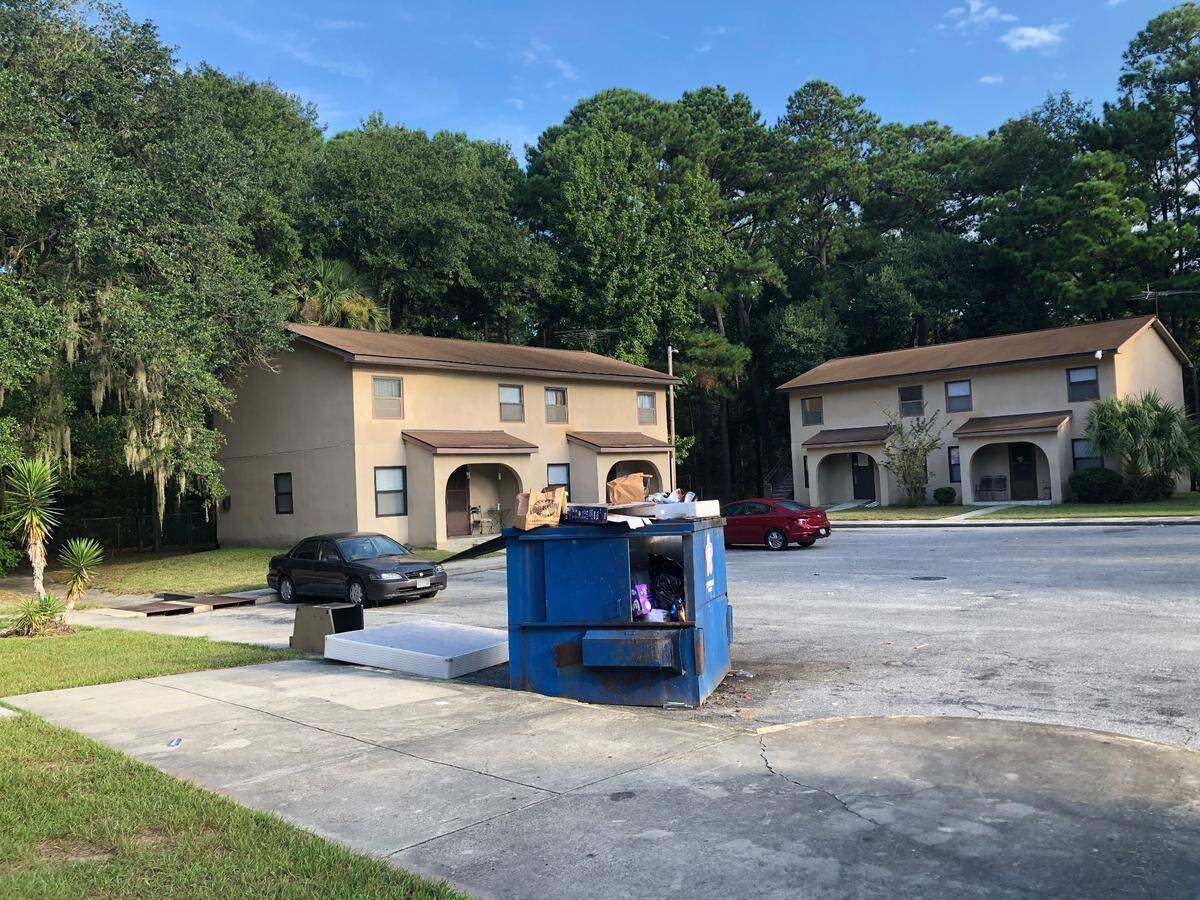
HUD officials found as much during a routine inspection of Sandalwood Terrace in December 2019, public records show. The complex on Hilton Head Island, evaluated along with several scattered public housing sites across Beaufort County, received 63 out of 100 points, just above a passing score (60) and far below the 81 average for complexes across the U.S.
More recently, Hilton Head Island Fire and Rescue has been on the housing authority’s case to get them to install required fire extinguishers. The housing authority has already missed one deadline.
The Beaufort Housing Authority and town staff are aware of the rough living conditions, public records and interviews reveal. Yet many of the tenants do not feel that the institutions have taken their concerns seriously enough, especially as many teeter at the edge of eviction due to COVID-19-related income losses.
The housing authority mostly pushes back. Complaints are actually few and handled quickly, they say. Residents are to blame for some problems because of poor housekeeping habits, and many expect more than the authority is contractually obligated to provide.
A new HUD audit is due this year, but COVID-19 is likely to postpone it.
A better path forward is unclear.
A home on fire

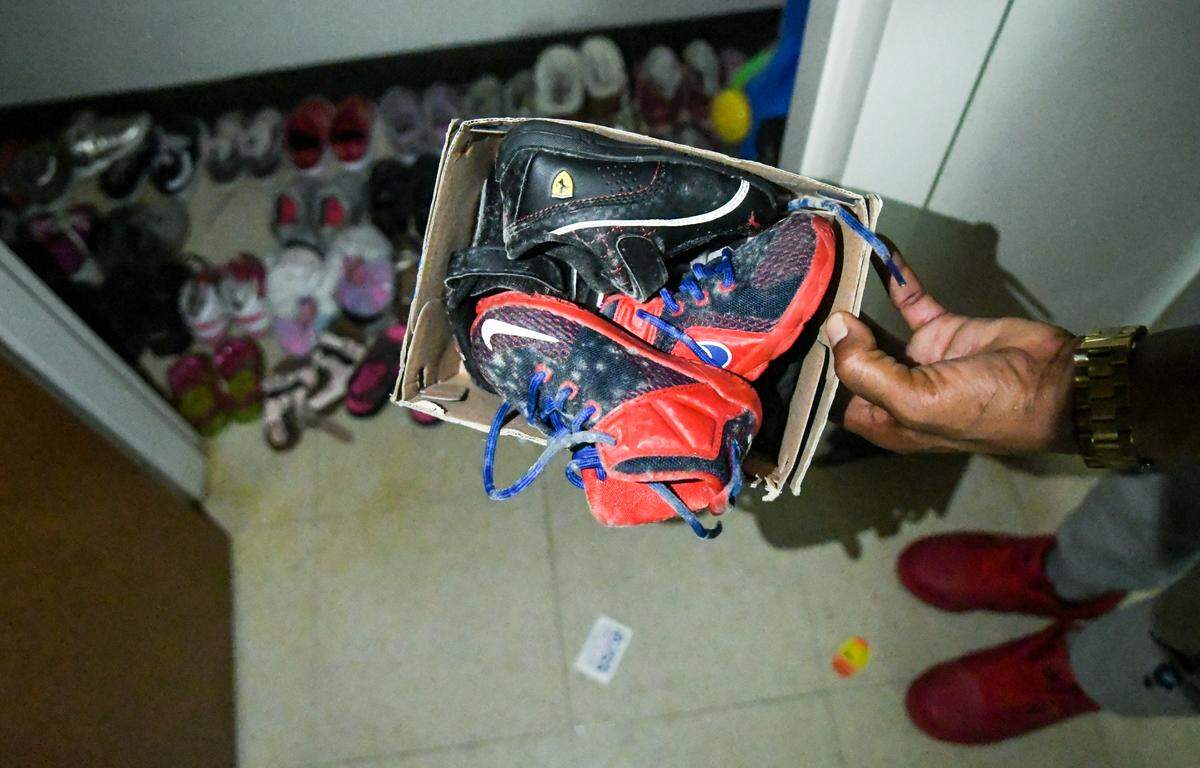
Briana Cohen poured love into her Sandalwood apartment. Filling it with family photographs, candles, chocolates and toys, she felt it was a welcoming home for her 2-year-old daughter, Bri’Riana, and herself.
Born and raised in Beaufort, Cohen had been staying with her mother in Laurel Bay until she moved into Sandalwood right after the pandemic started. Cohen said she had been working as a stocker at Food Lion and as a caregiver for a health care agency but she no longer holds either job.
The apartment burned last month, when an exhaust fan caught fire in her bathroom, destroying the toilet and bathtub. According to public records, the fire department estimated property loss to be $700.
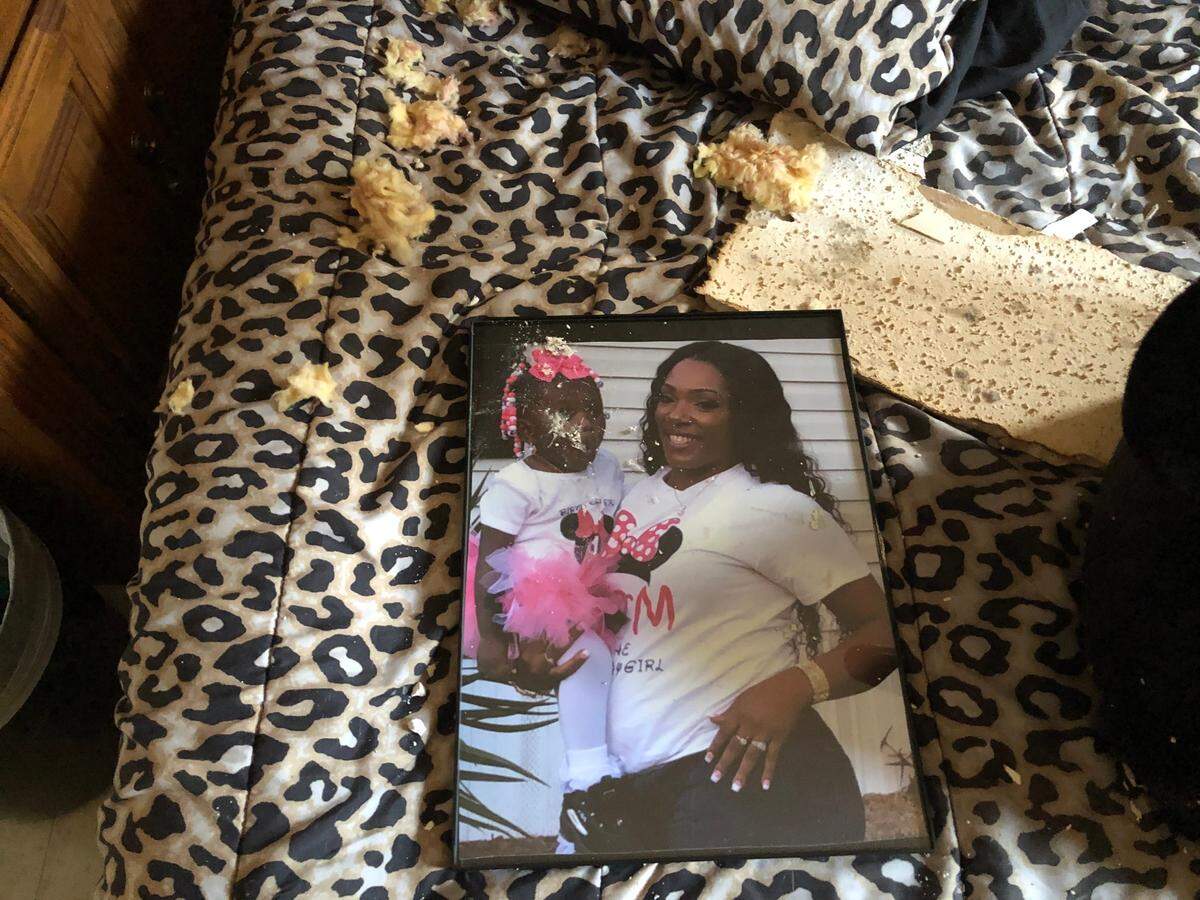
Cohen was placed in a temporary apartment which she says is worse, with mold spots on the walls, rusty appliances, a defective stove and an outdated fire alarm. Repairs to her old unit have lingered. She and her daughter have been staying with relatives elsewhere.
Cohen and the housing authority got into a spat after a frustrated Cohen entered her old apartment and challenged workers to see their permit to do repairs. Cohen said she was upset that she saw some of her things had been broken and that what she thought was mold was growing on her daughter’s belongings. The housing authority wrote to her and told her to stay out of the apartment.
“The contractors feel that your interfering with their work on numerous occasions is harassment,” the letter read. “Yesterday contractors walked off the job due to your behavior.”
To make matters worse, Cohen said, it appears she has to pay rent for both units. She had been paying a monthly rent of $53 since moving in, she said, but on Oct. 6, she received a notice of nonpayment of rent for her replacement unit which said she must pay $39 by the 20th or vacate the apartment complex. A money order receipt Cohen provided to the Island Packet shows she paid her normal $53 in rent to Beaufort Housing Authority on Oct. 1 — the date rent was due.
If anything, Cohen said, “I thought they would at least not charge me this month for rent after my fire, but I always had a gut feeling they were [going to] try some mess like this.”
She refuses to pay the rent for her new unit. She has not been evicted.
To make ends meet, she said, Cohen receives support from family and friends and performs cosmetic services on the side.
BHA’s executive director, Angela Childers, did not respond to requests for comment regarding Cohen’s specific situation.
Said Cohen: “I am the victim of the tragedy, and I am getting no kind of love.”
“The most disgusting and unhealthy way to live”
The Island Packet spoke to several other residents with complaints similar to Cohen’s.
Keturah Jenkins says mold is causing her son’s feet to peel. Stephanie Wilson says the air quality in the apartment is so bad, her baby is having trouble breathing. Tiffany Glover says her health has deteriorated since she moved into Sandalwood, with roaches and mold making it hard for her to breathe. Thais Di Lazary says she cannot figure out how to eradicate the roaches from her apartment. Joseph Coe says his floor is uneven and dangerous to walk on, and that his apartment lacks ceiling lights. Amyle Chisolm, a former tenant who experienced a fire while at Sandalwood, says the rent is too high for apartments to be in as poor condition as they are. And one tenant, who asked not to be named citing fear of retribution from the housing authority, said she was charged $88 for having cigarette butts in her yard. But she doesn’t smoke, she said, and is not sure where they came from.
They all say the housing authority is failing them, letting serious health and safety issues deteriorate as complaints pile up. By far the largest issues tenants have are also the most visible — suspected mold and roaches.
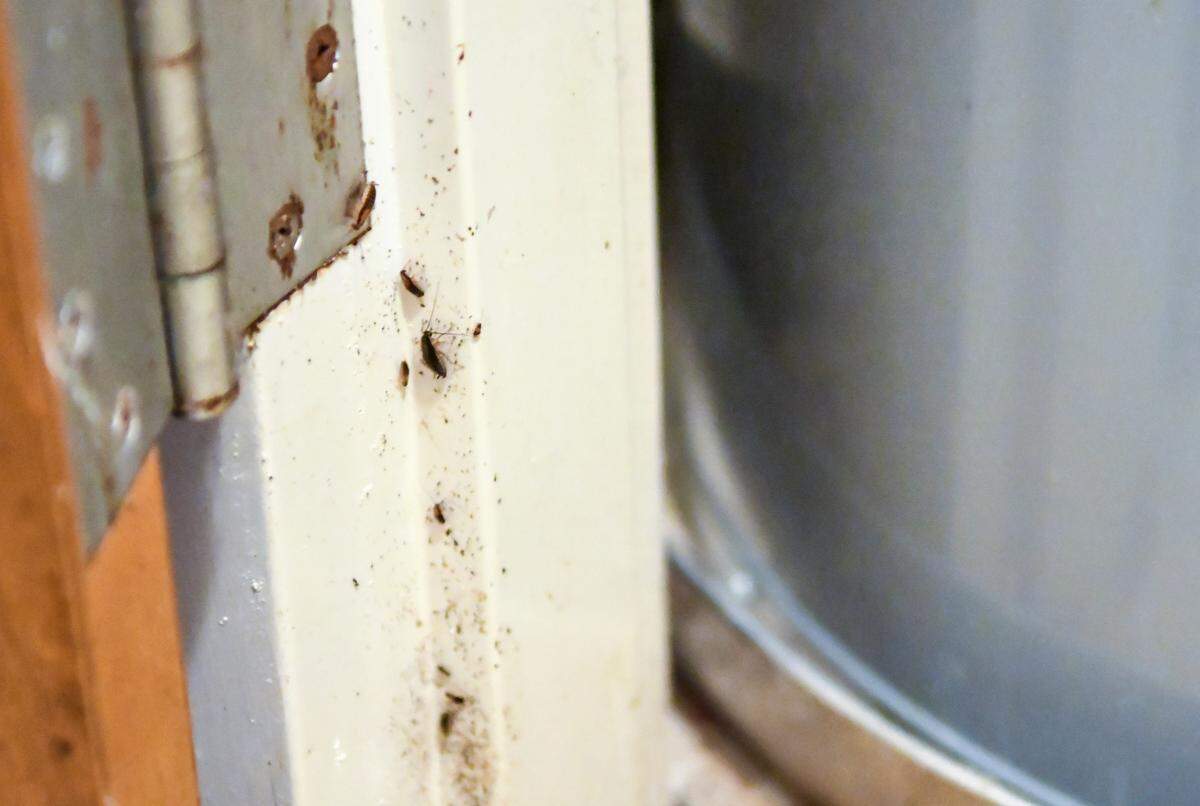
Public records from the Town of Hilton Head Island’s code enforcement department reveal that several residents have recently sought help from local authorities for roaches and black residue in vents.
Tony Pierce, chief building inspector with the Town of Hilton Head Island, confirmed he has found black residue and roaches at multiple apartments at Sandalwood. But, since the building code does not regulate these issues in residences, he is not allowed to inspect or remediate them.
“We don’t get in the middle of landlord and tenant disputes,” Pierce said.
Those inspections do not provide the tenants what they need to compel the housing authority to address their demands — proof that the black residue is in fact mold. Without a test showing the sticky black residue contains mold spores, it might as well be dust.
Childers said the housing authority does not tend to find mold in apartments, but will sometimes find mildew or dust — housekeeping issues, she said, that result when tenants fail to maintain normal moisture and temperature levels indoors. She said tenants are free to have their units tested by a mold inspector, but they must pay for it on their own.
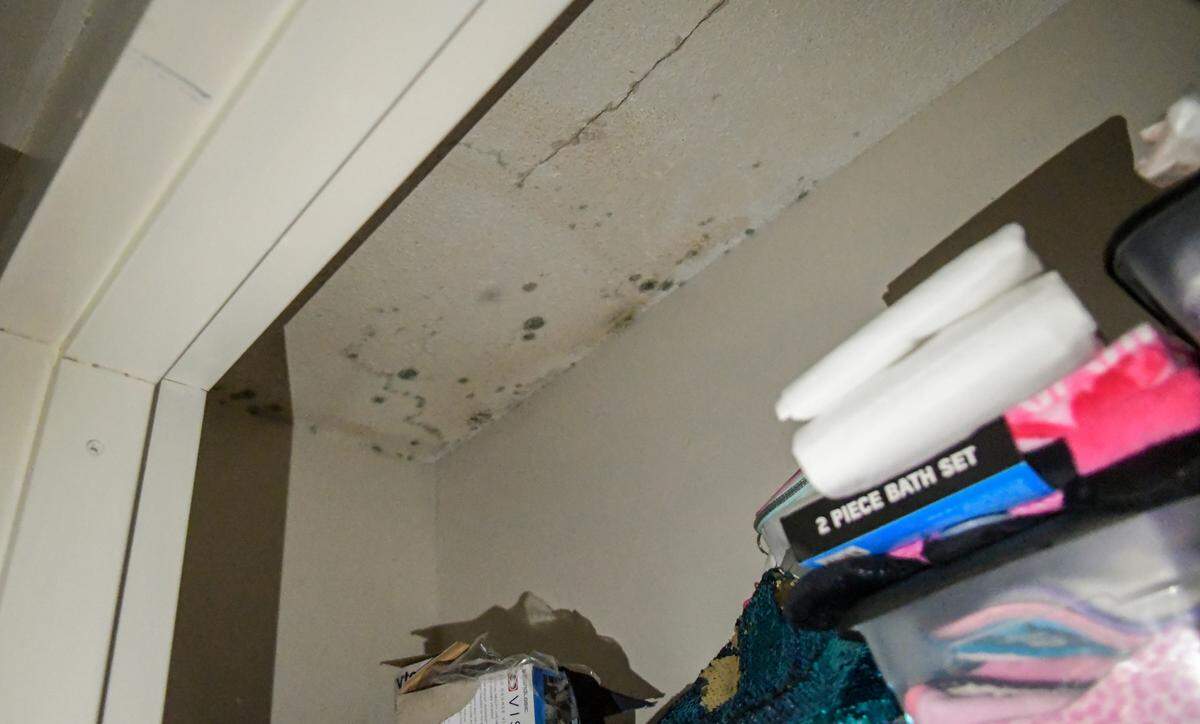
Hiring a mold testing company can cost hundreds of dollars, according to company representatives and websites.
Even with proof, there is nothing illegal about mold, per local, state and federal law. The state’s Department of Health and Environmental Control cannot test, monitor or inspect for mold in homes or public buildings.
Chris Yates, a building official with the town’s inspections division, said his department enforces the building code, which does not address most of the property maintenance issues tenants at Sandalwood have brought up.
“The building code deals with unsafe structures,” Yates said. “Unfortunately, mold and bugs are not issues that would create an unsafe structure per the building code.”
Childers confirmed that she had received the building inspector’s reports that detailed the black residue found in apartments. She did not answer a question regarding whether the inspector’s findings caused concern.
The adverse medical effects of mold and roaches are well documented. According to the Centers for Disease Control and Prevention, mold can cause anything from a stuffy nose to a sore throat to a lung infection. Those with asthma or mold allergies can have severe reactions.
Roaches, like mold, thrive in moist environs. They contain a common allergen that can trigger asthma, skin rashes, coughing, runny noses and other symptoms.
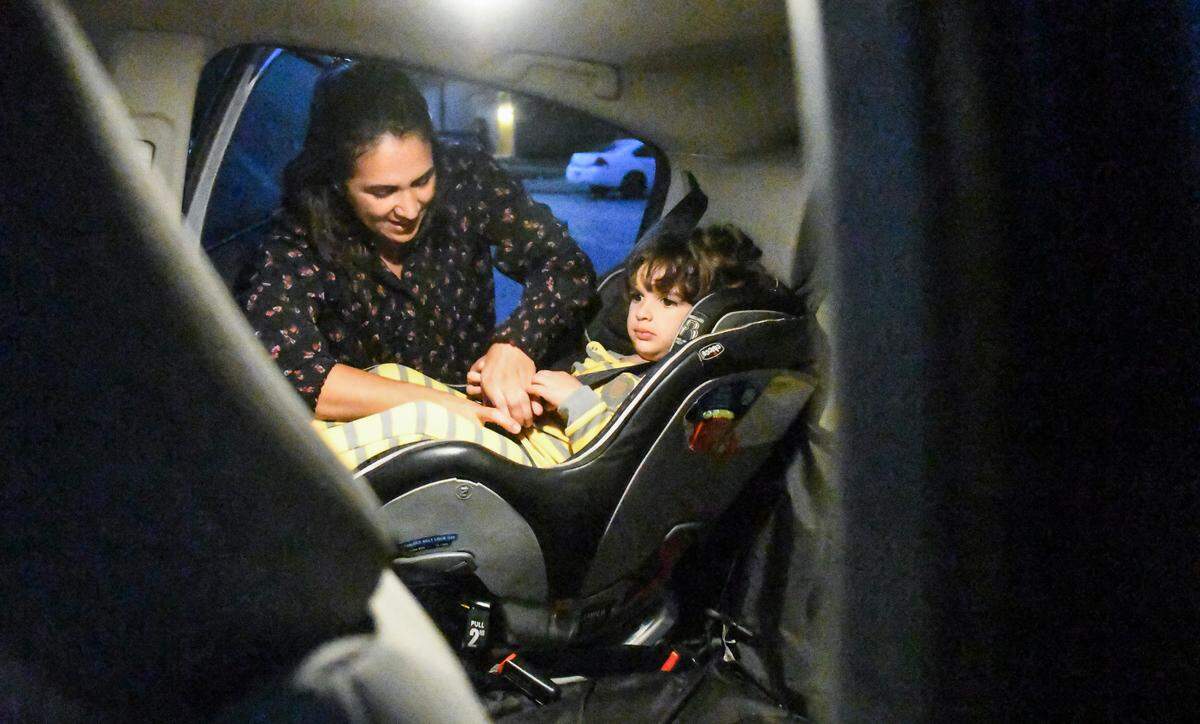
Sandalwood tenant Thais Di Lazary said she is tired of coming home to an apartment infested with roaches. A single mom, she drives an hour to and from Beaufort for her job at a bank. She said she cleans her apartment every day to try to get rid of the roaches, but they keep coming back.
“I don’t think anyone should be living in these conditions,” Di Lazary said. “It’s the most disgusting and unhealthy way to live. ... Wherever you move in your house, there are roaches.”
She said that the pest control provided by the housing authority has not solved the problem.
“I have a 3 1/2-year-old, and he is killing these bugs with his hands,” Di Lazary said.
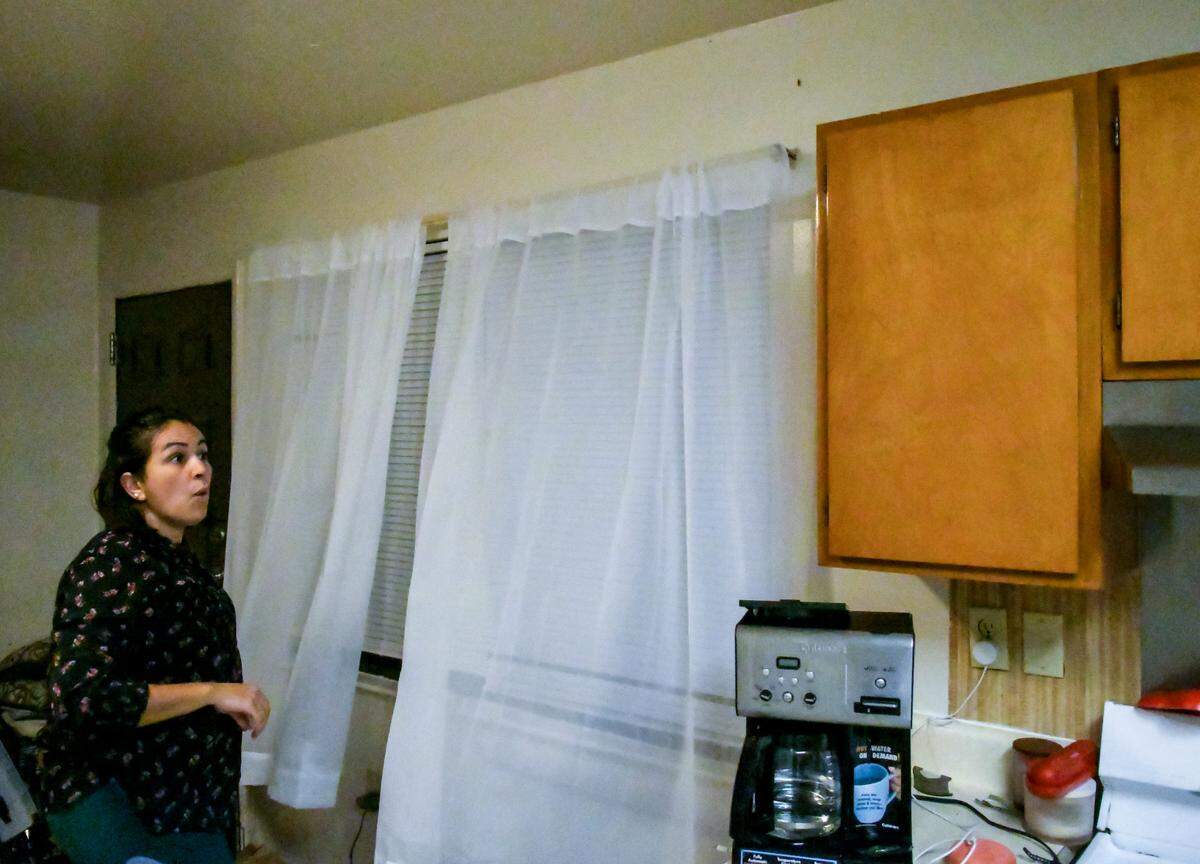
“We are working on this”
The lack of fire extinguishers is also a concern — and a major code violation.
In August, one tenant requested a visit from fire inspector Christopher Osterman, who found multiple fire code violations. He noted in his report that he emailed Beaufort Housing Authority “regarding the need to replace the smoke alarms and add fire extinguishers to meet code requirements” within a month.
A month came and went. According to public information officer Joheida Fister, Hilton Head Island Fire and Rescue emailed Christa Taylor — a financial administrator with Beaufort Housing Authority — asking for an update on the addition of the fire extinguishers.
According to Fister, Taylor responded: “We are working on this.”
Osterman allowed an additional month for the housing authority to put up the fire extinguishers because so many would have to be installed.
After finding that none had been installed in mid-October, the fire department issued a “notice of order” to Sandalwood’s office manager, Kelly Lamb, for “failure to maintain code compliant fire extinguisher coverage on the property.” They threatened a $1,087.50 fine if the housing authority did not produce an installation timeline by Oct. 26.
On Oct. 26, Fister said, the housing authority responded with a list of reasons it is exempt from requirements to install extinguishers. The agency isn’t exempt, Fister said. But in its response, obtained by the Island Packet via public records request, the housing authority noted it would be installing fire extinguishers anyway and was in the process of securing a contractor. Installation would take up to 90 days after that, it said.
Not every unit is required to have an extinguisher so long as one is available in the common area of a building, Fister said. Sandalwood Terrace has extinguishers in some common areas, but not all, she said.
If Sandalwood chooses to install extinguishers in common areas, it will need to put in 14. If it chooses to give each unit an extinguisher, it will need 78.
Fires at Sandalwood are relatively frequent. Over the past five years, firefighters have responded to eight reports of fires at the complex, Hilton Head’s fire department reported.
In a 2018 report of a cooking fire, a lieutenant noted that although the apartment was equipped with smoke detectors on two floors, neither activated to alert occupants of the fire.
In September, Osterman found that fire alarms in four tenants’ apartments had expired. Fister said they have all been replaced since then.
Lamb and Taylor could not be reached for comment.
39 years and counting
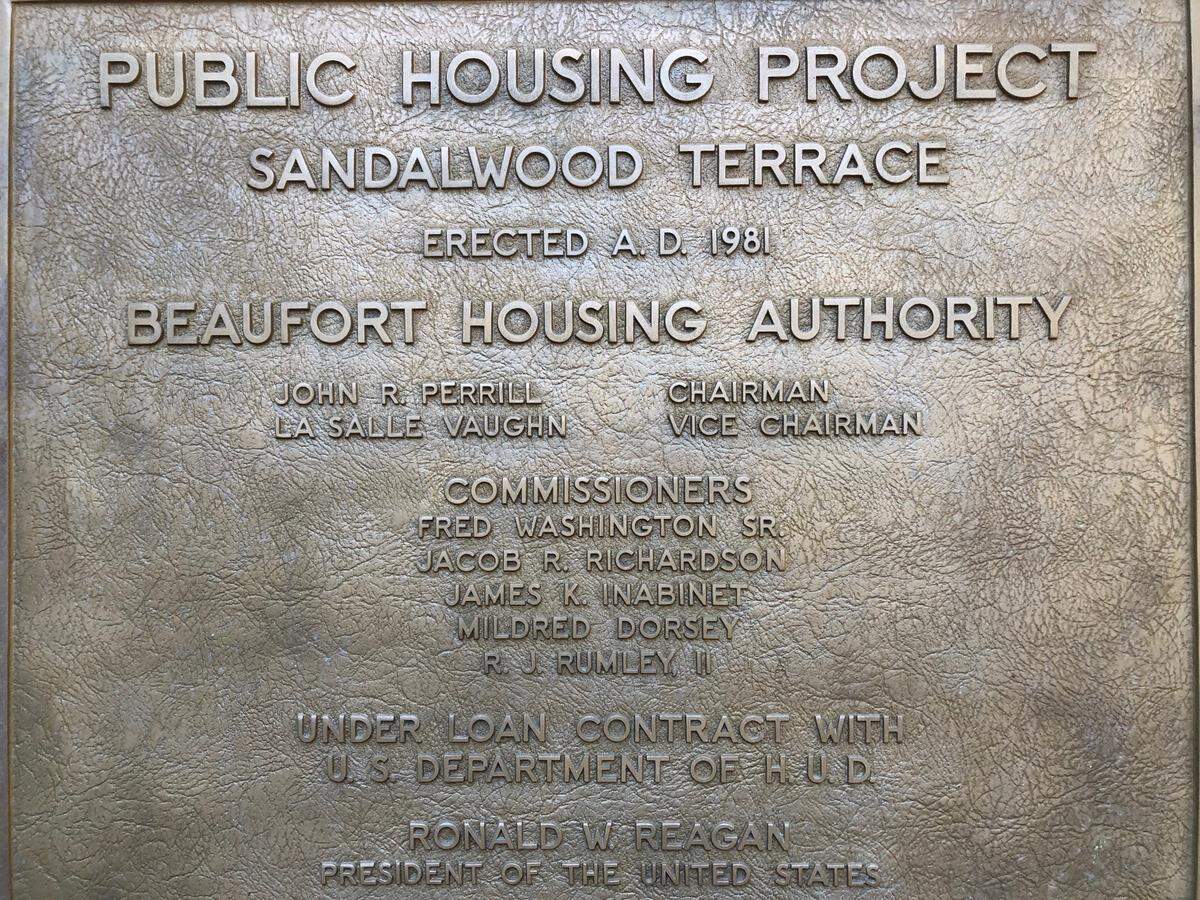
In 1981, Beaufort Housing Authority, chaired by John R. Perrill, erected Sandalwood Terrace as a public housing project under a contract with the Department of Housing and Urban Development. A plaque commemorating the establishment is cemented onto the BHA office building at Sandalwood.
Sandalwood’s 80 units sit at the northeast corner of Hilton Head Island, a few minutes from the airport. Units range in size, with the largest having four rooms. Some are split level, with decaying wood steps leading up to the second floor. They mostly look like a lot of other apartments, just old, plain and musty.
Like all public housing projects, Sandalwood accommodates low-income families and elderly and/or disabled individuals. According to Di Lazary, many of the tenants are single mothers.
Not much exists online about Sandalwood Terrace. A search through the Island Packet’s archives reveals dozens of articles from the early 2000s focused on crime and poverty, but not much about living conditions.
In April, a fatal shooting rattled the Sandalwood community. It was the most recent shooting since 2017.
“One shooting is too many, but generally speaking Sandalwood is a safe area,” said Maj. Bob Bromage, the public information officer for Beaufort County Sheriff’s Office. “We do not have a lot of calls of service at Sandalwood.”
Tenants at Sandalwood must abide by strict rules, per the lease — no wallpaper or washing cars, for example. Tenants are responsible for the costs of repairing any damage to their apartment, even if it’s not their fault. In exchange for obeying these restrictions, they have the right to grievance hearings with the housing authority and are promised that the housing authority will comply with all applicable building codes, housing codes and HUD rules.
But the section of the lease tenants run into the most is the first one, which concerns evictions for non-payment of rent. Bolded, underscored and typed in all-caps, the section warns tenants that if they do not pay their rent within five days of it being due, the housing authority can begin the process of eviction.
“You will get no other notice as long as you live in this rental unit,” the lease states. “This constitutes written notice in conspicuous language in this written agreement of the housing authority’s intention to terminate.”
Paying rent late, and subsequently facing an eviction, can be costly for tenants. If they do not pay their rent within five days of its being due, they will be responsible for a $25 late fee and the costs of filing an eviction in court ($45 in Beaufort County). If they are late three times in a year, the lease notes, the housing authority will seek to get the tenant ejected.
Filing evictions in South Carolina is much less expensive than in other states, where it can cost upwards of $100. So some landlords use it as a method of debt collection, without actually intending to eject the client.
Adam Protheroe, an attorney with South Carolina’s Appleseed Legal Justice Center, said he has seen lease terms like these, and that they are not unique to Beaufort Housing Authority.
“The sole reason for filing is to get the tenant to pay,” Protheroe said. “They only really mean to evict the third time they file.”
Childers said roughly 50 to 75 tenants have received 14-day notices for nonpayment of rent each month since a federal ban on eviction filings ended in July. Since then, the CDC has enacted a ban on evictions that requires tenants to declare their income and loss of earnings, among other criteria. The ban is effective through Dec. 31.
Childers said no evictions have been filed with the court since March, when a state eviction ban — now ended — went into effect.
According to a public records request fulfilled by Beaufort Housing Authority, Sandalwood receives $78,452 annually from HUD — $980.65 per unit. According to a public records request fulfilled in September, the authority was on track to net $288,820 in rent and fees during the 2020 fiscal year, indicating an average monthly per-unit payment of roughly $300. As a nonprofit, the funds are supposed to go to maintaining the property and its operations year after year.
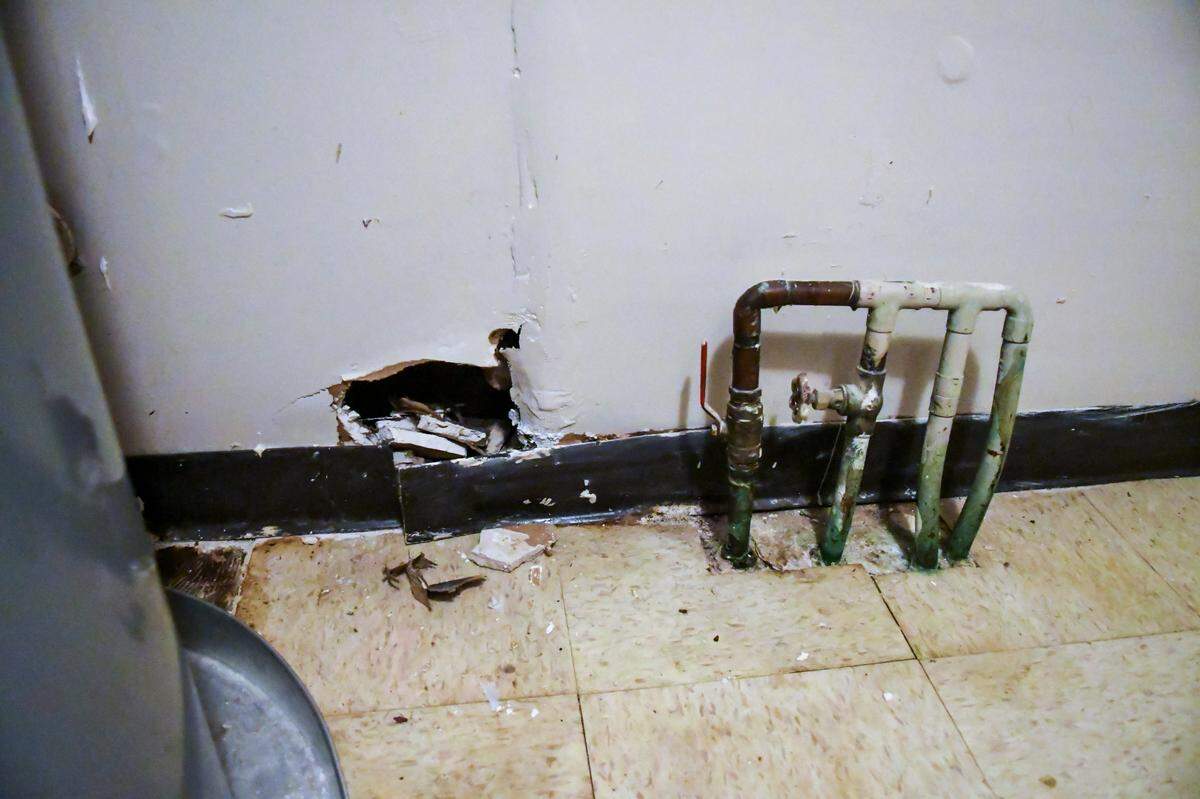
But some tenants, including Tiffany Glover, think it might be better to just tear the whole complex down.
“The apartments are almost 40 years old,” she said. “They have neglected 40 years of rain, 40 years of hurricanes, 40 years of Hilton Head policies.”
Like most apartment leases, Sandalwood’s allows for “wear and tear” — small, usually fixable damages that are an expected part of residential living. In the dusty tile flooring and the faded concrete siding, in the fickle stove ranges and rusty metal fixtures — Sandalwood shows its age.
Red tape

Glover’s family has been on Hilton Head Island much longer than the Sandalwood Terrace apartments have stood erect. Native Islanders, her family has called Hilton Head home for generations. Her grandmother is Ethel Rivers, 102, a Gullah elder believed to be the oldest living person born on Hilton Head Island.
On the other end is Quintez, Glover’s 9-year-old son. An avid reader and gamer, Quintez has made the pandemic months go by more quickly by playing outside and riding his scooter.
At the moment, Glover is relying on unemployment and Supplemental Nutrition Assistance Program benefits to make ends meet. She has also received support from family and friends to help pay for living expenses and is trying to start a clothing business, she said.
Glover ended up at Sandalwood, she said, because she is disabled. She previously worked at Advance Auto Parts on the island but said she was fired for poor attendance. She suspects that they also saw her as a liability — Glover suffers from allergies to different types of grass, cockroaches and latex, for which she carries an EpiPen.
In Sandalwood, Glover’s allergies have only gotten worse, she said.
Glover and her son are experiencing health issues she suspects are due to mold.
“We wake up with our eyelids locked together,” Glover said.
In mid-August, Glover took Quintez to the hospital for the two of them to get chest X-rays. Doctors found that her son had bronchitis, and she had a persistent dry cough, medical records Glover provided show. They were both prescribed inhalers.
Doctors blamed the diagnoses on Glover smoking, saying that her son had been exposed to tobacco smoke indoors. Glover said she never smokes on the property, as per BHA and HUD policy.
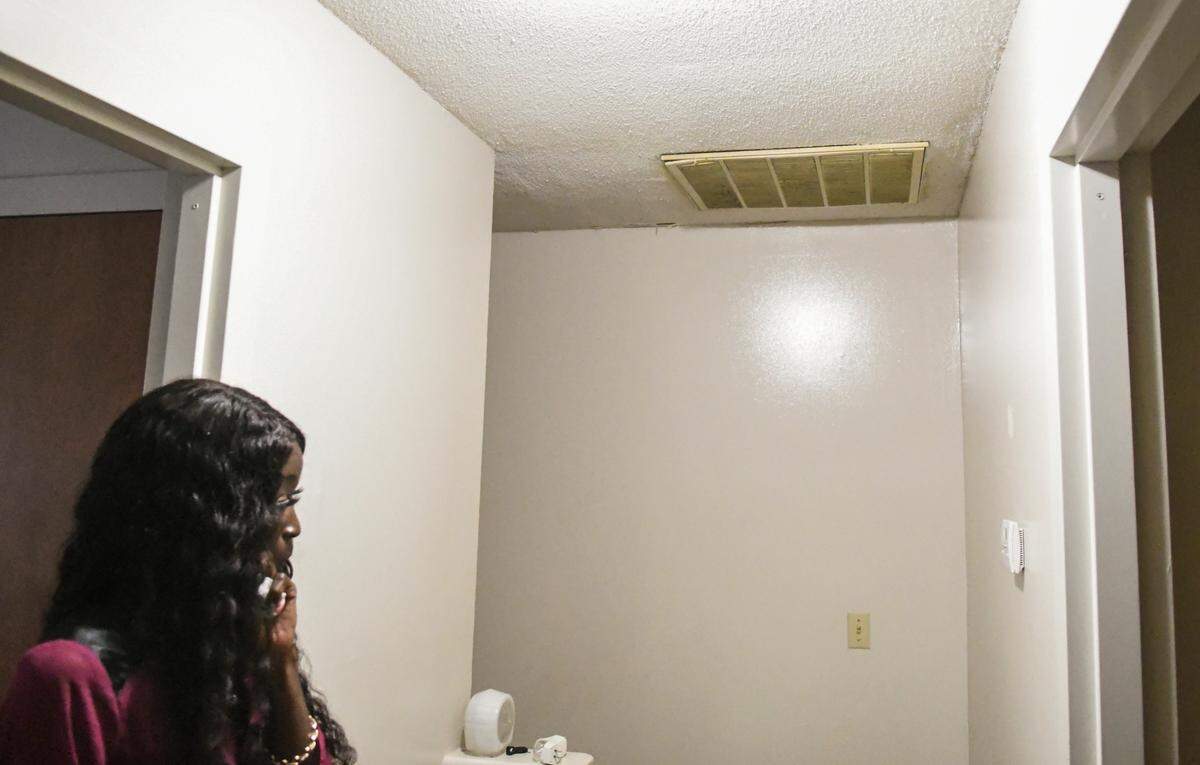
Black residue lines her vents and the vents of several other tenants’ apartments. But without documentation proving the residue is mold, Glover is stuck.
Like many office buildings during the COVID-19 pandemic, Beaufort Housing Authority’s Sandalwood outpost is vacant most of the time. Before the pandemic, Childers said, a property manager would be there 30 hours a week.
Now, one is there at least four hours a week over at least two days. Maintenance workers, she said, are there four days a week.
This can make it more difficult for tenants to reach the officials who can help them. The housing authority invites tenants with complaints and maintenance requests to contact them as soon as a problem arises. So they do, tenants say. And then the problem does not get fixed.
Childers said that when a tenant calls or emails a frustration, the property manager generally handles it.
“I don’t get many at all,” Childers said. “They are usually handled expeditiously before they reach this level.”
Multiple attempts to reach Sandalwood’s property manager, Ivy Simmons, were redirected to Childers.
Seeking redress and an outlet for their frustrations, several tenants have turned to higher authorities. But figuring out where to send a complaint, and whether an agency even has the legal authority to do anything about it, is a complex and confusing process.
Most of the tenants, they said, have been calling HUD’s office in Columbia, which according to its website, is intended to take “general questions about HUD or its programs.” Complaints from federal housing renters, the website states, should go to the Public and Indian Housing Resource Center.
Yet there are other offices within HUD that take complaints. Discrimination complaints go to HUD’s Office of Fair Housing and Equal Opportunity. Allegations of fraud, waste, abuse and mismanagement are directed to the HUD Inspector General’s hotline.
Tenants may also file housing discrimination complaints with South Carolina’s Human Affairs Commission. Marvin Caldwell, the fair housing director with the state’s Human Affairs Commission, said he could find no complaints filed against Sandalwood Terrace during the past five years.
The Island Packet requested documentation of all complaints filed with Columbia’s Housing and Urban Development office by Sandalwood Terrace tenants from August 2015 to August 2020, as well as documentation of HUD’s response to the complaints and explanation of how the complaints were remediated.
HUD said it had no such documentation, and a public affairs official noted that HUD had searched for complaints in calls and emails it had received directly and via referral from the Public and Indian Housing Resource Center.
Glover has filed a discrimination complaint, called the Inspector General’s hotline and contacted HUD’s office in Columbia several times, she said. When she last called Columbia, HUD officials directed her to the Office of the Inspector General. The IG’s office told her to call Consumer Affairs, she said, and that agency has not responded.
“They know [they are] wrong and covering up everything,” Glover said. “I’ve [left] numerous messages. Several people have called.”
Di Lazary echoed Glover’s frustration.
“We’ve been calling HUD,” Di Lazary said. “Every time we complain, they just go to Beaufort Housing Authority. They do nothing.”
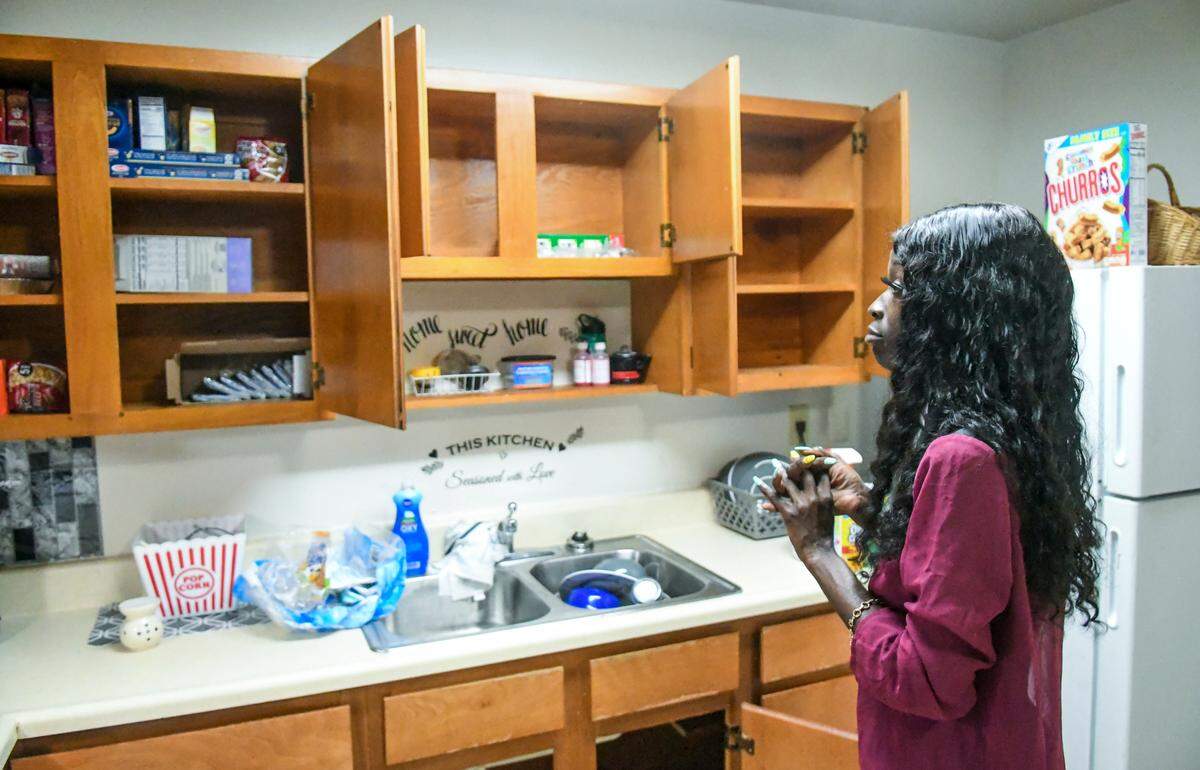
Still, the inspection report of Sandalwood Terrace from last year indicates HUD is far from unaware of the complex’s problems.
In the 38-page report, inspectors checked 25 buildings and 23 units across the property — including several at Beaufort Housing Authority’s scattered sites, which are filed under the Sandalwood Terrace name by HUD but are located across the county — and found 23 health and safety deficiencies, in addition to dozens of non-health and safety deficiencies. If they were to inspect all 46 buildings and 143 units across the complex and scattered sites, they would have found 128 health and safety deficiencies, a HUD estimate states.
Tenants wonder who will help
In late September, Native Islander leader and Ward 1 Town Council candidate Alex Brown paid a visit to tenants at Sandalwood Terrace. He did not like what he saw.
“It’s not a quick fix when you talk about continuous leaking pipes, roofs are leaking, windows not sealed, the mold issue, infestation of insects,” Brown said. “All that trickles down into health issues of tenants. To me it’s an overhaul — versus a patch here and here.”
He said he is frustrated that the tenants have not been able to get answers to their questions — that families must live in dilapidated conditions in one of the wealthiest communities in the country.
“Everybody is born with pride, and those folks in Sandalwood, they have pride,” Brown said. “For us to diminish that systematically is actually insulting, in my mind.”
Brown’s opponent in the race, Hilton Head Plantation general manager Peter Kristian, said he previously was not aware of the problems at Sandalwood Terrace, but that the housing authority must address mold and insect issues.
“Those are all quality of life issues,” he said.
Whoever wins the Ward 1 Town Council seat Nov. 3 will represent the tenants of Sandalwood. The tenants hope that person, and others in power, will hear, and respond to, their calls for help.
“I am not trying to move out,” Cohen said. “I just want to be handled the right way.”
This story was originally published October 28, 2020 at 4:45 AM.