When will Beaufort Co. hit COVID-19 herd immunity? It’s complicated. Here’s why
The mathematical concept of herd immunity has become synonymous with Beaufort County’s goal of “returning to normal” and the expected end to South Carolina’s COVID-19 epidemic.
Achieving such immunity is often described as the best way to beat the novel coronavirus, which has claimed dozens of lives and infected thousands of people across the region.
Naturally, everyone wants to know: When will Beaufort County reach the threshold for herd immunity? And what will it take to get there?
The answers are complicated or unknown, partly because of the threshold’s malleable nature. The level of protection required to maintain herd immunity may shift over time.
Incomplete coronavirus data from the state and federal government also hinder efforts to make accurate local predictions about herd immunity.
The Island Packet and Beaufort Gazette interviewed four biostatistics experts in an attempt to better estimate when the Lowcountry might initially hit the threshold.
Some of the experts agreed that areas will struggle to attain herd immunity in 2021 without inoculating children, who are currently ineligible for COVID-19 vaccines.
A return to normalcy, though, is not dependent on herd immunity, a few experts argued.
South Carolinians can expect a more typical summer this year, akin to pre-pandemic times, even without reaching herd immunity, the experts said.
“Herd immunity is a great thing to achieve, but it’s not necessarily the goal that we must achieve,” said Stephen Kissler, a researcher at the Harvard T.H. Chan School of Public Health who studies the spread of infectious diseases.
‘It’s really complex’
Here’s how herd immunity works: Once enough people in a population are immune to the coronavirus, SARS-CoV-2, either through vaccination or natural infection, the chance that residents will run into a person who’s infected will drop so low that the outbreak sputters out.
No one knows the exact herd immunity threshold for SARS-CoV-2, but Dr. Anthony S. Fauci, the nation’s top expert on infectious diseases, estimates that 70 to 85% of the U.S. population needs to be immune.
It seems like a simple concept, right? Think again. Here’s where things get tricky:
Herd immunity is a “moving target,” said Spencer Fox, associate director of the COVID-19 Modeling Consortium at the University of Texas at Austin.
Natural immunity to SARS-CoV-2 will wane over time, much like it does for seasonal influenza viruses, affecting the percentage of residents protected against COVID-19, Kissler said.
Future variants of SARS-CoV-2 could also raise the herd immunity threshold if they completely or significantly evade the body’s vaccine-induced immune response, Fox said. (No such variants exist at this time. There’s also reason to hope that SARS-CoV-2 is limited in its ability to mutate and escape vaccines.)
The coronavirus’ transmissibility varies from season to season, too. Consider the R0, or basic reproduction number, which indicates how contagious it is. The pathogen’s R0 is higher in the winter than it is in the summer, Kissler said.
Some evidence suggests that cooler and drier conditions help SARS-CoV-2 spread.
“We could reach herd immunity,” Kissler said, “but once we do that, it’s not necessarily going to be permanent.”
On top of that, herd immunity is both a local and national issue, some of the experts said.
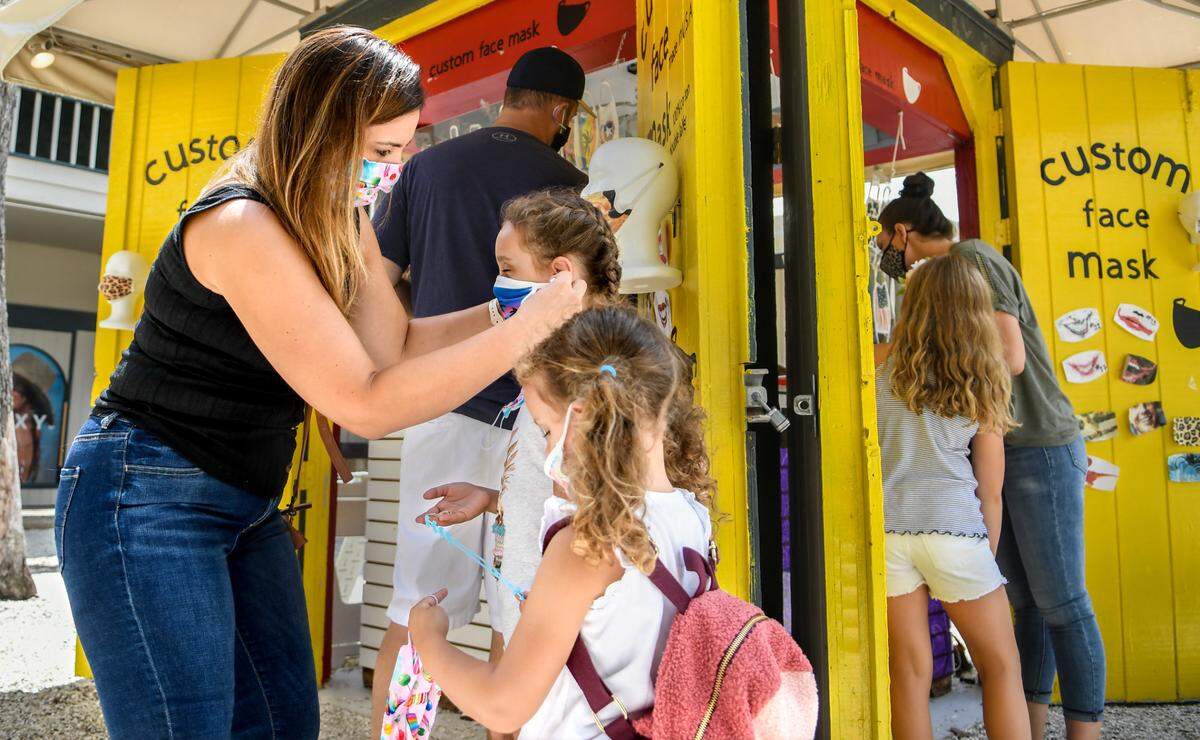
Hilton Head Island, as an example, may have a different herd immunity threshold in July than in October due to the thousands of summertime visitors traveling to the beach.
A Beaufort County nursing home, on the other hand, might achieve herd immunity in a tightly controlled and well-vaccinated environment, Kissler said, while surrounding areas continue to experience COVID-19 spread.
“The herd immunity threshold itself depends to some extent on interpersonal interaction patterns, and how much people are mixing, for example, and what kind of settings they’re mixing in,” he said. “You might imagine that there’s a lot more opportunities for spread where people are crowding in indoor spaces. ... You’ll need a higher level of protection.”
In a neighborhood where everyone kisses one another as a greeting, the virus’ R0 — pronounced “R naught” — would be higher than in a community where people use “elbow bumps,” Kissler previously said.
“It’s really complex,” Fox said.
The United States will probably hit the threshold eventually, some of the experts said. Kissler argued it might occur in 2022.
But it remains difficult to pinpoint when Beaufort County will first reach herd immunity, partly because of the nation’s inability to inoculate kids and because of incomplete COVID-19 data from health officials.
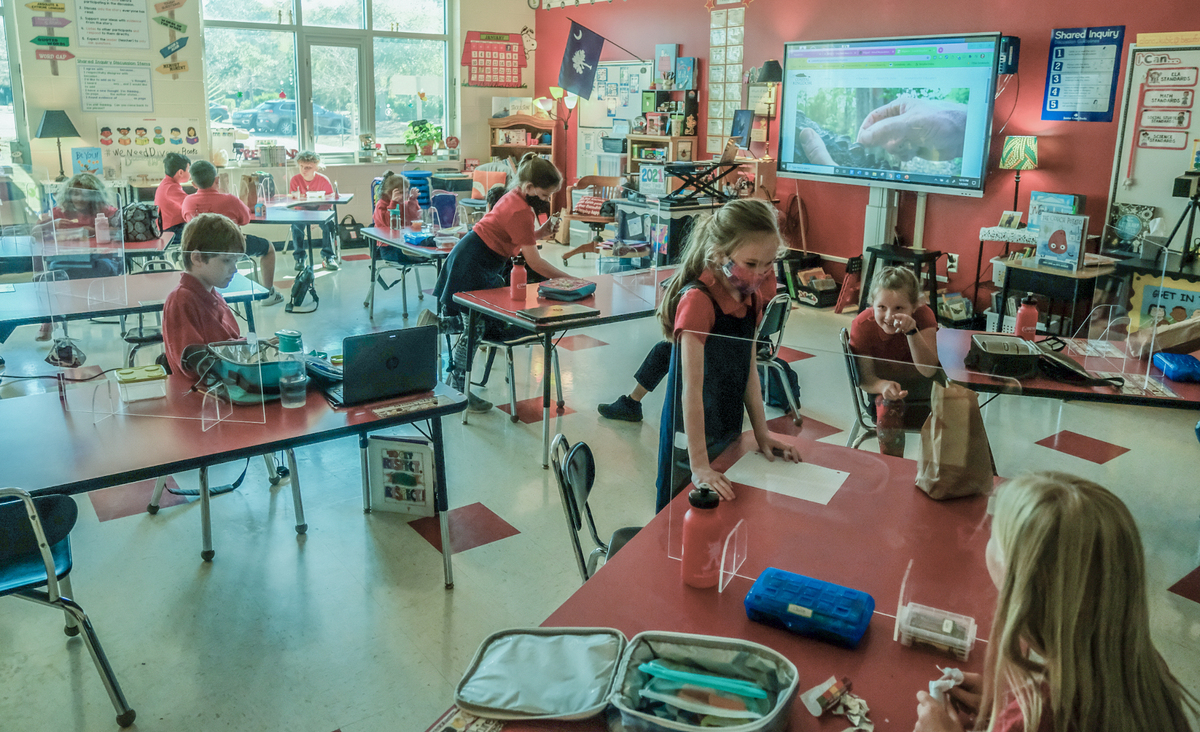
Vaccinating children
Pfizer-BioNTech’s vaccine is authorized only for emergency use in people 16 or older. Moderna and Johnson & Johnson’s shots are available to everyone 18 and up.
About 15.9% of Beaufort County’s population is 14 or younger, according to U.S. Census Bureau estimates.
A percentage like that, Kissler said, ensures that Beaufort County will struggle to reach herd immunity with only about 156,300 currently eligible residents.
Vaccine hesitancy plays a part in that prediction.
The county’s seven-day average of new first-dose inoculations has taken a nosedive in recent weeks, mirroring a statewide trend.
About 346 county residents are now being vaccinated per day. In comparison, an average of 1,072 first-dose vaccinations were recorded in Beaufort County every 24 hours late last month.
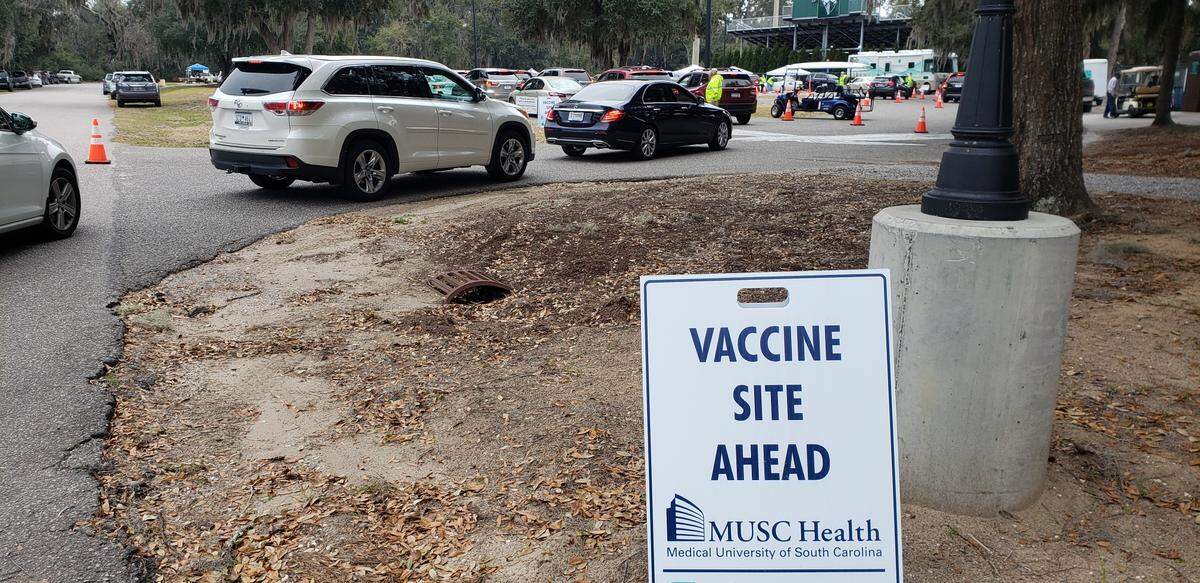
Health officials are increasingly concerned that South Carolina, like other parts of the country, now faces a wall of vaccine hesitancy that will curb its inoculation campaign.
The U.S. Department of Health and Human Services estimates that 18.2% of the state’s population is hesitant about getting a shot. An estimated 15.4% of Beaufort County residents are wary of the vaccines, according to the department.
Ali H. Mokdad, a professor at the Institute for Health Metrics and Evaluation at the University of Washington, said that given this hesitancy, vaccinations among children will be crucial to achieving COVID-19 herd immunity.
“Herd immunity, in my opinion, is not going to be reached this year simply because the vaccines are not authorized for everybody,” Mokdad said.
That makes Pfizer’s pending application to vaccinate 12- to 15-year-olds all the more important. Mokdad expects the U.S. Food and Drug Administration to greenlight Pfizer’s request “anytime now.”
Pfizer and Moderna are still running clinical trials for their vaccines in younger age groups. It’s unclear when those trials will end.
Incomplete data
It’s also impossible to say how many Beaufort County residents are already immune to SARS-CoV-2, further complicating the effort to predict when herd immunity might be achieved.
Roughly 40.5% of the county’s estimated population of 186,095 has received at least one dose of a COVID-19 vaccine, according to data from the S.C. Department of Health and Environmental Control. About 5.6% of county residents, meanwhile, have tested positive for SARS-CoV-2 in the past six months, according to DHEC. And 8.9% of residents have been diagnosed with COVID-19 since the pandemic began.
DHEC’s data, though, don’t account for federally administered vaccinations for military members north of the Broad River, including at Marine Corps Recruit Depot Parris Island.
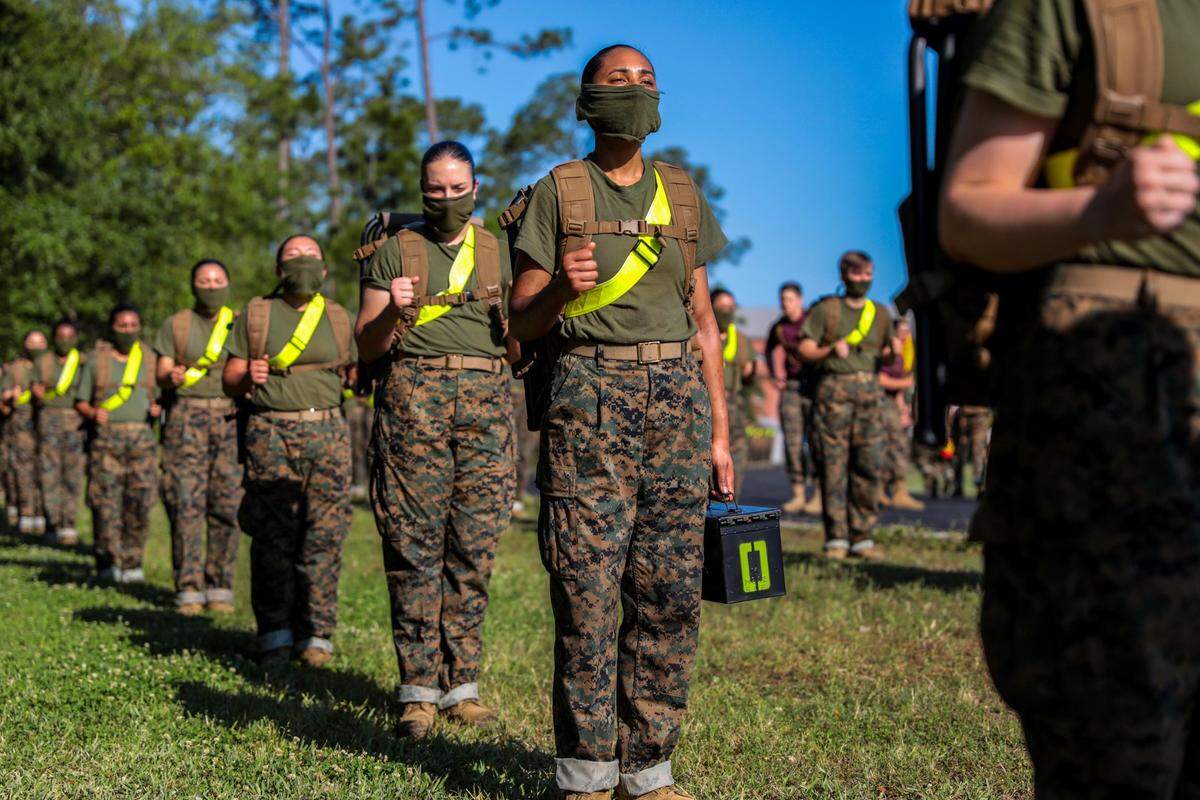
The U.S. Department of Defense and other federal entities are not required to provide their vaccine data to the state’s health agency, according to DHEC spokeswoman Laura Renwick.
“We are reaching out, however, to see if this information can be shared with the agency so we can begin including it in our vaccination reporting,” she wrote in a statement. “Every dose administered for these federal personnel is a boost to our state’s overall vaccination efforts.”
A DOD spokeswoman did not respond to a phone call and emails.
Because of the federal data issue, Beaufort County’s inoculation rate may be slightly higher than what DHEC has reported thanks to vaccinations at Parris Island, Marine Corps Air Station Beaufort and Naval Hospital Beaufort. More than 10,000 service members live in the Beaufort region, according to a 2017 economic impact report.
That isn’t the only roadblock, though, when trying to compile accurate estimates on COVID-19 immunity.
DHEC’s reported number of COVID-19 cases in Beaufort County likely fails to reflect the true extent of the coronavirus’ spread. Scientists have long warned that SARS-CoV-2 infections are grossly undercounted in the United States due to an early lack of testing and viral transmission among asymptomatic people, including children.
State data, for example, show only that 11.2% of South Carolina’s population has tested positive for COVID-19.
But a Centers for Disease Control and Prevention analysis of antibody tests in March estimated that 24.1% of the Palmetto State’s residents were likely infected with SARS-CoV-2 previously.
‘Close to a normal summer’
However, even if Beaufort County or South Carolina can’t hit Fauci’s 70 to 85% herd immunity threshold this year, life can mostly return to normal in the coming months, the biostatistics experts said.
“SARS-CoV-2 will likely still be able to spread, especially amongst younger people, but it will just ... what that means for our broader society will just be entirely different. ... I think we can largely go about our normal lives and it should be more or less OK,” Kissler said. “The fact that we’re protecting some of the highest risk people from severe disease is essentially like taking the teeth off of the virus.”
COVID-19 deaths, Kissler said, could drop significantly before the United States achieves wide-scale herd immunity.
(More than 80% of U.S. residents who are 65 or older have received at least one vaccine dose. A study published Wednesday found that fully vaccinated seniors are 94% less likely to be hospitalized with COVID-19 than unvaccinated people in the same age group.)
“We are on a trajectory to normal,” said Lior Rennert, a biostatistician at Clemson University.
“I’m still optimistic about a potential return to normal sometime through the summer into the fall,” Fox said.
“We will be in a very good spot, close to a normal summer,” added Mokdad, who thinks herd immunity won’t be reached in 2021 due to the vaccines’ age restrictions.
The real goal, Mokdad stressed, is to continue vaccinating as many people as possible to mitigate a possible surge of cases this winter, when SARS-CoV-2 spreads more easily.
The coronavirus will likely become endemic, he said, joining the seasonal flu.
“We want COVID to become like any other disease or respiratory virus that we can deal with on a yearly basis,” Mokdad said. “That should be our plan.”
Note: Data in this story are current as of Wednesday.
This story was originally published April 29, 2021 at 12:25 PM.