Scientists studied COVID-19 cases among Parris Island recruits. Here’s what they found
Hundreds of Parris Island recruits are helping researchers understand how asymptomatic carriers of the novel coronavirus spread the deadly pathogen.
More than 1,800 recruits volunteered to participate in a COVID-19 study earlier this year at The Citadel in Charleston, where they were set to quarantine for two weeks before heading to boot camp at Marine Corps Recruit Depot Parris Island.
The New England Journal of Medicine published peer-reviewed findings of the study late Wednesday.
The study found that 0.9% of the recruits tested positive for COVID-19 when arriving at the college campus, even though they had self-quarantined for two weeks beforehand.
Roughly 2% of other participating recruits also tested positive during a 14-day quarantine at The Citadel.
Why is that so important?
Of those who tested positive, most were asymptomatic.
Very few of the infected recruits felt sick. Daily symptom screenings such as temperature checks didn’t flag possible COVID-19 cases.
Only 9.8% of infected recruits — five people — reported having symptoms in the week before they received a positive PCR test or on the day they were tested.
Those symptoms ranged from a runny nose to a fever and chills.
“You cannot screen individuals based upon risk factors. They’re not going to present because they simply do not have symptoms in this particular setting,” said Cmdr. Andrew Letizia, the study’s lead researcher and deputy director of the Naval Medical Research Center’s infectious diseases directorate. “They are still able to transmit infection.”
Letizia said in an interview that his team was focused on helping the U.S. Marine Corps navigate the pandemic.
But there are other possible benefits to the group’s research, which was conducted from May to July by NMRC experts and scientists at the Icahn School of Medicine at Mount Sinai in New York City.
“If that data can be extrapolated to support better public policies in schools and universities, well that’s icing on the cake for us,” Letizia said.
Coronavirus clusters
Using viral genomes obtained from 32 of 51 recruits who tested positive for COVID-19, researchers found evidence of local SARS-CoV-2 transmission during the two-week quarantine at The Citadel.
Six independent transmission clusters defined by distinct mutations relative to other U.S. and global coronavirus data were identified, according to the group’s article in The New England Journal of Medicine.
“Shared rooms and shared platoon membership were risk factors for transmission,” the article read.
Letizia, the lead researcher, recounted how one recruit from Maryland seemingly passed the pathogen along to another recruit from Alabama.
“These people had never talked to each other. The guy from Alabama had not done any traveling in the few weeks prior, he had never been to Maryland, yet he still had the exact same Maryland virus that this other platoon mate had,” Letizia said. “It’s kind of the smoking gun.”
The index patient for “each cluster strain” could have been a recruit in the study, a recruit not participating in the project or “other personnel,” the article read.
But only one instructor tested positive for COVID-19 during the study period. And nonparticipating recruits were also tested at the end of the 14-day quarantine.
Just 1.7% of those people were positive.
The U.S. Marine Corps’ quarantine was strictly enforced, according to the article, and about 90% of study participants were men and 10% were women.
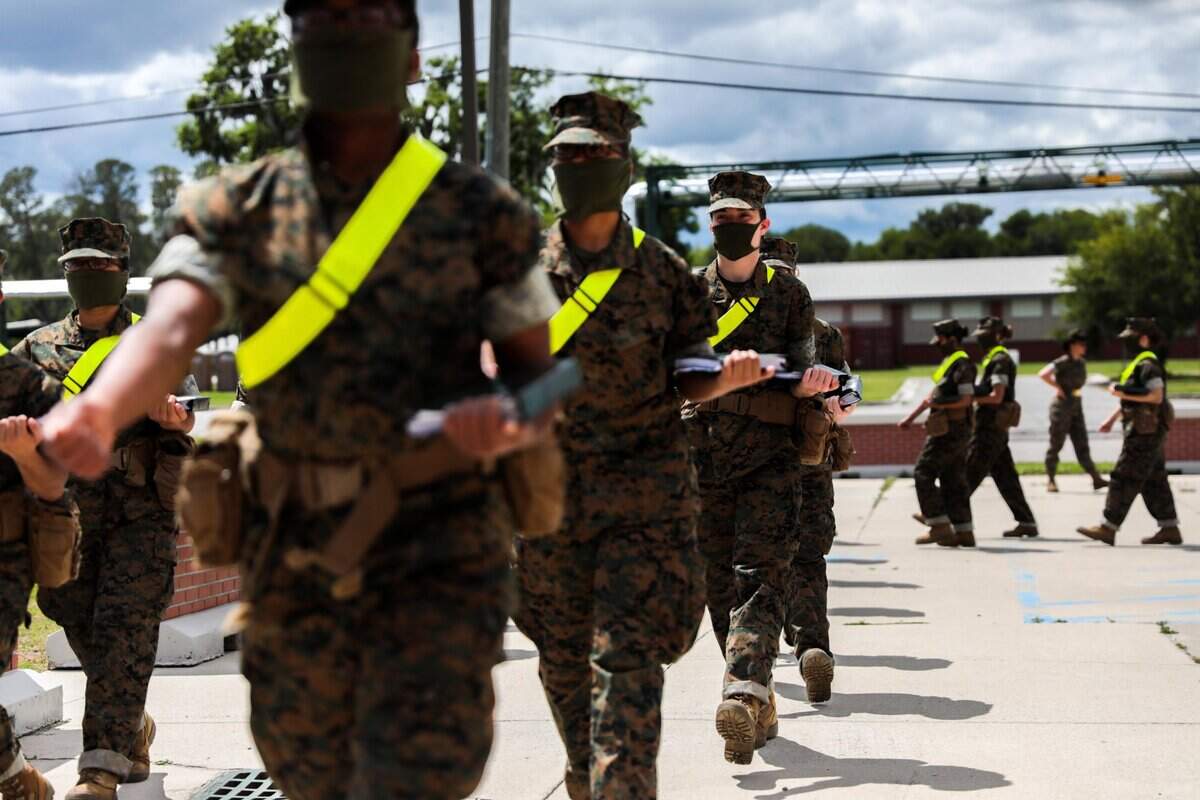
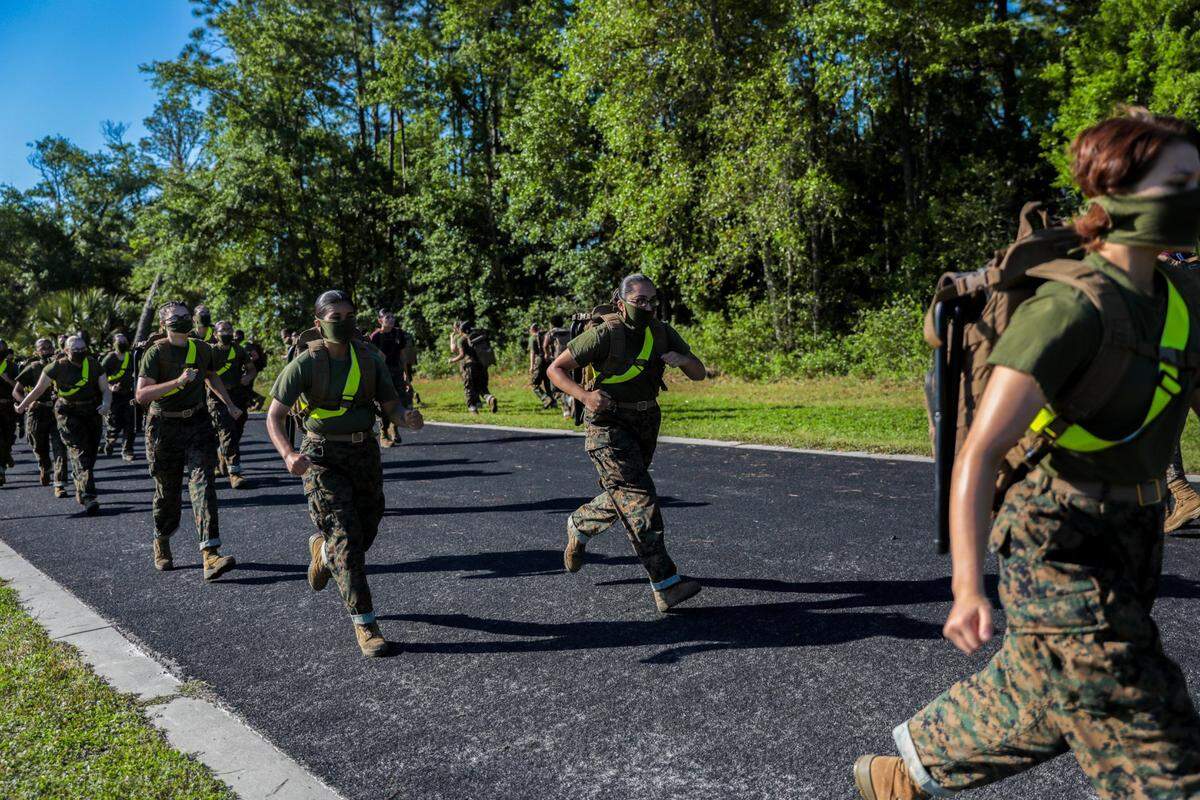
The two-week quarantine included “mask wearing, social distancing, and daily temperature and symptom monitoring,” the article read.
What does this all mean?
The U.S. military has struggled with COVID-19 outbreaks throughout 2020. The coronavirus ravaged the USS Theodore Roosevelt in March. Dozens of Marines have been infected at bases in Okinawa.
Letizia hopes the study can help Parris Island officials continue to “make Marines” during the pandemic.
Beyond the country’s military, though, the team’s findings could also be applicable to schools, colleges and other facets of public life.
Young people were a driving force behind SARS-CoV-2 outbreaks during the Sun Belt’s summer surge.
Better understanding how teenagers and young adults spread the virus could improve public health officials’ efforts to mitigate disease transmission.
In Beaufort County, as an example, more than 30% of local COVID-19 cases were identified among 11- to 20-year-olds in September, according to the S.C. Department of Health and Environmental Control.
Just 12.9% of infections, meanwhile, were recorded among people 61 or older.
“Anybody — an adult, a child, an adolescent — can be asymptomatic and still have the infection,” Dr. Tamera Coyne-Beasley, a pediatrics and internal medicine professor at the University of Alabama at Birmingham, previously said.