Beaufort Co. reports big drop in COVID-19 positivity rate after DHEC update. Here’s why
The percentage of Beaufort County’s COVID-19 tests that turn up positive day to day has fallen off a cliff in recent weeks.
However, while the coronavirus’ spread has been slowing, that doesn’t fully explain the major decline in the area’s positivity rate.
The S.C. Department of Health and Environmental Control in early February announced that it was changing how it calculates the state’s positivity rates, saying its new methodology is also being used by the federal government.
The Feb. 2 update has dramatically lowered the Lowcountry’s daily percentage of positive tests, and the state has since recalculated its old coronavirus data to reflect what DHEC would have reported in December 2020, for example, if it had been using its new methodology at the time.
On Dec. 15, for example, DHEC originally reported that Beaufort County had logged an average positivity rate of 20.5% over the past week (that’s extremely high).
Now, though, DHEC’s updated data show that the Dec. 15 average was 11.3% (that’s still high).
Dr. Linda Bell, the state’s top epidemiologist, recently said that South Carolina’s massive drop in percent positivity didn’t reflect a significant decline in disease spread. The lower percentages were simply a reflection of the new formula, Bell said.
DHEC changed its methodology so S.C. data could be more easily compared to testing calculations made by the Centers for Disease Control and Prevention, among other federal entities.
It’s been a confusing update, though. Residents have been left scratching their heads at the massive shift in South Carolina’s rates.
School districts use the percent positive data to help determine whether in-person learning is safe. And hospitals use the information to better quantify local virus transmission.
The Island Packet and Beaufort Gazette asked DHEC to clarify how its new methodology works. Here’s what the agency said:
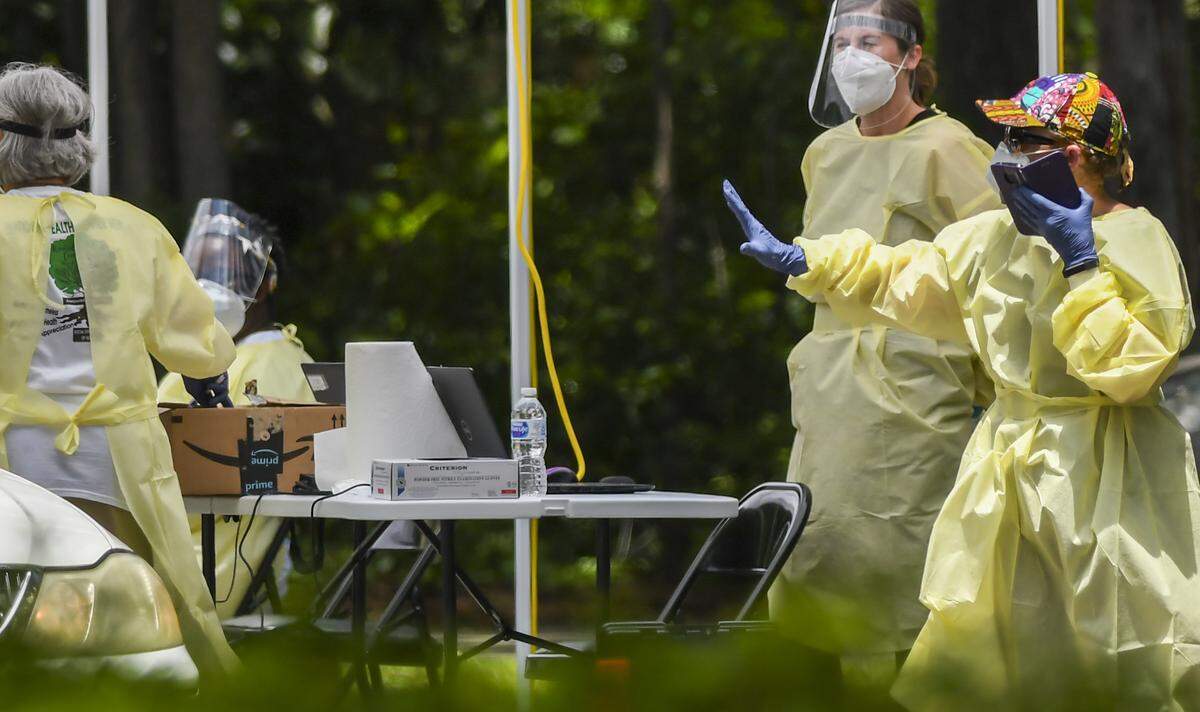
People-over-people
DHEC previously used a people-over-people formula to calculate its percent positive data. In other words, DHEC divided the number of new people who tested positive on a given day by the number of people tested in total that day, then multiplied the resulting figure by 100.
Here’s a hypothetical example from Dr. Jane Kelly, assistant state epidemiologist, of DHEC’s old formula:
On Feb. 1, 100 residents got tested for COVID-19. Ninety of those people were negative and 10 were positive. That left DHEC with a percent positive of 10%.
On Feb. 5, 100 people were tested for the first time. Twenty others who were previously negative got retested. Of those 120 people, 100 residents tested negative and 20 tested positive. But DHEC’s calculation was still 20/100 = .2 x 100 = 20% positive.
Then, from Feb. 6 to Feb. 23, dozens of new residents were tested day to day and were included in DHEC’s percent positive data, but they were omitted from any future calculations — if they were retested — because they weren’t new to the state’s testing system.
So, by Feb. 24, here’s what happened: 100 residents got tested for the first time and 100 others got retested. Twenty-five people in the group tested positive. But DHEC’s calculation remained as 25/100 = .25 x 100 = 25% positive.
This old formula didn’t take into account people getting retested. That’s why DHEC initially reported such astronomically high S.C. positivity rates during the winter surge.
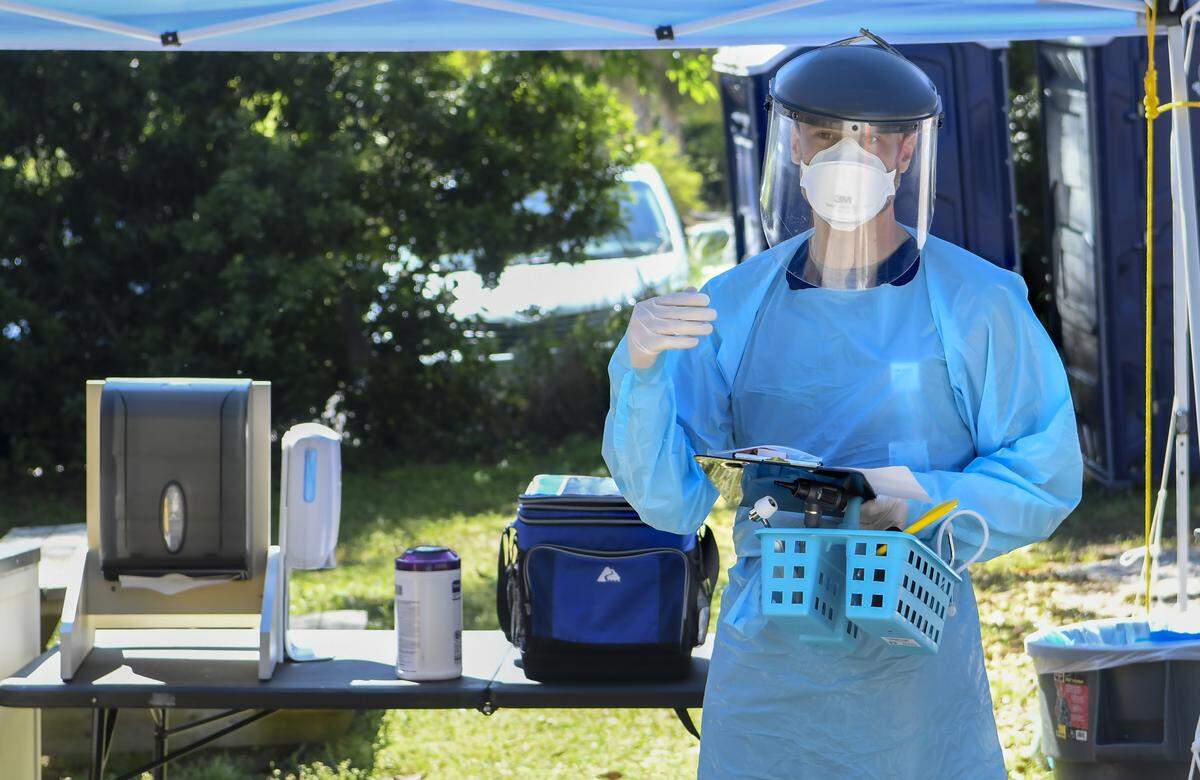
Tests-over-tests
DHEC now calculates the percent positive by dividing the number of positive tests per day by the total number of tests conducted that day, before then multiplying that resulting figure by 100.
Here’s how Kelly explained it, using a hypothetical scenario: On Feb. 1, 100 residents got tested for the coronavirus. Ninety of those people were negative and 10 were positive, indicating a percent positive of 10%.
On Feb. 5, 100 people got tested for the first time and 20 others were retested. In total, 20 people were positive and 100 were negative. Using the tests-over-tests formula, DHEC’s calculation was 20/120 = .16 x 100 = 16% positive.
Many residents then got tested from Feb. 6 to Feb. 23.
So, on Feb. 24, 100 people were tested for the first time and 100 others got retested — 25 people in total tested positive. DHEC’s resulting calculation was 25/200 = .125 x 100 = 12.5% positive.
“This could be a better reflection of exactly what’s happening in the community,” said Dr. Michael Kacka, a DHEC physician and chief medical officer for COVID-19, during a briefing with reporters in early February.
Using DHEC’s old formula, the Feb. 24 percentage of positive tests would have been 25%.
Laura Renwick, an agency spokesperson, in a statement Friday wrote that percent positivity isn’t the sole data point used when making “any type of decisions.”
But it’s still one of the most important COVID-19 metrics to monitor. DHEC includes county-level, two-week percent positivity rates in state reports that school districts use to decide whether it’s safe to reopen for in-person learning.
(DHEC hasn’t recently changed its “high,” “medium” and “low” percent positivity rankings that it uses in those reports. A “high” designation has been 10% and up for months, according to archived reports.)
The World Health Organization, meanwhile, previously suggested that governments should reopen only after their percent positivity was 5% or lower for at least two weeks.
More than 8% of 651 tests logged in Beaufort County on Friday were positive, according to DHEC data current as of early Sunday.
This story was originally published February 28, 2021 at 2:55 PM.