Last-minute plea to cap occupants in Hilton Head short-term rentals fails
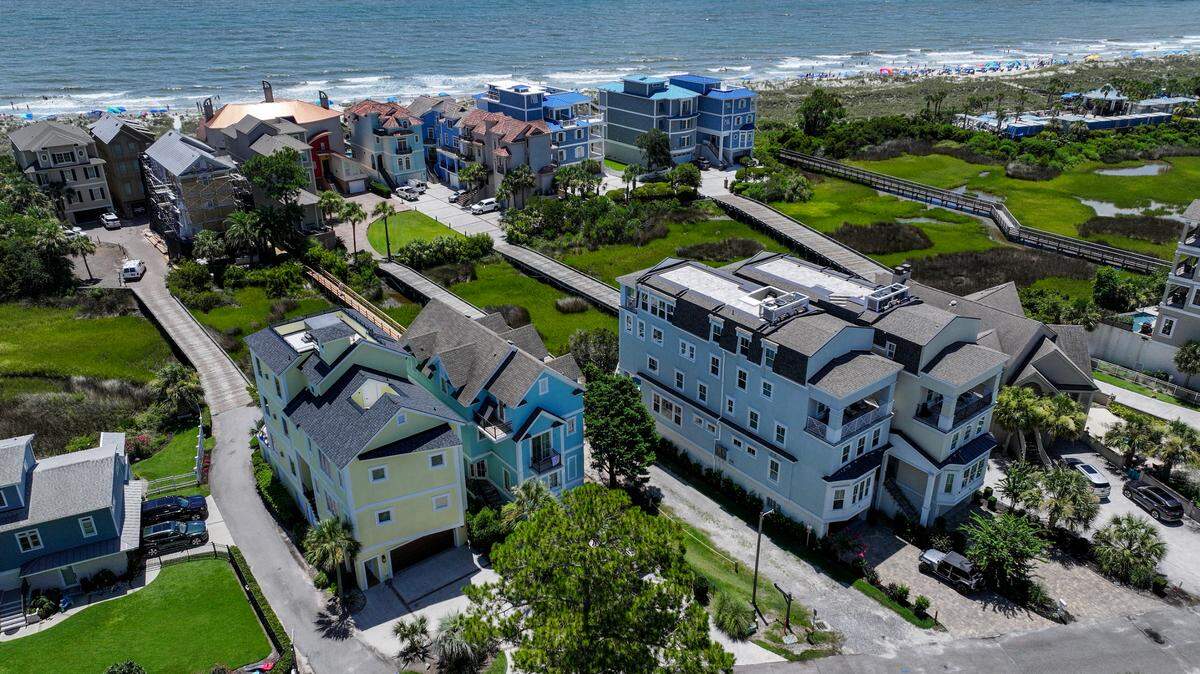
After months of debate, new rules for short-term rentals on Hilton Head received their final stamp of approval Tuesday evening.
The new rules passed a second and final reading at a Tuesday night meeting of the Hilton Head Town Council.
Last week, the council passed the amendments to the short-term rental ordinance on first reading after voting to remove any references to occupancy from the ordinance.
The changes have been in the works for more than a year. As short-term rentals increase in numbers in Hilton Head neighborhoods, residents have voiced concerns about parking, noise and a loss of a sense of community.
In some neighborhoods, short-term rentals make up as much as half of all residences. They are found in high concentrations in neighborhoods zoned for single-family residential use rather than commercial or resort use.
Last-ditch attempt to save occupancy caps fails
At the Tuesday meeting, Ward 2 council member Patsy Brison made a plea for the council to reconsider enacting occupancy limits on short-term rentals.
The idea is popular among some residents, but realtors and short-term rental business owners have pushed back and questioned how it would be enforced.
The council voted last week not to move forward with occupancy caps but left the door open to revisit occupancy rules after adopting a new land management ordinance, a policy that dictates land use for developers that is currently being rewritten.
Brison expressed concerns that waiting to enact rules could be too little too late.
One resident in Forest Beach, she said, recently complained to her that the sewer system backs up in their unit, that they can’t find a parking space, and that they’re often woken up during the night.
“If we wait until the LMO is adopted and then come up with some sort of occupancy, then we have let some of our communities suffer a longer amount of time, and some of it will be irreparable,” Brison said.
Ward 5 council member Steve Alfred also expressed disappointment that the occupancy limits were left behind.
Under the current rules, he said, it’s legal to pack “a whole bunch of double-decker bunk beds in the attic and put 10, 15, 20 people up there, and that concerns me,” Alfred said.
He said it’s “not impossible” to enforce occupancy. For example, he said, if a rental advertises a maximum occupancy online that’s higher than what they had told the town, that’s an easy sign that there is a violation.
Still, Alfred and Brison were the only two supporters of bringing back the occupancy limits. Brison’s motion failed in a 2-5 vote.
The council then voted 6-1 to pass the new restrictions on short-term rentals without occupancy restrictions, with Brison as the sole dissenting vote.
What are the new short-term rental rules?
New short-term rental rules require business owners to ensure their properties are fire-safe and restrict the number of cars that can park at a property.
Short-term rental owners must comply with the new rules by May 1, 2026, with one exception:
If an application to renew a short-term rental permit was approved before the council officially adopted the ordinance Tuesday, the permit holder has until May 1, 2027 to comply.
Smoke detectors a must
Fire and life safety is a huge concern in short-term rentals. In 2022, a Palmetto Dunes short-term rental home burned down, killing one tourist and critically injuring another.
New rules will require all short-term rentals to have functioning smoke detectors, carbon monoxide detectors, and at least one working fire extinguisher. Combustible gas detectors are also required if propane is used inside the property (i.e. in a stove or oven).
Any exterior gas grills will need to be equipped with automatic shut-off timers to reduce the risk of fires.
Short-term rental properties that are 3,600 square feet or more will be required to have a third-party monitored fire alarm system. Smoke detectors will be required in every bedroom, sleeping area, in every room on the path to exit a bedroom and on every floor, including basements.
Although not required, Ward 4 Council Member Tamara Becker urged short-term rental owners at a Oct. 13 meeting to buy a fire safety ladder and put them in the bedrooms of homes.
In case of a fire, she said, “the only way out is through that window ... and the surface below may not be forgiving.”
Parking capped at 6
New parking restrictions seek to limit the number of cars that can park at a short-term rental.
No more than six cars can park at a short-term rental, not including those parked in garages.
When applying for a short-term rental permit, applicants need to assess the parking capacity of their property and show town staff where cars would park.
Cars are not allowed to park on the street or on the grass. There must be enough space for all the cars to be able to park without blocking sidewalks. A space of at least nine feet by 18 feet is required for each vehicle.
The new rules also prohibit expanding a driveway or constructing a new parking area “for the primary purpose of increasing the capacity of a short-term rental property.”
Fee changes still in works
Hilton Head leaders have expressed interest in raising the short-term rental permit fee, which is currently $250 per property.
The fee is intended to cover the cost of reviewing permits, enforcing the rules, and other activities related to maintaining the short-term rental program.
Leaders agree the current fee is too low, but more time is needed to evaluate the costs of running the program.