Why Hilton Head’s ‘next generation’ wants you to stop buying boring souvenir T-shirts
In just about any touristy shop on Hilton Head Island, you’ll find the same T-shirt.
The words Hilton Head Island arched over a palm tree.
HHI in massive block letters on top of tie dye.
Or, to the delight of some visitors: OHIO with a lighthouse in the place of the I.
Sea turtles, bicycles, seashells, palm trees, crabs, sunsets, nautical flags, mask puns, anchors and lighthouses: Sonya Grant had seen it all before.
She grew up on the island. At 32 years old, she’d seen hundreds of iterations of the same neon T-shirt for a family to bring home to Ohio or New York or Atlanta.
None of them has a deeper meaning. They bear the island’s name but they leave out something important, the island’s original culture and history.
After a pandemic lockdown, a breakup and temporarily losing her job at an island retail store when it shut down in the spring, Grant decided to rewrite the island’s relationship with its clothing.
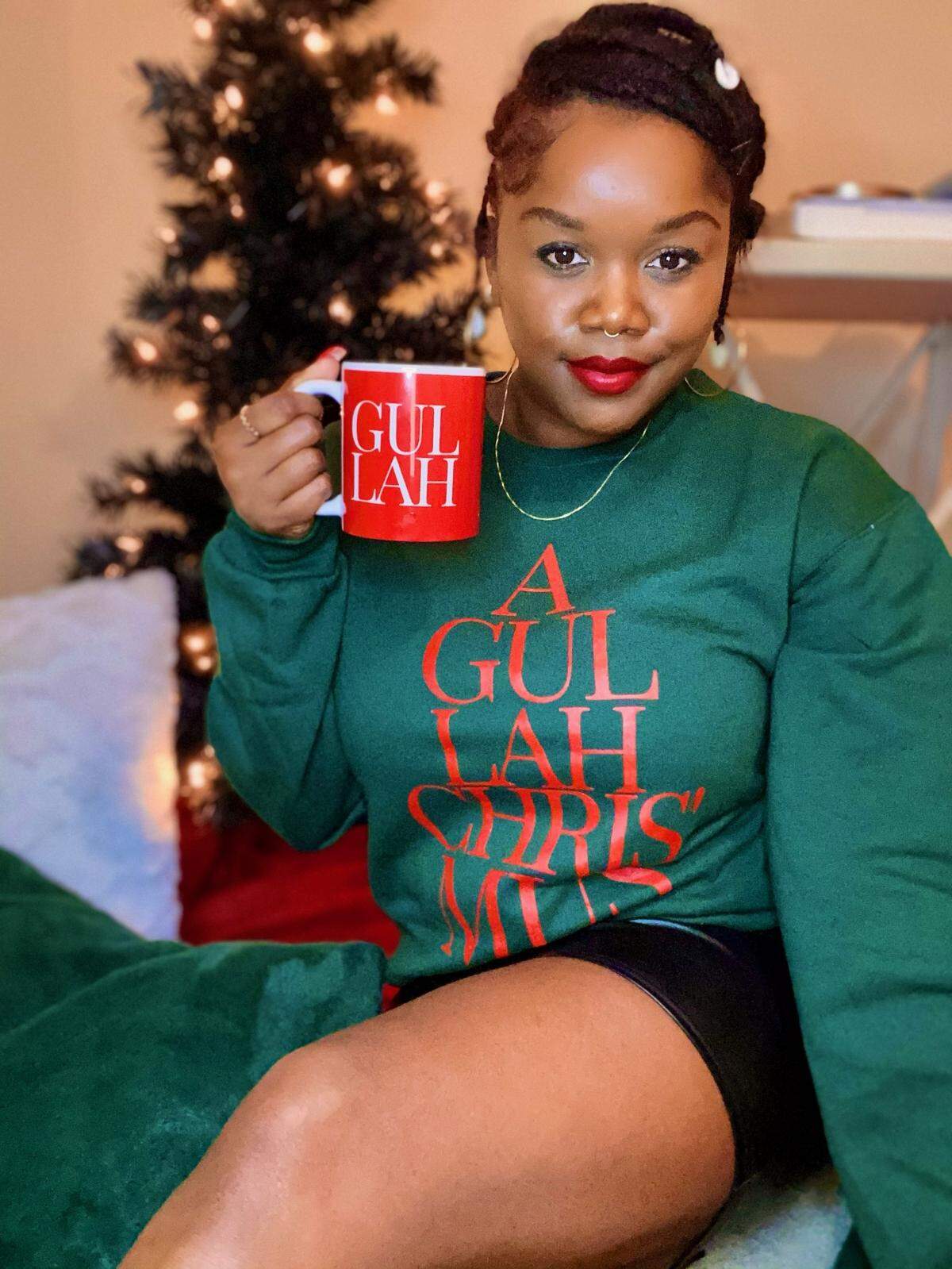
A Gullah Chris’ Mus
Geechee
Free
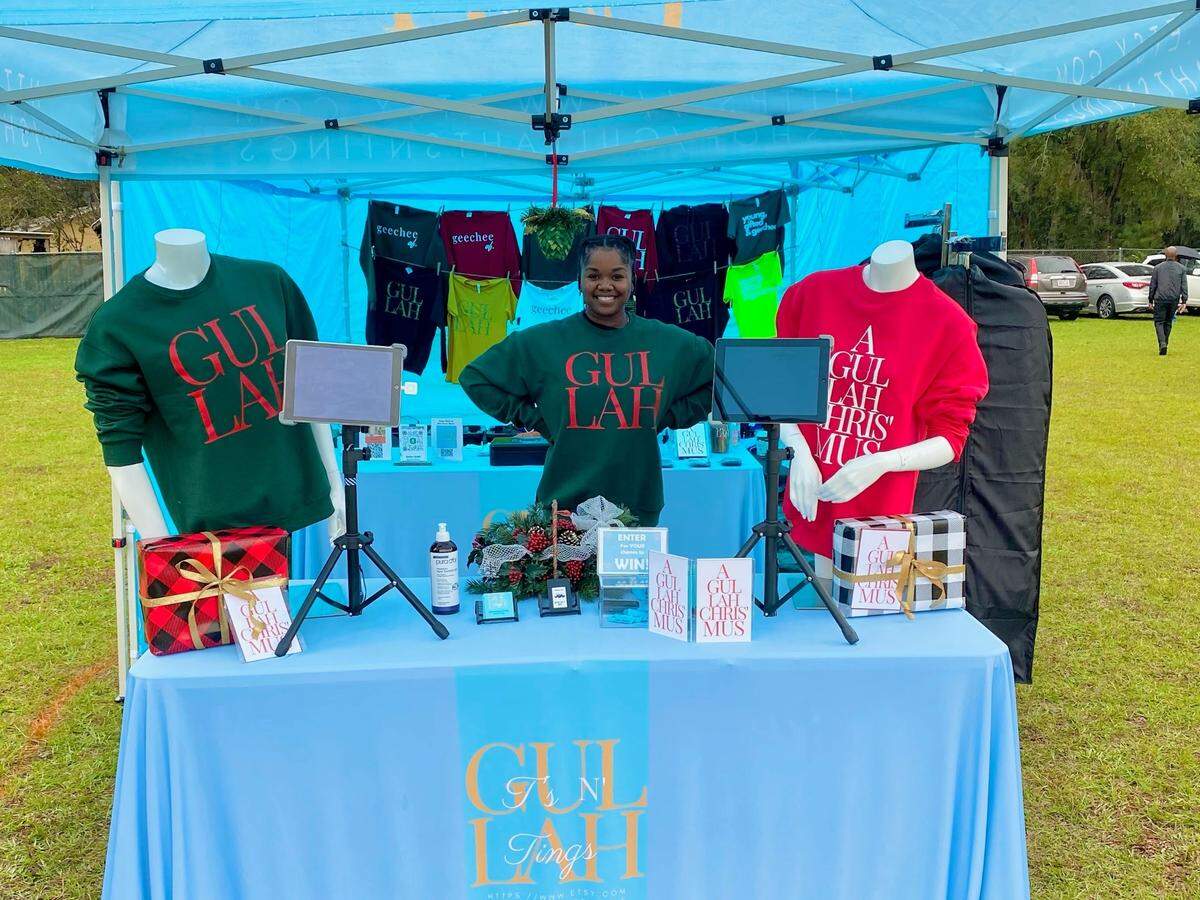
That is what’s printed in capital, sometimes golden letters on T-shirts, mugs, phone cases and dozens of other items on Grant’s shop, which she launched on her birthday last June.
“I didn’t want a souvenir T-shirt. I wanted a modern design,” she said. “I wanted something that was timeless.”
Her business, Gullah Ts N’ Tings, pays tribute to the island’s history — her history.
Gullah-Geechee history on Hilton Head
When Grant was 2 years old, she remembers going to a friend’s house for dinner and asking her hosts where the rice was on the table.
They didn’t have any, they told her.
It very well may have been Grant’s first meal without rice in her life.
Reflecting now, she said that experience was the first of many that helped her understand her culture as a Gullah-Geechee person. They ate rice with every meal because their grandparents and their grandparents before them had.
While she thought her family just did things differently, she now sees they were passing along rich sea island traditions that make coastal South Carolina one of most well-preserved examples of African culture outside of the continent.
“Gullah” was the name assigned to enslaved people who were brought to the U.S. from the Congo-Angola region of Africa. That region was often pronounced “N’Gulla,” which led to the word “Gullah,” according to David McCoy’s “Short History of Hilton Head Island.”
“Geechee” was used to refer to enslaved people who were brought to Georgia and, more specifically, the area of the Ogeechee River, which flows from central Georgia south to Savannah.
On Hilton Head, formerly enslaved people established the first self-sustaining village at Mitchelville once Union troops took control of the island. Gullah-Geechee folks like Grant’s ancestors created a life centered around shrimping, fishing, crafting and living off land that would one day become one of the most popular tourist islands in the United States.
Now, Grant wants to keep her family’s culture alive in a different way: Entrepreneurship.
“Whose job is it going to be to keep Gullah culture and preserve it?” she asked.
She has a group of young friends, all of whom are Gullah-Geechee and small business owners. They don’t have strong accents like their grandparents did, but they want to continue the legacy of hard working Gullah business owners on the island.
When Grant and her cousins were growing up, businesses in her Chaplin neighborhood — just before present day Palmetto Dunes — were beginning to disappear. They heard stories from people like former Town Council member Marc Grant about the days when Chaplin was buzzing with restaurants, gas stations, automotive garages and other businesses.
They could easily walk across the two-lane road that is now U.S. 278.
Now, Grant and her friends who own businesses are recreating that Gullah business district online. Instead of store fronts that open to U.S. 278, they use sites like Etsy to ship merchandise around the country.
“It may not look like it used to,” she said. “But the goal is the same.”
Culture preservation and awareness
There’s a pretty obvious question that arises when buyers look at Grant’s T-shirts.
Can a non Gullah-Geechee person wear a shirt that reads Geechee or lists the names of historic neighborhoods on the island?
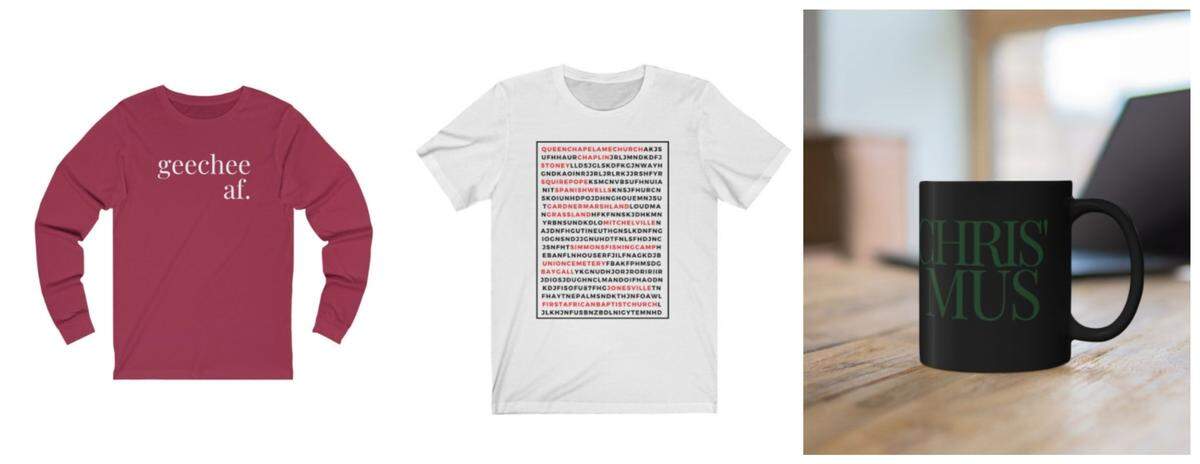
“I will always say yes, non-Gullah people can wear these clothes. I know there are a lot of people who are excited about and love Gullah culture, and I would never want to rob them of cultural appreciation,” Grant said.
One of the differences is who profits from the use of Grant’s culture. In her shop, it’s her.
As opposed to the use of a culture for profit by people who are not a part of it, every sale helps sustain her life and her family’s lives on the island.
Plus, she said, the shirts help educate others about her culture.
“Most people around here know the name of Gullah-Geechee. It doesn’t take much explaining,” she said. “But a lot of my friends who have purchased in other cities, they get stopped constantly. It gives them an opportunity to educate people. It’s so much more than my business, it’s culture preservation and culture awareness.”
Grant, who participated and organized rallies and action for racial justice this summer, looks at her business and her activism as the heralding of a new wave of Gullah culture on Hilton Head.
And it really, really helps that the elder members of her family don’t hate it.
“I don’t think I realized the significance of what I’d made until I saw the response. They love it,” she said of her clothing business.
“They were kind of waiting to see what the next generation was going to do, and to see the older generation to be so proud of me? It means a lot.”