‘What’s going to be left for us?’: Hilton Head US 278 project threatens natives’ shops
Sometimes, Tressa Govan feels like her life revolves around traffic on U.S. 278.
If she’s not sitting in it in her car, she’s watching vehicles with license plates from all over the country zoom by the door of her shop on the six-lane highway 10 feet away.
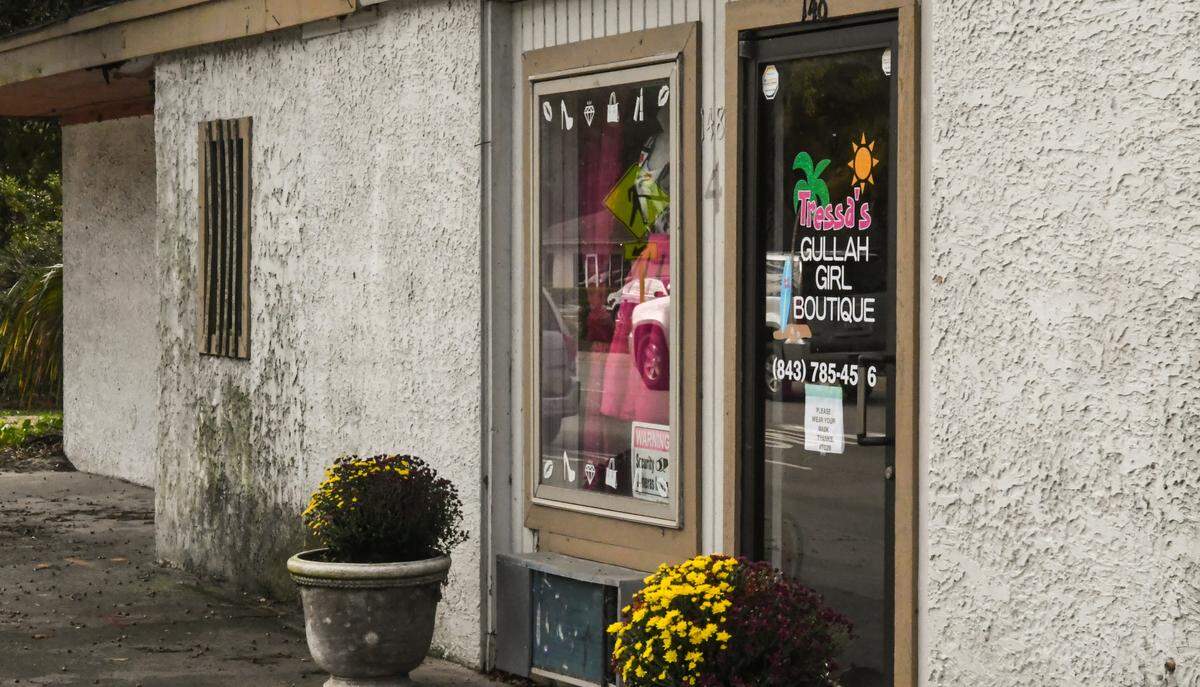
Govan has owned Tressa’s Gullah Girl Boutique for six years. She grew up taking old jeans and cutting them into her own designer purses and strutting around with them on her arm.
She’s only 34, but Govan remembers as a child riding shotgun across two-lane U.S. 278 on Hilton Head Island in her father’s blue, box-shaped Ford pickup truck.
Her whole family is connected to the highway’s intersection with Spanish Wells and Old Wild Horse Roads. Her parents’ house is just north of the intersection, her uncle’s upholstery shop sits just a few feet from the westbound lanes of U.S. 278, and her own boutique is across the highway from his.
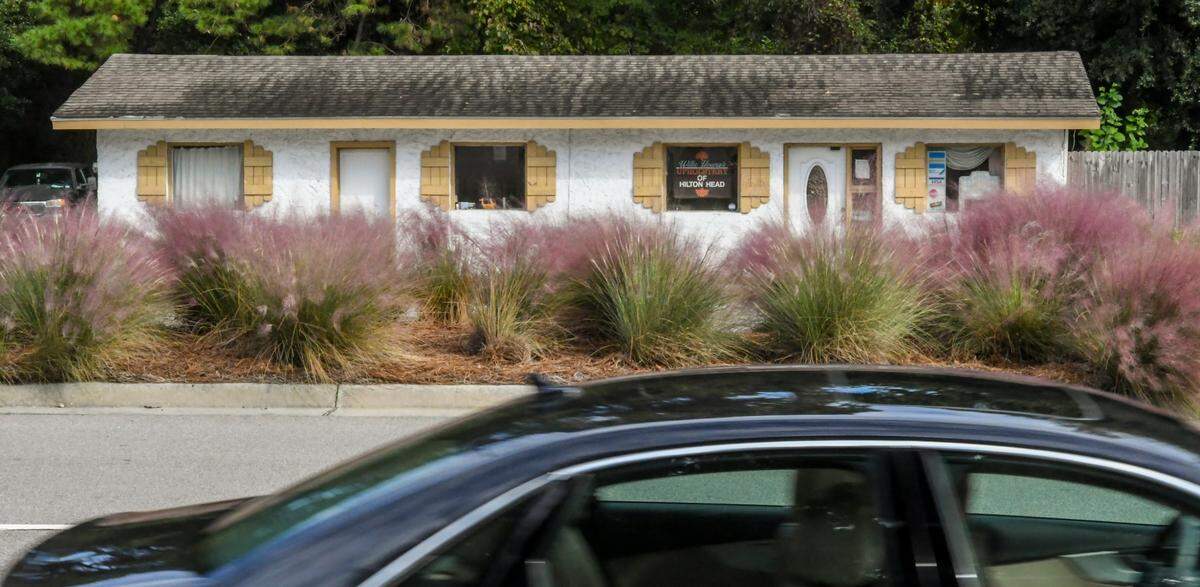
Govan rents space in a building that nearly 50,000 cars pass every day on U.S. 278. Any family arriving for vacation and heading to the south end drives by the brightly colored outfits in her shop window.
But the 70-year old building, which Govan said has also housed a mechanic, a convenience store, a Gullah bookstore and a church, is in peril.
This winter, the S.C. Department of Transportation is expected to identify the preferred alternative for U.S. 278. If that alternative doesn’t pave over Govan’s shop, it will bring the highway so close that she will be forced to move.
But so far she’s heard nothing from the department. In fact, she found out about the seriousness of the highway project just three months ago. Her future, inextricably tied to the highway’s, is up in the air.
Part of history
Stepping into Govan’s shop is like walking into a different world. The white stucco facade and the hot gray pavement of the highway feel miles away, although Govan can hear the roar of traffic from the very back of the store.
Even the ground where the shop sits is deeply meaningful to Hilton Head’s native island community. Behind her shop, Hilton Head’s consolidated first elementary school opened in 1954. The children from the school would come to Arthur Frazier’s “Fraidge Store,” now where Govan’s boutique is, to buy candy and soda water before going to school.
The school next door, which was not integrated until 1971, has been torn down.
Inside the boutique, bright painted ceiling tiles alternate in a checkerboard fashion she says is taken from shops in New York City. Her older cousins painted it for her.
She sells high heels that reach new layers of the atmosphere and colorful Gullah dashikis, alongside jeans and brightly colored tops.
Truly, her family’s labors are everywhere in the store. Her aunt re-upholstered a chaise in bright yellow faux leather before she passed away. Her father built custom shelves that span a wall and are set off by massive white columns. Her mom named the store. So it may be Tressa’s Gullah Girl Boutique, but it’s really the whole Govan family’s effort that made it a colorful oasis on the busy highway.
After six years and countless improvement projects, Govan said losing her store would be like “losing her baby.”
“It means a lot to be a part of history and for the building to be in the family,” she said.

Black communities disrupted by highways
Govan’s story, and that of her uncle Willie Young’s upholstery shop across the highway, fits into a disturbing trend across the country: transportation projects that disproportionately disturb Black communities.
“It is impossible to ignore the impact that the (highway) system has had on poor and minority communities,” David Karas wrote in his 2015 study, Highway to Inequity, which addressed the interstate highway system and its conception in the 50s.
“A growing body of research has addressed the racial effects of the landmark federal initiative, with many academics alleging that the system’s construction constituted, at least in some cities, a civil rights violation that served to formalize Jim Crow-era discriminatory patterns and some of the original racial boundaries imposed in some urban spaces,” he wrote.
Karas cites examples from Miami, where highway construction “captured 40 square blocks of city space, demolishing some 10,000 homes and a predominantly black business community,” and in Detroit, where “the route of the highway tore through minority communities and left behind large swatches of cleared neighborhoods.”
On Hilton Head, construction of the Cross Island Parkway cut through the historic Spanish Wells and Jonesville communities in the ‘90s. U.S. 278 bisected the historic Stoney community when it expanded, and the nine alternatives proposed for the highway threaten to relocate between 10 and 21 homes and businesses.

For Govan and her neighbors along the loud highway, relocating means being paid by the SCDOT to leave property that’s been passed down in their families for generations.
“That’s another reason why I’m holding on so tight to the building,” she said. “As far as the native aspect, what’s going to be left for us? So much has been taken from us over time because everywhere we call home, they come and try to push their way in.”
What’s next?
Govan is holding her breath for the final plan for Hilton Head’s single entry and exit point. It will be announced this winter after it’s reviewed by an engineering consultant hired by Beaufort County.
With no public meetings scheduled on the final plan until early next year, she has to sit tight.
When Govan’s mother, Deborah, sits in her daughter’s shop and recounts all the changes she and her husband have witnessed in the Stoney community, she shakes her head.
“I believe in change,” she said, “but sometimes it really hurts.”