SC wood pellet mill made people sick, neighbors say. Has it followed regulations?
Jackie Reynolds closes her eyes and massages her temples.
The throbbing headache is back.
It’s become all too regular.
Two doors down, Shannon Smith rolls over in bed and tries to fall back asleep.
Her clock says 4 a.m.
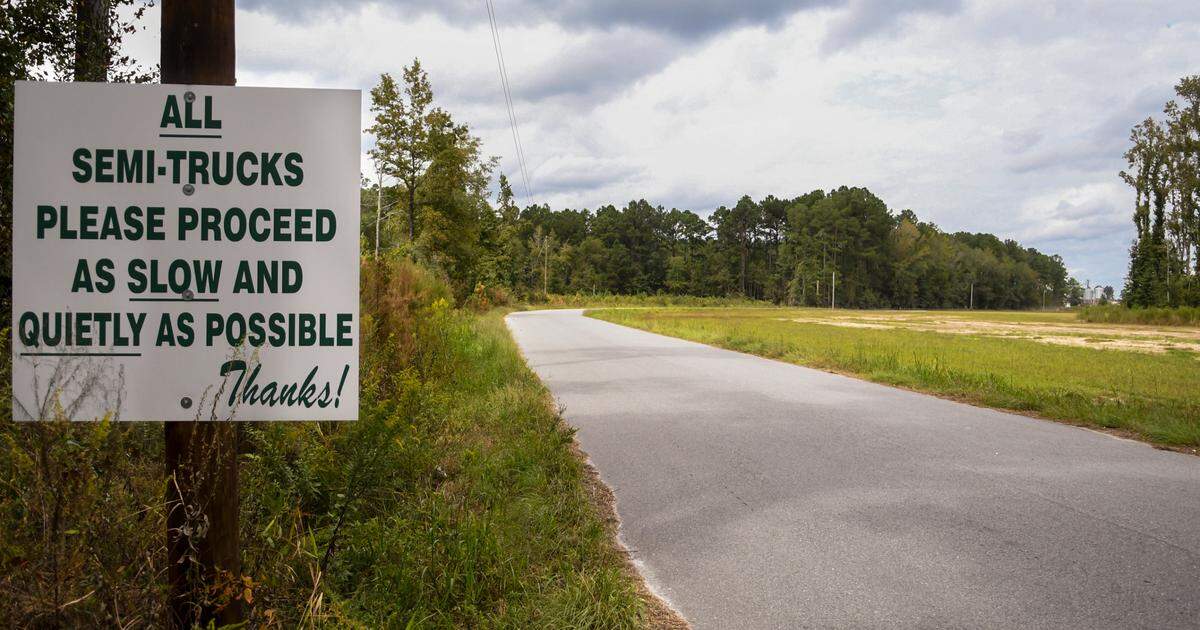
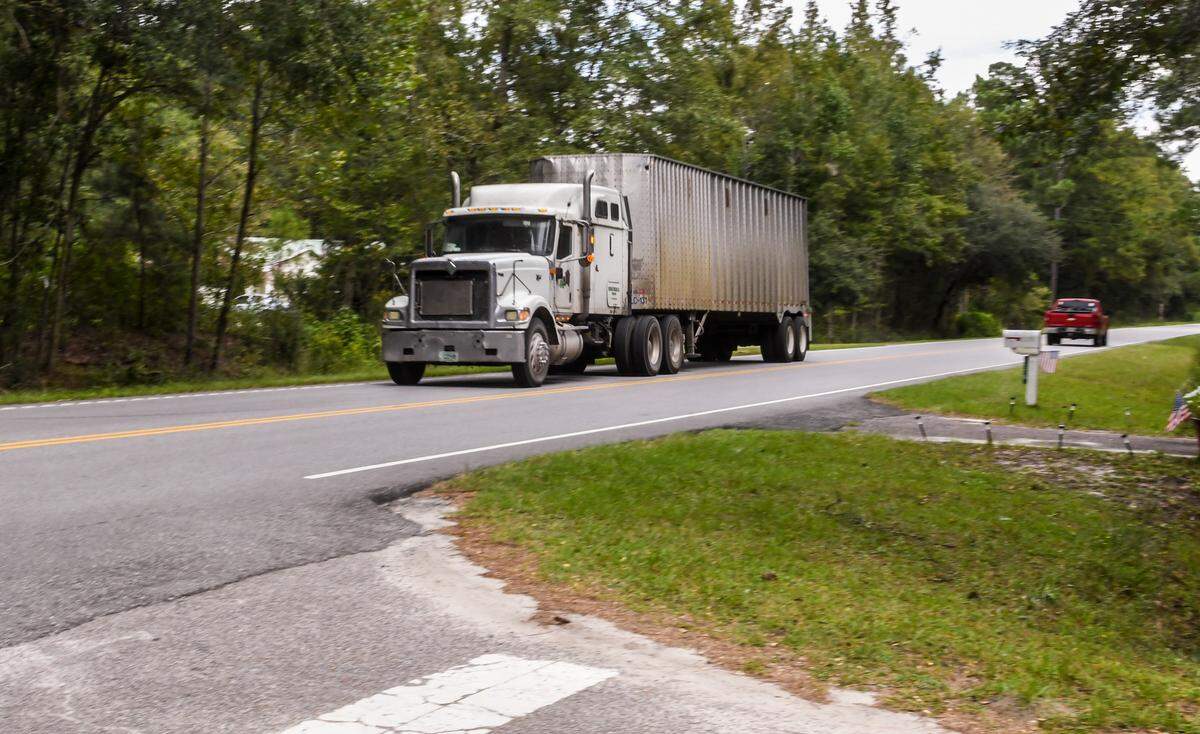
Between her husband’s coughing and the tractor trailers and logging trucks driving by her house off Tillman Road at all hours of the day — part of the wood pellet mill manufacturing plant near her Ridgeland neighborhood — she barely sleeps anymore.
She knows it’s not her husband’s fault.
These days, he always seems to have a tightness in his chest and a runny nose, but doctors haven’t been able to pinpoint why.
The pellet mill plant, which operated from 2014 through 2016 and then closed for three years, expanded and reopened last year, turning raw wood into compressed pellets that are typically shipped overseas to be used as power-plant fuel. That process can produce smog and soot that the neighbors say have wrecked their health.
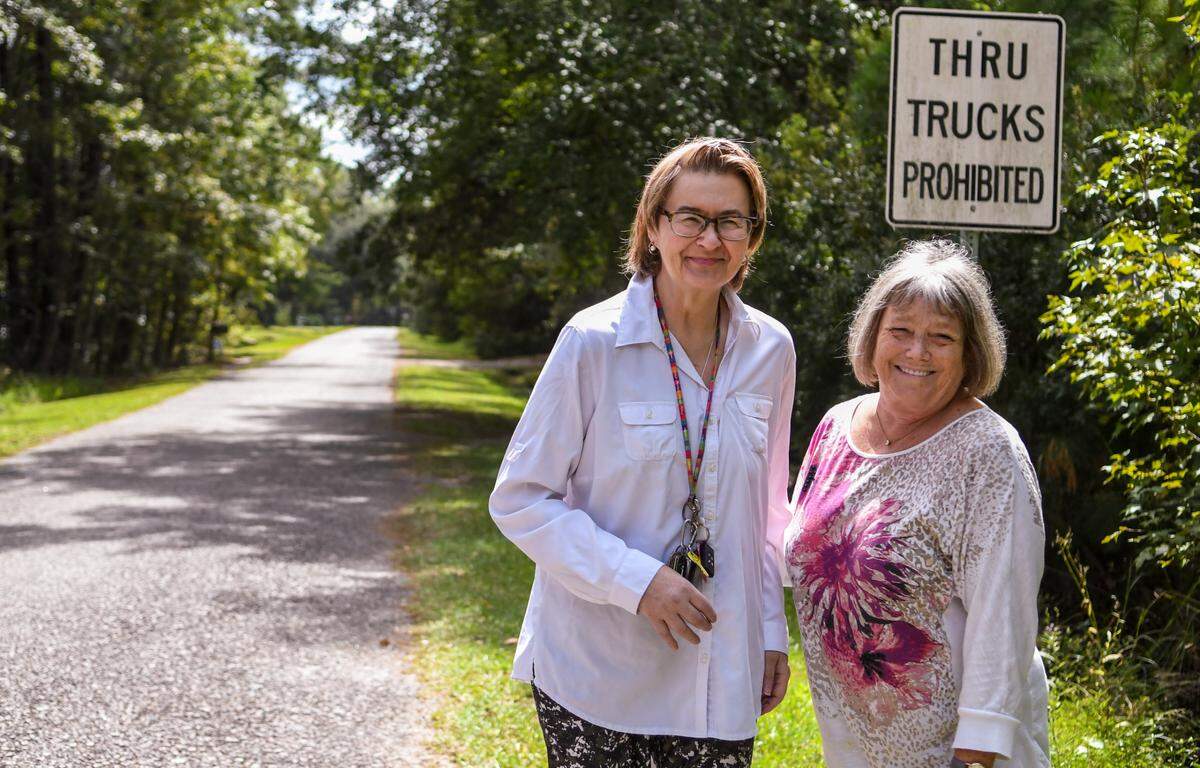
Reynolds, Smith, and a handful of other homeowners in and around Jasper County’s Bass Lake neighborhood have grown used to their diminished quality of life, but they say it’s unacceptable.
“I am afraid of what it’s going to do to us,” Reynolds said in a recent interview with The Island Packet.
Relief may be coming because of legal action by three environmental groups.
South Carolina-based Coastal Conservation League, Washington D.C.,-based Environmental Integrity Project, and the Southern Environmental Law Center have accused the facility of “significant, repeated, and ongoing” violations of the Clean Air Act. They call for it to “fix the violations” or face a federal lawsuit. The S.C. Department of Environmental Health and Control notified the company it has two alleged violations against it.
‘A living nightmare’
When a business expands, like the $8.1 million investment by Jasper Pellets LLC made in Ridgeland in 2018, the economic effects are immediate and obvious.
Local and state leaders, including Gov. Henry McMaster, praised Ridgeland Pellet Co. LLC, now known as Jasper Pellets LLC, for choosing Jasper County for its investment, according to a July 2018 news release from the S.C. Department of Commerce. They applauded the potential economic boost and creation of 27 jobs over the next five years.
The neighbors weren’t as celebratory.
Neither Reynolds, who moved from Pennsylvania more than a decade ago, nor Smith, who moved about four years ago from another part of Jasper County “to be more in the country,” knew they were buying homes near a wood pellet mill.
If they had known, they said, they would not have moved there.
The facility was likely dormant during both of their moves, but in the past 18 months, it would be impossible not to realize a factory is operating close to several residential neighborhoods.
Jasper Pellets, the environmental groups say, can emit more than 100 tons of “volatile organic compounds” per year, meaning it’s a “major source of air pollution” under the Clean Air Act.
The women say neither they nor their neighbors ever received a notification that the mill exists or is operating, let alone any information about emission levels.
A Clean Air Act Title V permit, which Jasper Pellets is supposed to have within a year of operation, would require “better monitoring and reporting of emissions and those details would be made available to the public,” said Patrick Anderson, attorney for the Environmental Integrity Project. “Without this permit, the public is at a disadvantage.”
Reynolds, a retired nurse who has an autoimmune illness, says her health has deteriorated in the past year, and she said the mill is partially to blame.
Her health had never “caused too much difficulty,” and she hadn’t had any problems with her breathing before, she said. But in the past couple of years, she noticed “some symptoms starting to creep up.”
Her joints have become so painful that she uses a crutch. Her ears ring from the noise of the factory. Sometimes she gets piercing headaches.
She isn’t the only one noticing changes.
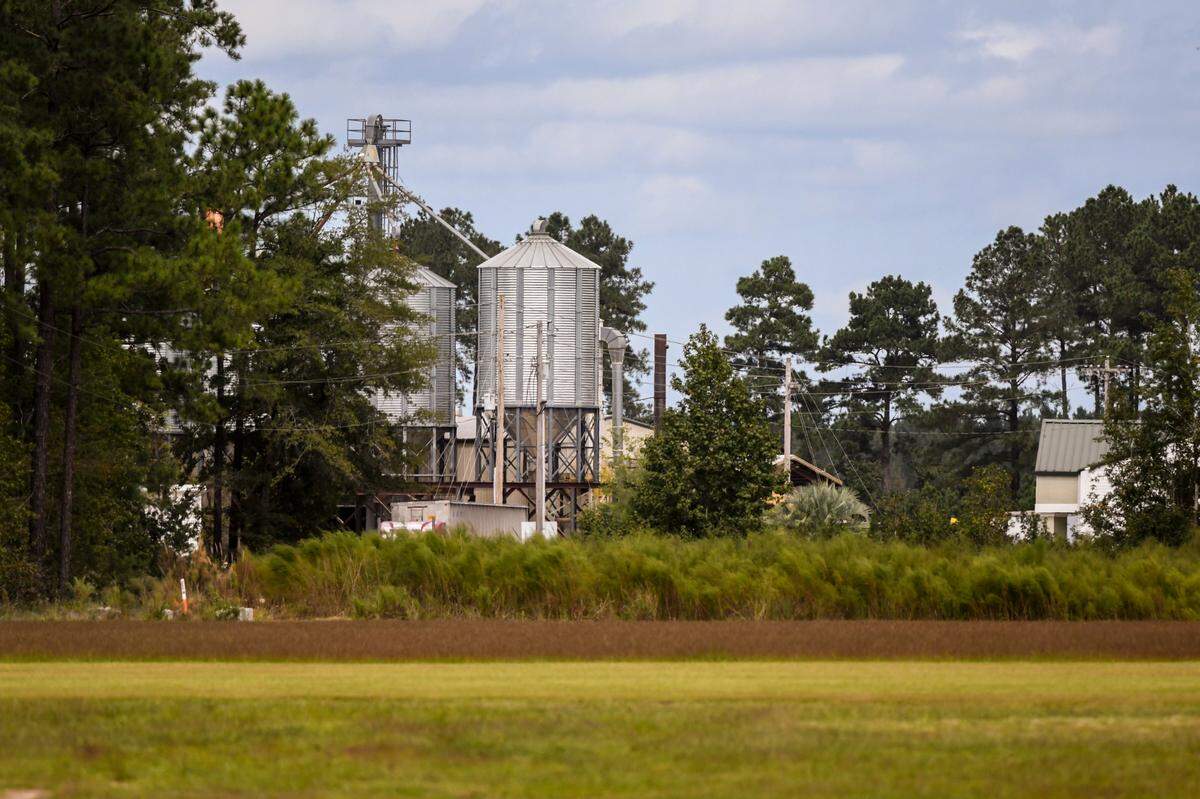
Others suffer with a deep cough or complain of feeling like they’re in a constant “allergy season.”
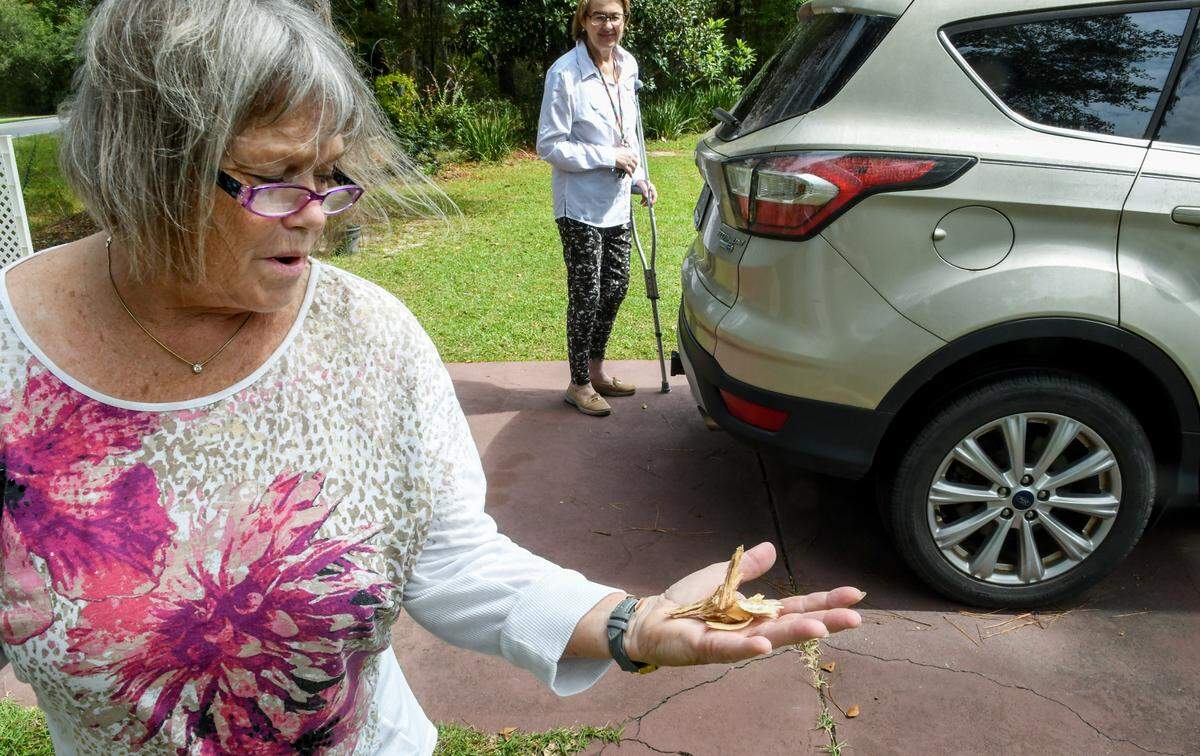
Smith said she rarely opens her windows anymore because of the visible particulates that blow in, the same material that piles up on their cars.
“These mills are dirty, they cause a lot of problems, they bring a lot of baggage,” Reynolds said. “We’re living in it. It’s a living nightmare here.”
Reynolds said she supports bringing businesses into Jasper County to help the economy flourish, but the effect on residents needs to be considered. And the people living nearby deserve to be notified.
Reynolds and Smith say situations like the one they’re experiencing happen too often in rural, poorer areas like Jasper County. They compared it to the fiery trash mountain in Okatie that emitted poisonous gases in 2019 and caused nearby residents and businesses to evacuate.
“We are not garbage,” Reynolds said. “And, we don’t need everyone else’s garbage.”
‘A known problem’
Jasper Pellets has been on regional environmental groups’ radar for years. On Sept. 22, three of those groups sent a notice to the facility’s owner, plant manager, and attorney alleging the mill had repeatedly violated multiple state and federal regulations over almost two years. It threatened to sue the company in federal court if the mill did not take steps to comply with the laws within 60 days.
Juliana Smith, the Coastal Conservation League’s South Coast project manager, said the group was “concerned about the violations the pellet mill is currently committing” and spoke with the Southern Environmental Law Center and the Environmental Integrity Project, which have been active “bringing pellet mills across the country into compliance.”
“Generally, it seems like rural counties tend to be targeted by these types of facilities, and that includes some facilities that are not compliant,” she said.
Although DHEC’s primary purpose is to protect the environment and the people of South Carolina, she noted that “it’s ultimately up to the facility to apply for their permits and follow federal laws.”
Anderson, the Environmental Integrity Project attorney, said he’d been looking through the permitting records for the mill since it was owned and built by a different company that eventually shut down.
The plant, he said, had always needed a Title V permit, and he mentioned that to DHEC and to Jasper Pellets’ CEO when it changed ownership in 2018.
When Jasper Pellets applied for a permit to expand, Anderson said he and other leaders raised issues, and he credits the state with limiting the size of the expansion. But he said DHEC, as the “frontline agency,” didn’t do anything to ensure the mill was following Clean Air Act regulations.
Southern Environmental Law Center attorney Heather Hillaker said the “public has the right to know what’s coming out of the stack,” but that information hasn’t been disseminated because Jasper Pellets never sent DHEC a notice of operations, which the state requires.
“Instead of using that time to apply for a relative permit and make sure they had their ducks in a row, Jasper Pellets recommenced operations without even telling DHEC,” Hillaker said. “DHEC was under the impression the facility was still idle and wouldn’t start the operations they’d applied for.”
Not until November 2019 did DHEC pay an unannounced visit to the mill and discover it was operating, according to Hillaker and a DHEC inspection report.
The visit, which occurred about a week after The Island Packet and Beaufort Gazette requested information from DHEC related to the facility’s permits, found Jasper Pellets had been operating without the proper permits since February 2019. The company had almost fully installed new manufacturing equipment that had not been approved.
In addition to the lack of proper permitting, Hillaker noted wood pellet facilities have “a known problem” of emitting dust and particulate matter that can cause respiratory issues.
She said mills emit hundreds of tons of harmful pollutants harmful to public health.
DHEC files delayed allegations
Last week — a week after the environmental groups’ letter was sent and the same morning a reporter inquired about what steps DHEC has taken to ensure Jasper Pellets had complied with state and federal laws — DHEC sent Jasper Pellets a “Notice of Alleged Violation” and “Notice of Enforcement Conference.”
The notices stem from issues DHEC observed during its unannounced Nov. 20, 2019, visit almost a year ago. Specifically, Jasper Pellets had not obtained a proper permit before constructing new equipment and had not submitted written notice that construction had begun, according to the notices obtained by The Island Packet.
The agency will evaluate Jasper Pellets’ “current and future compliance” with the Clean Air Act and state requirements to determine whether further enforcement action is needed, DHEC spokesperson Laura Renwick said in an email last week.
A virtual conference that allows Jasper Pellets to discuss the alleged violations with DHEC is scheduled for Oct. 13. The agency and company may discuss a settlement, according to the notice.
On Sept. 29, a reporter was told no one at DHEC was available to discuss Jasper Pellets or DHEC’s responsibility to enforce local and state regulations at pellet mills. The next day, Renwick sent a timeline and information about the mill in a detailed email but declined to comment further, citing the pending enforcement action.
In November 2019, days before the agency’s unannounced visit to Jasper Pellets, a DHEC spokesperson said the agency’s Bureau of Air Quality is “responsible for ensuring South Carolina meets all state and federal air quality standards.”
“For industrial facilities like Jasper Pellets LLC, (the bureau) issues construction permits and operating permits,” the email said. “(The bureau) ensures facilities meet air quality standards by conducting unannounced site inspections, reviewing compliance reports, investigating complaints, and addressing air quality violations through enforcement actions as necessary. “
‘Not going to comment’
Jasper Pellets owner and CEO Charles Knight, plant manager Beau Harwell, and registered agent Kevin Brown did not respond to emails requesting comment.
On Sept. 24 when a reporter for The Island Packet and Beaufort Gazette visited Jasper Pellet’s office on Nimmer Turf Road, a woman who was checking the business’ mail stopped the reporter.
The woman did not identify herself, but asked if she could help.
When the reporter asked to speak with Harwell, she said, “Beau is no longer with us.” She said Knight was also “busy” and not available to talk.
Knight “is not going to comment because we don’t know anything about it,” she said when the reporter informed her of the newspapers’ plan to write about the possible lawsuit. “We haven’t been served nothing.”
What happens now?
On Oct. 13, DHEC and Jasper Pellets plan to meet to discuss the facility’s alleged state and federal violations.
By mid-November, Jasper Pellet must prove that it is taking steps to comply with the laws or the Coastal Conservation League will sue the company in federal court
The neighbors are hoping the process moves quickly. They have their own recommendations for how this should end.
Reynolds said the mill and air quality surrounding it needs to be monitored regularly. But “proper emission control is not enough.
“I think the mill needs to be shut down and moved,” she said. “Disassemble it and move it somewhere else safer. You should not have a mill (so close) to a residential area.”
Most people, even in Ridgeland, likely don’t know the mill is there because it’s so well hidden, she said, and you can’t care about something you don’t know is there.
Reynolds’ voice grows more stern, breaking at times.
It’s been a long fight for her health and that of her neighbors, she said. Many moments she feels hopeless. As her body weakens, she acknowledges it’s hard to carry on.
“I know I’m probably not going to win this battle,” she said. “But I want to make people aware of it because it will affect you eventually.”
This story was originally published October 7, 2020 at 8:14 AM with the headline "SC wood pellet mill made people sick, neighbors say. Has it followed regulations?."