Taxpayers likely on hook for $4.5 million Jasper Co. cleanup. Could it happen again?
After a months-long fire at a mountain of debris near Okatie caused neighbors to flee their homes and left taxpayers with a $4.5 million environmental cleanup bill, Jasper County officials are considering limiting the height of trash pile sites and forcing operators to pay for emergency cleanups.
Able Contracting, a material recovery facility that caught fire last summer and was declared a federal Superfund site by the U.S. Environmental Protection Agency in August, exposed “some gaps” in the county’s code of ordinances, Jasper County Attorney David Tedder said Monday. The law allowed the facility to operate without requiring proof that its owner had the means to pay for cleanup in an emergency.
S.C. Sen. Tom Davis, R-Beaufort, said state officials are still looking for ways to recoup the $4.5 million from the operators of Able Contracting. In the meantime, however, the public is paying the bill.
“That depends on whether there’s a viable civil action under existing federal and/or state law against Able Contracting for reimbursement,” Davis said.
The ordinance change proposed by Jasper County and conditionally approved by all council members Monday night, is the county’s attempt to bar any material recovery facility from operating without a bond, letter of credit or other form of financial security from the S.C. Department of Environmental Health and Control.
If DHEC does not require financial security for a facility, an operator must still provide one to Jasper County before a development permit or business license can be issued. The operator must be able to pay $60 for every cubic yard of debris at the facility, according to the proposed law.
“This comes about as a result of our experience over the summer with a recycling facility down on Schinger Avenue,” Tedder said, referring to the Able Contracting fire.
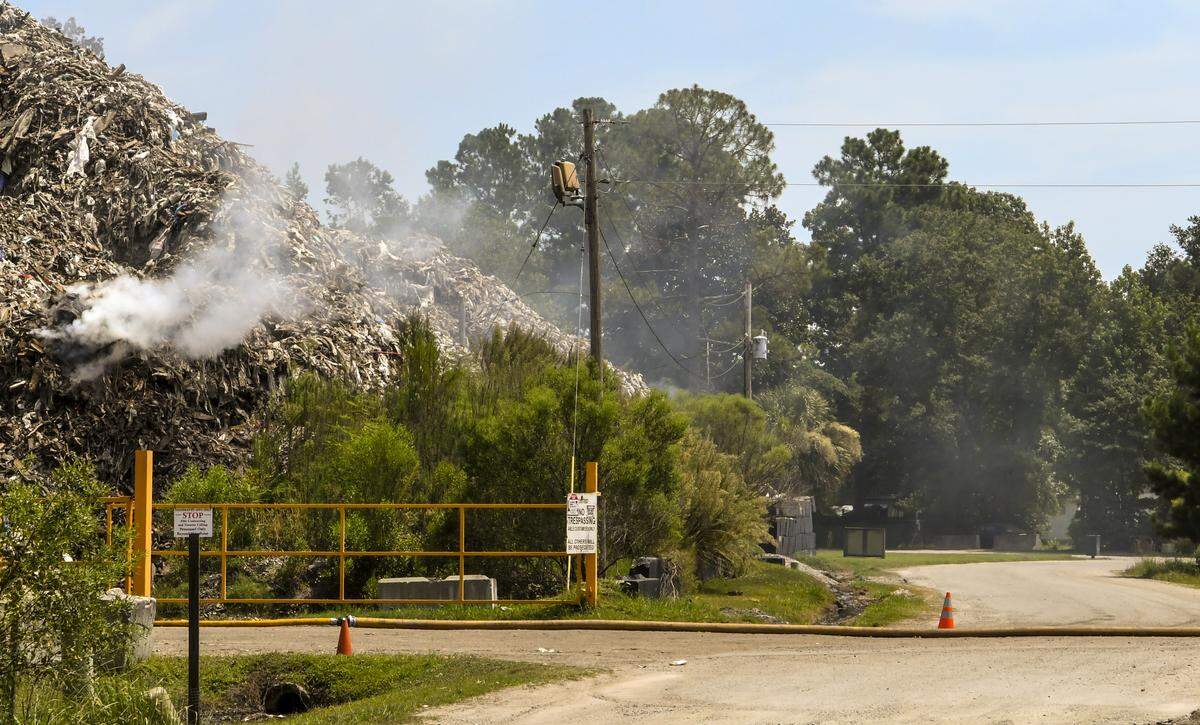
Before the emergency cleanup, Able Contracting housed about eight acres of construction and demolition debris.
There are 56 similar facilities across the state, including one in Beaufort County and another in Jasper County, according to DHEC documents.
Juliana Smith, south coast project manager for the Coastal Conservation League, wrote to support the ordinance change and said she and her colleagues “applaud Jasper County’s efforts.”
“By pursuing these amendments, Jasper County is not only poised to better protect its residents from bearing the burden of future disasters like the Able Contracting fire, but better equipped to prevent similar situations from ever occurring,” Smith’s letter said.
The proposed changes would require material recovery site operators to provide financial security to fund the “decommission, clean-up and close-out” of a facility if an emergency, like the Able Contracting fire, were to occur.
The amendment also requires operators to build at least an 8-foot-tall fence and at least 8 feet of trees or shrubs around the debris. No debris can be stacked higher than the fencing or shrubbery, the ordinance says.
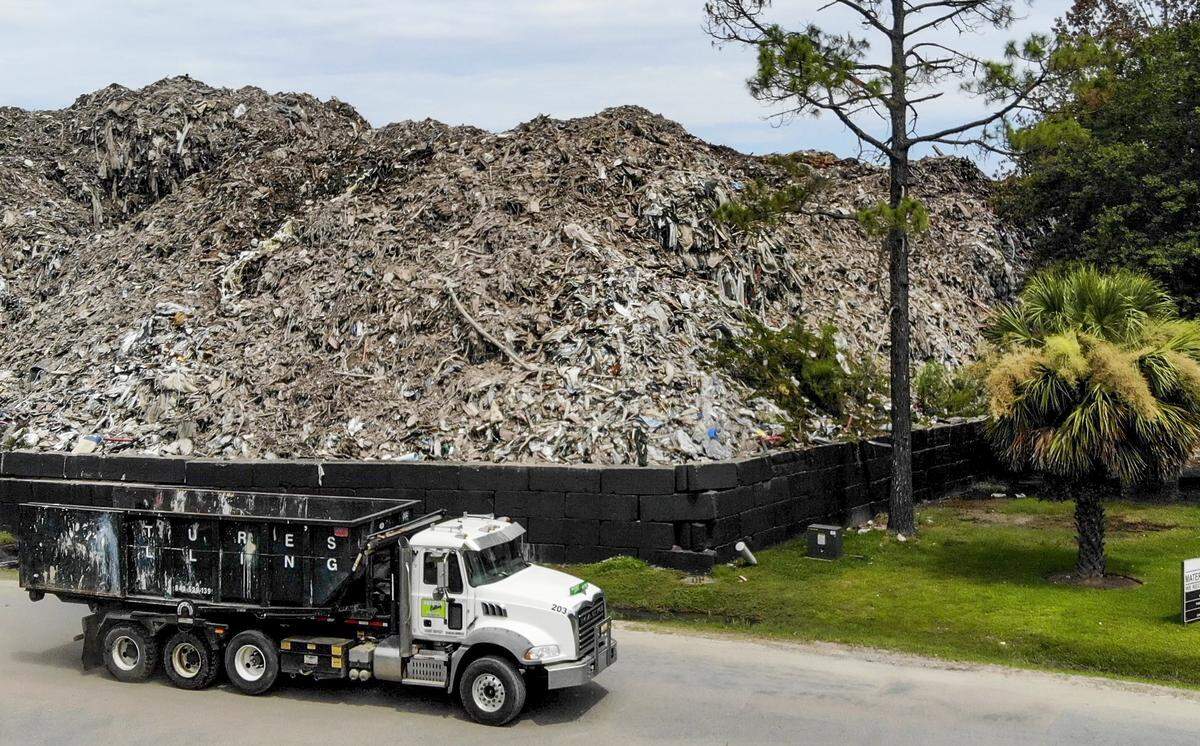
No recyclable material facilities can be within 1,000 feet of any homes, churches, schools, historical places or public parks, according to the ordinance.
The Coastal Conservation League has recommended adding marsh setbacks to that list.
“One of the Conservation League and Savannah Riverkeeper’s primary concerns during the Able Contracting fire was minimizing the likelihood of nearby waterway contamination,” Smith wrote to council members. “We recommend adding wetlands to the current setback requirements of at least 1,000 feet in place for neighboring residential uses like churches, schools, and public parks.”
The fire at Able Contracting
For months the mound at Able Contracting, between 45 and 56 feet high and burning internally, released noxious fumes, forced over 30 neighbors to evacuate and prompted emergency responses from environmental groups and legislators.
After using federal funds to clean up some of the site, the EPA transferred responsibility to the state’s DHEC for extinguishing the deep-burning fire and hauling debris to nearby landfills.
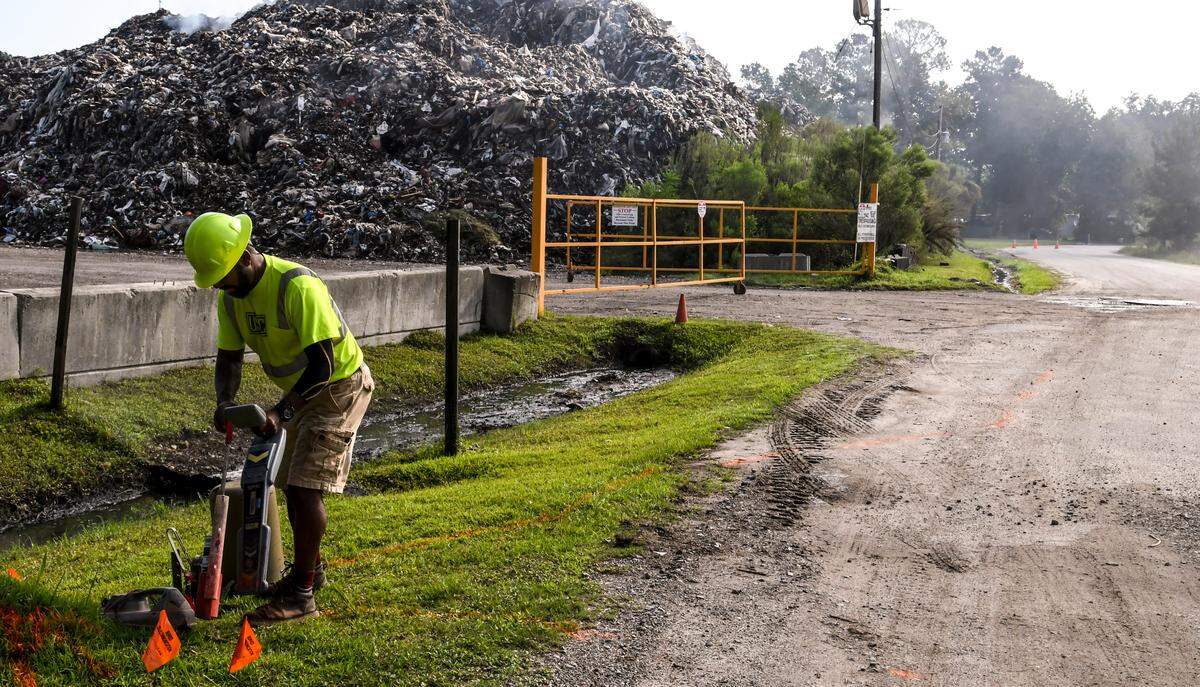
In January, eight months after the fire started, the department and its contractor removed the final load of waste from the site. DHEC estimates the cleanup, in which workers removed more than 115,000 tons of material from the site, cost about $4.5 million.
The acrid smell that so many residents complained about for months was due to the combination of burning organic material and plastic within the pile, according to DHEC.
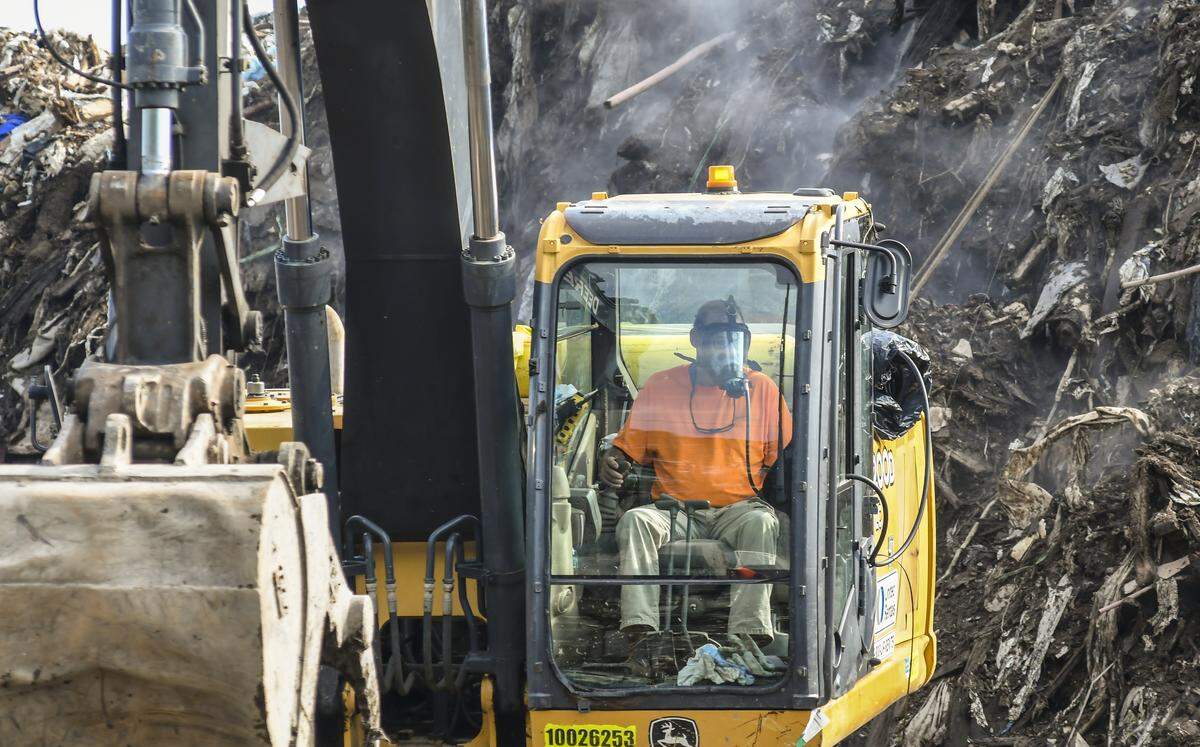
In August, air quality monitors detected high levels of acrolein and elevated levels of hydrogen cyanide near the site of the fire.
Pollution
In October 2018, Chandler Lloyd, the operator of Able Contracting, was indicted by a Jasper County grand jury on charges of violating the Pollution Control Act and The Solid Waste Policy and Management Act between 2015 and 2016. Lloyd and Hiram Lowther, 73, of Ridgeland, were also charged with two counts of conspiracy.
According to the charges, between Jan. 1, 2015 and Feb. 12, 2016, Lloyd allowed inappropriate construction and demolition debris to be discharged into the environment without proper permits, and he unlawfully operated a landfill without a permit. He and Lowther are accused of conspiring to violate both laws.
For each conspiracy charge, Lloyd and Lowther face up to five years in prison and a fine of up to $5,000, according to S.C. law.
Despite these charges, Lloyd was allowed to continue operating at the site until July, when DHEC ordered Able Contracting to stop accepting new materials.
Lloyd and Lowther were released on bond in August, but there’s been no movement on the case since then.
This story was originally published March 5, 2020 at 4:45 AM.