
Hilton Head doesn’t want this No. 1 ranking
In terms of Hurricane Matthew cleanup, nothing along the East Coast compares to Hilton Head Island, says a debris-removal contractor about its multi-state projects.
“This is the largest amount of debris along the East Coast that we are working from the storm,” Barrett Holmes, CrowderGulf’s eastern regional manager, said Wednesday.
CrowderGulf has more than 30 contracts from Florida to Virginia, including Hilton Head, for Hurricane Matthew cleanup, he said.
The slow-moving hurricane that hit the island’s thick tree canopy on Oct. 8 has created “significant” cleanup efforts, Holmes said.
Town officials have previously estimated at least 120,000 trees fell on the 41-square-mile island. As of Monday, CrowderGulf had collected 1.4 million cubic yards of debris, said Charles Cousins, the town’s director of community development.
Cousins said the removed debris could fill Madison Square Garden four times. It was previously estimated the town would have between 1 million and 2 million cubic yards of debris.
“We are beginning to even question that 2 million cubic yards is low,” Cousins said Wednesday. “There seems to be a lot of debris still out there.”
Town officials are hoping the cleanup will be completed in April, Cousins said.
State numbers show Beaufort County leading South Carolina counties in debris costs from the storm, Derrec Becker, a spokesman for the S.C. Emergency Management Division, said Wednesday.
Beaufort County, including Hilton Head, is estimated to have $44.5 million in debris costs so far — more than double compared to Charleston County, which ranks second statewide with $19.3 million, Becker said.
North Carolina and Florida officials said Wednesday it is too early to estimate storm costs for their counties. A call Wednesday to Georgia’s Emergency Management and Homeland Security Department was not returned.
Steve Riley, Hilton Head’s town manager, said Wednesday the island provides its own unique challenges for recovery, including, for example, narrow roads and limited space for processing the debris.
“We have two debris sites,” Riley said. “They are fairly good-sized, but they are less than ideal. If we had an even bigger storm, we would need at least one more debris site, and I don’t know where that would be.”
Residents often ask town officials to add more debris-removal crews, but that wouldn’t speed up the process, he said.
“The debris sites are only so big; you can only unload trucks so fast, process debris so fast, and move the chips out so fast,” Riley said. “If you add more trucks, you will just have them backing up onto Highway 278. If the stacks get too large, they become a combustion concern.”
Teresa Moss: 843-706-8152, @TeresaIPBG
Special report
10 unsung heroes of Hurricane Matthew
Oct. 28, 2016 Hurricane Matthew battered thousands of buildings and trees and caused widespread power outages and flooding throughout the Lowcountry in the early morning hours of Oct. 8. But the Category 2 storm didn’t dampen the resolve of residents determined to help their neighbors – and complete strangers – who were suffering. | READ

Oct. 21, 2016 Those who didn’t evacuate for Matthew tell us about their night. | READ
Special report
8 lessons from Matthew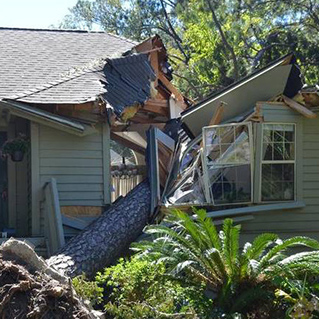
Nov. 19, 2016 In the aftermath of Hurricane Matthew’s destruction in Beaufort County, The Island Packet and The Beaufort Gazette asked local leaders and others to weigh in on what went well and what could have gone better. Lessons emerged that may better prepare us for when the next hurricane hits. | READ
Beaufort County debris cleanup
As of Sunday, more than 1.1 million cubic yards of storm debris had been removed from Beaufort County, not including Hilton Head Island, according to a county release.
The second pass for debris-removal operations is nearing completion for approximately 85 percent of the county, the release said. The third and final stage will begin Jan. 3 for those areas after a holiday break.
Any remaining hurricane-generated debris should be placed on rights-of-way, according to the release.
Debris removal by county contractors is limited by federal law, the release said. Leaves and small limbs should be disposed of in the same way yard waste is normally discarded.
Christmas trees are not allowed on rights-of-way and may be disposed of at any county convenience center, according to the release.
Residents can visit the Beaufort County Disaster Recovery website for more information.
This story was originally published December 21, 2016 at 3:47 PM with the headline "Hilton Head doesn’t want this No. 1 ranking."