
Pull, tug and mow all you want. This Lowcountry plant will still get the best of you
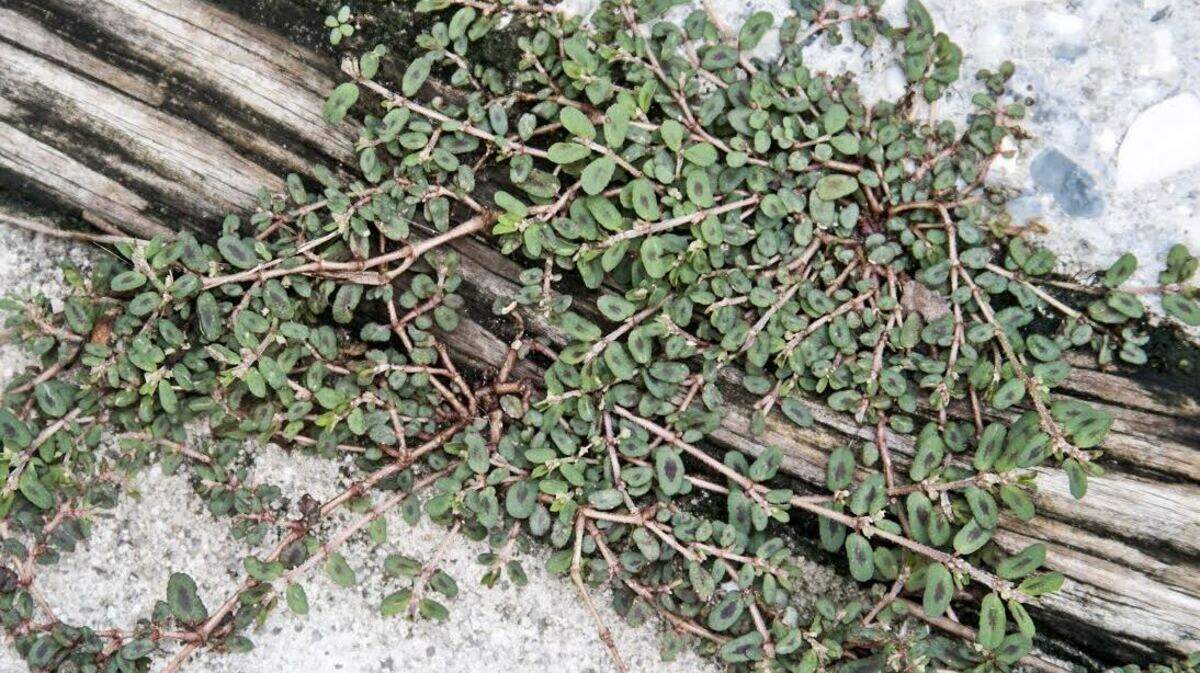
Spotted spurge, or Euphorbia (Chamaesyce) maculata, is a tenacious, mat-like plant that you may have noticed spreading over parts of your yard or driveway ever since the weather turned warm.
Neither heavy rainfall nor periods of drought seem to deter it, at least at our house.
The plant grows from a long taproot, with a dense cluster of pinkish stems radiating out at ground level. If broken, the stems emit a milky juice that can be irritating to the skin, mouth, and eyes. Each tiny green leaf bears a conspicuous reddish spot. You have to look closely to see the minuscule flowers, which are pinkish white.
A native plant, spotted spurge is common throughout much of the United States. Along with some 7,500 other species, it’s a member of the spurge family (Euphorbiacae), which also includes cassava, poinsettia, croton, and castor bean.
Spotted spurge isn’t picky about growing conditions, so you’ll see it everywhere — from roadsides, sidewalks, and waste areas to suburban lawns and gardens. In fact, it thrives where many other plants can’t grow. For this sprawling weed, even a narrow crack in your driveway presents few challenges. With time, soil and debris will accumulate in the crack, a little rain will fall, and a spurge seed may take root and survive.
Although I routinely pull out handfuls of invading spurge myself, I can’t help but appreciate the resilience of this little plant. You can stomp on it or try to mow it down, but thanks to its mat-like growth form, spurge tends to survive with a minimum of damage. You can spend hours weeding, but unnoticed bits of stem left behind will regenerate. And the slender root at the center of each mat can extend two feet into the soil, allowing the plant to thrive even in the driest of conditions.
Like many other annual weeds, spotted spurge is killed by frost, but it grows at top speed during hot, sunny weather. A single plant can produce thousands of new seeds only five weeks after it germinates. The seeds get sticky when it rains, adhering to the feet of humans and other animals, as well as to vehicles, thus distributing the plant widely.
All of which is to say that spotted spurge may continue to get the better of us.
This story was originally published June 18, 2018 at 7:21 AM with the headline "Pull, tug and mow all you want. This Lowcountry plant will still get the best of you."