
Expect these fuzzy guys to pitch silky tents in the trees around your Lowcountry home
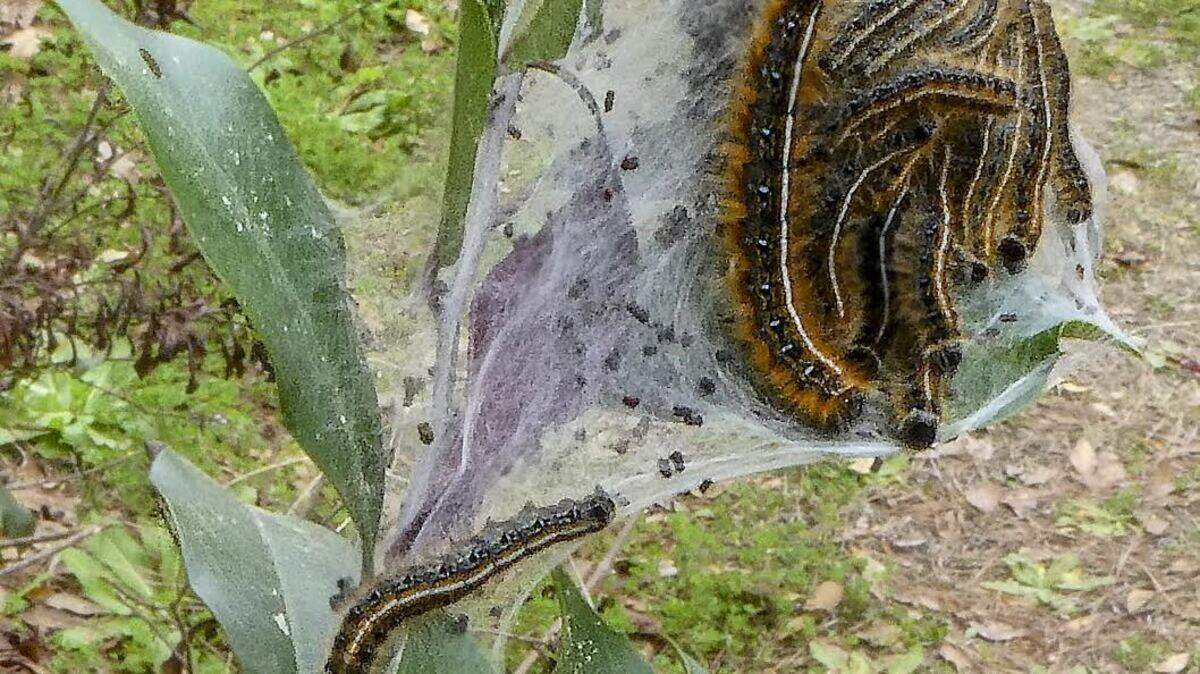
Warmer weather has arrived, and so have tent caterpillars.
These are moth larvae that build silken, communal nests in the crotches of trees just as new green leaves – prime caterpillar food -- are starting to appear. Worldwide there are 26 different species, including the familiar Eastern tent caterpillar (Malacasoma americanum), widespread throughout the eastern and central U.S. The larvae are about two inches long when fully grown, with prominent hairs, a white stripe on the back, and blue dots along the sides.
Cherry trees are typical hosts for nests, but tent caterpillars are also found on various other trees, including peach, pear, oak, poplar, willow, maple, and sweet gum.
In early spring, the tiny larvae emerge en masse from a shiny, hardened egg case that a female moth attached to a twig the previous summer. Wasting no time, the newly- hatched caterpillars – there may be several hundred per egg batch – start releasing silk from tiny organs near their mouths. Their collective efforts produce a sprawling sac-like “web” that will serve as a communal nest for the next 6-8 weeks.
A tent caterpillar nest is typically oriented so as to maximize exposure to the morning sun. Internally it’s multi-layered, with a series of silken chambers, some tending to be warmer than others. During cool days, the caterpillars huddle together on top of the nest or bask within the warmer chambers directly exposed to the sun. Scientists have found that the insects need an internal temperature of at least 59 degrees F to digest their leafy meals. If larvae get too hot, they move to cooler chambers, or they go on top of the nest and seek spots in the shade.
When not resting or nest-building, tent caterpillars eat nonstop during much of the day, streaming out from the nest in search of fresh leaves. While crawling, the larvae lay down silken trails laced with a distinctive scent. These chemical pathways help them find their way home, as well as guide other nest mates to new feeding sites. As the caterpillars grow larger, the nest fills up with shed skins and fecal pellets. Meanwhile, the larvae keep expanding the structure by adding more layers of silk.
Once fully grown, larvae disperse from the nest and construct silken cocoons in leaf litter on the ground or in other protected places. The adults – small, brown moths - emerge several weeks later. Soon they will pair up, mate, and die. But before their death, females will have attached egg masses to suitable host trees. These will hatch next spring, thus continuing the cycle.
Homeowners tend to find tent caterpillar nests unsightly, and they may worry about the future health of their defoliated trees. Generally, however, the damage is temporary, since the trees will grow new leaves to replace the ones lost.
And from a biological perspective, tent caterpillars offer rich areas for research. Social behavior in caterpillars is rare in butterflies and moths, recorded in only 300 of about 300,000 known species. Only a dozen or so, including Eastern tent caterpillars, have been well studied.
This story was originally published March 14, 2018 at 8:42 AM with the headline "Expect these fuzzy guys to pitch silky tents in the trees around your Lowcountry home."