Flounder population hits historic low in SC. What local biologists propose to fix it
Pursuing southern flounder in brackish waters of salt marshes and rivers is a popular pastime in Beaufort County and across South Carolina.
But the population of the unusual fish that has two eyes on its left side and swims sideways is markedly declining.
New fishing restrictions went into effect in July in South Carolina to address the problem. And another effort, this one based in Beaufort County, is under way to increase the population of the popular, bottom-dwelling finfish that fools its prey by disguising itself.
A $5 million program at South Carolina Department of Natural Resource’s Waddell Mariculture Center in Bluffton could one day lead to the production of millions of hatchery-reared southern flounder to bolster flagging wild populations.
The center on Port Royal Sound conducts research on growing different marine species in ponds and stocking those fish to enhance wild populations. It is already stocking red drum and cobia in state waters.
Now it is in the preliminary stages of building a stock enhancement program for southern flounder, but it will be tricky.
Flat fish, which spend most of their life swimming or lying on water bottoms on their side, require precise environmental conditions during hatchery production, SCDNR says. And in the past, hatchery offspring often ended up all male, partially albino or otherwise unlikely to survive.
“We have a lot of questions we need to answer before we can start putting fish back in the water,” Joey Ballenger, manager of SCDNR’s Inshore Fisheries Research Section, told the Beaufort Gazette and Island Packet.
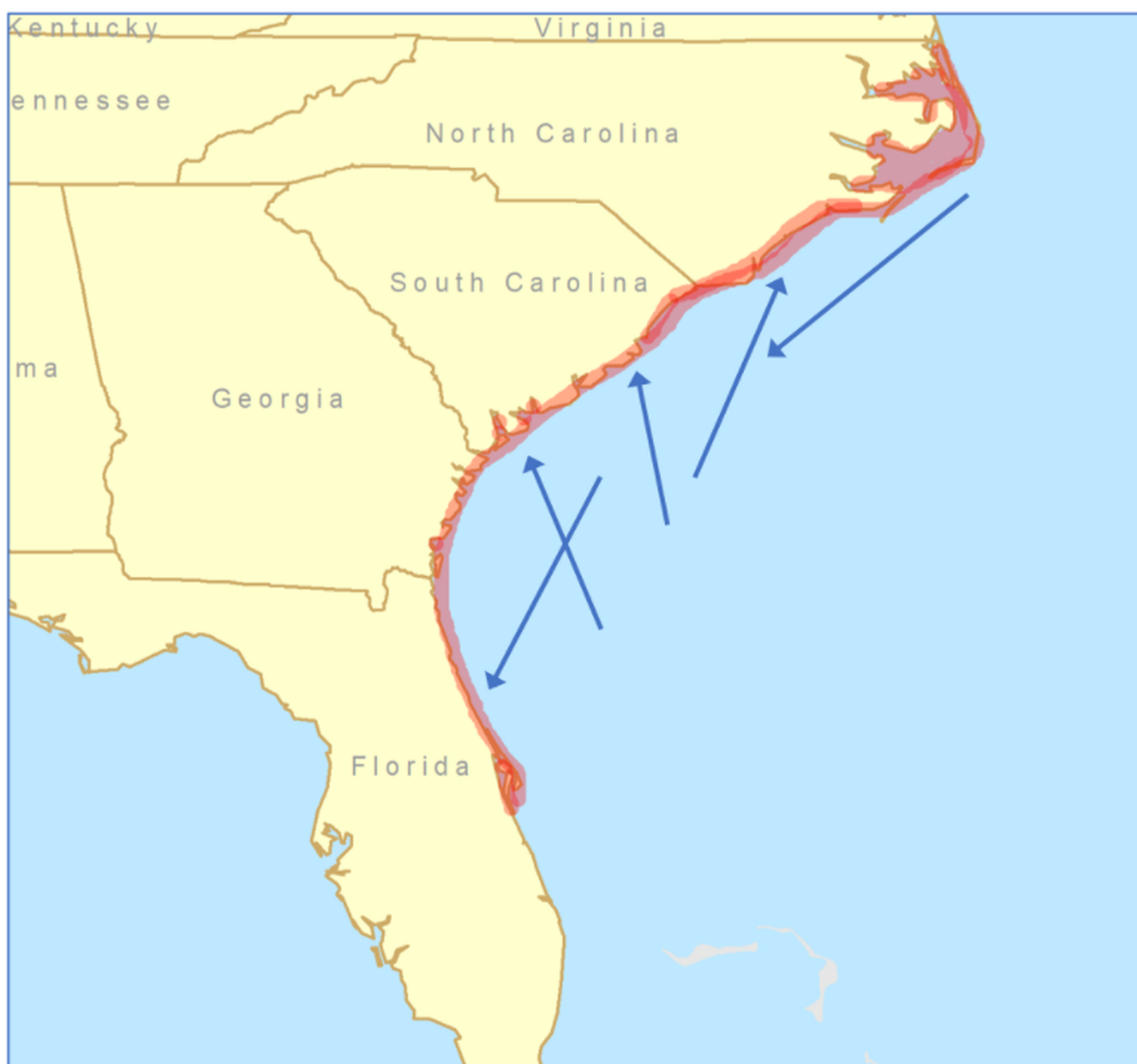
The first regional assessment of flounder, published in 2019, found numbers at historically low levels and a 20-year decline, primarily due to overfishing.
The flounder population is regional, Bellenger notes, with fish located in the waters off the Atlantic Coast from the Carolinas to Florida. “There is mixing all up and down the coast,” he says.
The study also said that rebuilding the flounder fishery in 10 years would require a drastic 72% reduction in coast-wide harvest annually. For a theoretical harvest of 1,000 pounds, that would be a reduction to 280 pounds.
“Obviously, from a resource management agency perspective, we don’t want to see a decline of this nature in any of our resources,” Ballenger said.
Declines in the population of wild southern flounder from the Carolinas to Florida are prompting states to implement new rules to curb the fishing harvest.
In South Carolina, state lawmakers, at the urging of SCDNR fisheries biologists, passed more stringent flounder regulations, limiting the number caught by any method to five per person and increasing the minimum size of “keeper” to 16 inches (it had been 15). Those regulations went into effect July 1.
And last month, SCDNR conservation officers in Beaufort County charged five people following a major investigation into the illegal commercial harvest and sale of flounder and other saltwater finfish species. Charged were two Bluffton men and a Georgia man who, while gig fishing, allegedly caught too many fish, including flounder, that were too small. Staff at Hudson’s Seafood House and ELA’s on the Water restaurants on Hilton Head Island, and the Maiz Taqueria Food Truck in Bluffton also were cited.
Flounder research and the stocking effort at Waddell also could be part of the solution, the SCDNR says.
Red drum and cobia stocking programs pioneered protocols for responsibly stocking saltwater fish over the past 30 years, the agency says.
Biologists estimate as many as 50 million to 100 million young flounder would need to be stocked annually to rebuild South Carolina’s diminished population.
Studies are now under way to ensure hatchery-raised fish have the same genetic makeup as wild populations to avoid unintended harm, Ballenger said. Completing the baseline genetics research will take three to four years.
It will take four to five years before fish are released.
Waddell, one of the country’s largest and most sophisticated facilities for mariculture research, is located on the Colleton River. Its 1,200-acre physical plant, which includes ponds and tanks, allows researchers to expand laboratory work to commercial scale.
For the flounder work, an estimated $5 million is needed to retrofit and repair Waddell’s facilities to allow for maximum production, in addition to $753,000 annually to cover ongoing program costs, SCDNR says.
Funding for the planned upgrades was OK’d in the state budget this year, while the flounder stocking program will be funded through a recent increase in recreational saltwater license fees, also passed by the Legislature.
Ballenger said the work is in the preliminary stages.
For the project, wild flounder are being collected across the state. They will serve as offspring-producing “brood stock” at the Bluffton center. The hope is some of the brood stock will spawn this winter, but it depends on how well the fish take to the new environment, Ballenger said. Flounder spawn in late December through early March.
Because female flounder produce far fewer eggs than red drum, a flounder stocking program will require as many as 1,500 of female brood stock. By comparison, SCDNR currently maintains 20 female red drum brood stock.
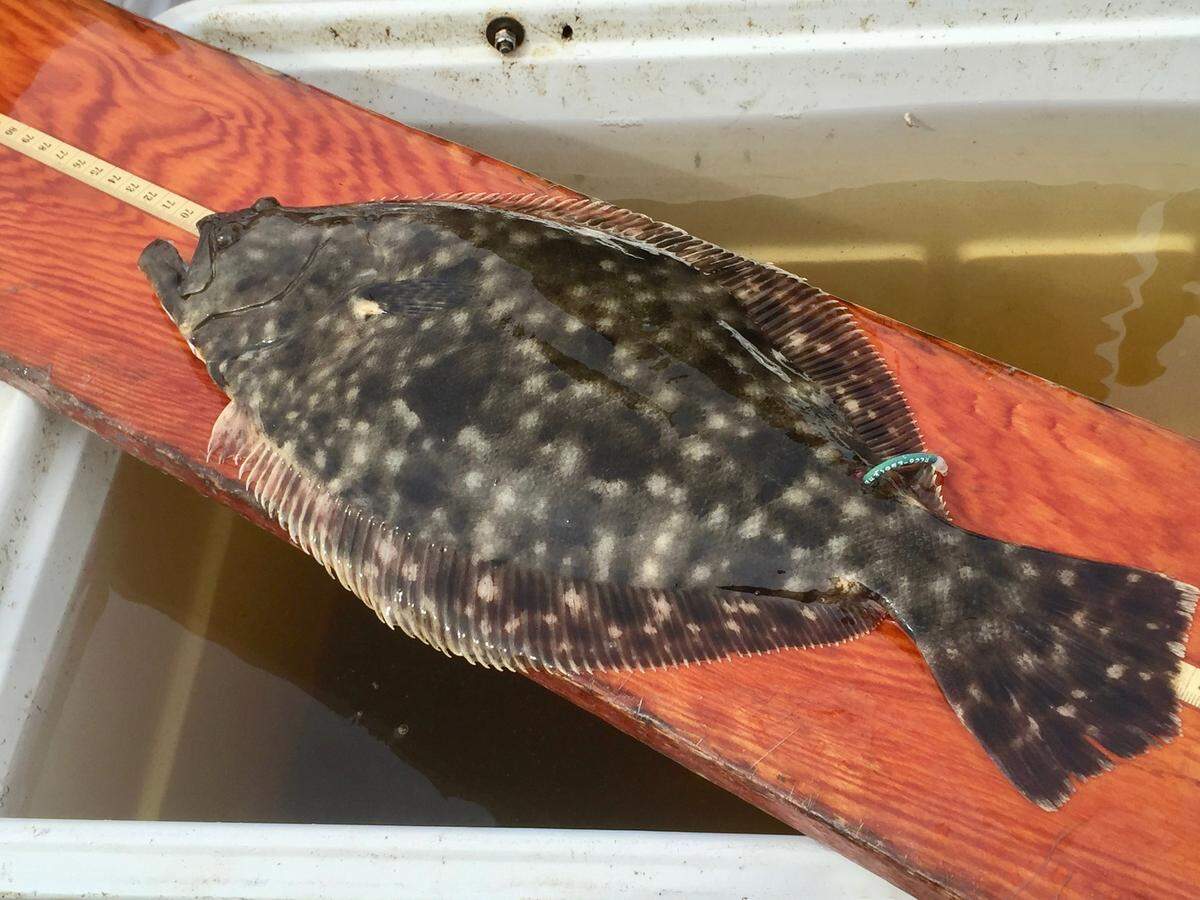
One of its interesting qualities is that females grow much larger than the males. The largest males in South Carolina grow to 12 inches, and “that’s pushing it,” Ballenger says. Females, meanwhile, can approach 30 inches long.Flounder love the salt marsh habitat and hang out in brackish water, around marsh edges and rivers.
That means that the state’s entire fishery is dependent on females because keepers must be at least 16 inches. “Males don’t ever reach that size,” Ballenger said. The size difference comes down to how many eggs the females can produce, with a bigger body allowing more eggs, Ballenger says.
Southern flounder also are somewhat unusual in that they move offshore to spawn, compared to other species that spawn in estuaries, Ballenger says. Biologists aren’t sure where they go to spawn, he said.
Capt. Michael Paul Thomas, of SCDNR’s coastal Region 4, says flounder rely on camouflage to protect themselves, lying flat on the bottom and blending in with sediment before ambushing fish and shrimp.
Gigging at night, when the salt marshes and rivers are alive with life, is one popular technique used to catch them, he says.
“A shark may come cruising by,” Thomas says of fishing at night. “You never know what you are going to see.”
Gigging one way to catch flounder
Gigging involves patrolling shallow water in flat-bottomed boats with lights that illuminate the water — and flounder. Long poles with attached prongs are then used to catch them.
Since the new flounder rules went into effect, Thomas thinks most fishermen are being extra cautious to avoid catching fish that are too small. Undersized fish can be returned to the water, even if they have been stabbed. Officers conduct regular patrols, including at night, he said.
“We do our best to get the word out,” Thomas says SCDNR conservation officers and the new rules.