Matt Rhule’s process worked at Baylor and Temple. The difference with Panthers is this
READ MORE
Panthers at Saints
Expanded coverage of Carolina’s Week 17 NFL game.
Expand All
Panthers’ owner David Tepper has a dilemma.
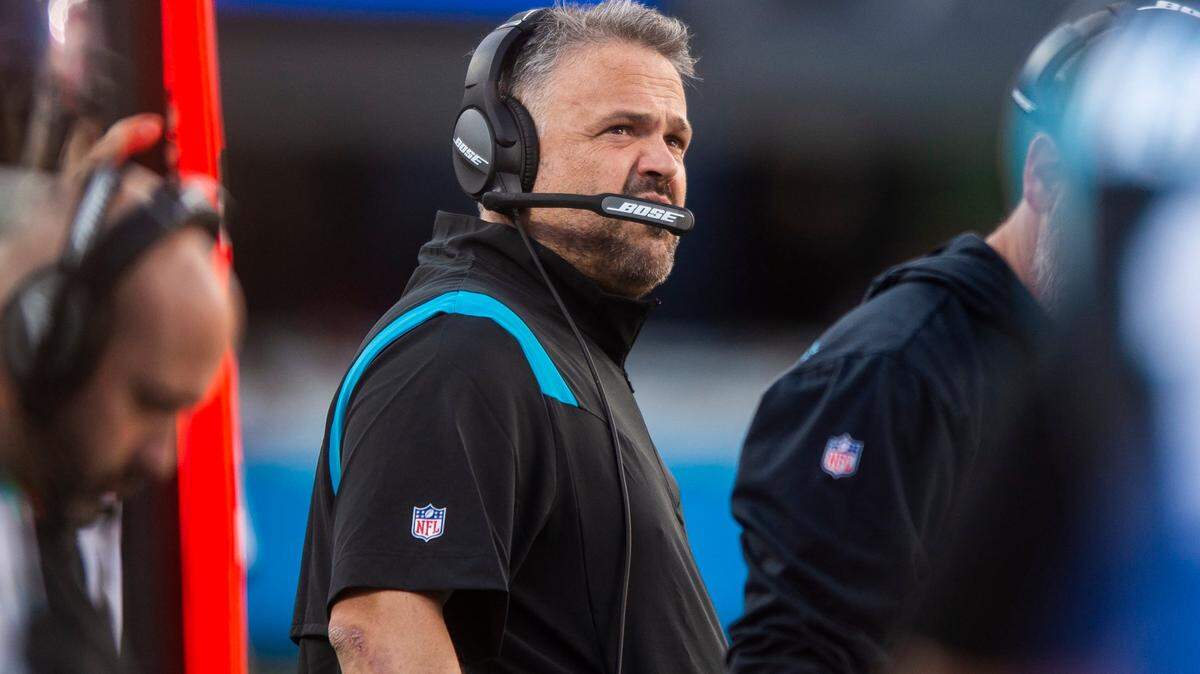
On one hand, the coach he signed less than two years ago to a seven-year, $62 million deal was booed out of Bank America Stadium last Sunday following a 32-6 loss. Chants of “Fire Rhule” broke out in a small pocket of the stadium, loud enough to hear from the press box. Tepper probably heard, too.
After the game, Rhule defended his process (and his job) in a long-winded press conference where he referenced “The Fresh Prince of Bel-Air,” to explain how he inherited a barren roster. And he also mentioned Jay-Z, laying a blueprint for how long finding success can take.
“We have some key areas that we have to fix. Whether that is to coach them better. To do better organizationally. But I believe it is one-thousand percent working, I just know no one can see it and I apologize,” Rhule said. “As I tell our team all the time, it took Jay-Z seven years. Seven years. He had to start his own agency to become famous, to become an overnight sensation. It takes time.”
On Tepper’s other hand sits patience. Keeping Rhule around for his storied Year 3 turnarounds is exactly what enticed Tepper to hire Rhule in the first place. But things are trending in the wrong direction.
Carolina has lost five straight and 10 of its last 12 games. Panthers’ fans haven’t seen a home win since September and winning at this point only hurts their chances of a higher first-round pick.
Why hasn’t Rhule’s program building and rebranding project in Carolina worked through two seasons? Let’s unpack what went right for Rhule at Temple and Baylor, compared to his situation with the Panthers, before deciphering what it’ll take for a Year 3 turnaround.
Year 2 at Baylor and Temple vs. Carolina
At Temple, the Owls won 10 games in Rhule’s third season, highlighted by a 17-point season-opening win against his Alma mater Penn State. Temple parlayed that victory into a seven-game winning streak before losing by four to No. 9-ranked Notre Dame.
Rhule and the Owls upset the Nittany Lions by gradually building toward that moment. A similar process unfolded at Baylor when Rhule took over a shattered program, only to win the Big 12 Conference three years later.
Two steady through lines followed Rhule at Temple and to Baylor. At both stops, he landed a starting quarterback and stuck with him through his entire tenure. And he hired excellent assistant coaches.
“The secret sauce with a lot of this stuff is the fact that he has Phil Snow as his right-hand man. That’s what I’m looking at the data when I’m looking at film, how these teams perform,” Pro Football Focus analyst Diante Lee told The Observer. “You know, there is a heavy tilt, especially during his tenure at the college level, towards getting a high level of defensive play, almost from the time that he stepped in the door. And certainly by Year 2.”
Snow, a football lifer with more than 40 years of coaching experience, has been Rhule’s defensive coordinator since 2013 and built top-ranked defenses at Temple and Baylor. With the Owls, Snow deployed a traditional four-down system. Then at Baylor, he installed a unique three-high safety shell behind a three-man front.
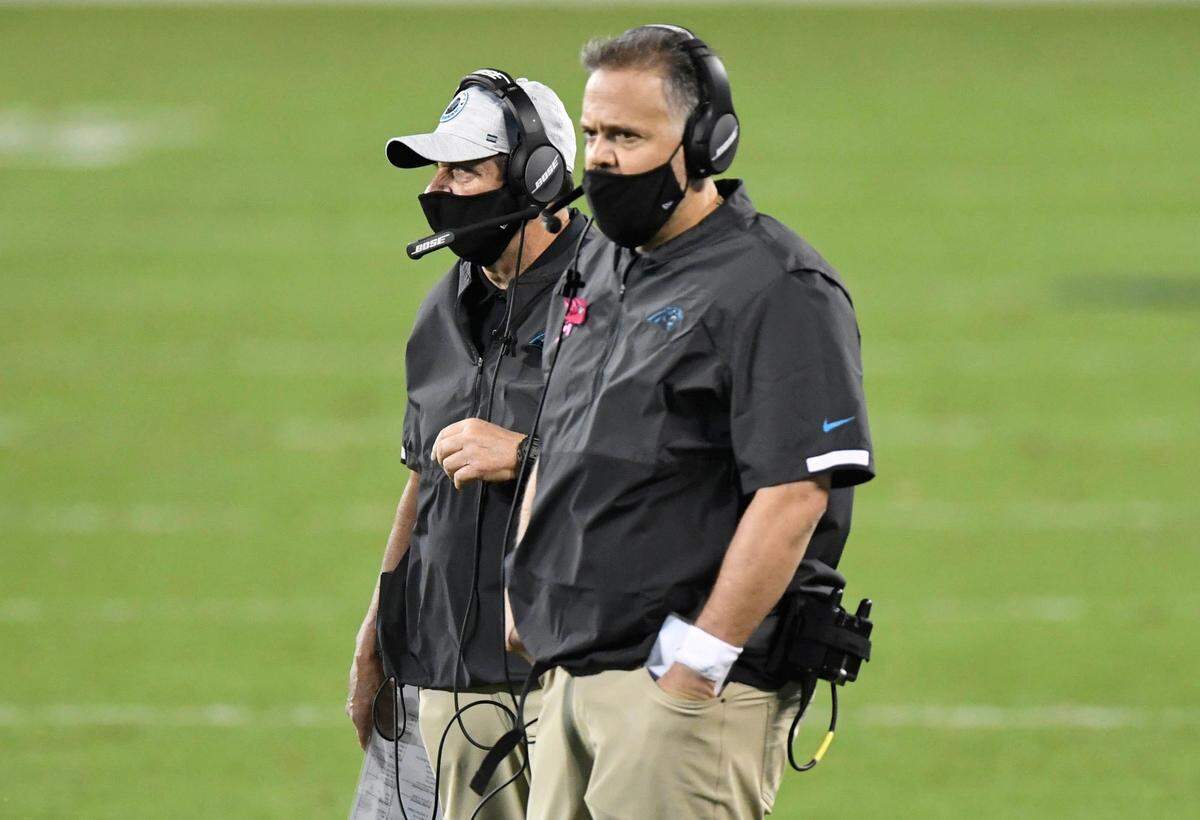
In Carolina, Rhule often highlights Snow’s defense as an example of progress. According to Football Outsiders DVOA metric, the Panthers’ defense ranks 12th overall, 20th against the run and ninth against the pass.
As Snow keeps reinventing his defense, it’s the offense that cannot keep up. That wasn’t the case at Temple or Baylor because Rhule found his quarterback early. By Year 2, P.J. Walker (Temple) and Charlie Brewer (Baylor) had overcome challenging freshmen seasons by developing a controlling grasp of the offense.
Temple started Rhule’s second season with a 4-1 record before losing five of their last seven games. Still, the Owls finished with a plus-six point differential and were 6-6. The Bears never lost more than two consecutive games in Rhule’s Year 2 and improved their point differential from minus-11 to only minus-2.

“The distance between what it takes to go from maybe decent to good, then good to great at the college level is just different than what we’re talking about with pros,” Lee said. “If you got warts, they’re going to be exposed. And that’s what we’ve seen with Sam Darnold. We saw it with Teddy Bridgewater, the year prior. We see it with what they have upfront, in terms of their talent.”
The Panthers did not score a touchdown last week against Tampa Bay, marking the fourth time they’ve been held without an offensive touchdown this season. Unsurprisingly, Carolina averages a non-threatening 18.5 points per game (sixth-lowest) and carries an offensive DVOA better only than the Houston Texans. Their point differential is nearly 14 points.
Quarterback play and leaky protection are largely to blame. Carolina has started three different quarterbacks and been forced to use 11 different starting offensive line combinations in 15 games. Simply, the offensive consistency Rhule built at the college level hasn’t materialized in the pros because of what Lee described as a shortened developmental runway.
In college, players redshirt, making it easier to protect quarterbacks as they grow into a system. Rhule configured his offense for Walker and Brewer, allowing them to mature behind talented defenses.
Rhule is not building momentum during his second season like he did in college. Compared to previous Panthers’ head coaches he’s not holding serve either. Ron Rivera finished his Year 2 winning five of six games. Of course, John Fox pushed Carolina to Super Bowl 38.
Of the four other head coaches hired in 2020, Rhule has seven fewer wins than Cowboys coach Mike McCarthy, eight fewer than the Browns’ Kevin Stefanski and only one fewer than Rivera (Washington). Rhule and Giants coach Joe Judge have identical 10-21 records. It’s no coincidence both are feeling their seats warm up heading into the offseason.
“The pro level is all about the ability to pivot,” Lee said. “As confusing as it was to let Joe Brady go, if (Rhule) feels like the offense is a problem, then the right move is to let go of your offensive coordinator when you have the opportunity to do so. What does that mean for the offense? We have to evaluate it going into next season.”
Is Year 3 worth the wait?
Earlier this week, Rhule said Tepper continues to privately show him support. From signing Cam Newton to firing former offensive coordinator Joe Brady, Tepper has signed off as Rhule and general manager Scott Fitterer made major decisions.
But Rhule is running out of time to prove his Year 3 vision is worth the wait.
Interim play-caller Jeff Nixon took over for Brady entering Week 14. The Panthers’ offense hasn’t improved and it seems certain changes among Rhule’s offensive staff are coming.
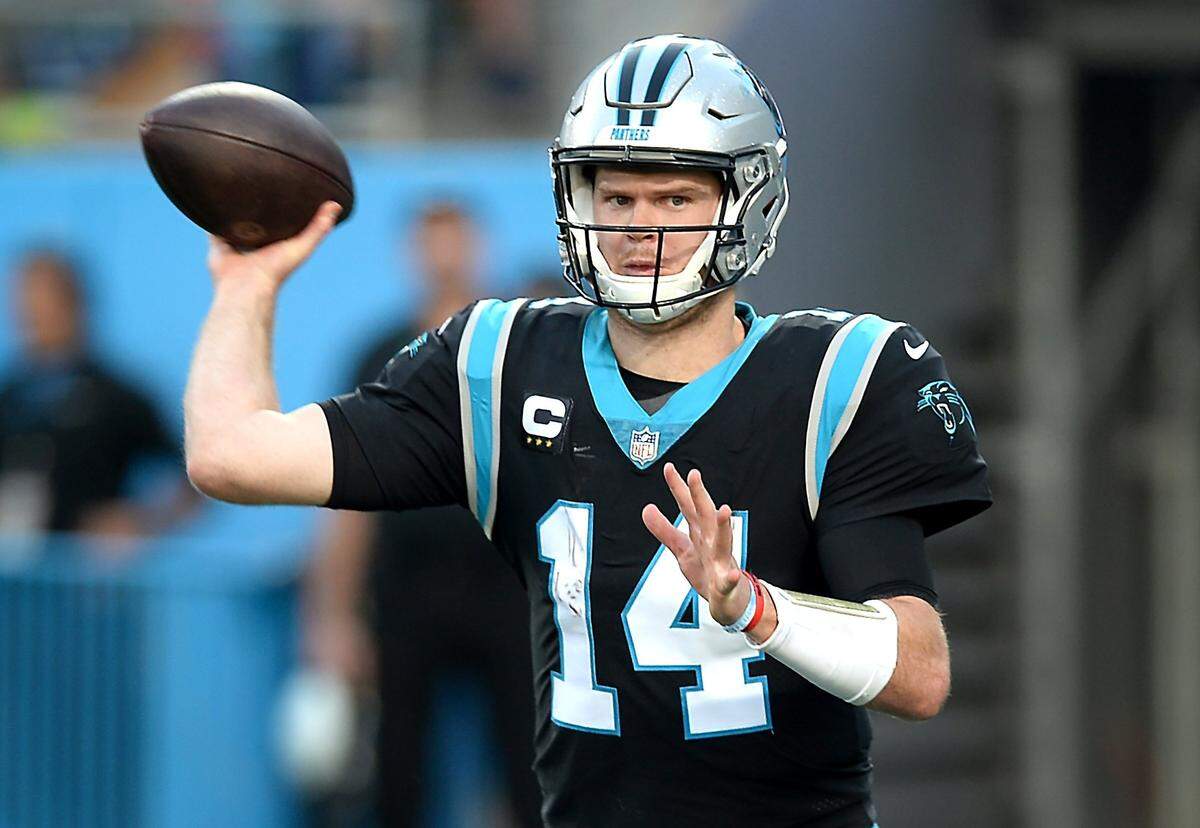
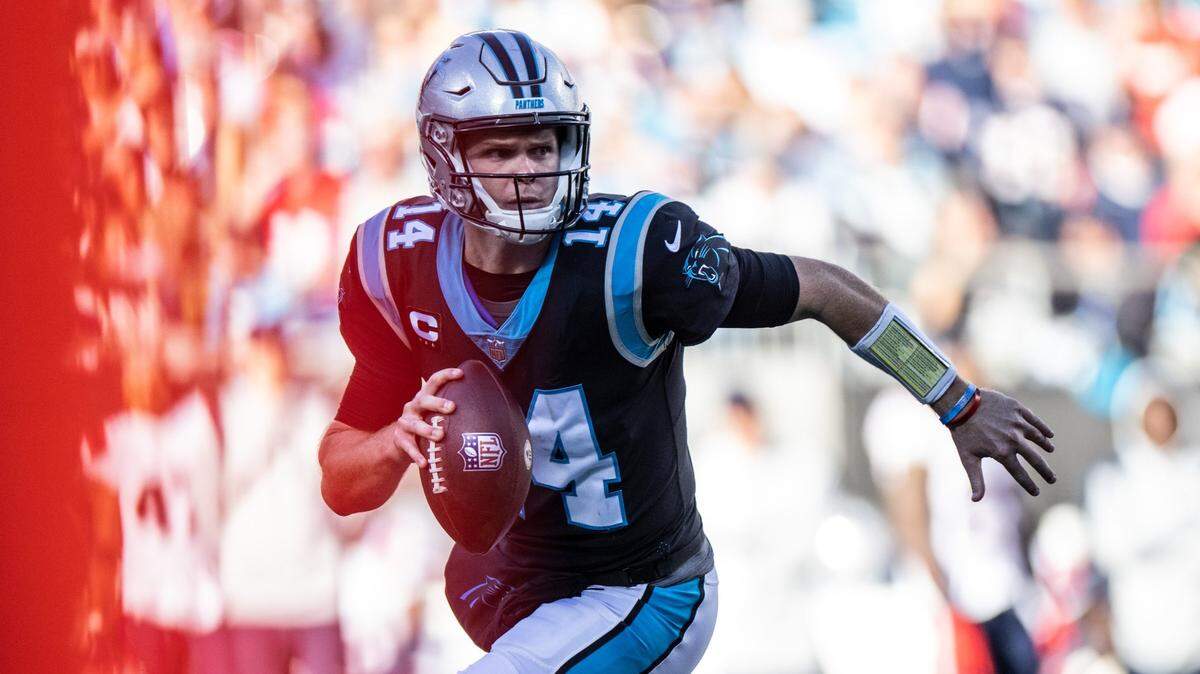
Darnold will start Sunday against New Orleans in place of Newton. The former 2015 NFL MVP completed just 47% of his passes in four starts, accounted for six turnovers and had a passer rating slightly lower than his completion percentage (44.5).
Many of the Panthers’ issues are self-inflicted. Carolina prematurely exercised Darnold’s fifth-year option in May. Before that, the team selected cornerback Jaycee Horn instead of a quarterback or offensive linemen. Horn may be a blue-chip talent but he broke his foot in September and hasn’t played since.
If Rhule survives these next two games then he’ll have a daunting task of remaking the offensive line, finding a starting quarterback and reshaping his offensive staff. He and Fitterer will have to do so with only one pick inside the top 100 (a first-round selection) and about $29 million in projected salary cap (19th most).
Whomever Rhule hires to fix the offense is equally important to the talent acquired in free agency and the draft. He’s operating on a thin margin of error, unable to afford future mistakes while facing a high degree of difficulty entering Year 3.
“Whatever hires you’re making for this staff, it has to be a hit. It can’t just look OK the first year then get better down the line,” Lee said. “This is going to basically be a referendum one, what this coaching staff is more so than whether or not they can get the influx of talent to make it happen.”
This story was originally published January 2, 2022 at 7:00 AM with the headline "Matt Rhule’s process worked at Baylor and Temple. The difference with Panthers is this."
.JPG)
.JPG)
.JPG)