How Hornets forward Nic Batum faced his father’s death and his own fear of dying young
READ MORE
Hornets in Paris
Expanded coverage of Charlotte’s trip overseas
Expand All
No one recalls Richard Batum ever being sick.
A rugged power forward in the second division of France’s pro basketball leagues — the tough guy always ready for a fight — he got fouled that night in 1991, with his wife and son watching from the stands.
He went to the foul line for free throws. Then, with no warning he was ill, he collapsed to the floor.
“Gone! Like that,” Nicolas Batum recalled with a finger-snap, of his father’s sudden death at 30 of a still undetermined cause.
That’s Batum’s first memory. His worst memory. He was 2 1/2 years old then, and had no idea that moment would one day almost derail his career.
“I had to grow up with this,” Batum, now 31, recalled. “People asking, ‘Will this happen to Nico?’ And then it all came back again before the draft.”
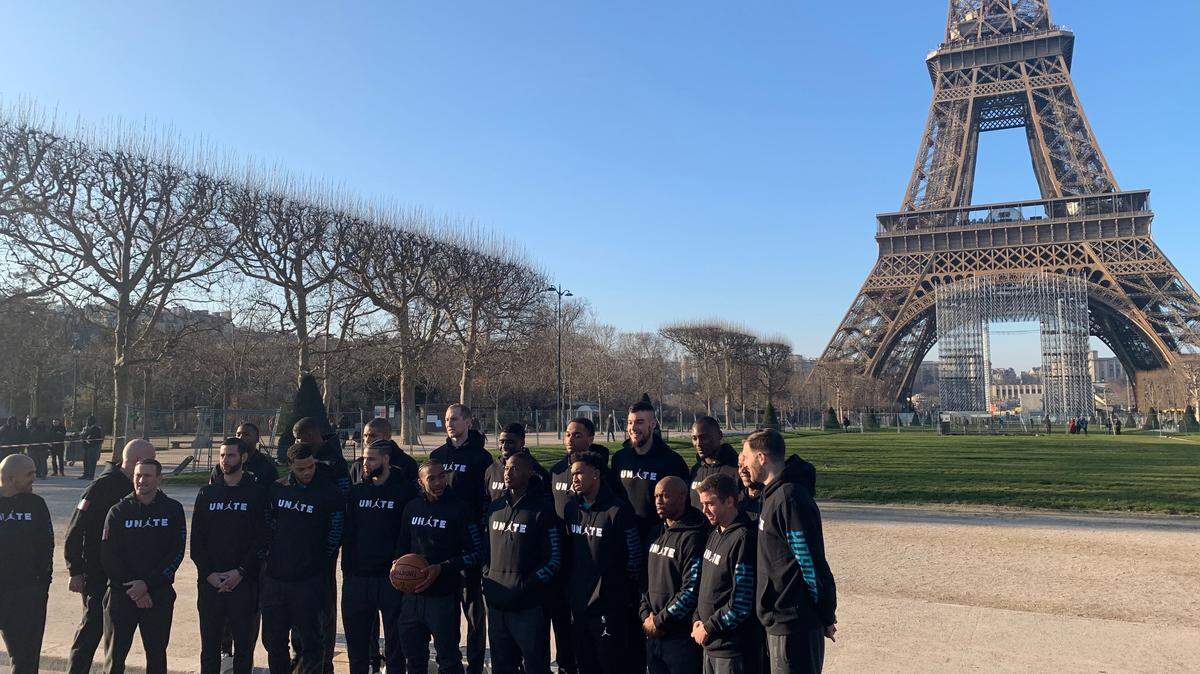
With the Hornets playing the Milwaukee Bucks on Friday in the NBA’s first regular-season game in Paris, Batum and his Paris-based agent, Bouna N’diaye, discussed in detail with the Observer how Richard Batum’s early death sparked a young Nic in basketball, how its aftereffect could have ended his NBA career before it started, and how the memory haunted Nic when his son, Ayden, was an infant.
Death and after death
Nic turned 31 in December.
“So many people in my family were scared for me. I made it” past his father’s passing, Batum said.
That fear — would he, too, die young? — surfaced consciously and subconsciously for many years. While he was just beyond infancy — his younger sister a month old — Batum recalls watching his father’s death as if the funeral was last week.
“I remember it all. When you see your dad die before your eyes, it’s so difficult to grow up with,” Batum said.
Television crews surrounded their home the next day. Batum couldn’t comprehend the finality of it all, that his father had passed away.
“It’s a hard thing to grow up with,” he said. “I had to do something for him.
“ ... I started playing very early. I felt I had to do something in basketball to finish it.”
Batum grew up in a small town in the Normandy region, and it quickly became apparent he had the basketball talent his dad possessed.
At 12, he was sent to a school with sports specialization to practice daily. By 14, he was playing and living in Le Mans, a 90-minute drive from his home, effectively an apprentice professional, coming home only on occasional vacations when his team and national age-group obligations allowed.
“You can’t be a normal teenager,” Batum said of his upbringing. “You finish school in May or June and then you go straight to national team to prepare for Eurobasket. Then, training camp starts in August. You maybe have 10 days” to be a kid.
But the trade-off felt worth it when 19-year-old Batum, now 6-foot-8, was on the NBA’s radar. Tony Parker, six years older, had shown with the San Antonio Spurs that Frenchmen could be NBA-ready. (One of Batum’s dreams was to play with Parker, which happened last season with the Hornets.)
Batum traveled to North America for the standard workouts and physicals that precede every draft. That’s when his career nearly unraveled.
‘Why me? Why now!’
Batum wept uncontrollably in June 2008, repeating, “Why me? Why now?”
N’diaye, who represents numerous French players, including Utah Jazz star Rudy Gobert, replied, “Trust me. We will still make it happen.”
Batum’s draft status was crumbling. An electrocardiogram raised concern during his workout with the Raptors, and Toronto’s team physician asked if any of Batum’s family members had heart issues or had died young. Batum told the Raptors about his father dying at 30. That set off pre-draft concern around the league.
“He was red-flagged — no one would work him out,” N’diaye recalled of the reaction.
As if that wasn’t bad enough, Batum felt the NBA was questioning his integrity: “I had to prove I was in good condition. I was accused, like, ‘He’s ready to lie about his dad’s death for money!’ I was 19 years old and new to this country. I was talking to my mom every day” in a panic.
N’diaye sent Batum to an elite hospital — the Cleveland Clinic — for an expedited workup. A heart specialist found nothing of concern, but before making a final appraisal, he needed the records of Richard Batum’s death.
Except there were none.
No autopsy had been performed. His official cause of death was unknown. The presumption was either a heart attack or a ruptured aneurysm, but the Cleveland doctor needed more clarity. They eventually tracked down the doctor who pronounced Richard Batum’s death; he’d retired and moved to Africa.
Batum and N’diaye joined a conference call with the two doctors conferring on what might have caused Richard Batum’s death.
“Just bizarre. There was no way to make this easy,” N’diaye said of that call. “Nic’s mom had never really talked about exactly what happened, and he was just a baby at the time. This was his first time with doctors” speculating as to what occurred.
There seemed a real possibility Batum would go undrafted.
“It really did feel like, ‘Either you’ll (be cleared to) play basketball, or go home and do something else entirely.’ ” Batum said. “That was the toughest moment of my life.”
The doctor in Cleveland signed off on Batum’s health, but that wasn’t sufficient to stop his potential drift in the draft. N’diaye started calling teams with later first-round picks. Batum’s draft ceiling was torn away, through no fault of his own; it was time to find his floor.
“Two days before the draft, I was no longer sure he’d be picked by a team in the first round,” N’daiye recalled. “I always knew the Spurs were interested, particularly with Tony Parker’s success, so I called R.C. (Buford, the Spurs general manager). He said, ‘We love him as a basketball player. We just need to know’ he’s healthy long-term.
Buford got Batum to a second specialist in Texas, who also signed off on his health. He was drafted 25th overall — six spots before the end of the first round, and one spot before the Spurs’ pick — by the Houston Rockets, but headed to the Portland Trail Blazers in a prearranged trade.
Batum started as a rookie and through most of his seven seasons in Portland. He had a career-best season with the Hornets following a 2015 trade. That resulted in N’diaye negotiating a five-year, $120 million contract, still the largest in Charlotte sports history.
Through all that — a decade as an NBA starter, getting married and having a son — Batum never quite shook the fear that his DNA destined him for an early death.
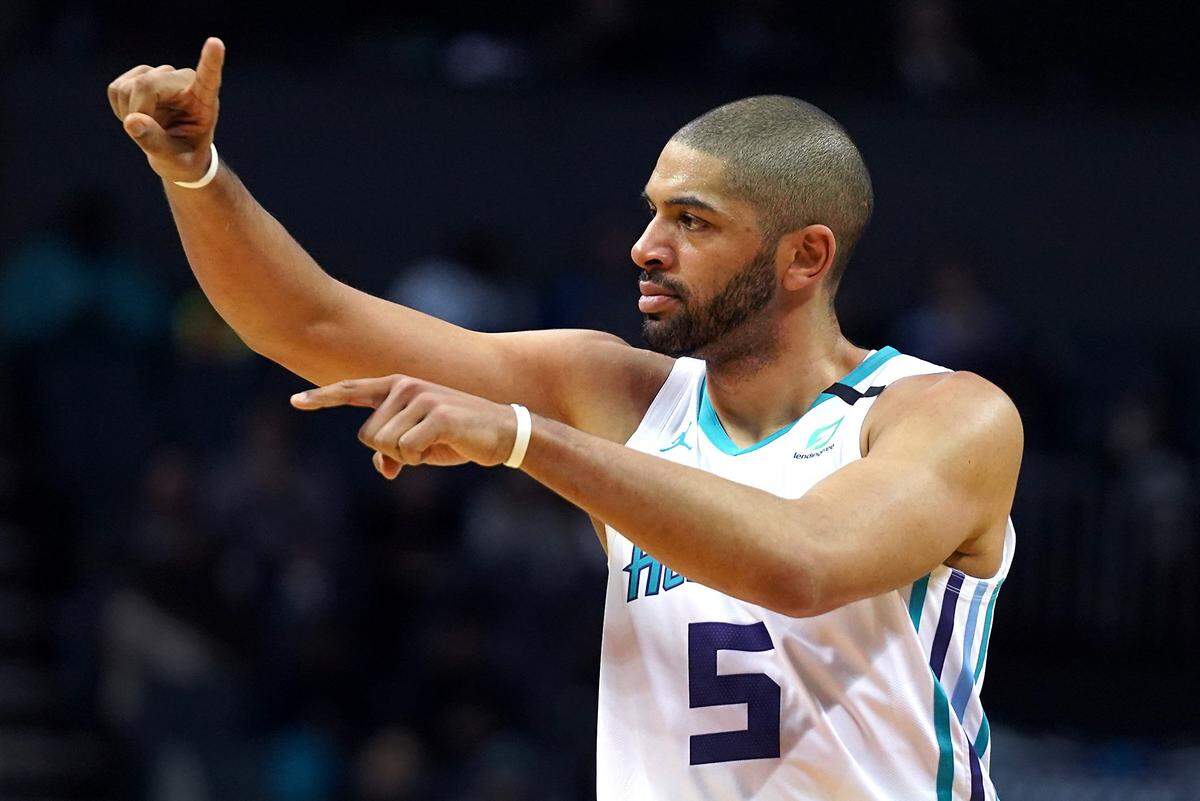
‘What if this happens to Nico?’
Growing up, Batum grew used to people knowing him as the kid whose dad died on the basketball court. When he came to the United States, he was often reminded of Hank Gathers, who collapsed and died in 1990 while playing for Loyola Marymount.
This wasn’t just strangers adding to Batum’s latent fears, it was those close to him: “So many members of my family were scared for me (growing up, saying), ‘What if this happens to Nico?’ ”
His fear came to a head in late summer 2016, with Batum playing for France in the Olympics in Brazil. For the first time, his wife, Aurelie, and his son, Ayden (whose middle name is Richard) were both in the stands to watch him play — eerily similar to his recollection of his father’s last day.
“I thought, ‘Whoa!’ That was tough,’ ” Batum said. “My Dad died at 30 years old. He’d never had health issues, ever. And he goes like that!
“... My family said, ‘Nic, stop thinking about that: That won’t happen to you!’ But it bothered me sometimes on the court. It’s just ‘Why?’ ”
In December, Batum’s 31st birthday provided a closure of sorts:
“I’m 31 — I’m older than him. Now I could say, ‘You made it. You’re free.’
“It’s over.”
This story was originally published January 21, 2020 at 6:00 AM with the headline "How Hornets forward Nic Batum faced his father’s death and his own fear of dying young."

.JPG)