You want to become a part of Beaufort Co.? Then stop keeping secrets from the public | Opinion
The Town of Yemassee is shaped a bit like a unicycle.
Two-thirds of it — the seat, frame and top of the wheel — is in Hampton County.
The other third — the bottom of the wheel — is in Beaufort County.
And if we were to zoom out on the map just a pinch, we’d find that this unicycle is dragging something behind it by a very long piece of a string.
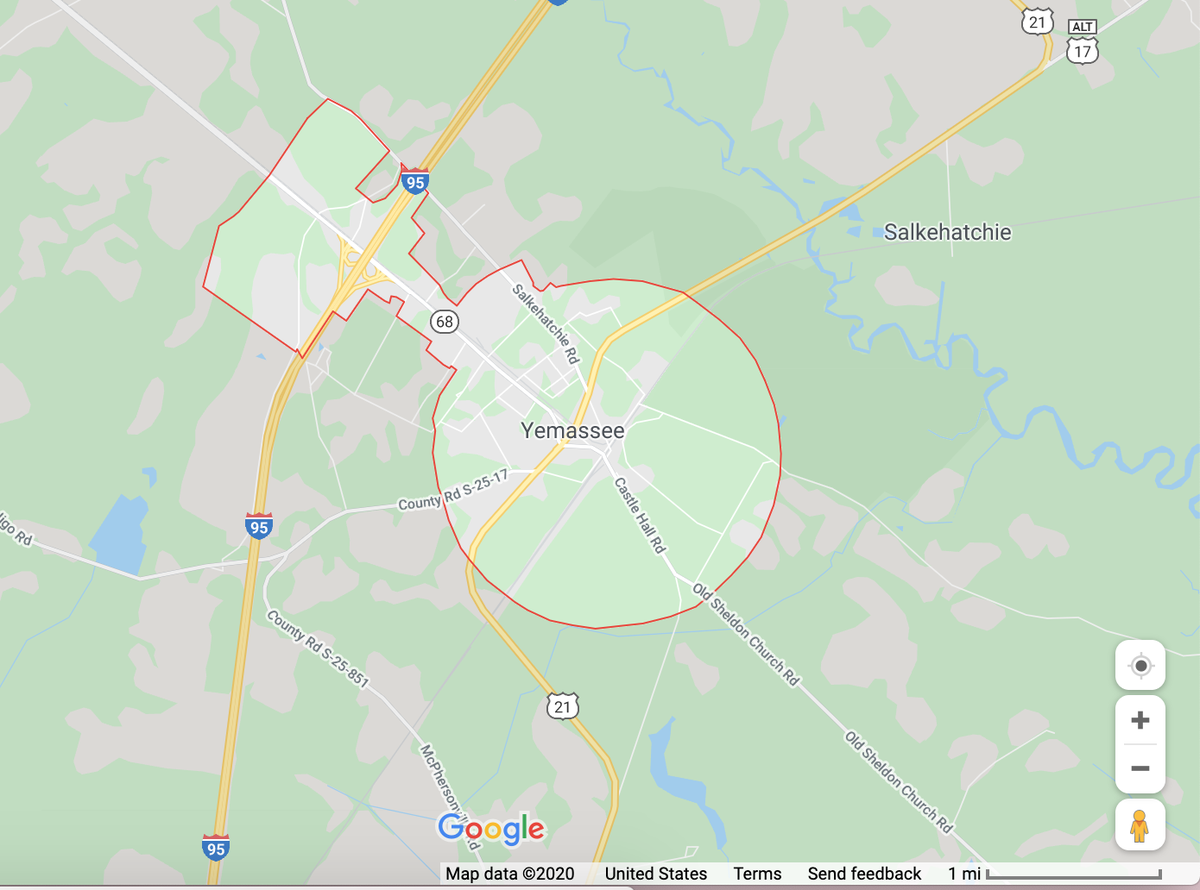
What is that?
Is it a large and floppy Carmen Sandiego-style fedora?
A lethargic snail?
Mikhail Gorbachev’s birthmark?
Or is it ... it couldn’t be!
Why, it’s the 1,317-acre former plantation that Yemassee hastily annexed from Beaufort County in 2006 — with little public input and at the behest of a developer trying to get around those pesky county zoning ordinances so it could build up to 1,300 homes, or triple the number that would have been allowed on the parcel otherwise.
And that “piece of string” is actually the 20-foot by 2-mile toothpick of land the town also annexed so Bindon Plantation — or Binden, depending on who’s doing the spelling — would be considered “contiguous” to Yemassee and thereby meet the requirements of state annexation law.
Two miles.
By 20 feet.
Clever, huh?
Let me tell you, when a developer wants something, it wants something.
Just ask Bluffton.
Actually, right now we need to be asking Yemassee and Beaufort County.
Last week the public accidentally discovered a rather large secret: Town officials and at least one Beaufort County council member have been slyly and “informally” talking about the possibility of redrawing county lines so the unicycle, string and lollygagging snail would be entirely in Beaufort County instead of mostly in Hampton County.
The secret got out — as any secret involving secession will — and the resulting scuttle and scratch from the pro-annexation crowd bears a keen resemblance to the exclamatory recasting you might hear from your significant other after he realizes he’s thrown you a very expensive birthday party on the wrong date because he sometimes mixes up “March” and “May.”
“Surprise! What? Uh oh. Well, hey! Let’s just call this ‘cake and jubilee day!’ It’s a good thing! Woo-hoo!”’
In the case of the hush-hush annexation talks, it was more like: “You know about that now? Uh oh! Well, hey! It’s a good thing! For Yemassee residents AND for the residents of Beaufort County! This is for THE PEOPLE! Win-win! Only good things to see here.”
Allow me a second to swallow a grain of salt before I say this: The idea of Yemassee becoming a full-fledged member of Beaufort County might be a smart one.
Certainly, it makes more sense for a single town to reside in a single county.
Most of Yemassee — with about 1,000 residents — lives in Hampton County, and about one-third are below the poverty line. The much lower taxes in Beaufort County could be a real game-changer for many families.
And Beaufort County government would get to collect those coveted taxes from businesses off I-95’s exit 38.
Win-win.
Only good things to see here.
So they say.
See, there’s a wobble in the preemptive welcome wagon’s wheel.
It’s this: The public’s business should be conducted in public, and this public business was absolutely not conducted that way.
Instead it was discussed by both governments in executive session — in that dank cave where elected officials routinely retreat so they can say and do things they should be saying and doing in full view of the public.
Of course, “attorney-client privilege” allows them to legally meet in private. However, that privilege is meant for the receipt of legal advice and, unfortunately for you and me, some boards and councils around here continue to misuse this exemption in South Carolina’s Freedom of Information Act as an invisibility cloak they can throw over anything discussed in the presence of the attorney.
“The lawyer is in the room” has come to mean “none of what we say or talk about exists as far as the public is concerned, OK?”
So this makes it very hard to trust them when they say “This annexation would be a good thing for all of us.”
It makes it very hard to trust that this is an idea being driven by residents in search of lower taxes and not one that was concocted behind the scenes and being pushed by an unknown developer eyeing all that land for sale by Exit 38 — wanting to maximize profits by building in what is a more desirable habitat for business.
Not that free market enterprise is a bad thing. But the public should know the motives.
Because there’s some history here.
In Northern Beaufort County, 2006 was considered to be the “Year of Annexation,” as one op-ed writer in The Beaufort Gazette put it five years later.
Yemassee wasn’t alone in its developer-driven desire to gobble up rural parcels of land as quietly as possible. The City of Beaufort and Town of Port Royal also found themselves operating on the down-low in the hopes of fast-tracking deals without apparent or serious consideration given to the obvious and myriad infrastructure issues that accompany such growth.
According to a Nov. 19, 2006, editorial in the Gazette, Yemassee offered the developer “1,000 more houses, permission to build commercial space and relaxed environmental protections — all for the low price of two police cruisers, sponsorship of their annual Shrimp Festival, and a $250,000 contribution to the town.”
As they seem to be now, many residents of Yemassee then were excited by the prospect of the town tethering itself to a neighborhood 2 miles by 20 feet away.
Finally, they said, we can get a grocery store. Finally, we’ll have more opportunities for work and might not have to drive to Hilton Head Island anymore. Finally, the town can get some money.
Others weren’t so sure.
“There’s plenty of vacant land and dilapidated buildings in town that they should be working on,” one resident said at the time.
What’s the plan for roads, sewer and water? How is this going to affect the marsh and river? What about the traffic 1,300 houses will bring? Who’s paying for this? Won’t this ultimately cost taxpayers more? Do we have to do this so fast?
“From start to finish, the Town Council’s review process was a sham,” the Gazette editorial at the time read. “(Council) asked virtually no questions about the plans at the required public hearings and disregarded public opinion. They ran through the process as if it were a formality instead of a true evaluation of an enormous decision that will more than triple the population of their town.”
A lawsuit and the soon-to-be economic downturn would end up preventing that land from being developed the way Yemassee and its Shrimp Festival sponsor had hoped.
The 2006 annexation was widely considered a debacle. “It smells bad,” one resident said at the time. “It smells like the town and the mayor got the population into a very bad situation, where we have a piece of property that’s no good.”
In 2012, Beaufort County paid $2.5 million to put a conservation easement on that land, which limited future development to just 20 homes. Six years later, the plantation was on the market for $15 million and still appears to be for sale.
While circumstances between 2006 and now are quite different, their secretive beginnings sure do look alike.
In 2006, the deal was pretty much done by the time it reached the public’s ears.
Would it have been this same way now if Hampton County hadn’t found out, gotten angry and news of it started showing up on Facebook?
One has to wonder.
This story was originally published February 14, 2020 at 9:34 AM.