
In past 5 months, Beaufort Co.’s smallest town gets hundreds of new residents. Here’s why
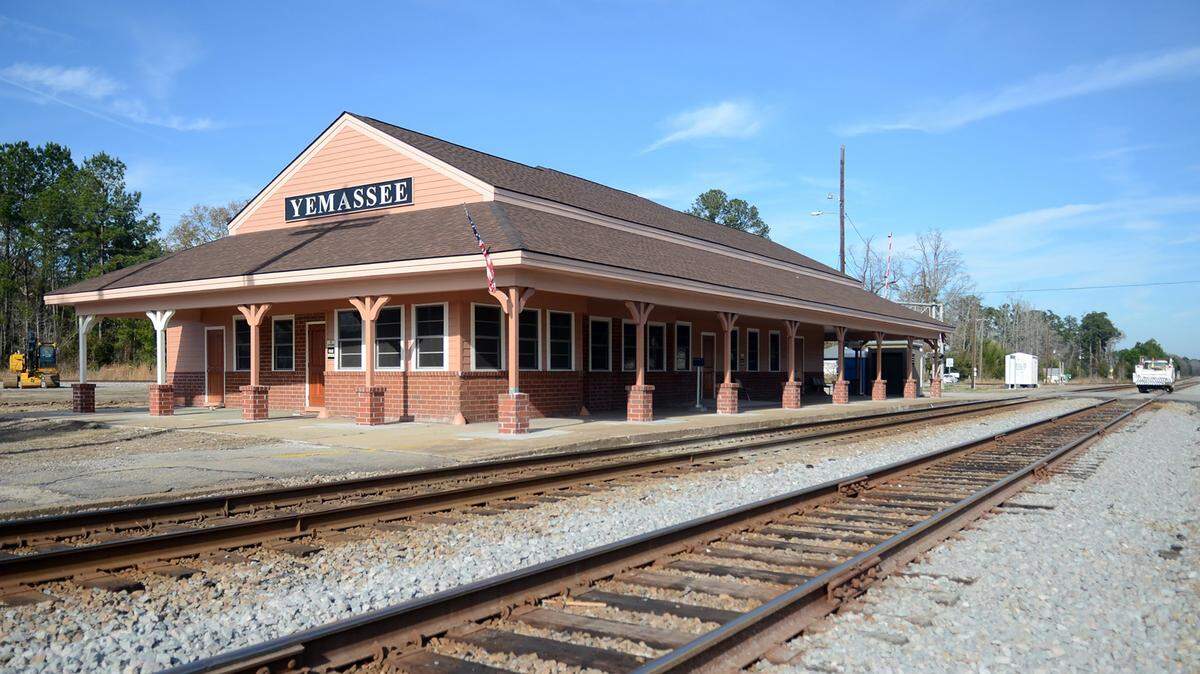
Beaufort County’s smallest town has grown exponentially this year by extending its borders to include hundreds of nearby residents who were looking for greater access to public resources, such as police services, and who say they’ve felt underrepresented by county governments.
Yemassee, which is located in both Beaufort and Hampton counties, has increased its population by 50 percent since March, mostly through annexations of unincorporated areas in Hampton County.
Robert Jackson said one of the major reasons he had six of his properties annexed into the 4.5-square-mile town two months ago was because the town has its own police force.
“Hampton (County Sheriff’s Office) has to come from 30 minutes away to get to Yemassee,” he said. “Sometimes, that’s a difference of life or death.”
In 2010, the U.S. Census reported that Yemassee had a population of 1,027.
A large percentage of the town’s few residents live in poverty. Census data shows that 29.1 percent of Yemassee inhabitants — nearly 1 in 3 — fall below the poverty line.
The same goes for residents in surrounding areas, but in the town’s eyes, that problem has been intensified by another problem: a lack of sewage and central water. People living just outside the Yemassee town limits have not had clean water or clean sewer service available to them, Jackson said.
Instead, these residents have been subject to septic tanks and well water as their only options. Although the well systems are separate from the sewage lines, some residents believe the current system leaves people outside the town borders susceptible to water contamination.
Jackson said the ability to be given access to a city sewer system and water line by Yemassee was another factor that led him to apply for annexation.
“After a heavy storm, our septic tanks back up and need to get pumped,” he said. “But every time that happens, it costs $300. A lot of people here can’t afford that. It affects everyone in the area.”
The town is primarily composed of families that go back generations, with the Jacksons still living on Jackson Street, the Bings living throughout Bing Street and the Cochrans on Cochran Street. Yemassee began to see these families file for annexation permits five months ago.
These annexations not only bring in more people, but for a town that lacks a single hotel and only has one retail store, they provide more potential customers, land and opportunities for business, too, Yemassee Town Clerk Matt Garnes said.
Home to the Lowcounty’s lone Amtrak station, Yemassee was practically built so the station didn’t stand alone, Garnes said.
“(Yemassee) was originally drawn with a protractor to create a 2-mile perfect circle radius around the train station,” he said.
He said talk of annexation in Yemassee dates back to the 1990s, but he attributed the rush of applications now to outlying residents not previously knowing about annexation or the perks it could provide them.
“One petition began for annexation on Cochran Street in late March, and everyone on that street signed it to be annexed into the town,” Garnes said in a phone call Wednesday. “People then started talking, and they wanted this for so long that it just caused this domino effect for more and more annexation applications.”
Since then, approximately 400 residents have requested to extend town limits by 392 acres to include their homes, according to Yemassee Mayor Colin Moore.
“The (2020) census is coming, and people requested this,” Moore said. “When they realized their land was continuous with the town, they could come in.”
There are a couple of challenges with annexation in South Carolina. State law only allows annexation to be voluntary by the property owner, whether on their own accord or if approached by the town. It also requires annexations to be contiguous with town borders, meaning all property boundaries must touch existing Yemassee boundaries.
Garnes and Moore say they expect to see even more growth in the future, including annexations into neighboring Jasper County, which would make it a tri-county town.
Scott Slatton, a legislative and public policy advocate with the Municipal Association of South Carolina, said annexation into a third county shouldn’t change how Yemassee residents go about their day-to-day lives, but said they could see a more positive response in governmental services provided to them.
“The only real difference noticed would be by government itself,” Slatton said. “It would now have to work with an extra county on extra assessments, bills and taxes.”
This format, however, has worked well for other three-county municipalities in South Carolina, he said, which include North Charleston, Summerville and Ware Shoals.
“They’ve gotten routine procedures down,” Slatton said. “Aside from additional administrative issues, there are no real downsides.”
Sixteen other cities and towns in South Carolina have borders that go beyond one county, including Charleston and Columbia, the two largest cities in the state by population.
Although Yemassee eventually could occupy part of three counties, Moore doesn’t see the possibility of adding a third as a problem, given that he’s already used a two-county setup.
“If we call in the county, they would still do the same thing they’ve done beforehand,” he said. “The way it is now, if it falls into the town, we do it. If not, we call the other part of the county and they get it done.”
Garnes said Yemassee wants to start implementing central sewer and water systems for these newly annexed homes and properties by next spring.
“These areas would be eligible for community block grants (to install sewing and water),” he said. “Right now, they’re regulated by the Lowcountry Regional Water System. If they’re under the town, we’d have them apply for block grants in the winter that would give them the grant money by March 2019.”
Water isn’t the only problem affecting outlying residents, though. Hampton County is responsible for any law enforcement and first responders to these unincorporated county communities that have recently annexed into the town.
That led to what residents say have been delayed response times to emergencies, compared to what they believe Yemassee can provide.
Edna Bing, who had her property annexed into the town three weeks ago, said this was an important factor for her.
“I would get quality services with annexation. We need 911 or police here.”
Bing explained how an incident involving her security system led to a response time she felt wasn’t sufficient.
“My security once went off in the middle of the night because it was defective,” she said. “It took too long for them to come from Hampton to respond.”
Moore explained that the emergency response issues have affected these unincorporated residents for a long time. But, until they were annexed into Yemassee, residents said they felt like they lacked an outlet to voice their concerns.
“Before annexation, you can’t vote (in Yemassee elections),” Jackson said, with regard to residents living outside the town. “But now, you can vote and also run for town council.”
Jackson concluded that even if people are less interested in being active in local government, those who are more concerned about feeling represented should consider annexation as an answer to their problems.
“You and I can complain about the situation, but it couldn’t change even though we’re so close to Yemassee,” he said. “Now, with us going into the town limits, we can be part of the solution.”
As more people consider annexation into Yemassee, Moore said he’s pleased that the people he’s always considered part of the town can officially consider themselves part of it, too.
“These people would be a mile outside of Yemassee and would have to go all the way to Hampton just to (get approval to) build an addition on their house,” he said. “They couldn’t understand that.”
Both on behalf of the residents and the town itself, Moore made clear how beneficial he believes annexation can be for everyone that’s part of the process.
“It’s a tremendous help to the town,” Moore said. “By them being more involved, they and business licensing can come to the town versus the county. I think it’s a win-win either way.”
This story was originally published August 24, 2018 at 2:25 PM.