
You should know Hilton Head once had its own Cracker Barrel logo fight | Opinion
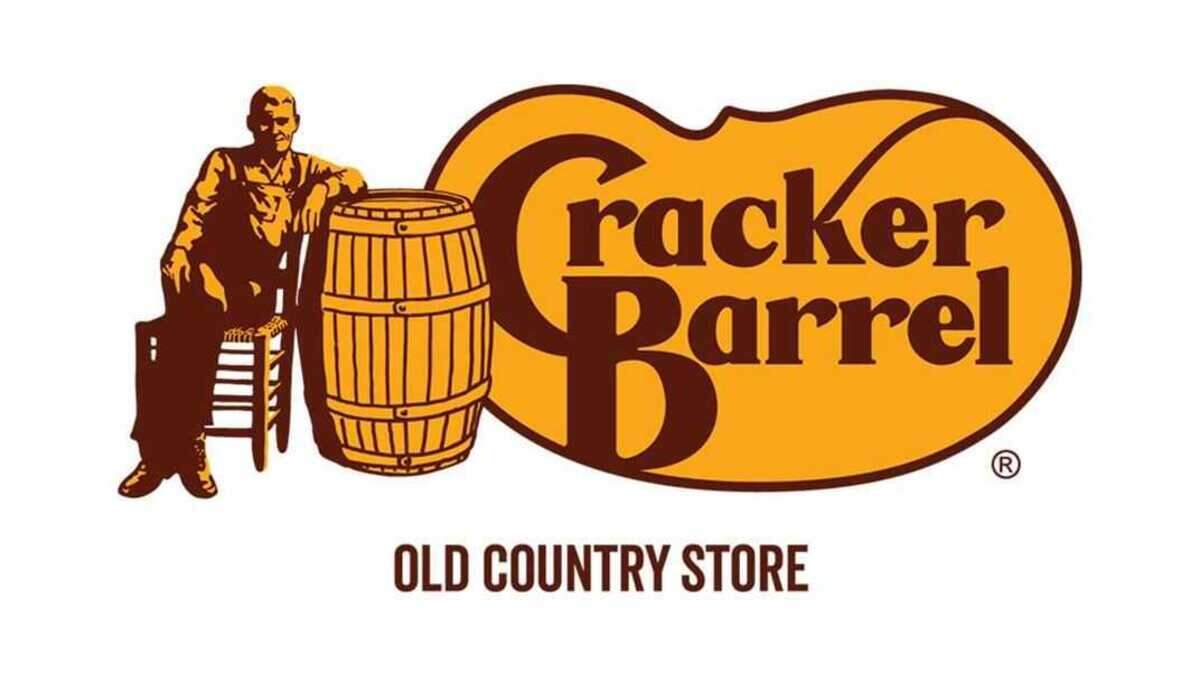
Cracker Barrel’s cracker barrel man has been at the center of controversy on Hilton Head Island before. And he left behind a life lesson that the booming Lowcountry needs to heed.
The restaurant chain got pummeled this month for removing the cracker barrel man from its logo and replacing it with a faceless, generic logo more bland than grits without butter.
The “Old Timer” in bib overalls — an image of company founder Danny Evins’ Uncle Herschel — would no longer be resting an arm on a cracker barrel like folks did at country stores a century ago. Suddenly, everybody with a keyboard was an expert in big business.
The chain lost $94 million in market value in a single day, and Cracker Barrel quickly retreated amid a public uproar fueled by President Donald Trump and others on social media.
Many wanted the cracker barrel man to stay, even if Cracker Barrel’s CEO had to reverse a declining trend by turning all 660 restaurants across 44 states into covered-wagon dealerships.
On Hilton Head Island, it called to mind an earlier Cracker Barrel logo fight.
When Cracker Barrel came to Hilton Head almost 40 years ago, the chain of down-home cooking restaurants founded in Tennessee in 1969 was still in its infancy with only 54 locations.
Its store on William Hilton Parkway (U.S. 278) near a new enclosed shopping mall at Shelter Cove was unusual from the start. It was only the third Cracker Barrel not built along an interstate. And it bent to local standards by foregoing the dark brown wooden siding for light stucco.
What really riled some people up, though, was the image of the cracker barrel man.
The Town of Hilton Head Island’s Corridor Review Committee said Cracker Barrel could have a sign out on the highway, but that the man in the logo had to go.
Committee member Katie Callahan said, “We really don’t want human beings portrayed on (U.S.) 278.”
The committee also panned the logo’s golden yellow color in the sign. It was called “garish.”
The company put up the sign anyway, and the town was taking it to magistrate’s court when Evins himself, the founder and president of Cracker Barrel, came to town to work out a deal.
He explained that the logo, with the cracker barrel man and the golden yellow color, had to be used on Hilton Head so diners would become aware of the chain and be able to identify it without having to think it over while speeding down the freeway.
Evins told town officials the man in the logo was inspired by memories of his uncle.
“The gentleman next to the barrel represents an era,” he said. “He suggests a slow tempo.”
The man is supposed to represent someone conservative, almost religious, and a man of integrity, Evins said.
“I think the sign is very distinctive,” Callahan told Evins. “I don’t think your uncle has to be sitting there for it to be recognizable.”
She made the motion to deny the sign “for aesthetic reasons, particularly Mr. Evins’ uncle who is near the barrel.”
In the end, the company appealed to the town’s Board of Adjustment, which ruled the Corridor Review Committee was policing images on signs inconsistently. The cracker barrel man could stay, but the golden yellow had to give way to brown in the 3-foot by 3-foot logo on Hilton Head.
The Cracker Barrel had a 19-year run on the island before closing in 2006 for not meeting business expectations. Another Cracker Barrel opened outside Sun City Hilton Head in 2012.
Some islanders thought the town went overboard in fighting the cracker barrel man.
But the lesson for today is that the community knew what it stood for. It knew what it believed in, knew that it must be different, knew that it did not want “garish,” and it wasn’t afraid to say so.
To Cracker Barrel and to Dunkin’ Donuts, which was told in 1987 that it could not have the fuchsia color in its sign that was perfectly fine everywhere else in the nation.
Cracker Barrel also knew what it stood for and that it needed to be different.
And through the regulatory process and a compromise born of real principles, a solution was reached on Hilton Head Island.
Today, that kind of backbone is needed among officials throughout a Lowcountry besieged by clear-cutting, high-density development and “homes” that become short-term rentals sleeping 20. Our leaders must be ready to fight for the Lowcountry’s unique character and charm.
We have the gentleman next to the barrel to thank for that reminder.
David Lauderdale may be reached at lauderdalecolumn@gmail.com.
This story was originally published August 29, 2025 at 5:00 AM.